
Eflornithine Cream: Benefits vs. Limitations
Eflornithine cream is a topical treatment designed to slow facial hair growth, particularly for women managing conditions like PCOS. Unlike traditional hair removal methods, it targets hair follicles by inhibiting an enzyme essential for hair growth. While effective for many, it requires consistent use and isn't a permanent solution. Here's what you need to know:
- How it works: Slows new hair growth by targeting enzymes in hair follicles.
- Results: Noticeable improvement for 35% of users after 24 weeks; 60% see reduced growth within 4–8 weeks.
- Application: Twice daily, with results fading 8 weeks after stopping use.
- Safety: Minimal absorption into the body, making it a non-hormonal option with mild side effects.
- Cost: Regular use can be expensive, with generic options varying in price.
Key Limitations:
- Results vary significantly between users.
- Requires ongoing use for maintenance.
- Does not remove existing hair.
Eflornithine cream works best as part of a broader plan that may include hormonal therapy, lifestyle changes, and other hair removal methods. For women with PCOS, it offers a targeted approach to managing facial hair growth but demands patience and consistency.
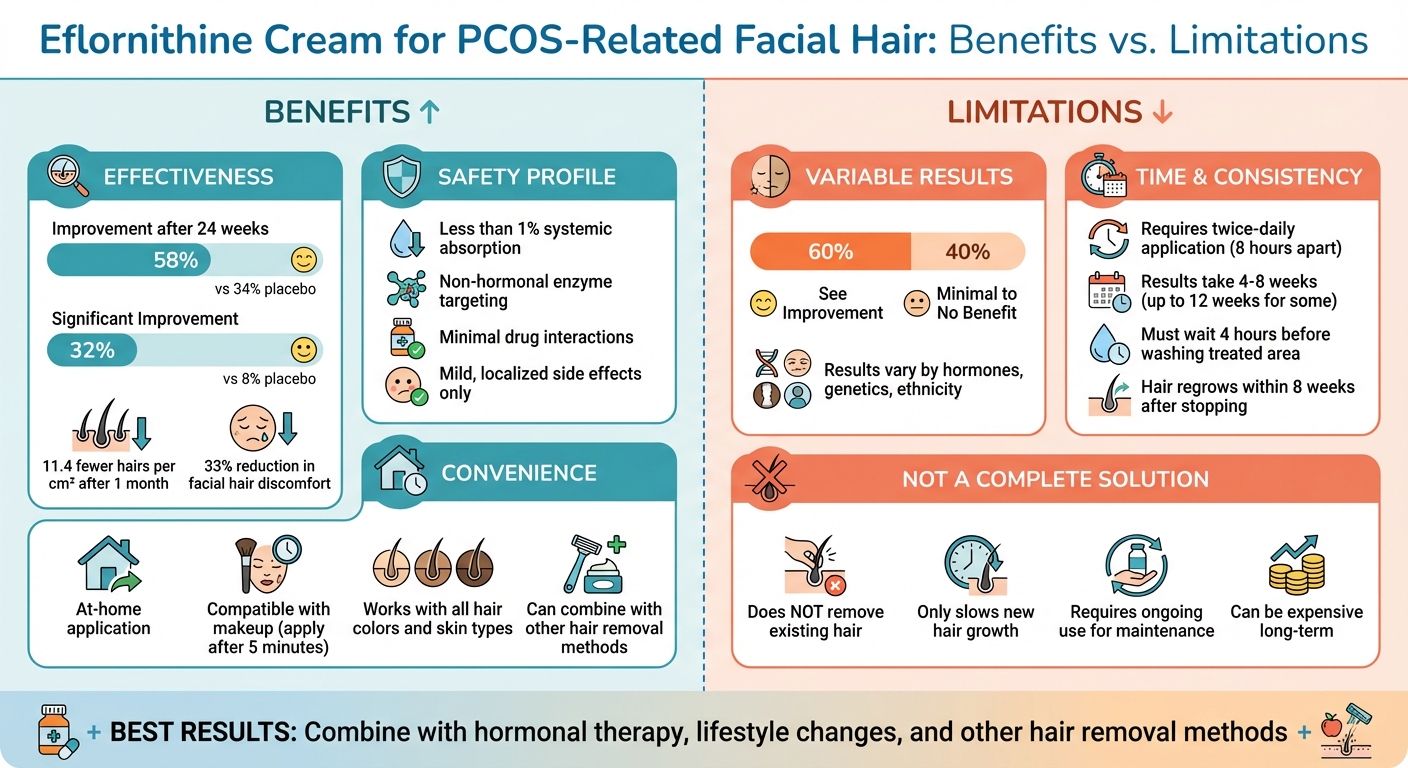
Eflornithine Cream Benefits vs Limitations for PCOS Facial Hair Treatment
How Eflornithine Cream Works
Eflornithine cream works by targeting an enzyme called ornithine decarboxylase (ODC), which is found in hair follicles. This enzyme is crucial for hair growth because it helps produce polyamines - natural compounds that enable cells in the follicle to divide and multiply. When polyamine production is disrupted, the hair growth cycle slows down noticeably.
Here's how it works: when applied to the skin, eflornithine acts as an irreversible inhibitor, meaning it permanently binds to the ODC enzyme and stops it from functioning. As explained in research published on PubMed:
Eflornithine is a specific, irreversible inhibitor of the enzyme ornithine decarboxylase which is thought to slow hair growth by inhibiting this enzyme in hair follicles
. By blocking this enzyme, the cream interrupts the biological process responsible for forming new hair.
Unlike traditional methods of hair removal, eflornithine doesn’t remove existing hair. Instead, it prevents new hair from growing. This is why it’s classified as a growth-inhibiting cream, not a depilatory. Over time, the hair that does grow back is often finer and lighter, making it less noticeable.
Another advantage? Less than 1% of eflornithine is absorbed through the facial skin, which contributes to its strong safety record.
Because eflornithine works by targeting enzymes rather than melanin (as laser treatments do), it’s effective for all hair colors and skin types. Whether your facial hair is dark, light, or red, the cream slows down the cellular activity in the follicles that drives hair growth. This makes it particularly useful for managing hair growth in conditions like PCOS.
Benefits of Eflornithine Cream
Effectiveness and Results
Clinical research highlights the cream's ability to reduce unwanted facial hair effectively. After 24 weeks of consistent use, 58% of women experienced noticeable improvement compared to 34% of those using a placebo. Moreover, 32% of users reported significant improvement, whereas only 8% of placebo users saw similar changes. Another study using TrichoScan technology measured a decrease in hair density by 11.4 hairs per cm² after just one month of use. Beyond reducing hair growth, the cream also alleviates discomfort tied to facial hair, with users reporting a 33% reduction in discomfort. These results, combined with its strong safety profile, make it a reliable option.
Safety and Non-Hormonal Treatment
One of the standout features of eflornithine cream is its excellent safety profile. The cream has minimal systemic absorption, meaning it works locally without circulating throughout the body. This makes it an ideal choice for women who cannot or prefer not to use hormonal treatments due to health conditions, pregnancy concerns, or personal preferences. Unlike hormonal medications, which can carry systemic risks, eflornithine targets enzymes within hair follicles without altering hormone levels. This is particularly beneficial for women with PCOS who may want to avoid hormonal interventions. Side effects are generally mild and limited to the application area, including temporary stinging, burning, or redness. Additionally, the cream is not associated with significant drug interactions.
At-Home Application
Eflornithine cream is easy to incorporate into a daily routine. It requires twice-daily application, spaced at least 8 hours apart - typically in the morning and evening. Once the cream dries, makeup or sunscreen can be applied within five minutes. Unlike laser treatments or electrolysis, which require professional appointments and recovery time, eflornithine offers the convenience of at-home use. It can also be combined with other hair removal methods like shaving, plucking, or waxing, providing flexibility for women managing unwanted facial hair due to PCOS. While the benefits are considerable, setting realistic expectations about the cream's limitations is important.
| Benefit Category | Key Advantage |
|---|---|
| Effectiveness | 58% improvement after 24 weeks; visible results in 4–8 weeks |
| Safety Profile | Less than 1% systemic absorption; minimal drug interactions |
| Treatment Approach | Non-hormonal enzyme targeting; suitable for hormone-sensitive users |
| Convenience | At-home use; compatible with makeup and other hair removal methods |
| Quality of Life | 33% reduction in facial hair-related discomfort |
Limitations of Eflornithine Cream
Variable Results Among Patients
The effectiveness of eflornithine cream can differ significantly from person to person. Clinical studies reveal that about 60% of users experience some improvement, but only 32% see noticeable progress. This leaves roughly 40% of users with little to no benefit. Factors like hormonal imbalances, genetic predispositions, and ethnic background can all influence how well the cream works.
One key limitation is that stopping the treatment leads to hair regrowth within about 8 weeks. Since the cream doesn’t offer a permanent solution, it’s more of a maintenance option. A trial period of six months is often recommended to evaluate its effectiveness. If results are unsatisfactory, alternative treatments should be considered. For women dealing with PCOS-related hirsutism, this variability highlights the importance of close monitoring during the trial phase.
Consistency is crucial for achieving the best results, given the treatment’s unpredictable outcomes.
Time and Consistency Requirements
Using eflornithine cream requires a disciplined routine. The cream must be applied twice daily, with at least 8 hours between applications. After each use, the treated area should remain unwashed for a minimum of 4 hours. Most users begin to see results within 4 to 8 weeks, though for some, noticeable changes may take up to 12 weeks. However, it’s important to note that the cream only slows hair growth - it doesn’t remove existing hair. This means users often need to continue other hair removal techniques, like shaving, waxing, or plucking, alongside the treatment.
The commitment to consistent application also brings a financial aspect into play, as ongoing use is necessary to maintain results.
Cost and Long-Term Use
Long-term use of eflornithine cream can become a financial burden. Since the treatment requires continual application to sustain results, costs can add up over time. The FDA-approved brand Vaniqa, once available in the United States, was discontinued due to financial reasons. Today, generic versions of eflornithine are accessible through telehealth providers and compounding pharmacies, but prices vary widely, particularly for those without prescription coverage.
| Feature | Benefits | Limitations |
|---|---|---|
| Results | Slows hair growth, making it finer and lighter | Hair returns to pre-treatment levels after ~8 weeks |
| Timeline | Effective for long-term management of hirsutism | Initial results may take 4–12 weeks to appear |
| Application | Easy to apply at home | Requires twice-daily use and a 4-hour no-wash period |
| Efficacy | Helps 60% of users see improvement | 40% of users may experience minimal or no benefit |
| Treatment | Non-hormonal option | May cause side effects like acne, redness, or stinging |
sbb-itb-6dba428
Factors That Affect Treatment Success
Proper Application Techniques
Using eflornithine cream correctly is essential for getting the best results. Apply the cream twice a day, ensuring there's at least an 8-hour gap between applications. Before applying, wash and dry the area thoroughly. If you've recently removed hair, wait at least 5 minutes before applying the cream to minimize irritation. Rub the cream into the skin until it's fully absorbed, and avoid washing the treated area for at least 4 hours after application. Once the cream has dried, you can use sunscreen or makeup as needed. Always wash your hands before and after applying the cream. If skin irritation occurs, reduce usage to once daily until the irritation subsides. Consistent and careful application is crucial for maximizing the cream's effectiveness.
Patient Characteristics and Skin Type
Individual factors, such as hormonal levels and skin type, can influence how well eflornithine works. The cream reduces hair growth by inhibiting the enzyme ornithine decarboxylase in hair follicles. However, women with conditions like PCOS or elevated androgen levels may need additional treatments, such as hormonal therapy or weight management, to achieve the best results. While eflornithine can slow hair growth and make it appear finer and lighter, its effectiveness with laser treatments depends on hair color and skin type. For example, patients with darker hair (black, brown, or auburn) typically respond better to laser treatments, while those with blond or white hair might see better results with electrolysis. Additionally, women with tanned or darker skin tones may face a greater risk of side effects, such as blistering or changes in skin color, when combining eflornithine with certain laser treatments. These factors highlight the importance of tailoring treatment plans to individual needs.
Combination Therapies
Using eflornithine alongside other treatments can lead to better outcomes. Research shows that 81% of women using a combination of eflornithine and laser treatments see significant improvement within a year, making this approach more effective than laser treatments alone. Customizing treatments based on skin type and hormonal conditions can further boost results.
"Eflornithine plus laser treatment is superior to laser alone." – Camille A. Clare, MD, MPH, Associate Professor of Obstetrics and Gynecology
For women with PCOS, a multi-faceted approach often works best. This might include combining eflornithine with hormonal therapies, such as oral contraceptives, and medications like spironolactone to block androgen activity. Eflornithine is particularly helpful for treating white or vellus hairs, which often don't respond to laser therapy. There's no need to stop using the cream during laser or IPL treatments. In fact, starting eflornithine and laser therapy at the same time, while continuing with mechanical hair removal for existing hair, can yield the most effective results.
Eflornithine Cream in PCOS Management
Eflornithine cream is most effective when included as part of a well-rounded treatment plan for PCOS. Hirsutism, or excessive hair growth, affects 70% to 80% of women with PCOS, making facial hair management an important aspect of care. While systemic treatments work to correct hormonal imbalances, eflornithine cream directly targets unwanted facial hair growth.
The best results come from combining systemic treatments with topical options. For instance, oral contraceptives help regulate hormone levels, and anti-androgens, like spironolactone, block androgen receptors. Meanwhile, eflornithine cream slows the growth of new facial hair. Lifestyle changes also play a key role; losing just 5% of body weight can reduce androgen levels and improve PCOS symptoms. Together, these strategies create a more effective treatment plan. Clinical trials have shown that 35% of patients using eflornithine cream saw significant improvement after 24 weeks, compared to only 9% in the placebo group. This highlights the value of combining systemic and topical therapies for better results.
Other Treatments for Hirsutism
For women with PCOS who are not trying to conceive, hormonal therapies are often the first step in managing hirsutism. Oral contraceptives help balance hormone levels, and if additional progress is needed, anti-androgens like spironolactone can be added after six months of treatment.
"Excess facial or body hair is not only distressing to women, it is often a symptom of an underlying medical problem." – Kathryn A. Martin, M.D., Chair of the Endocrine Society task force
Eflornithine cream works well alongside these systemic treatments, especially for addressing fine, white, or vellus hairs that don’t respond to laser therapy. It also pairs seamlessly with hormonal medications without causing interference. Physical hair removal methods - such as shaving, waxing, electrolysis, or laser therapy - can complement the use of eflornithine. To avoid irritation, it’s recommended to wait at least 5 minutes after hair removal before applying the cream. Combining eflornithine with laser treatments has been shown to be more effective than laser therapy alone. For women managing PCOS, integrating these treatments - along with telehealth services - can make care more accessible and effective.
Telehealth Solutions for PCOS
Telehealth platforms like Oana Health are expanding access to comprehensive PCOS care. These services connect women with licensed medical professionals who can prescribe eflornithine cream, hormonal medications, and other treatments - all delivered to their doorstep. After an online consultation, providers arrange hormone testing, create personalized treatment plans, and monitor progress remotely. This streamlined approach simplifies the management of PCOS symptoms, including facial hair, acne, irregular periods, and weight concerns.
Oana Health offers eflornithine cream starting at $69 per month. They also provide complementary treatments like spironolactone for $14 per month and combination therapies aimed at improving results. Additionally, the platform offers weight loss solutions and insulin-sensitizing treatments, recognizing that addressing multiple symptoms is often necessary for effective PCOS management. This approach reflects the interconnected nature of PCOS, where no single treatment can address every symptom on its own.
Conclusion: Weighing the Pros and Cons
Eflornithine cream offers a well-researched, non-hormonal option for managing facial hair in women with PCOS. By targeting hair growth at the follicle level, it helps slow the development of new hair, resulting in finer and lighter strands. Importantly, it works without interfering with other systemic treatments. Clinical trials show that 35% of women using eflornithine experienced noticeable improvements, compared to just 9% in the placebo group.
However, it’s not without its drawbacks. The cream doesn’t remove existing hair; it simply slows the growth of new hair. Results take time - usually 4 to 8 weeks to become visible - and require consistent, twice-daily application to maintain effectiveness. Additionally, hair growth resumes within eight weeks of stopping use.
| Benefits | Limitations |
|---|---|
| Effectively slows facial hair growth | Not a permanent solution |
| Non-hormonal and safe for long-term use | Requires ongoing twice-daily application |
| Fits into broader PCOS management plans | Results take 4–8 weeks to show |
| 35% of users report significant improvement | Hair regrows within eight weeks after stopping |
When deciding whether eflornithine is the right choice, it’s important to weigh these pros and cons. For women with PCOS, this cream works best as part of a broader treatment plan that addresses hormonal imbalances, incorporates lifestyle changes, and includes physical hair removal methods. Because results can vary based on factors like skin type, hair texture, and hormone levels, consulting a licensed healthcare provider is key. To explore a personalized approach, consider connecting with Oana Health, where you can access telehealth consultations and begin using eflornithine cream for $69 per month.
FAQs
How does eflornithine cream compare to other hair removal options for women with PCOS?
Eflornithine cream, such as Vaniqa, offers a unique approach to managing unwanted hair. Unlike traditional hair removal methods that physically remove hair, this cream works by slowing down hair growth. It achieves this by blocking an enzyme essential for hair production, gradually making facial hair finer and less noticeable. However, it’s important to note that eflornithine doesn’t remove existing hair and requires consistent use to maintain results.
When compared to laser hair removal, which provides quicker results by targeting hair follicles, eflornithine stands out as a non-invasive option. It can also help lengthen the time between physical hair removal sessions. This makes it particularly useful for managing hormone-related hair growth, such as that caused by PCOS. That said, it doesn’t offer permanent results like electrolysis, which is a more invasive method capable of permanently destroying hair follicles. For the best outcomes, eflornithine is often combined with other treatments, especially those offered through personalized programs like Oana Health, to address individual needs effectively.
What side effects can occur with eflornithine cream?
Eflornithine cream can sometimes lead to minor skin reactions where it's applied. The most frequent side effects include redness, rash, itching, burning, tingling, and dryness. Additionally, some individuals may notice acne or razor bumps in the treated area.
If irritation becomes severe or doesn’t go away, it’s a good idea to reach out to a healthcare provider. While these reactions are typically mild, a doctor can help determine if this treatment is suitable for your needs.
Can Eflornithine cream be combined with other treatments for better results?
Yes, Eflornithine cream can be used in combination with other treatments to help manage unwanted facial hair, particularly for women dealing with PCOS. While the cream works to slow down hair growth, many people pair it with hair removal methods like shaving, plucking, or waxing to keep their skin smooth.
For more lasting results, it’s often combined with hormonal therapies that tackle the root cause, such as androgen imbalances. That said, Eflornithine doesn’t prevent hair from growing back once you stop using it, so regular application is usually necessary. Be sure to consult a healthcare provider to develop a treatment plan tailored to your needs, which might include medications, lifestyle changes, and cosmetic solutions for the best outcome.