
Eflornithine Cream: What to Know
Eflornithine cream is a prescription treatment for reducing unwanted facial hair, especially for women dealing with conditions like PCOS. It works by slowing hair growth rather than removing existing hair. Most users notice improvements within 4 to 8 weeks, but consistent use is essential, as stopping treatment returns hair growth to normal. While the cream is safe for most, some may experience mild side effects like skin irritation or acne. It's not a permanent solution but can significantly reduce the frequency of other hair removal methods. For best results, consult a healthcare provider to ensure it's the right choice for you.
How Eflornithine Cream Works
Eflornithine cream works by targeting an enzyme called ornithine decarboxylase (ODC), which is present in hair follicles. This enzyme is crucial for producing polyamines - compounds that play a key role in cell division and hair growth. By inhibiting ODC, eflornithine slows down the production of new hair cells.
What makes eflornithine effective is its ability to irreversibly block ODC, essentially shutting it down. This process leads to slower hair growth, and over time, any new hair that does grow may become finer and lighter.
"VANIQA interferes with an enzyme found in the hair follicle of the skin needed for hair growth. This results in slower hair growth and improved appearance where VANIQA is applied."
– VANIQA Patient Information Leaflet
It’s worth noting that eflornithine doesn’t remove hair that’s already present. It’s not a depilatory but rather a treatment to slow the growth of new hair. Also, less than 1% of the cream is absorbed through the skin, so its effects are limited to the area where it’s applied.
Clinical studies show that steady-state plasma levels of eflornithine are achieved within four days when the cream is applied twice daily. Most users start seeing noticeable improvements in hair growth after 4 to 8 weeks. However, if you stop using the cream, hair growth typically returns to its normal rate within about 8 weeks. Knowing how it works can help you decide if eflornithine is the right choice for managing unwanted facial hair.
Who Should Use Eflornithine Cream
Eflornithine cream is specifically approved for females aged 12 and older who are dealing with unwanted facial hair. It’s particularly useful for those experiencing hirsutism - a condition where coarse, dark hair appears in areas typically associated with male-pattern growth. This often stems from hormonal imbalances linked to conditions like Polycystic Ovary Syndrome (PCOS) or elevated androgen levels.
"Eflornithine HCl cream is indicated for the reduction of unwanted facial hair in women." – DermNet NZ
This topical treatment works directly on hair follicles, slowing down the growth of new hair. Clinical trials have shown that 35% of patients using eflornithine cream experienced noticeable improvement after 24 weeks, compared to just 9% in the placebo group.
The following sections outline its approved uses and offer guidance on seeking medical advice.
FDA-Approved Uses
Eflornithine cream is officially approved by the FDA for reducing unwanted facial hair in women, specifically on the face and areas just under the chin. It is not intended for use on other parts of the body, such as the arms, legs, or chest, as these areas have not been studied or approved for treatment.
"VANIQA (eflornithine hydrochloride) Cream, 13.9% is indicated for the reduction of unwanted facial hair in women." – FDA Prescribing Information
It’s important to note that eflornithine cream is not a hair remover. Instead, it slows the growth of new hair but does not get rid of existing hair.
When to See a Doctor
Before starting eflornithine cream, it’s essential to consult a healthcare provider to determine whether your facial hair might be linked to an underlying condition. Sudden or rapid hair growth, especially when paired with symptoms like a deepening voice or increased muscle mass, could indicate a hormonal imbalance or, in rare cases, a tumor that requires immediate attention.
A doctor will likely review your medical history, perform a physical exam, and may order blood tests to check hormone levels, such as testosterone, to rule out conditions like PCOS or androgen excess. If you’re pregnant, planning to become pregnant, or breastfeeding, it’s crucial to discuss the use of this cream with your doctor, as its effects on unborn babies or nursing infants remain unclear.
Additionally, inform your healthcare provider if you have severe acne or a history of allergic reactions to eflornithine or its ingredients. If no improvement is seen after six months of consistent use, your doctor will likely recommend stopping the treatment.
Taking these steps ensures that the treatment is both safe and aligned with your overall health and cosmetic goals.
How to Apply Eflornithine Cream
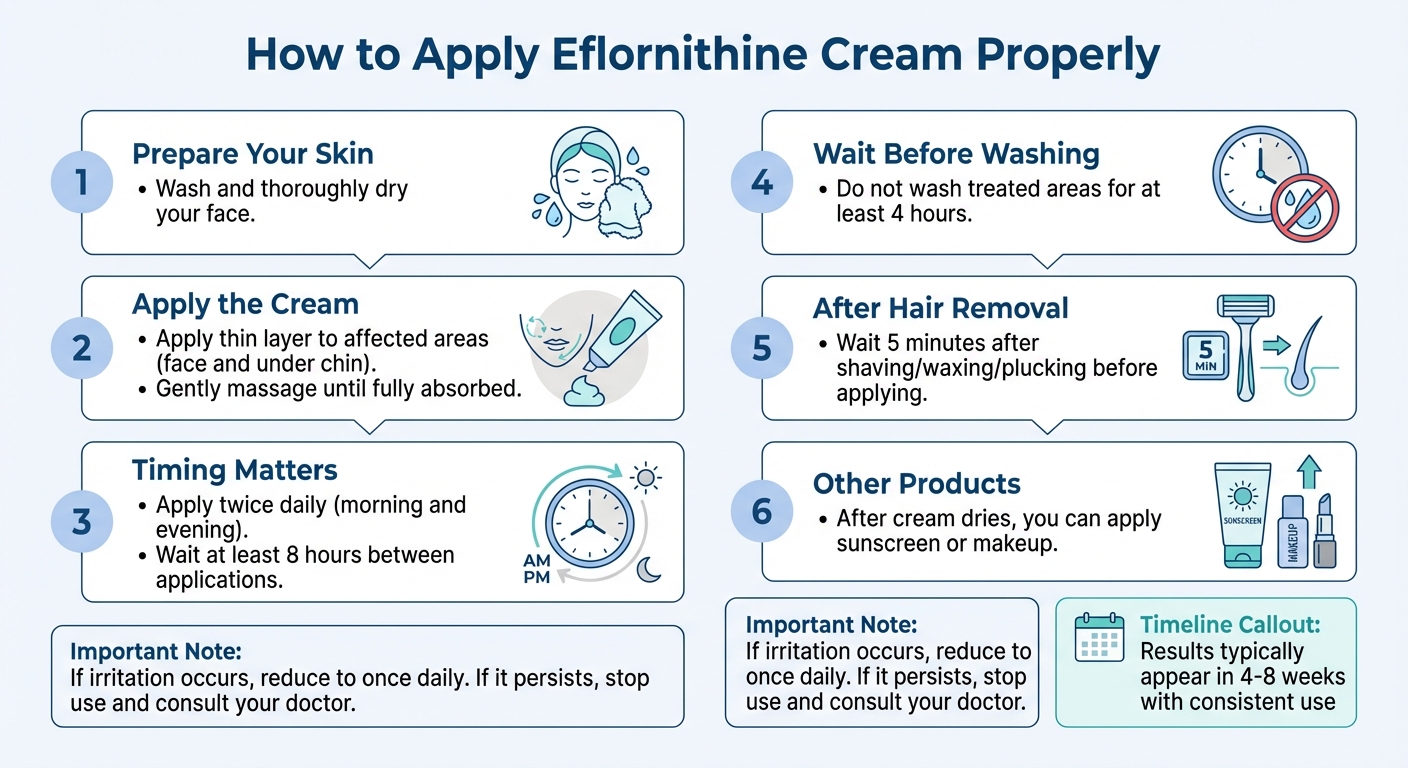
How to Apply Eflornithine Cream: Step-by-Step Guide
Getting the most out of eflornithine cream requires proper application. By following a few simple steps and maintaining a consistent routine, you can maximize its benefits.
Application Instructions
Start by thoroughly washing and drying your face to ensure the cream absorbs effectively. Apply a thin layer to the affected areas of your face and under your chin, gently massaging it into the skin until fully absorbed. Use the cream twice daily - once in the morning and once in the evening - keeping at least 8 hours between applications.
Once applied, wait at least 4 hours before washing the treated areas to allow the medication to fully penetrate your skin. After the cream has dried, you can safely use sunscreen or makeup. If you’ve recently shaved, waxed, or plucked, wait at least 5 minutes before applying the cream to avoid irritation.
If you notice skin irritation, reduce usage to once a day. If the irritation continues, stop using the cream and consult your doctor for guidance.
Now, let’s look at how eflornithine works in tandem with your regular hair removal methods.
Using Eflornithine with Other Hair Removal Methods
While eflornithine slows hair growth, it’s not a hair remover. You’ll still need to rely on your usual hair removal techniques, like shaving, waxing, plucking, or threading, to manage existing hair.
"VANIQA is not a depilatory, but rather appears to retard hair growth to improve the condition and the patient's appearance." – Vaniqa Product Label
The cream works well alongside various hair removal methods, including laser therapy and electrolysis. In fact, a study involving 54 women showed that combining eflornithine with laser therapy sped up hair removal compared to laser treatment alone.
When to Expect Results
Consistency is key when using eflornithine cream. Most users begin to see improvements within 4 to 8 weeks of twice-daily use, though noticeable results can take time. Patience during the early stages of treatment is essential.
"Improvement in the condition occurs gradually. Don't be discouraged if you see no immediate improvement. Be patient." – Vaniqa Patient Information Leaflet
Clinical trials revealed that about 32% to 35% of patients experienced significant improvement after 24 weeks, compared to only 8% to 9% of those using a placebo. However, if you stop using the cream, hair growth generally returns to its pre-treatment levels within approximately 8 weeks.
Up next, we’ll dive into the clinical outcomes you can expect and what long-term use might look like.
What to Expect from Treatment
When used correctly, eflornithine cream has shown promising results in managing unwanted facial hair. Here's a closer look at what clinical studies have uncovered.
Clinical Results and Effectiveness
Eflornithine cream offers gradual but noticeable improvements in reducing unwanted facial hair. In two large clinical trials involving 594 women, 32% of participants using eflornithine reported significant improvement after 24 weeks, compared to just 8% in the placebo group. Additionally, studies found that up to 60% of women experienced slower facial hair growth.
Data from TrichoScan analysis further highlighted its effectiveness. After one month, hair density dropped by approximately 11.4 hairs per square centimeter, and by two months, the reduction reached 16.5 hairs per square centimeter. Hair length also decreased, with cumulative reductions of 7.104 mm at one month and 10.054 mm at two months.
Success rates varied depending on individual factors. For instance, 37% of White participants and 22% of non-White participants achieved clinical success. Postmenopausal women saw particularly strong results, with a 38% success rate compared to 0% in the placebo group. Beyond physical changes, the cream also helped reduce the overall discomfort and frustration caused by facial hair by 33%.
Why Continued Use Is Necessary
It’s important to note that eflornithine cream works only while you’re using it. The cream inhibits an enzyme crucial for hair growth, but its effects are temporary. Once you stop applying it, hair growth will resume.
Think of eflornithine as a maintenance tool rather than a permanent fix. You’ll still need to rely on other hair removal methods like shaving or plucking, but you’ll likely find yourself using them less often. If you don’t notice any improvement after six months of consistent use, it’s worth discussing alternative options with your doctor.
sbb-itb-6dba428
Side Effects and Safety Information
Using eflornithine cream can lead to some side effects, though most are mild. Being informed about these potential reactions can help you use the product safely and recognize when it might be time to reach out to a healthcare provider.
Common Side Effects
The most frequently reported side effect is acne, affecting over 1 in 10 users. In fact, about 21% of both eflornithine and placebo users in studies reported experiencing acne.
Localized skin reactions, such as stinging, burning, or redness, are also possible. Research shows that 7.9% of users reported stinging, while 4.3% experienced burning. Other common reactions include itching, skin dryness, and small red bumps or pus-filled follicles (known as pseudofolliculitis barbae), which were noted by 16.3% of users.
To minimize irritation, follow the application guidelines carefully. For example, avoid washing the treated area for at least 4 hours after applying the cream. If irritation occurs, you might want to reduce application to once daily. However, if the irritation persists, stop using the cream and consult your healthcare provider.
Less commonly, systemic side effects like headaches (reported by 3.8% of users in trials), dizziness, and upset stomach may occur. Serious allergic reactions, while rare, can happen. Seek immediate medical attention if you experience symptoms like hives, difficulty breathing, or swelling of the face, lips, tongue, or throat.
Interestingly, only 2% of clinical trial participants stopped using eflornithine due to side effects, indicating that most people tolerate the cream well.
Understanding these potential reactions can help you safely incorporate eflornithine cream into your routine. Additionally, studies have evaluated its safety for extended use.
Safety for Long-Term Use
Looking beyond short-term effects, long-term studies confirm that eflornithine cream remains well tolerated. Open-label safety trials lasting up to a year have shown that the side effect profile is consistent with what was observed in shorter studies. The cream is approved for adults and children aged 12 and older, though it hasn’t been studied in younger children.
If you’re pregnant, planning to become pregnant, or breastfeeding, it’s important to consult your doctor before using eflornithine. In trials involving 19 pregnancies, outcomes included 9 healthy infants, 4 spontaneous abortions, 5 induced abortions, and 1 case of Down’s Syndrome. Since there are no well-controlled studies in pregnant women, your doctor will weigh the potential risks and benefits before recommending the treatment.
Because less than 1% of the cream is absorbed into the bloodstream, interactions with oral or injectable medications are unlikely. However, it’s unclear if eflornithine interacts with other topical products. Before using any additional creams or soaps on the treated area, consult your healthcare provider.
Getting Eflornithine Through Oana Health
Looking into eflornithine cream to manage unwanted facial hair? Oana Health makes the process seamless with their telehealth service - no need for in-person doctor visits or pharmacy trips. Everything happens from the comfort of your home, with treatments delivered straight to your door. It’s a convenient way to access expert care without stepping outside.
Telehealth Treatment for Unwanted Facial Hair
Oana Health focuses on evidence-based treatments for hormonal imbalances, including PCOS-related symptoms like hirsutism. Their licensed medical professionals review your health history and provide personalized care through an easy-to-use online platform. Treatments are custom-prepared in FDA-regulated pharmacies and come with free delivery.
You can choose from options like Eflornithine 16% (the generic version of Vaniqa) for $99 per month or Hairless Hype, a compounded formula with metformin and azelaic acid, starting at $115 per month. If you opt for a membership subscription, you can get Hairless Hype for $69 per 20gm. Clinical studies show that 70% of users experienced noticeable improvements in hair growth and density within two months, while 81% of women reported significant clinical progress within a year.
"Oana's telehealth service is fantastic! I've always had excess facial hair due to my PCOS. The Hairless Hype cream has significantly slowed down my hair growth, and I love how easy it is to include into my routine." – Victoria A., Patient
How to Start Treatment with Oana Health
Getting started is quick and simple. In less than five minutes, you can complete an online intake form. A licensed professional will review your health history and, if you qualify, prescribe a treatment tailored to your needs. This ensures you get the same high-quality care discussed earlier regarding eflornithine's effectiveness. Once approved, your medication is custom-prepared and shipped to your home with free delivery.
Oana Health also offers ongoing support with automatic refills and easy access to their medical team, either online or by phone. Plus, you can use FSA or HSA funds to cover your prescription. Ready to begin? Visit eflornithine.oanahealth.com or take their 2-minute PCOS quiz to receive personalized treatment recommendations.
Conclusion
Eflornithine cream provides a well-researched option for managing unwanted facial hair, especially for individuals dealing with hirsutism caused by PCOS or other hormonal imbalances. Achieving results depends on sticking to a consistent routine of applying the cream twice daily.
One of the standout benefits of eflornithine is its compatibility with your existing hair removal methods - whether that's shaving, plucking, or threading. By gradually slowing down hair growth, it helps reduce the effort and time spent on regular maintenance, making it a practical addition to your routine.
Using this treatment under medical supervision is important to ensure proper application and address any potential skin issues. If you don’t notice results after six months, it’s worth consulting your healthcare provider to discuss whether to continue or explore alternative treatments.
FAQs
Can I use eflornithine cream on parts of the body other than the face?
Eflornithine cream is meant exclusively for facial use and should not be applied to other parts of the body. Applying it elsewhere might not work as intended and could pose safety concerns. Always stick to the guidance provided by your healthcare provider, and reach out to them if you’re unsure about how to use it correctly.
How does eflornithine cream compare to other hair removal options?
Eflornithine cream helps slow down the growth of unwanted facial hair, making it a helpful option for women managing hirsutism. Unlike shaving or waxing, which only provide temporary solutions, or laser treatments that aim for more lasting effects, eflornithine offers a topical and non-invasive alternative to gradually reduce hair growth.
Though treatments like laser therapy and electrolysis can deliver longer-term results, they often come with drawbacks - multiple sessions, high costs, and potential skin irritation. Eflornithine cream stands out as a convenient, at-home solution. It's typically used alongside other hair removal techniques, such as shaving or plucking, to achieve optimal results. This ongoing treatment provides a manageable and practical way to control hair growth over time.
What should I do if I notice side effects while using eflornithine cream?
If you notice any side effects while using eflornithine cream, stop using it right away and contact your healthcare provider. They’ll assess your symptoms and help determine the next steps, whether that means adjusting your treatment plan or considering other options.
For serious reactions like swelling or trouble breathing, get medical help immediately.