
4 Factors That Affect Metformin Results for PCOS
Metformin can help manage PCOS symptoms, but its effectiveness varies based on several factors. Here's what you need to know:
- Dosage and Consistency: Benefits typically appear at doses between 1,500–2,000 mg daily. Consistent use over 4–6 months is key to improving menstrual cycles and ovulation.
- Body Mass Index (BMI): Lower BMI often leads to better results. For women with higher BMI, combining Metformin with weight management strategies improves outcomes.
- Diet and Lifestyle: A low-sugar, high-fiber diet paired with regular exercise enhances Metformin’s impact. Proper sleep also supports better insulin regulation.
- Insulin Resistance Severity: Women with severe insulin resistance may need higher doses and longer treatment duration for meaningful improvements.
Takeaway: Metformin works best when combined with a tailored approach, including the right dosage, healthy habits, and long-term commitment.
Factor 1: Dosage and Treatment Consistency
Finding the Right Dosage
Getting the dosage right is crucial for managing PCOS symptoms effectively. Most clinical benefits aren’t seen at doses below 1,500 mg per day, while exceeding 2,000 mg often brings more side effects without much added benefit. Healthcare providers typically recommend a maintenance dose between 1,500 mg and 2,000 mg daily to maintain the steady drug levels needed for symptom relief.
"Clinical effect does not usually occur at dosages of less than 1,000 mg per day, and the optimal effect may not be apparent for several months." - Anne D. Walling, M.D.
Starting with 500 mg daily (preferably with your largest meal) and gradually increasing the dose by 500 mg weekly - or 850 mg every two weeks - can help minimize common gastrointestinal side effects like nausea and diarrhea. These side effects affect 22% to 40% of women on Metformin, compared to just 10% on placebo. Once the appropriate dosage is reached, sticking to it consistently is critical for maintaining stable drug levels.
Staying Consistent with Treatment
Consistency in taking Metformin is just as important as finding the right dosage. The medication achieves stable levels in the body within 24 to 48 hours of regular use, but its plasma elimination half-life is only about 6.2 hours. This means skipping doses or inconsistent use can lead to fluctuations in drug levels, reducing its effectiveness.
While Metformin begins lowering blood sugar within a week, it takes 2 to 3 months of regular use to see its full impact on ovulation and menstrual cycles. Remarkably, studies show that 90% of women who stayed on Metformin for at least six months experienced a return to regular menstruation. Taking the medication with meals at the same time every day not only helps maintain stable drug levels but also reduces the risk of stomach upset, making it easier to stick to your treatment plan.
Factor 2: Body Mass Index (BMI) and Weight
How BMI Affects Metformin Results
BMI plays a crucial role in determining how well Metformin works for treating PCOS. Research shows that women with a lower BMI tend to see better results from Metformin therapy. Why? It’s simple: carrying extra weight increases insulin resistance, which makes it harder for Metformin to do its job. Since Metformin is a moderately effective insulin sensitizer, it often struggles to counteract the combined insulin resistance caused by both PCOS and obesity.
Here’s a striking statistic: insulin resistance is present in about 70% to 80% of obese women with PCOS (BMI >30), compared to only 20% to 25% of lean women (BMI <25). For women with a BMI over 30 - especially those exceeding 35 - lifestyle changes aimed at weight reduction are often recommended as the first step. Why? Because Metformin’s effectiveness is significantly lower in this group.
"There is a growing evidence base that metformin response is better in women with PCOS who have a lower BMI." - Neil P. Johnson, Professor, Robinson Institute, University of Adelaide
Incorporating weight management strategies can make a big difference in improving treatment outcomes.
Weight Management for Better Results
Managing weight is a key factor in boosting Metformin’s effectiveness. The medication itself can help by lowering insulin resistance and curbing appetite. In one study involving 150 obese women, Metformin therapy led to a 10% reduction in BMI.
But the best results come from pairing Metformin with lifestyle changes. Aim for a daily 500-calorie deficit and include at least 30 minutes of moderate to intense exercise. This combination can be transformative. For example, clinical trials showed that obese adolescents who combined lifestyle changes, oral contraceptives, and Metformin experienced a 55% drop in total testosterone and a 4% reduction in waist circumference. Even without Metformin, lifestyle modifications alone led to a 59% decrease in the free androgen index and a 122% increase in Sex Hormone-Binding Globulin (SHBG) levels. Striving for a BMI between 20 and 25 kg/m² can significantly improve your chances of restoring regular ovulation.
Factor 3: Diet and Lifestyle Changes
Nutrition and Metformin
What you eat plays a big role in how well Metformin works. This medication boosts your body's ability to manage glucose without relying on insulin - a process called "glucose effectiveness." However, it’s most effective when your baseline glucose levels are lower. Cutting down on sugar and processed foods can help maximize Metformin’s benefits.
Diets high in sugar can lead to hyperinsulinemia, a condition where excess insulin triggers ovarian theca cells to produce too much testosterone. By reducing sugar intake, you not only lower glucose levels but also help Metformin work more efficiently to reduce androgen production. Since Metformin limits glucose production in the liver and decreases glucose absorption in the intestines, a diet low in processed carbs ensures these mechanisms aren’t overwhelmed.
Studies show that lifestyle changes, including dietary adjustments, can cut the risk of developing diabetes in pre-diabetic individuals by 58%, compared to a 31% reduction with Metformin alone. Opting for low-glycemic foods, such as complex carbs and fiber, helps maintain steady glucose levels and supports the acute insulin response (AIRg), a critical metabolic function often impaired in women with PCOS.
"Metformin may improve the AIRg [acute insulin response to glucose] by lowering glucose levels, even within the normal range in women with PCOS."
– Cindy T Pau, Reproductive Endocrine Unit, Massachusetts General Hospital
While diet is crucial, pairing it with physical activity can further enhance these benefits.
Exercise and Metformin
Aerobic exercise combined with Metformin creates a powerful duo for improving metabolic health. While Metformin alone helps regulate blood glucose and insulin levels, adding regular aerobic activity amplifies these effects. Whether it’s a brisk walk, jogging in place, or a structured fitness routine, exercises that raise your heart rate can significantly boost the medication’s impact.
Research highlights that the combination of Metformin and aerobic exercise provides the most effective results for managing PCOS symptoms. This synergy works because exercise directly targets elevated blood glucose and insulin levels, which are at the core of PCOS-related issues.
"Combining metformin and aerobic exercise demonstrates the greatest impact on managing PCOS symptoms."
– Angela Gao and Jean-Ren Wen
And let’s not forget: good sleep is just as important as diet and exercise in this equation.
Sleep Patterns and Insulin Resistance
Quality sleep is a cornerstone of effective PCOS management. Metformin works best when paired with healthy habits, and maintaining a consistent sleep schedule supports blood sugar regulation and proper insulin function. Poor sleep can disrupt glucose metabolism and worsen insulin resistance, potentially undermining your treatment.
Getting consistent, restful sleep - ideally 7–9 hours per night - is crucial for stabilizing glucose levels and optimizing Metformin’s effects. Without this foundation, even the best medication and lifestyle changes may fall short. By prioritizing quality sleep, you give your body the tools it needs to enhance treatment outcomes.
sbb-itb-6dba428
Factor 4: Insulin Resistance Severity and Treatment Duration
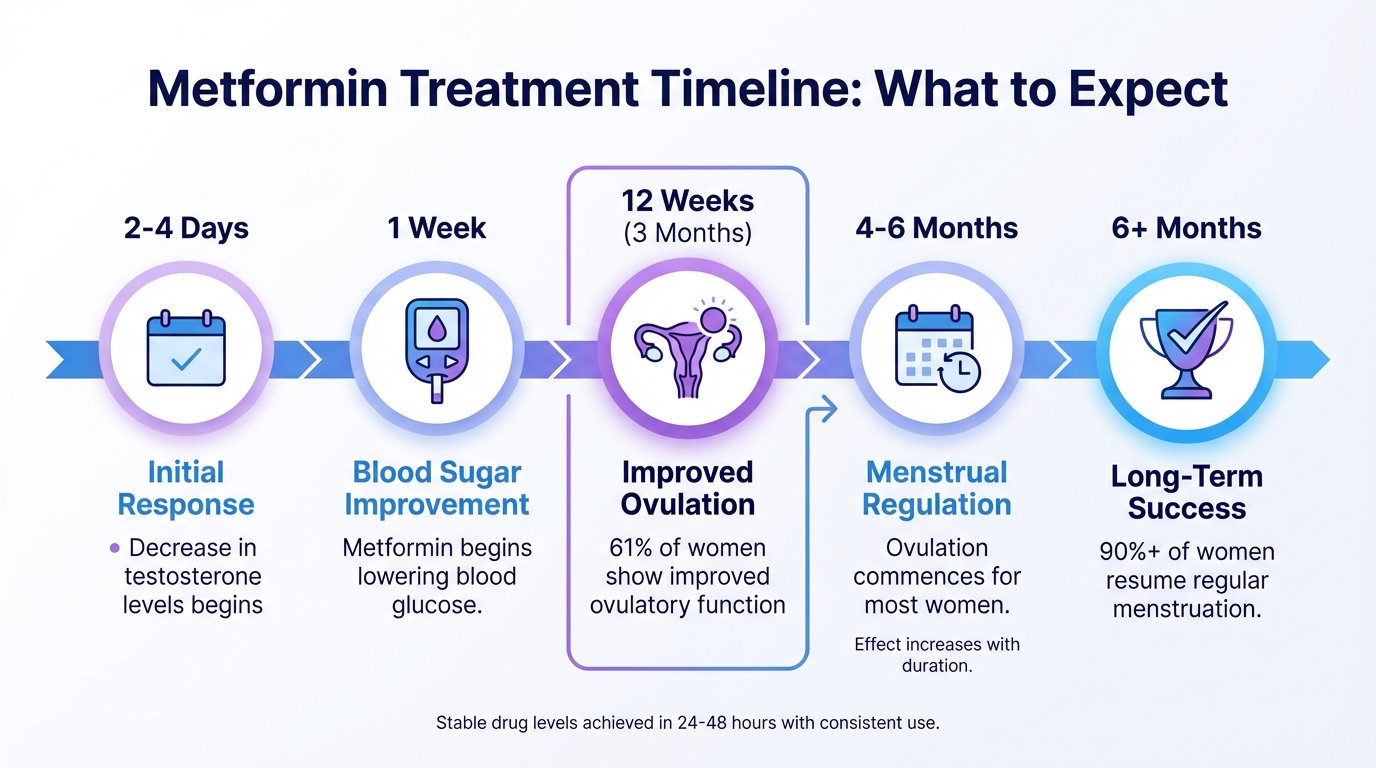
Metformin Treatment Timeline for PCOS: What to Expect from Days to Months
How Insulin Resistance Severity Affects Results
The severity of insulin resistance plays a major role in determining the effectiveness of treatment. Women with higher baseline insulin resistance often experience the most noticeable improvements when treated with the right Metformin dosage. For those with severe insulin resistance - commonly associated with a BMI between 35 and 40 - daily doses ranging from 2,550 to 3,000 mg may be necessary to achieve meaningful reductions in insulin levels.
In cases of severe metabolic dysfunction, higher dosages are often essential. As mentioned earlier, finding the right dosage is critical; for individuals with significant insulin resistance, adjusting the dose can lead to better outcomes. Your healthcare provider will determine the appropriate dosage based on your BMI and overall metabolic profile to ensure the treatment is as effective as possible.
"The reduction of insulin resistance was the greatest among subjects with the greatest baseline insulin resistance."
– Antoni J. Duleba, Division of Reproductive Endocrinology and Infertility
Long-Term Treatment Benefits
When it comes to Metformin, patience truly pays off. While it can lower testosterone levels within just 2–4 days, the broader metabolic and reproductive benefits take much longer to manifest. After 12 weeks of treatment, approximately 61% of women with PCOS show improved ovulatory function. And with consistent use over six months, studies reveal that more than 90% of women regain regular menstrual cycles.
The timeline for results depends on your treatment goals. For those aiming to regulate their menstrual cycle or enhance ovulation, noticeable improvements typically occur after 4–6 months of consistent treatment. This isn't a sign of inefficacy; rather, it reflects the time your body needs to adapt to the hormonal and metabolic changes brought about by Metformin.
"4 to 6 months of therapy are thought to be necessary for ovulation to commence. The effect appears to increase with duration of treatment."
– Anne D. Walling, M.D.
Here’s a quick overview of what to expect at different stages of treatment:
| Treatment Phase | Expected Outcome | Typical Timeline |
|---|---|---|
| Initial Days | Decrease in LH-stimulated testosterone response | 2–4 Days |
| Short-Term | Improved ovulation rates (approx. 61%) and lower testosterone levels | 12 Weeks |
| Long-Term | Resumption of regular menstruation in >90% of patients | 6+ Months |
Getting Better Metformin Results with Oana Health
Personalized PCOS Treatment Plans
Oana Health provides tailored, science-supported treatment plans for managing PCOS. Their licensed professionals analyze your health profile and personal goals to craft a treatment plan that fits your needs. Options might include Metformin ER, known for its improved tolerability, or combination packs that pair Metformin with GLP-1 medications or anti-androgens to address multiple symptoms simultaneously.
"We offer a spectrum of PCOS treatments for every unique journey." – Oana Health
For example, if you're managing insulin resistance alongside hair loss, your plan might include Metformin combined with topical Spironolactone or oral Minoxidil. This combination works from different angles to tackle both concerns effectively. Oana Health takes into account factors like dosage, BMI, lifestyle, and insulin resistance to ensure the best possible results. Their approach is designed to be both effective and accessible.
Affordable and Convenient Treatment
Oana Health makes PCOS management both affordable and easy to access. Oral Metformin ER starts at $22 per month, while combination packs such as Metformin & Spironolactone are priced at $32 monthly. For more advanced needs, options like Oral GLP-1 & Metformin are available for $199 per month. Plus, all treatments include free shipping directly to your doorstep, saving you time and eliminating pharmacy visits.
The process is simple: start by completing a quick online questionnaire, have a virtual consultation, and then receive your prescription at home. If you prefer, prescriptions can also be sent electronically to your chosen pharmacy. This level of convenience is especially helpful for women juggling PCOS treatment with work or family responsibilities.
Getting Started with Oana Health
To begin, visit the Oana Health website, fill out a brief medical questionnaire, and schedule a virtual consultation. Your healthcare provider will assess whether Metformin alone or a combination therapy is best for you, considering factors like BMI, insulin resistance, and specific symptoms.
Ongoing follow-up consultations help adjust your treatment as needed, which is crucial for achieving the best results. Patience is key - 61% of women report improved ovulation after 12 weeks of treatment. With Oana Health's personalized care and expert guidance, you'll have the support you need to stay consistent and see meaningful progress.
Conclusion: Improving Your Metformin Results
Getting the most out of Metformin for PCOS involves more than just taking the medication. The dosage plays a critical role - most clinical benefits begin at 1,000 mg per day, with the best results often seen in the 1,500 mg to 2,550 mg range. But achieving optimal outcomes requires more than just the right dose. Factors like weight management, lifestyle changes, and the severity of insulin resistance all work together to create an effective treatment plan.
Your BMI can directly impact how well Metformin works. While the medication can support weight loss, it’s far more effective when paired with a low-calorie diet rather than being used on its own. Non-obese women often experience better ovulatory outcomes, but that doesn’t mean Metformin isn’t helpful for those with higher BMIs. It just means a more holistic approach - one that includes diet and exercise - is essential.
Speaking of diet and exercise, these lifestyle adjustments can dramatically boost Metformin’s effectiveness. Studies show that combining the medication with significant lifestyle changes reduces the risk of diabetes far more effectively than medication alone.
Consistency is another key factor. It often takes 4 to 6 months of regular treatment to see meaningful improvements in menstrual cycles and ovulation. In fact, over 90% of women with PCOS reported resuming regular menstruation after at least six months of treatment. Personalized care, such as the support offered by Oana Health (https://oanahealth.com), can help you tailor your treatment plan to your specific needs and make adjustments as necessary. By bringing together these elements - proper dosage, lifestyle changes, and long-term commitment - you can set yourself up for better results with Metformin.
FAQs
How does BMI affect how well Metformin works for PCOS?
Body mass index (BMI) significantly influences how well Metformin works for managing PCOS symptoms. Women with a BMI over 25 tend to experience more noticeable improvements, particularly when their dosage is tailored to their needs. This is because higher BMI often correlates with greater insulin resistance, which may necessitate higher doses of Metformin to address issues like irregular menstrual cycles and metabolic concerns effectively.
Pairing Metformin with lifestyle adjustments - like maintaining a balanced diet and incorporating regular exercise - can amplify its benefits. This combination not only helps regulate BMI but also boosts overall treatment results for women dealing with PCOS.
What lifestyle changes can help Metformin work better for PCOS?
Making some changes to your daily routine can boost how effectively Metformin manages PCOS symptoms. Regular physical activity, especially aerobic exercises like walking, cycling, or running, can improve insulin sensitivity and help with weight management. These benefits often lead to reduced symptoms such as irregular periods and acne.
A nutritious diet also plays a key role. Prioritize whole, nutrient-rich foods like lean proteins, vegetables, whole grains, and healthy fats, while cutting back on processed foods and added sugars. This approach can help stabilize blood sugar levels and support hormonal balance.
When combined with Metformin, these lifestyle adjustments can deliver better outcomes by tackling the underlying issues of PCOS. Even small, consistent changes in your habits can have a meaningful impact on your health and how well your treatment works.
Why is it important to take Metformin consistently for managing PCOS?
Metformin plays an essential role in managing PCOS when taken consistently over time. It helps address key metabolic and hormonal challenges, such as reducing insulin resistance, lowering high testosterone levels, and aiding with weight management - common hurdles faced by those with PCOS.
By stabilizing blood sugar levels, Metformin can also lower the risk of developing complications like type 2 diabetes, contributing to better overall metabolic health. Staying on your prescribed regimen allows your body the necessary time to adapt and work toward achieving optimal results.