
Finasteride for Female Hair Loss: Benefits and Risks
Finasteride, a medication commonly used for male hair loss, is increasingly being prescribed off-label for women experiencing female pattern hair loss (FPHL). It works by reducing dihydrotestosterone (DHT), a hormone linked to hair follicle shrinkage. While studies show it can improve hair density and thickness, its use comes with risks, especially for women of childbearing age due to the potential for severe birth defects.
Key Points:
- How It Works: Finasteride blocks DHT production, helping hair follicles return to the growth phase.
- Best Candidates: Postmenopausal women or premenopausal women with high androgen levels (with strict contraception).
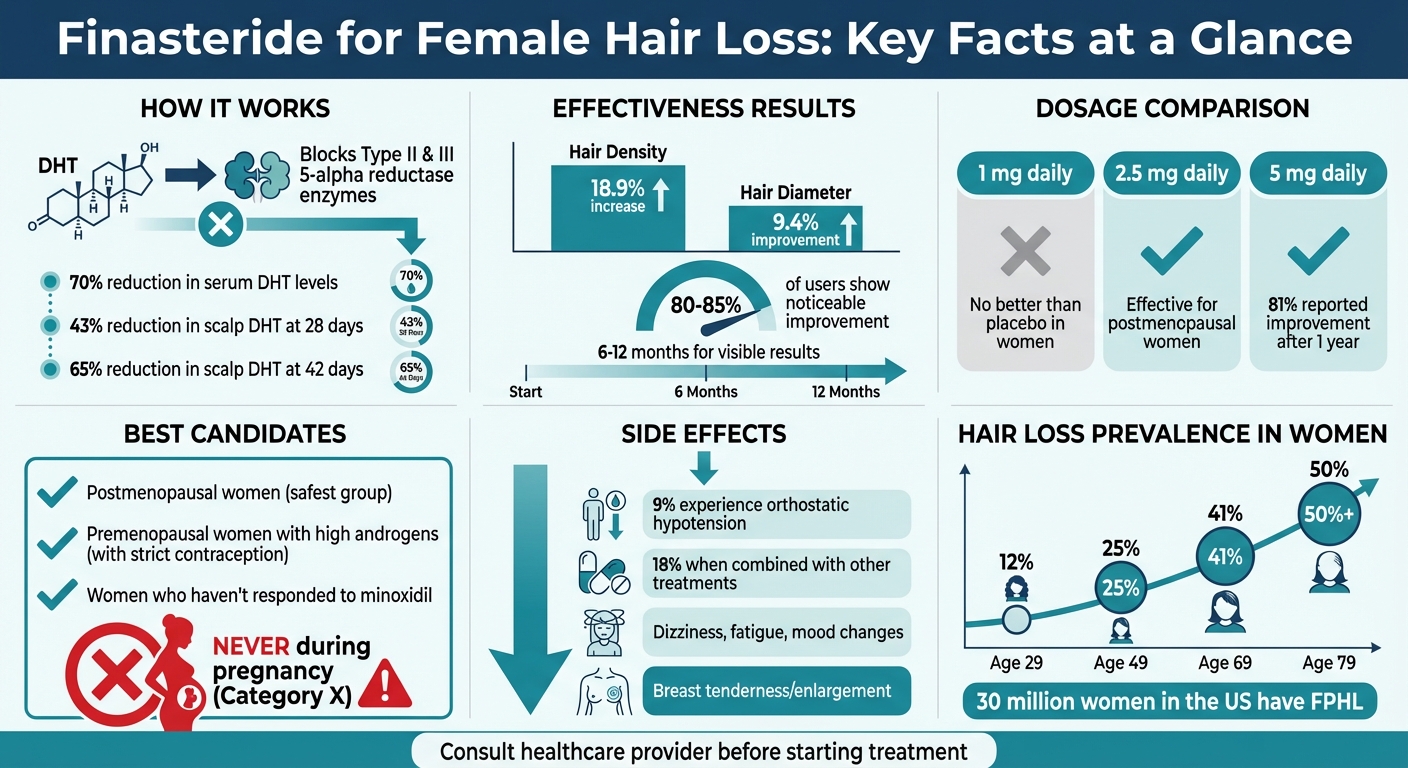
- Effectiveness: Studies report up to an 18.9% increase in hair density and noticeable improvements in over 80% of users after 6-12 months.
- Risks: Side effects include dizziness, fatigue, mood changes, and serious risks during pregnancy. Stopping use reverses progress.
- Alternatives: Oral minoxidil, spironolactone, and low-level laser therapy may be other options.
Finasteride can be effective but requires careful consideration and medical supervision to weigh its benefits against its risks.
Finasteride for Female Hair Loss: Effectiveness, Dosage, and Key Statistics
What Causes Hair Loss in Women
Common Causes of Female Hair Thinning
Hair loss in women is often linked to hormonal shifts and genetics. A condition called FPHL (androgenetic alopecia) impacts about 30 million women in the United States. Its occurrence becomes more common with age: around 12% of women notice hair thinning by age 29, 25% by age 49, 41% by age 69, and more than 50% by age 79.
Hormonal disorders like PCOS (polycystic ovary syndrome) can lead to elevated androgen levels, causing scalp hair to thin while sometimes increasing coarser facial hair. Similarly, menopause plays a role, as declining estrogen and progesterone levels - compared to androgens - shrink hair follicles, resulting in finer strands. Other contributors include thyroid issues, iron deficiency (especially when ferritin levels drop below 40 μg/L), and hormonal changes during pregnancy, all of which can trigger excessive hair shedding.
It's normal to shed 50 to 100 hairs daily, but losing more than 125 hairs per day is considered clinical hair loss. On a healthy scalp, the ratio of growing (anagen) hairs to resting (telogen) hairs is about 12:1. However, in androgenetic alopecia, this ratio can drop to 5:1. These factors set the groundwork for understanding how DHT impacts hair follicles.
How DHT Affects Hair Follicles
DHT (dihydrotestosterone) plays a key role in speeding up hair follicle miniaturization. This powerful androgen binds to androgen receptors with twice the strength of testosterone. It’s formed from testosterone by the enzyme 5-alpha-reductase Type 2, which is found in abundance in hair follicles.
When DHT binds to these receptors, it shortens the hair’s growth phase, gradually converting thick terminal hairs into fine, short vellus hairs that resemble peach fuzz. In women with FPHL, the ratio of terminal hairs to vellus hairs drops below 4:1, compared to the usual ratio of over 8:1. Genetics also play a key role - some women have hair follicles that are unusually sensitive to normal androgen levels. Additionally, areas like the crown may have a higher density of androgen receptors and elevated local levels of 5-alpha-reductase, making them more prone to thinning. These factors explain why some women experience severe hair loss even when their circulating hormone levels are within the normal range.
How Finasteride Works in Women
The Science Behind Finasteride
Finasteride works by blocking the conversion of testosterone into DHT, a hormone closely linked to hair loss. It achieves this by targeting and inhibiting the Type II and III 5-alpha reductase enzymes, which are abundant in hair follicles.
"Finasteride is a competitive inhibitor of the type II and III isoenzymes of 5-alpha reductase, inhibiting testosterone conversion to dihydrotestosterone (DHT)." – StatPearls
When taken orally, finasteride can lower serum DHT levels by about 70%. In studies focused on women, a daily dose of 5 mg reduced scalp DHT levels by 43% within 28 days and by 65% within 42 days. By decreasing DHT, finasteride may also enhance insulin-like growth factor-1 levels in the dermal papillae, which can encourage hair regrowth and help revive dormant hair follicles. However, if the medication is stopped, DHT levels typically return to their original levels within about two weeks.
This specific mechanism explains its off-label use in women.
Off-Label Prescribing for Women
Although finasteride is FDA-approved for men at a 1 mg daily dose, its use in women remains off-label. However, it is often prescribed for women to address certain hormonal imbalances. Women with elevated androgen levels or conditions like PCOS may be prescribed doses between 1.25 mg and 5 mg daily. For postmenopausal women, 2.5 mg is a common dose, while 5 mg is typically used for conditions related to hyperandrogenism.
Because finasteride is contraindicated during pregnancy, strict precautions are necessary. Women of childbearing age must use reliable contraception while on the medication. Pregnant women should avoid handling crushed or broken tablets, as the active ingredient can be absorbed through the skin. Additionally, patients must wait six months after their last dose before donating blood to avoid exposing a pregnant transfusion recipient to the drug.
In April 2025, the FDA issued a warning about compounded topical finasteride products, citing concerns over inconsistent quality and reports of severe side effects.
Benefits of Finasteride for Women
Stopping Hair Loss and Promoting Regrowth
Finasteride works by blocking DHT, the hormone responsible for shrinking hair follicles, allowing them to return to their growth phase. This reduction in DHT helps follicles stuck in dormant or inactive phases to re-enter active growth, effectively halting hair loss and encouraging regrowth.
Research backs up these effects. One study reported an 18.9% increase in hair density and a 9.4% improvement in hair diameter, with over 80% of participants showing noticeable progress. Another study revealed that 85% of postmenopausal women experienced moderate to major improvements after using finasteride for 6 to 18 months. A separate retrospective analysis of 120 women found that 81.7% of participants taking 1.25 mg daily saw thicker hair over three years.
It’s important to note that consistent use for 6–12 months is necessary to see results, and stopping treatment can reverse progress.
Beyond its general benefits, finasteride shows particular promise for women dealing with high androgen levels.
Better Results for High-Androgen Conditions
Women with hyperandrogenism - a condition marked by excessive androgen activity - often see enhanced results with finasteride. By specifically targeting DHT, finasteride addresses the root cause of hair loss in these cases, making it especially effective.
Postmenopausal women, who experience a shift in hormone balance as estrogen levels drop and androgens become more dominant, also benefit significantly. Studies show that 80% to 85% of postmenopausal women taking 2.5 mg to 5 mg of finasteride daily report moderate to significant hair improvement. The Endocrine Society even recommends these doses for treating hirsutism in premenopausal women, often in combination with oral contraceptives.
Interestingly, research highlights that doses between 2.5 mg and 5 mg are effective, while a 1 mg dose shows no meaningful difference from a placebo in women.
Risks and Side Effects
Typical Side Effects
While finasteride can be effective, it’s important to weigh its potential risks. Some common physical side effects include dizziness, headaches, fatigue, and cold sweats. Around 9% of users report experiencing orthostatic hypotension - a sudden drop in blood pressure when standing up - which increases to 18% when combined with other treatments.
Breast-related changes, such as tenderness, enlargement, or even nipple discharge, have also been noted. On the mental health side, some individuals may experience neuropsychiatric symptoms like depression, anxiety, or brain fog. In severe cases, these effects have included suicidal thoughts. Unfortunately, these mood-related symptoms can sometimes persist even after stopping the medication.
Prolonged use of finasteride has also been linked to conditions such as insulin resistance, non-alcoholic fatty liver disease (NAFLD), and dry eye disease.
Pregnancy Risks and Precautions
For women of childbearing age, finasteride carries serious risks. Classified as Pregnancy Category X, it is strictly contraindicated for women who are pregnant or may become pregnant. The drug interferes with the conversion of testosterone to dihydrotestosterone (DHT), a hormone vital for normal male fetal genital development. Exposure during pregnancy can result in severe birth defects, including hypospadias.
"Women who are pregnant or may become pregnant should not use finasteride or handle the crushed or broken tablets. Finasteride can cause birth defects in male babies." - Mayo Clinic
If accidental contact with crushed or broken tablets occurs, it’s essential to wash the area immediately with soap and water.
sbb-itb-6dba428
Who Should Use Finasteride
Best Candidates for Treatment
Postmenopausal women are among the most suitable candidates for finasteride. Since pregnancy is not a concern, they can use the medication safely. Research highlights its effectiveness, especially at a dosage of 5 mg per day. In one study involving 87 women taking 5 mg daily, 81% reported noticeable hair improvement after a year.
Premenopausal women with elevated androgen levels may also benefit from finasteride's anti-androgen properties. However, they must use reliable contraception throughout the treatment to avoid the risk of severe birth defects.
For individuals who have not responded to topical minoxidil, finasteride offers a promising alternative. Unlike minoxidil, which improves blood flow to the scalp, finasteride works by reducing DHT production, making it effective in cases where other treatments fall short.
"Patient-specific factors, including age, signs of hyperandrogenism, or need for contraception may help determine which antiandrogen therapy is most appropriate." - Journal of the American Academy of Dermatology
Consulting a healthcare professional is essential before starting finasteride. A medical evaluation can help determine hormonal status, rule out other causes of hair loss, and, for premenopausal women, confirm the use of effective birth control. A personalized approach ensures the treatment aligns with your specific needs.
For those who may not be candidates for finasteride or do not respond to it, other effective hair loss treatments are available.
Other Treatment Options
If finasteride isn't suitable, there are several alternatives to address female hair loss. These include:
- Oral minoxidil: Enhances blood flow to the scalp and extends the hair growth phase.
- Spironolactone: Blocks androgen receptors, particularly useful for conditions like PCOS or hormonal imbalances.
- Dutasteride: A more potent DHT inhibitor that targets both Type I and Type II enzymes.
- Low-level laser therapy (LLLT): A non-invasive treatment using red light to stimulate hair growth.
Additionally, companies like Oana Health offer personalized, prescription-based hair loss solutions. Their licensed medical professionals design treatments tailored to your needs, with medications conveniently delivered to your doorstep and free shipping included.
The choice of treatment depends on factors like your hormonal profile, medical history, and the specific pattern of hair loss. Partnering with a healthcare provider ensures you receive recommendations that are tailored to your situation and goals.
Getting Treatment Through Oana Health
Personalized Hair Loss Solutions
Tackling hair loss often begins with addressing hormonal imbalances, and that's where Oana Health steps in. This telehealth platform connects women with licensed professionals who specialize in hormonal hair loss. The process kicks off with a quick online consultation, where you share your medical history and details about your hair loss. From there, Oana Health’s physicians review your information and create a treatment plan tailored specifically to your needs.
Although finasteride isn’t available through Oana Health, the platform offers other scientifically supported options. These include oral minoxidil for $25 per month and topical spironolactone for $43 per month. Minoxidil works by increasing blood flow to the scalp, while spironolactone helps block androgen receptors that contribute to hair thinning.
Oana Health takes a holistic approach, recognizing that hair loss is often linked to underlying issues like PCOS or androgen imbalances. Their medical experts carefully assess your case to recommend the prescription treatment best suited to your hormonal profile and specific hair loss pattern.
Convenient and Budget-Friendly Care
Oana Health goes beyond personalized care by making the entire process simple and cost-effective. Forget about in-person visits, juggling appointments, or pharmacy runs - everything happens online. Once your prescription is approved, your medications are shipped directly to your doorstep with free delivery.
The pricing is straightforward and accessible. In addition to hair loss treatments, Oana Health provides solutions for other hormonal concerns. For example, spironolactone for managing unwanted hair growth starts at $14 per month, while treatments for insulin resistance and weight management range from $22 to $199 per month. All medications come from FDA-regulated pharmacies, ensuring safety and quality, while telemedicine helps keep costs manageable.
Treatment of Hair Loss in Women: Finasteride
Conclusion
Finasteride shows promise for women dealing with hair loss, especially those with elevated androgen levels or conditions like PCOS. By blocking DHT, the medication can lead to a 19% increase in hair density and a 9% boost in hair thickness after 12 months at higher doses. However, it’s important to weigh the risks. Finasteride is strictly off-limits during pregnancy due to serious risks to male fetuses, and its benefits only last with consistent use.
Since the FDA has not approved finasteride for women, consulting a healthcare professional is essential. Dosage plays a key role - 1 mg often falls short for women, whereas 2.5–5 mg daily tends to be more effective. Patience is also required, as visible results typically take three to six months. Stopping the medication usually reverses progress within a year. For tailored advice, Oana Health offers access to licensed professionals who can guide you toward the right solution.
Oana Health also provides alternatives like oral minoxidil and topical spironolactone, which address similar hormonal causes of hair loss. Their telehealth services make it easy to receive personalized treatment plans without needing an in-person visit.
Ultimately, the best treatment depends on your hormonal profile, medical history, and future pregnancy plans. A consultation with an expert can help you determine the most suitable option for your needs.
FAQs
Is it safe for women planning to become pregnant to use finasteride?
No, finasteride is not safe for women who are planning to become pregnant. This medication poses a risk of causing birth defects in male fetuses. Moreover, pregnant women - or those who might become pregnant - should avoid handling crushed or broken finasteride tablets to minimize the chance of accidental exposure. If you're exploring hair loss treatments and pregnancy is a possibility, it's essential to discuss safer options with a healthcare professional.
What side effects can women experience when taking finasteride?
Women who take finasteride might encounter mild side effects such as a lower libido, dry skin, mild acne, irregular menstrual cycles, headaches, dizziness, or even an increase in body hair. Although these effects are not very common, it’s wise to stay alert to any changes you notice.
More serious side effects are rare but could include breast lumps, pain, swelling, unusual discharge, or signs of low mood or depression. If any of these occur, it’s essential to reach out to a healthcare provider right away. Always consult a licensed medical professional to fully understand the potential risks before beginning treatment.
How does finasteride stack up against other treatments for female hair loss?
Finasteride works by lowering levels of DHT, a hormone closely tied to hair loss. While it’s FDA-approved for treating male pattern baldness, its use in women is considered off-label, with limited evidence supporting its effectiveness. Additionally, it’s not suitable for women who are pregnant or could become pregnant, as it carries potential risks.
When compared to FDA-approved options like topical minoxidil, which is specifically formulated for female hair loss, finasteride presents a greater likelihood of side effects, such as hormonal imbalances and mood changes. For women, topical treatments like minoxidil or antiandrogens are often the go-to choice due to their established safety and reduced risk of systemic side effects. Finasteride might be an option for some women, but it should only be used under strict medical supervision, particularly for those of childbearing age.