
How Genetic Testing Improves PCOS Hormone Treatments
PCOS affects up to 20% of women and is linked to hormonal imbalances, insulin resistance, and elevated risks for type 2 diabetes. Current treatments often focus on symptoms rather than root causes, leaving many women with ineffective options.
Genetic testing is changing this by pinpointing the genes driving PCOS symptoms, such as insulin resistance and androgen production. Using advanced techniques like Next-Generation Sequencing (NGS), doctors can now tailor therapies to individual genetic profiles, improving outcomes and reducing side effects.
Key takeaways:
- PCOS is highly genetic: 70–80% of cases are influenced by genetic variants.
- Insulin resistance affects 70% of women with PCOS, yet standard treatments like birth control may worsen symptoms for these patients.
- Genetic markers like DENND1A, IRS-1, and AMH guide specific therapies, such as anti-androgens or insulin sensitizers, for better results.
- Telehealth platforms, like Oana Health, combine genetic insights with personalized care, making advanced treatments accessible and affordable.
This personalized approach addresses the unique challenges of PCOS, offering hope for more effective and precise care.
Genetic Research and PCOS with Dr. Urbanek, PhD
Problems with Current PCOS Hormone Treatments
Current treatments for PCOS primarily focus on managing symptoms, often overlooking the underlying metabolic causes. While medications like metformin help regulate blood sugar levels, they fail to address the fact that genetic factors drive 70% to 80% of PCOS cases. Without incorporating genetic insights, treatment remains a one-size-fits-all approach, which falls short in tackling key issues like insulin resistance and androgen imbalances.
Insulin Resistance and Its Effects
Insulin resistance affects 70% of women with PCOS, regardless of their weight. This condition triggers a harmful cycle: elevated insulin levels push the ovaries to produce more androgens, which then lead to abdominal fat accumulation and worsen insulin resistance even further. Unfortunately, many standard treatments fail to break this cycle due to their lack of precision. For instance, oral contraceptives, a common prescription, can actually reduce insulin sensitivity in patients who are already insulin resistant. Dr. Kate Dudek explains:
Oral contraceptives are not suitable for insulin-resistant patients, as many forms impair insulin sensitivity.
Considering that up to 85% of patients with classic PCOS exhibit hyperinsulinemia, a significant portion of women may find this widely used treatment unsuitable. Additionally, the failure to adequately address androgen imbalances further complicates symptom management.
Androgen Imbalance and Related Symptoms
Excess androgens are responsible for many of the noticeable symptoms of PCOS, such as unwanted facial hair, severe acne, thinning hair on the scalp, and weight gain. While traditional therapies often target testosterone, many women with PCOS also have elevated levels of 11-oxygenated androgens. These androgens are highly potent and strongly activate androgen receptors, making them significant predictors of metabolic risk. This might explain why some women continue to struggle with symptoms even when their testosterone levels appear to be under control.
Why Patients Respond Differently to Treatment
PCOS is a complex condition with at least four distinct subtypes, each presenting unique metabolic and reproductive patterns. Genetic variations play a major role in these differences. For example, about 20% of PCOS risk variants disrupt enhancer function, leading to variable responses to the same medication. When these regulatory elements malfunction, standard hormone therapies often fail to deliver the desired results. As noted by BMJ Medicine:
Unlicensed treatments have limited efficacy, mostly because drug development has been hampered by an incomplete understanding of the underlying pathophysiological processes.
This variability highlights the importance of genetic testing to create more personalized and effective treatment plans.
How Genetic Testing Improves PCOS Treatment
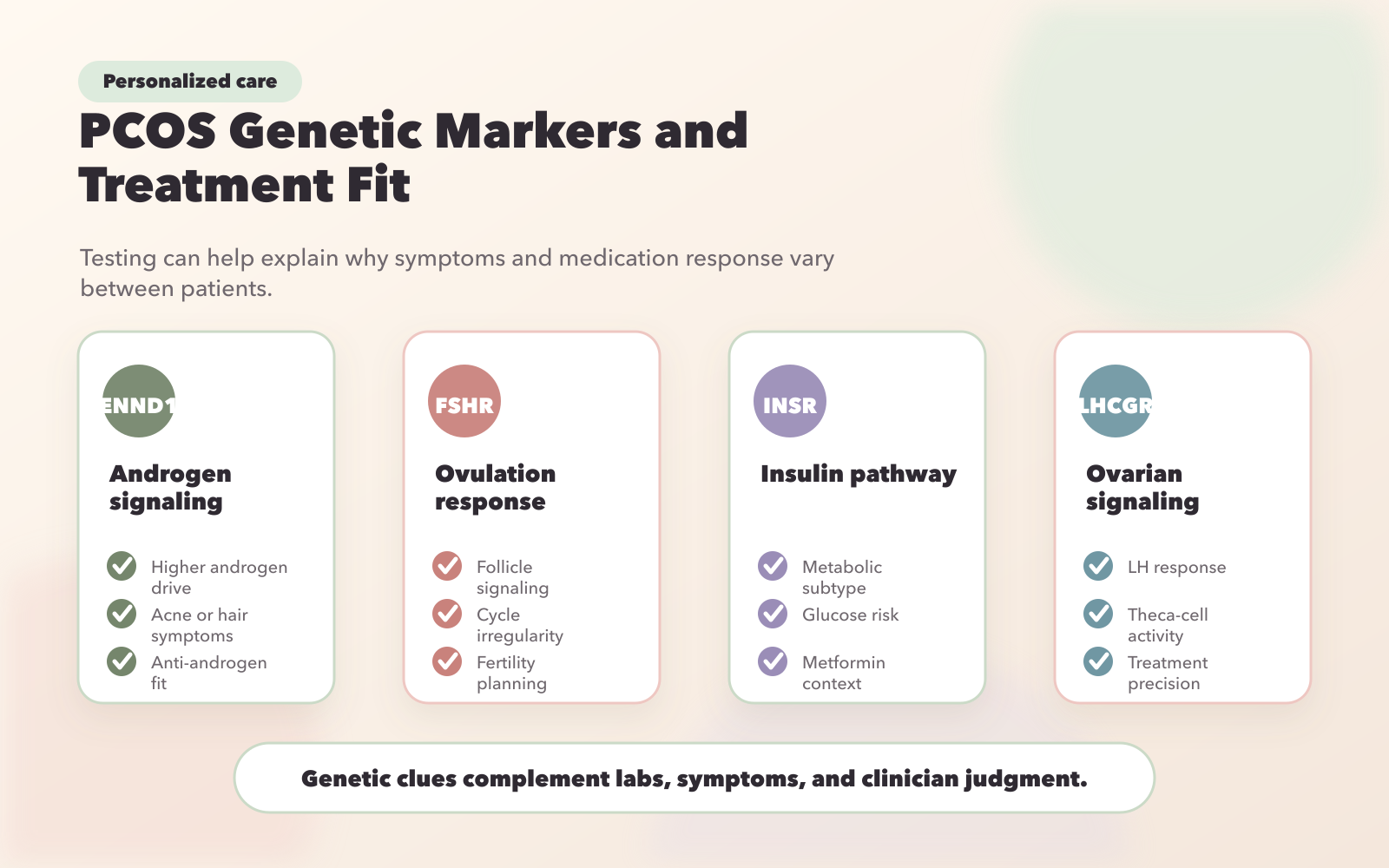
Key Genetic Markers in PCOS and Their Treatment Implications
Genetic testing provides a clear window into the biological pathways disrupted in patients with PCOS. Techniques like Next-Generation Sequencing (NGS) and Whole Genome Sequencing (WGS) analyze a vast array of genetic variants, helping to identify which genes are driving specific symptoms. This level of precision allows doctors to pinpoint the most suitable medications for each individual. In essence, genetic insights pave the way for identifying crucial genetic markers that shape treatment strategies.
Identifying Key Genetic Markers
Genetic testing shines a light on the markers that explain the variation in PCOS symptoms. For example, genes such as DENND1A and THADA are closely tied to excessive androgen production, while variants in IRS-1 and INSR highlight the severity of insulin resistance. In one study, researchers examined 26,550 genetic variants in patients with PCOS and identified 262 specific variants from 131 genes linked to the condition. Additionally, rare variants in the AMH gene were found to significantly impair hormone signaling, which normally helps control androgen production - 94% of these rare variants had a measurable impact.
| Gene Marker | What It Affects | Impact on Treatment |
|---|---|---|
| DENND1A | Androgen production | Suggests the use of targeted anti-androgen therapy |
| IRS-1 / INSR | Insulin signaling | Guides the use of insulin sensitizers like metformin |
| FSHB / FSHR | Follicle development | Influences hormone regulation and testosterone levels |
| THADA | Testosterone regulation | Linked to elevated androgen levels |
| AMH | Androgen biosynthesis | Rare variants reduce signaling, possibly increasing androgen production |
Customizing Hormone Therapies with Genetic Data
With genetic information in hand, doctors can fine-tune treatments to address specific dysfunctional pathways. For instance, patients with mutations in the MAPK14 gene, which is associated with elevated testosterone levels, may require more aggressive anti-androgen therapies. Similarly, individuals with RUNX2 mutations, tied to higher insulin resistance scores, are likely to benefit more from insulin sensitizers than hormonal contraceptives.
Yunus Arikan, from the Department of Medical Genetics at Yozgat Bozok University, noted, "Genetic profiling could potentially aid in tailoring treatments, particularly in cases where insulin resistance or hyperandrogenism predominates."
This personalized approach also helps distinguish between lean and obese PCOS phenotypes. Lean patients often carry mutations in genes like CYP21A2, while obese patients tend to show variants in genes such as KISS1, which are linked to energy metabolism. Because of these differences, lean PCOS patients may benefit more from folate supplementation and cardiovascular monitoring, whereas obese patients typically require intensive insulin-sensitizing therapies.
Improved Outcomes with Fewer Side Effects
By targeting genetic markers and tailoring therapies, genetic testing leads to better results and reduces the risk of side effects. It removes much of the trial-and-error involved in treatment, ensuring patients receive interventions that are more likely to work for their specific genetic profile. For example, about 3% of women of European ancestry with PCOS carry AMH variants that impair hormone signaling. This explains why standard androgen-blocking medications often fail for these individuals. With treatments matched to genetic profiles, patients frequently experience quicker symptom relief, fewer medication adjustments, and a reduced risk of complications like Type 2 diabetes and heart disease.
sbb-itb-6dba428
Personalized PCOS Treatments Through Telehealth
Science-Based and Personalized Treatment Plans
Telehealth is changing how PCOS is treated by combining genetic insights with personalized care. Instead of relying on a one-size-fits-all approach, platforms like Oana Health use genetic data to create individualized treatment plans. By analyzing genetic markers linked to pathways like steroidogenesis and insulin signaling, they identify which medications are likely to work best for each person. For example, patients with a RUNX2 mutation might be prescribed Metformin, while those with a MAPK14 mutation could benefit from Spironolactone.
Patients meet virtually with board-certified OB-GYNs and endocrinologists, who review their medical histories and metabolic tests. This eliminates the long waits often associated with traditional clinics. Interestingly, about 75% of patients using specialized telehealth for PCOS report feeling more in control of their health within just a few weeks. This approach not only personalizes care but also makes it more accessible.
Easy Access and Affordable Pricing
Telehealth services are making PCOS care easier to access and more affordable than ever. In the U.S., PCOS management costs around $4 billion annually, but Oana Health helps reduce this burden with transparent self-pay options and broad insurance acceptance. Medications are shipped directly to patients’ homes at no additional cost, removing barriers like transportation or taking time off work. On top of that, partnerships with national laboratories offer discounted lab tests, further cutting down diagnostic expenses. This patient-first approach simplifies the process and keeps costs manageable.
Sample Treatment Plans and Pricing
To show how this works in practice, Oana Health provides examples of treatment plans tailored to specific PCOS symptoms. Here’s a look at some options along with their monthly pricing:
| Medication | Monthly Price | Targeted Symptoms |
|---|---|---|
| Oral Metformin ER | $22 | Insulin resistance and blood sugar regulation |
| Spironolactone | $14 | Hirsutism (excess hair) and acne |
| Oral GLP-1 & Metformin Pack | $199 | Weight management and insulin sensitization |
| Metformin & Spironolactone Pack | $32 | Combined management of insulin resistance and androgen excess |
These medications are prescribed by licensed professionals and dispensed through FDA-regulated pharmacies, ensuring they meet safety standards. For more complex cases, such as severe insulin resistance or hyperandrogenism, combination therapies like the Oral GLP-1 & Metformin Pack ($199 per month) offer a well-rounded solution by addressing multiple pathways at once. This makes managing PCOS both effective and convenient.
Conclusion: What's Next for Genetic Testing in PCOS Care
Genetic testing is changing the way PCOS is treated, moving away from generic solutions toward more personalized care. Instead of relying on a one-size-fits-all approach, doctors now use genetic markers to customize hormone therapies. This approach tackles issues like insulin resistance and androgen imbalance directly, leading to better results and fewer side effects.
"To reduce the burden of PCOS, it is inevitably important to diagnose at early ages as well as intervene through personalized medicine." – Nature, Scientific Reports
Looking ahead, early screening for individuals with a family history of PCOS is likely to become a standard practice. Early detection means timely interventions, such as lifestyle changes or hormonal treatments, which could help prevent more serious complications like chronic anovulation or type 2 diabetes. Meanwhile, research into pathways like MAPK, Wnt, and TGFβ signaling is opening doors to treatments that target specific molecular mechanisms rather than depending solely on traditional options like birth control. This shift toward targeted therapies is setting the stage for new care models, many of which are being delivered through telehealth.
The combination of genetic testing and telehealth is making personalized PCOS care more accessible than ever. Platforms like Oana Health are bridging the gap by offering virtual consultations paired with genetic insights, providing patients with tailored treatment plans without the long waits or high costs. With medications starting at $14 per month and a 98% satisfaction rate, these services are bringing advanced care options directly to patients. As genetic testing continues to evolve, even more women will benefit from treatments designed to meet their specific hormonal needs.
FAQs
How can genetic testing enhance hormone treatments for PCOS?
Genetic testing plays a key role in identifying specific genetic variations associated with PCOS, including changes in genes tied to hormone regulation and metabolic functions. By uncovering these genetic factors, healthcare providers can develop treatment plans designed specifically for you.
This targeted approach enables a more precise diagnosis and helps in choosing treatments that address core issues like insulin resistance, androgen imbalances, and other related symptoms. Ultimately, genetic testing can enhance the success of hormone therapies and lead to better long-term management of PCOS.
How can genetic testing help personalize PCOS hormone treatments?
Genetic testing can pinpoint markers associated with PCOS, such as THADA, DENND1A, and TOX3, which play a role in regulating androgen levels and insulin sensitivity. This information helps healthcare providers develop treatment plans tailored to your genetic makeup.
For instance, individuals with DENND1A or THADA variations often exhibit elevated androgen levels and may respond well to anti-androgen medications or hormonal contraceptives. On the other hand, markers like IRX3-FTO or MAPK14 are linked to higher insulin resistance, making treatments like metformin particularly effective. Additionally, certain AMH mutations can influence ovarian response, offering valuable guidance for ovulation induction therapies.
At Oana Health, clinicians integrate this genetic data to design personalized PCOS treatment plans that address both hormonal imbalances and metabolic challenges. To make things easier, medications are shipped directly to your doorstep at no extra cost, combining convenience with care tailored just for you.
How does genetic testing improve PCOS treatment through telehealth?
Genetic testing plays a crucial role in personalizing PCOS treatments. By pinpointing factors like insulin resistance, androgen levels, or inflammation, it allows for tailored treatment plans designed to address each individual's unique challenges. This makes the care more precise and effective.
Telehealth platforms simplify this entire process. They provide virtual consultations, send genetic testing kits straight to your door, and discuss results during online visits. This convenience cuts down on the need for multiple in-person appointments, saving both time and money while making care more accessible.
Additionally, telehealth services often include prescription treatments that are delivered directly to your home - at no extra cost for shipping. This streamlined approach ensures patients receive high-quality, customized care for managing PCOS without the hassle of traditional healthcare visits.