
Gut Health Tips for Hormonal Imbalance
If you're dealing with issues like irregular periods, weight gain, acne, or facial hair, your gut health might be a bigger factor than you think. The bacteria in your gut help regulate hormones like estrogen and insulin, and when they’re out of balance, it can worsen conditions like PCOS and hirsutism. Here's how to support your gut for better hormone health:
- Increase fiber intake: Foods like oats, beans, and vegetables help regulate estrogen and improve insulin sensitivity.
- Add fermented foods: Yogurt, kimchi, and sauerkraut introduce good bacteria to your gut, helping balance hormones.
- Eat prebiotic foods: Garlic, onions, and bananas feed healthy gut bacteria, reducing inflammation.
- Balance your meals: Combine protein, healthy fats, and complex carbs to stabilize blood sugar and reduce hormonal spikes.
- Stay hydrated: Drinking enough water aids digestion and hormone clearance.
- Consider probiotics: Supplements with strains like Lactobacillus and Bifidobacterium can improve gut and hormone health.
- Use targeted nutrients: Magnesium, myo-inositol, vitamin D, and omega-3s help with insulin sensitivity and hormone regulation.
Making these changes can support your overall health and complement treatments for PCOS or hirsutism. For persistent symptoms, consulting a healthcare provider is essential. Services like Oana Health offer personalized care for hormonal issues.
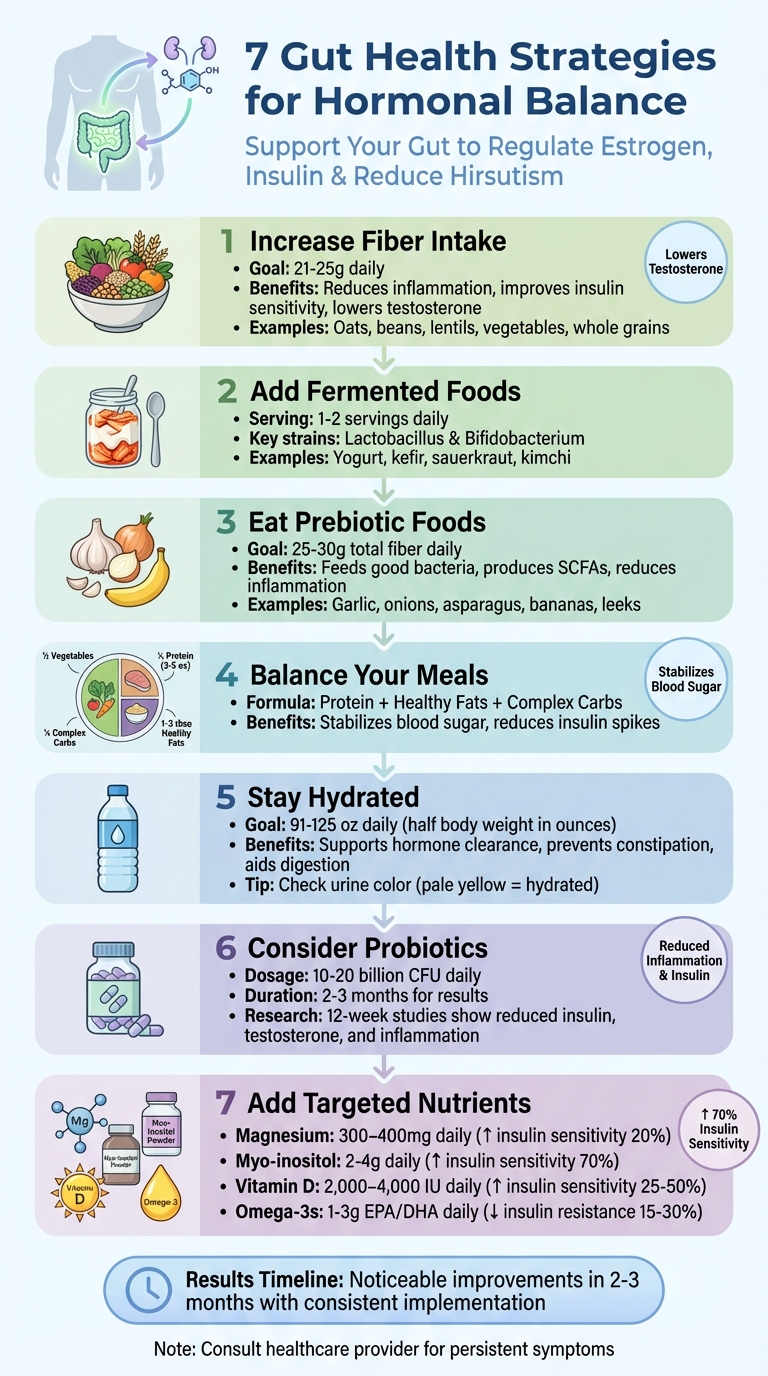
7 Gut Health Strategies to Balance Hormones and Reduce Hirsutism
The Hidden Connection Between Your Gut & Your Hormones ft. Dr. Megan Rossi | SHE MD
How Gut Health Affects Female Hormones and Hirsutism
The bacteria in your gut do more than just digest food - they play a major role in regulating sex hormones. One key group of gut microbes, called the estrobolome, produces enzymes like beta-glucuronidase. These enzymes influence how estrogen is metabolized. After your liver deactivates estrogen, it sends it to your intestines, where the estrobolome decides whether that estrogen gets eliminated or reabsorbed into the body.
When the gut's microbial balance is disrupted (a condition called dysbiosis), it can lead to increased estrobolome activity. Elevated beta-glucuronidase levels can result in more estrogen being reabsorbed, which may contribute to symptoms like heavy periods, bloating, or weight changes. Dysbiosis can also weaken the gut lining - a condition often referred to as "leaky gut." This allows inflammatory compounds to enter the bloodstream, interfering with insulin signaling. This double whammy not only impacts estrogen metabolism but also disrupts insulin function, which can spiral into further hormonal imbalances. For instance, the body may start producing more insulin, which, in turn, can stimulate excess androgen (testosterone) production - a key factor behind hirsutism and symptoms of polycystic ovary syndrome (PCOS).
The link between insulin resistance and androgen levels is central to understanding hirsutism. Research shows that women with PCOS tend to have less bacterial diversity in their gut and lower levels of beneficial microbes like Lactobacillus and Bifidobacterium. This imbalance is associated with higher testosterone levels. On the other hand, when dietary fiber is fermented into short-chain fatty acids (SCFAs) by gut bacteria, it helps reduce inflammation and improve insulin sensitivity, which supports healthier androgen levels. Studies also point to probiotics as a promising tool - they can help balance hormones and lower inflammation in women with PCOS.
These insights highlight how targeting gut health through diet and supplements can help restore hormonal balance and reduce hirsutism. The intricate relationship between the gut, hormones, and inflammation underscores why gut health is so crucial in managing hormonal imbalances.
1. Eat More Fiber to Support Hormone Metabolism
Gut health plays a key role in balancing hormones, and one of the simplest ways to support it is by eating more fiber. Fiber feeds gut bacteria, helping them produce short-chain fatty acids (SCFAs). These SCFAs can help reduce inflammation, strengthen the gut lining, and improve how your body responds to insulin. Since insulin resistance is a major driver of excess androgen production in PCOS, a diet rich in fiber can help lower testosterone levels and reduce symptoms like hirsutism.
There are two main types of fiber, and both are important. Soluble fiber - found in oats, beans, lentils, apples, and citrus fruits - slows down how your body absorbs glucose. Insoluble fiber, from whole grains, vegetables, and wheat bran, helps with hormone elimination. Together, they support the gut bacteria that regulate the estrobolome, which is responsible for estrogen metabolism.
Making small, practical changes can help you reach the recommended 21–25 grams of fiber per day. For example:
- Start your day with oatmeal topped with berries and ground flaxseed instead of sugary cereal.
- Swap white rice for brown rice or quinoa.
- Fill half your plate with nonstarchy vegetables like broccoli, Brussels sprouts, kale, or carrots at lunch and dinner.
- Add black beans, chickpeas, or lentils to soups, salads, or tacos.
- Snack on an apple with peanut butter or carrots with hummus.
If you're new to eating more fiber, increase your intake gradually over a week or two and drink plenty of water to avoid discomfort. Spreading fiber-rich foods throughout the day, rather than eating them all at once, can make it easier for your digestive system to adjust. Keep in mind that noticeable changes - like improved cycle regularity or reduced hirsutism - may take a few months as your body improves insulin sensitivity and lowers androgen levels.
If you experience persistent bloating or pain, it’s a good idea to consult a healthcare professional. Clinics like Oana Health specialize in hormone-focused care and can help customize a fiber plan to address insulin resistance and androgen-related issues.
2. Include Fermented Foods for Natural Probiotics
Fermented foods are a fantastic way to introduce live, beneficial bacteria into your gut. Options like yogurt, kefir, sauerkraut, and kimchi provide strains such as Lactobacillus and Bifidobacterium, which can help diversify your gut's microbial population. Why does this matter? A balanced gut microbiome plays a key role in regulating the estrobolome - a group of bacteria responsible for breaking down estrogen. When the estrobolome is functioning well, it helps prevent excess estrogen from being reabsorbed into your bloodstream. This can stabilize hormone levels and alleviate symptoms associated with conditions like PCOS. Research even links fermented foods to better hormonal balance.
Studies show that fermented foods not only support estrogen metabolism but also help lower inflammation, particularly in women dealing with PCOS. This makes them a valuable tool for managing symptoms like hirsutism (excess hair growth). By reducing gut inflammation and improving insulin sensitivity, these foods target the root causes of androgen excess, which often drives unwanted hair growth and other PCOS symptoms.
If you're just starting out, aim for 1–2 servings of fermented foods daily. For example, have 1 cup of plain yogurt or ½ cup of raw sauerkraut. If you're new to these foods, begin with smaller amounts - like 1–2 tablespoons or a few ounces - and gradually increase to avoid bloating. Always choose unpasteurized versions from the refrigerated section, as pasteurization destroys the live cultures your gut needs. Rotate your choices - try yogurt, kimchi, or coconut-based kefir throughout the week - to expose your microbiome to a variety of beneficial strains. Pair these with fiber-rich meals to help probiotics flourish. Stick to plain, unsweetened options to keep blood sugar levels steady, as high sugar can worsen insulin resistance and counteract your hormone-balancing efforts.
If dietary changes alone don’t resolve persistent digestive or hormonal issues, consider seeking professional guidance. Oana Health offers hormone-focused care, combining gut health strategies with tailored treatments for conditions like PCOS, insulin resistance, and hirsutism.
3. Eat Prebiotic Foods to Feed Beneficial Bacteria
Prebiotic foods are a type of dietary fiber that your body can’t digest, but your gut bacteria love them. These fibers, found in foods like garlic, onions, asparagus, and bananas, are fermented by gut bacteria into short-chain fatty acids (SCFAs) such as butyrate, propionate, and acetate. These SCFAs play a big role in improving insulin sensitivity and maintaining steady blood sugar levels.
Why does this matter? An imbalanced gut microbiome can spark low-grade inflammation, which may raise androgen levels and worsen symptoms like acne, unwanted hair growth, and irregular menstrual cycles. Regularly eating prebiotic-rich foods helps nurture a healthy, diverse gut microbiome and boosts SCFA production. This, in turn, can lower inflammation, support estrogen processing, and promote more stable hormone regulation.
Incorporating prebiotic foods into your diet is simple and practical. Toss garlic, onions, or asparagus into your meals, or snack on a slightly underripe banana. Other great options include leeks, oats, and Jerusalem artichokes. To keep your gut happy and healthy, aim for 25–30 grams of total fiber daily from a mix of prebiotic and non-prebiotic plant foods.
That said, it’s important to listen to your body. Many prebiotic foods are high in FODMAPs, which can sometimes cause digestive discomfort. If you’re new to these foods, start small - try well-cooked vegetables in small portions and space out servings. If digestive or hormonal issues persist, consider seeking professional advice. For instance, Oana Health offers telehealth services that blend gut health strategies with personalized care for conditions like PCOS, insulin resistance, and hirsutism.
4. Balance Blood Sugar with Protein, Healthy Fats, and Complex Carbs
Alongside fiber and probiotics, balancing macronutrients plays a key role in keeping blood sugar levels steady and supporting hormone regulation. Fluctuating blood sugar can lead to insulin surges, which, in turn, can trigger excess androgen production. This can worsen symptoms like unwanted hair growth, acne, and irregular periods. A mix of protein, healthy fats, and complex carbs helps slow down glucose absorption by delaying digestion. Complex carbs - found in vegetables, legumes, whole grains, and starchy vegetables - contain fiber that breaks down more slowly than refined carbs like white bread or pastries. By combining these three macronutrients in your meals, you can avoid the rapid blood sugar spikes and crashes that often lead to cravings, fatigue, and hormonal imbalances. This approach not only stabilizes blood sugar but also enhances insulin sensitivity, which is particularly helpful for women managing PCOS or insulin-driven hirsutism.
A practical way to achieve this balance is by using the "balanced plate" method. Picture a standard 9-inch dinner plate: fill half of it with non-starchy vegetables (like broccoli, spinach, or peppers), one-quarter with a protein source (3–5 ounces of chicken, fish, tofu, or beans - about the size of your palm), and the remaining quarter with complex carbs (½–1 cup of cooked whole grains, beans, or sweet potato). Add 1–2 tablespoons of healthy fats, such as olive oil, avocado, or a small handful of nuts. For example, a breakfast of 2 scrambled eggs cooked in olive oil, paired with ½ cup of black beans and sautéed spinach, checks all the boxes.
This eating style also benefits your gut. High-fiber complex carbs nourish beneficial gut bacteria and promote short-chain fatty acid production, which helps reduce inflammation. On the other hand, meals dominated by refined carbs - like a plain bagel, sugary cereal, or soda - can cause sharp blood sugar spikes and disrupt gut health. For those dealing with PCOS, insulin resistance, or unwanted facial hair, working with experts like Oana Health can help tailor these strategies to your specific needs and maximize the impact of any prescribed treatments.
5. Drink Enough Water for Digestion and Hormone Clearance
Water plays a key role in supporting your liver and kidneys, which are responsible for clearing hormones like estrogen from your body. When you're well-hydrated, your liver can break down these hormones more effectively, and your kidneys can filter and excrete them through urine. Without enough water, there's a risk that excess hormones could be reabsorbed in your gut, especially if your gut bacteria (known as the estrobolome) aren’t working as they should. This reabsorption can worsen hormonal imbalances, potentially leading to symptoms like unwanted facial hair.
Staying hydrated also benefits your gut health by keeping stools soft and preventing constipation. Dehydration can harden stools, disrupt gut balance, and allow hormones to be reabsorbed. Proper hydration helps maintain the protective mucus layer in your gut lining, reducing inflammation and encouraging the growth of healthy bacteria. This highlights how crucial it is to meet your daily water intake goals.
For women managing PCOS or hirsutism, staying hydrated can also improve insulin sensitivity. It supports a balanced gut microbiome and reduces inflammation tied to elevated androgens. A good daily target is 91–125 ounces of water (roughly half your body weight in ounces for most women), though you may need more depending on your activity level or climate.
A quick way to gauge your hydration is by checking your urine color - pale yellow means you're hydrated, while dark yellow suggests you need more water. Other signs of dehydration include dry mouth, fatigue, constipation, bloating, and headaches. To stay on track, carry a 32-ounce reusable water bottle and refill it three to four times a day. Start your morning with 16 ounces of water and sip before meals. If plain water feels dull, try adding lemon, cucumber, or fresh mint for a refreshing twist.
When paired with fiber, proper hydration is even more effective. Fiber needs water to move smoothly through your digestive system, helping to prevent bloating while clearing toxins and excess hormones. Together, they also promote the growth of beneficial gut bacteria.
If you’re looking for tailored advice on managing hormonal symptoms through hydration and other lifestyle adjustments, Oana Health connects you with licensed professionals who specialize in addressing the challenges of PCOS and hirsutism.
sbb-itb-6dba428
6. Consider Research-Backed Probiotic Supplements
Probiotic supplements can be a helpful addition to support hormonal health and manage PCOS symptoms, especially when paired with the dietary strategies we've already covered. Research highlights the benefits of Lactobacillus and Bifidobacterium strains in multi-strain formulations. These probiotics have been shown to strengthen gut barrier function, reduce inflammation, and improve insulin sensitivity, which can help alleviate symptoms like hirsutism. Clinical trials back up these potential benefits with promising results.
For example, one 12-week study found that women with PCOS who took a multi-strain probiotic containing Lactobacillus acidophilus, L. casei, L. rhamnosus, and Bifidobacterium bifidum (8 billion CFU daily) experienced significant reductions in fasting insulin, HOMA-IR, and total testosterone levels. They also saw an increase in SHBG (sex hormone-binding globulin) compared to a placebo group. Another study demonstrated that combining probiotics with selenium for 12 weeks led to even greater improvements, including reduced inflammatory markers (hs-CRP), lower insulin levels, better insulin resistance outcomes, and enhanced antioxidant capacity.
When choosing a probiotic supplement, look for products that clearly list specific strains, provide a daily dose of 10–20 billion CFU or more, and have been tested by third-party labs. For best results, take your probiotic with food once a day and stick with it consistently for 2–3 months to evaluate its effectiveness.
Before starting any new supplement, it's essential to consult your healthcare provider - especially if you're pregnant, have a weakened immune system, or are taking medication for conditions like diabetes. For women in the United States managing PCOS, hirsutism, or insulin resistance, Oana Health offers telehealth services focused on female hormonal health. Their experts can help you decide if probiotics are a good fit for your treatment plan, alongside prescription therapies and lifestyle changes. These supplement recommendations work hand-in-hand with dietary strategies to support your gut health and overall well-being.
7. Support Insulin Sensitivity with Targeted Nutrients
When it comes to managing PCOS, addressing insulin resistance is key. This condition affects up to 70% of women with PCOS and creates a vicious cycle where high insulin levels lead to increased androgen production, worsening symptoms like hirsutism. Certain nutrients can play a vital role in breaking this cycle by improving insulin sensitivity and supporting gut health. Here are four essential nutrients that can make a difference: magnesium, myo-inositol, vitamin D, and omega-3 fatty acids.
Magnesium is a powerhouse for improving insulin sensitivity. It enhances glucose uptake and reduces inflammation, but many women with PCOS are deficient in this mineral. Clinical studies suggest that taking 300–400 mg daily can boost insulin sensitivity by up to 20%. You can also get magnesium from foods like spinach (157 mg per cup), almonds (80 mg per ounce), and black beans.
Myo-inositol is another effective tool for tackling insulin resistance. Research shows that 2–4 grams daily can improve insulin sensitivity by as much as 70% in women with PCOS. While myo-inositol is naturally found in foods like beans and citrus fruits, therapeutic doses typically require supplementation.
Vitamin D plays a dual role in both insulin regulation and gut health. A staggering 67% to 85% of women with PCOS are deficient in vitamin D, which can impair insulin secretion. Supplementing with 2,000–4,000 IU daily has been shown to improve insulin sensitivity by 25–50% and support gut health by reducing issues like leaky gut. You can boost your vitamin D levels through fatty fish like salmon (about 570 IU per 3 oz), fortified milk, or safe sun exposure.
Omega-3 fatty acids, commonly found in fish oil, are essential for reducing inflammation and promoting a healthy gut microbiome. Taking 1–3 grams daily of EPA/DHA can lead to a 15–30% improvement in insulin resistance, according to clinical studies.
Interestingly, combining magnesium, myo-inositol, and vitamin D has been shown to reduce HOMA-IR (a measure of insulin resistance) by 40% while also improving gut microbiome diversity and lowering inflammation. A practical way to incorporate these nutrients is through meals like a smoothie with chia seeds and spinach for breakfast, salmon for lunch, and a handful of nuts in the evening. Over 8–12 weeks, these changes can lead to noticeable improvements in insulin levels, reduced androgen levels, and relief from symptoms like hirsutism.
Before starting any supplements, it’s a good idea to check your magnesium and vitamin D levels and consult with your healthcare provider. For personalized guidance, Oana Health offers telehealth consultations tailored to women managing PCOS and insulin resistance. They also provide innovative treatments, such as topical metformin, which enhances insulin sensitivity without the common gastrointestinal side effects of oral medications.
Probiotics and Micronutrients for Gut Health in Hirsutism
Supporting gut health can play a crucial role in managing hirsutism, especially when probiotics and specific micronutrients are part of your daily routine. The key lies in understanding which probiotic strains and nutrients are most effective.
Research highlights the benefits of probiotic strains like Lactobacillus and Bifidobacterium in promoting a balanced microbiome and regulating enzymes involved in estrogen metabolism. These strains help reduce gut inflammation and strengthen the gut lining, which can contribute to better hormonal balance in women with PCOS. Additionally, Saccharomyces boulardii has been shown to address gut dysbiosis, boost immune health, and ease symptoms like bloating and menstrual discomfort. These benefits are even more impactful when paired with the right micronutrients.
Micronutrients complement strategies like eating fiber-rich foods and fermented products, which were discussed earlier. Foods such as whole grains, fruits, vegetables, and cruciferous options like broccoli and kale increase short-chain fatty acid (SCFA) production. Cruciferous vegetables and flaxseeds, in particular, contain DIM, which aids the liver in detoxifying estrogen.
When probiotics and micronutrients are combined, they work in harmony to restore gut and hormonal balance. Pairing probiotic-rich foods or supplements with prebiotic foods - like garlic, onions, asparagus, and bananas - creates an ideal environment for beneficial bacteria to thrive. This combination enhances bacterial diversity, increases SCFA production, and strengthens the gut barrier. Together, these actions support the estrobolome (the collection of gut bacteria involved in estrogen metabolism) and improve insulin sensitivity.
For women struggling with persistent insulin resistance and hirsutism, combining gut health approaches with medical treatments can yield noticeable results. Oana Health offers personalized telehealth services that include evidence-based treatments like topical metformin, spironolactone, and a combined therapy called Hairless Hype. These therapies are designed to address insulin resistance and reduce hirsutism. Many patients have reported significant improvements with consistent use. All treatments are prescribed by licensed healthcare providers and shipped directly to your home at no additional cost.
Lifestyle Habits That Support Gut and Hormonal Health
What you eat, when you eat, how you sleep, your exercise routine, and how you handle stress all play a huge role in keeping your gut and hormones in check. Let’s break it down.
Meal timing is a key player here. Eating at consistent times helps regulate blood sugar and insulin levels, which is especially helpful for women dealing with PCOS or insulin resistance. Your gut bacteria and digestive hormones, like insulin and ghrelin, follow a daily rhythm. When your eating schedule is all over the place - like skipping breakfast or snacking late at night - it can throw off this rhythm, disrupt your gut's balance, and even lead to inflammation. A good rule of thumb? Stick to a 10–12 hour eating window. For example, have breakfast around 8:00 a.m. and finish your last meal by 7:00 p.m. Also, make sure your meals include protein, fiber, and healthy fats. These nutrients help slow down glucose absorption and curb cravings.
Just as important as meal timing is consistent sleep. Your body thrives on routine, and sleep is no exception. Aim for 7–9 hours of sleep every night, going to bed and waking up at the same time - even on weekends. This consistency supports the rhythms that regulate digestion and hormone release, including cortisol, insulin, estrogen, and progesterone. Poor sleep habits or chronic sleep deprivation can raise cortisol levels, increase insulin resistance, and worsen symptoms like weight gain, inflammation, and androgen-related issues (like unwanted hair growth). To set yourself up for better sleep, keep your bedroom cool (65–68 °F), dark, and quiet. Dim screens 1–2 hours before bed, and avoid heavy meals, caffeine, and alcohol a few hours before you hit the pillow.
Now let’s talk about exercise, another big factor in gut and hormonal health. Regular physical activity increases the diversity of gut bacteria and boosts the production of short-chain fatty acids, which help reduce inflammation and improve insulin sensitivity. For women with PCOS, exercise can lower fasting insulin levels and improve ovulation, which in turn reduces androgen levels that contribute to symptoms like hirsutism. The benefits don’t stop there - exercise also enhances the positive effects of a balanced gut microbiome on hormone regulation. Aim for at least 150 minutes of moderate aerobic activity each week (think brisk walking, cycling, or swimming) and 2–3 strength training sessions using body weight, free weights, or machines. If you’re feeling tired or dealing with joint pain, start small. Try 10-minute walks after meals and gradually increase your activity over time.
Finally, let’s not overlook stress management. Chronic stress raises cortisol levels, which can lead to a "leaky gut", disrupt the microbiome, and make it harder to regulate hormones. High cortisol can also worsen insulin resistance and interfere with ovulation, leading to higher androgen levels and symptoms like hirsutism. To keep stress in check, carve out 10–20 minutes daily for yoga, meditation, or deep breathing exercises. Taking short breaks throughout the day can also help you stay balanced. Over time, these practices can improve digestive health, sleep quality, cravings, and even symptoms tied to PCOS or your menstrual cycle.
If you’ve tried making these lifestyle changes but are still struggling with persistent symptoms - like difficulty managing weight, anxiety, depression, or ongoing hormonal issues - there’s additional support available. Oana Health offers personalized telehealth services tailored to these interconnected challenges. Their licensed clinicians provide science-backed treatments for weight loss, insulin resistance, unwanted facial hair, and mental health, all delivered to your door with free shipping. This kind of integrated care can be a game-changer when lifestyle adjustments alone aren’t enough or when emotional eating, stress, or low mood make it tough to stick to healthy routines.
When to Seek Professional Support for Hormonal and Gut Issues
Sometimes, no matter how much effort you put into eating well, managing stress, or taking probiotics, it’s not enough. If you’re still dealing with persistent hirsutism, irregular cycles, or ongoing digestive troubles lasting for weeks, it might be time to reach out to a healthcare professional. These symptoms signal that lifestyle changes alone may not be cutting it. Other warning signs include unexplained weight gain around your midsection, extreme fatigue, mood swings, stubborn acne, hair thinning, or difficulty conceiving after 12 months of trying (or 6 months if you're over 35).
These issues could point to conditions like PCOS or insulin resistance, where gut imbalances disrupt estrogen metabolism and worsen hormonal problems. Left unchecked, gut inflammation and hormonal imbalances can create a vicious cycle, leading to blood sugar swings and more severe hormone fluctuations. If you're experiencing alarming symptoms like sudden or worsening facial hair, severe abdominal pain, fever, blood in your stool, or rapid, unintentional weight loss, seek immediate medical attention.
For a thorough evaluation, consult a clinician who can assess both your hormones and gut health. Ask about hormone testing - including androgens, estrogen, progesterone, insulin, and thyroid levels - and request a PCOS assessment if you’re dealing with hirsutism, irregular cycles, or weight and blood sugar concerns. If digestive symptoms are a major issue, a gut health evaluation for conditions like IBS or SIBO might also be necessary. With the right testing and targeted treatments, you can address these challenges more effectively than lifestyle changes alone.
When at-home strategies aren’t enough, professional guidance becomes essential. Oana Health offers specialized telehealth services tailored for women facing these interconnected hormonal and gut issues. Their personalized treatments, delivered to your door with free shipping, provide a convenient option. This kind of care is especially helpful if emotional eating, stress, or low mood are making it hard to stick to healthy habits, or if you need ongoing support without the hassle of in-person visits.
Conclusion
The connection between gut health and hormones is deeply intertwined. An imbalance in gut bacteria, known as dysbiosis, can disrupt estrogen metabolism, worsen insulin sensitivity, and lead to symptoms like hirsutism and irregular menstrual cycles.
The strategies outlined above - such as increasing fiber intake, incorporating fermented and prebiotic foods, balancing macronutrients, staying hydrated, and using targeted probiotics - help support hormone metabolism and alleviate symptoms. Research shows that probiotics can improve hormonal balance and reduce inflammation in women with PCOS, while fiber-rich diets aid in stabilizing insulin levels and promoting beneficial gut bacteria.
Making lifestyle changes takes time and commitment, often requiring weeks or months to see results. These gut-focused strategies are most effective when used alongside professional medical treatments. For persistent symptoms, prescription options like anti-androgens, insulin sensitizers, or hormone therapies may be necessary to address underlying issues.
For women seeking expert support, Oana Health provides personalized telehealth services tailored to conditions like PCOS, insulin resistance, and unwanted facial hair. Their treatments, such as Hairless Hype, have demonstrated clinical success, with 81% of women reporting noticeable improvements within a year and some seeing results in as little as eight weeks [1].
FAQs
How does gut health affect hormonal imbalances like PCOS?
Your gut health is more important than you might think when it comes to managing hormonal imbalances, including PCOS. A balanced gut microbiome doesn’t just aid digestion - it plays a direct role in regulating hormones. By reducing inflammation and improving how your body handles insulin, a healthy gut creates the foundation for better hormonal balance.
When your gut is in good shape, it supports overall hormone regulation, which can help ease common PCOS symptoms like acne, irregular cycles, and even unwanted hair growth. Focusing on improving your gut health isn’t just about digestion - it’s a step toward managing PCOS symptoms and boosting your overall well-being.
What dietary changes can help improve gut health and support hormone balance?
Improving gut health through your diet can have a positive effect on hormone balance. Start by adding fiber-rich foods like vegetables, fruits, whole grains, and legumes to your meals. These not only aid digestion but also help feed the beneficial bacteria in your gut. On the flip side, try to cut back on processed foods, added sugars, and artificial additives, as they can throw your gut health off track.
Adding fermented foods to your diet - like yogurt, kefir, sauerkraut, and kimchi - can also make a big difference. These are packed with probiotics, which help maintain a healthy gut microbiome. Don’t underestimate the importance of staying hydrated, either. Drinking enough water keeps your digestion running smoothly and supports overall gut function. If you're considering probiotics or other supplements, it’s always a good idea to check in with a healthcare provider first. These simple adjustments can go a long way in supporting your gut health and, in turn, keeping your hormones in check.
Can probiotics help with hormonal imbalances?
Probiotics can play a role in managing hormonal imbalances by promoting better gut health, which is closely linked to hormone regulation. A well-functioning gut helps maintain the balance of hormones like estrogen, potentially alleviating issues such as acne, hirsutism, and mood swings.
Adding probiotic-rich foods to your meals - like yogurt, kefir, or fermented vegetables - can naturally support your gut. You might also consider a high-quality probiotic supplement to enhance these effects. It’s always a good idea to discuss your options with a healthcare provider to find what works best for you.