
What to Look for in High-Quality Inositol Supplements
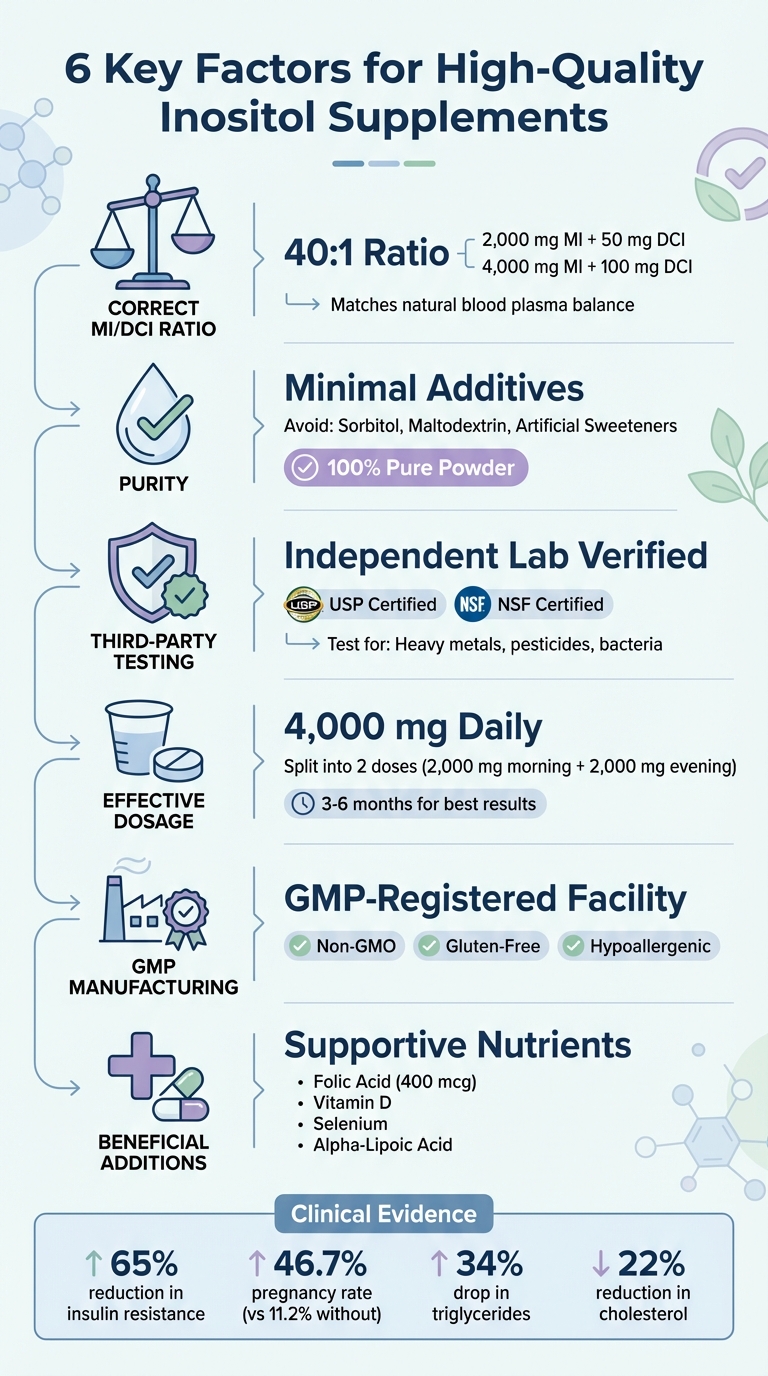
Inositol supplements can help manage PCOS by improving insulin sensitivity, balancing hormones, and supporting ovulation. To get the best results, focus on these key factors:
- Correct MI/DCI Ratio: Look for a 40:1 ratio of Myo-Inositol (MI) to D-Chiro-Inositol (DCI). For instance, 2,000 mg of MI should pair with 50 mg of DCI.
- Purity: Choose products with minimal additives. Avoid artificial sweeteners or fillers like sorbitol or maltodextrin.
- Third-Party Testing: Ensure the supplement has been tested by independent organizations like USP or NSF for safety, ingredient accuracy, and contaminants.
- Dosage: Clinical studies recommend 4,000 mg of MI daily, split into two doses (e.g., 2,000 mg morning and evening).
- Manufacturing Standards: Select brands made in GMP-registered facilities with transparent labeling and quality certifications.
- Additional Ingredients: Supplements with folic acid, vitamin D, or selenium may further support hormonal and metabolic health.
For PCOS, research shows the right inositol formulation can improve ovulation rates, lower insulin resistance, and reduce cholesterol levels. Always check labels carefully and consult a healthcare provider if needed.
6 Essential Factors for Choosing Quality Inositol Supplements for PCOS
Purity and Ingredient Ratios
Check for Myo-Inositol and D-Chiro-Inositol
When evaluating supplements, the label should clearly state the exact milligram amounts of both myo-inositol and D-chiro-inositol. For the ideal 40:1 ratio, a dose of 2,000 mg of myo-inositol should be paired with 50 mg of D-chiro-inositol. Similarly, a dose of 4,000 mg of myo-inositol should include 100 mg of D-chiro-inositol.
Products on the market often display ratios ranging anywhere from 0.04:1 to 104:1. However, too much D-chiro-inositol can negatively affect egg quality. The 40:1 ratio is particularly important because it matches the natural balance found in human blood plasma.
Check Ingredient Purity
The purity of ingredients is just as important as the correct ratio when it comes to achieving effective results. Check the "Other Ingredients" section on the label. High-quality supplements will focus on the active forms of inositol with minimal additives. For instance, pure powder formulations typically have no additives at all, while capsules may only include cellulose and water for the capsule shell.
Be cautious of artificial sweeteners or sugar alcohols like sorbitol or maltodextrin, as these can interfere with inositol absorption. Look for products labeled as being made in a "GMP-registered facility", which ensures they meet FDA quality standards. Additional labels, such as "Non-GMO", "Gluten-free", and "Hypoallergenic", are further indicators of cleaner ingredient sourcing.
For the best results, opt for 100% pure myo-inositol powder to steer clear of unnecessary binders and flow agents. Finally, verify that the product undergoes thorough third-party testing and certification to guarantee quality and consistency.
Third-Party Testing and Certifications
Confirm Third-Party Testing
Since the FDA doesn't pre-approve supplements, manufacturers can sell products without prior safety checks or label verification. This is where third-party testing steps in, using independent labs to verify that what's on the label matches what's in the bottle.
Organizations like USP (United States Pharmacopeia) and NSF International conduct these tests, ensuring the supplement contains the correct ingredients in the right amounts. They also screen for harmful contaminants such as heavy metals, pesticides, and bacteria.
"The FDA's role takes place after a supplement comes to market." - GoodRx
To confirm whether a supplement has been tested, look for a USP or NSF seal on the packaging. You can also check the product's status on the USP or NSF websites. Many trustworthy manufacturers will provide a Certificate of Analysis (COA) upon request, which includes batch-specific test results for purity and potency. This added transparency complements the quality manufacturing practices mentioned earlier.
Look for Quality Certifications
Once you've confirmed third-party testing, the next step is to check for quality certifications. These certifications offer another layer of assurance that the product is reliable and safe.
Not all certifications are created equal. The USP Verified Mark and NSF Certified seal are two of the most trusted indicators. USP ensures that a product contains the listed ingredients, breaks down properly in the body, and is free from harmful contaminants. NSF goes a step further, verifying ingredient accuracy and performing routine facility audits to screen for toxins.
"If it's USP Verified, consumers can trust that what's on the label is what's in the bottle." - USP
Be wary of vague claims like "standardized", "verified", or "certified" if they aren't backed by a specific third-party seal. These terms aren't strictly regulated and can be misleading.
For athletes, the NSF Certified for Sport® seal is particularly important. This certification screens for 280 substances banned by major sports organizations. As of 2025, inositol remains off the World Anti-Doping Agency (WADA) Prohibited List.
Dosage and Additional Ingredients
Verify Effective Dosage
Research highlights that the ideal dosage of inositol for managing PCOS is 4,000 mg daily, split into two doses of 2,000 mg - one with breakfast and one with dinner. This dosage should follow the 40:1 ratio of myo-inositol (MI) to D-chiro-inositol (DCI), meaning each dose delivers 2,000 mg of myo-inositol and 50 mg of D-chiro-inositol.
"Two grams twice a day is currently considered the optimal inositol dosage for PCOS." - Angela Grassi, MS, RDN, LDN
Clinical trials using this specific ratio have demonstrated impressive results. For example, women saw a 65% reduction in insulin resistance (measured by the HOMA-Index). Over the course of a year, taking 2 grams of myo-inositol twice daily also led to an average 34% drop in blood triglycerides and a 22% reduction in total cholesterol. While some benefits may appear within 6–8 weeks, achieving the best hormonal and weight management results typically takes 3–6 months. Beyond this dosage, adding supportive nutrients can amplify the results.
Review Additional Ingredients
Once the recommended inositol dosage is established, consider including complementary nutrients to further enhance metabolic and hormonal health. These additional ingredients can work synergistically to improve insulin sensitivity, hormonal balance, and overall metabolic function.
One of the most researched additions is folic acid. When paired with 4 grams of inositol, 400 mcg of folic acid resulted in ovulation for 62% of women within three months - a key benefit for addressing PCOS-related fertility challenges.
Other supportive nutrients include:
- Alpha-lipoic acid: Helps improve insulin sensitivity and manage cholesterol levels.
- Vitamin D: Plays a role in hormonal regulation and balance.
- Selenium: Particularly useful for women with subclinical hypothyroidism, as it supports thyroid function.
When considering these additional ingredients, it's essential to ensure that each one is backed by solid clinical evidence for its effectiveness. Together, these components can create a more comprehensive approach to managing PCOS.
sbb-itb-6dba428
Manufacturing and Brand Reputation
Select FDA-Regulated or Trusted Brands
While the FDA doesn’t approve dietary supplements before they hit the shelves, reliable manufacturers adhere to strict production standards. One key indicator of quality is the label "Made in a GMP registered facility". This signifies that the manufacturer follows the FDA's Good Manufacturing Practices, ensuring proper handling and production of supplements.
"Look for supplements that are labeled 'Made in a GMP registered facility,' which means 'good manufacturing process.' This means that the manufacture follows the stringent standards established by the FDA for the manufacturing and handling of dietary supplements." - Dr. Amanda Olson, President & Chief Clinical Officer, Intimate Rose
Some companies go even further by undergoing third-party audits to confirm their quality and safety standards. Together, these practices, combined with consumer reviews, help ensure that inositol supplements are both safe and effective.
Check Consumer Feedback and Research
Quality isn’t just about production - it’s also reflected in user experiences and clinical research. Reading consumer feedback alongside scientific studies provides a well-rounded view of a supplement’s effectiveness. Brands that consistently receive positive reviews for both value and results are more likely to deliver reliable products.
For example, a 2024 study revealed that 68% of PCOS patients experienced restored menstrual cycle regularity after using inositol supplements. Another study demonstrated that individuals with PCOS taking a 40:1 ratio of myo-inositol to D-chiro-inositol had significantly better outcomes, with ovulation and pregnancy rates reaching 46.7%, compared to just 11.2% in those who didn’t use the supplement. To verify such claims, resources like Examine.com can be invaluable. They assign evidence grades to health outcomes - inositol, for instance, earns a Grade A for addressing PCOS symptoms and a Grade B for managing blood glucose levels.
Inositol: The Most Underrated Supplement for PCOS
Choosing the Right Inositol Supplement
When selecting an inositol supplement, there are a few key factors to keep in mind. First, check that it contains the recommended 40:1 ratio of Myo-Inositol (MI) to D-Chiro-Inositol (DCI) and provides a daily dose of 2,000–4,000 mg, split into two servings for optimal effectiveness.
It's equally important to ensure the supplement is manufactured in a GMP-registered facility and has undergone third-party testing. Steer clear of products with unnecessary fillers, artificial sweeteners, or sugar alcohols, as these additives can detract from the supplement’s quality and benefits.
Clinical research highlights the potential of inositol for women with PCOS. For example, supplements with the 40:1 ratio have been associated with a 46.7% pregnancy rate, compared to just 11.2% in those who did not use the supplement. Moreover, taking 2 grams twice daily has been shown to reduce triglycerides by 34% and total cholesterol by 22% over the course of a year.
If you have diabetes or are taking blood-sugar-lowering medications, consult a healthcare provider before starting inositol. This supplement can amplify the effects of such medications, which may increase the risk of hypoglycemia. It's a good idea to begin with a lower dose to gauge your body’s response before gradually increasing to the recommended amount.
For tailored advice on managing PCOS or insulin resistance, consider scheduling a telehealth consultation with licensed professionals at Oana Health. Their expertise can help you navigate your options and develop a personalized plan.
FAQs
Why is the 40:1 Myo-Inositol to D-Chiro-Inositol ratio so important in supplements?
The 40:1 ratio of Myo-Inositol to D-Chiro-Inositol is widely recognized as the most effective combination for promoting hormonal balance and supporting metabolic health, particularly for women managing PCOS. Research highlights that this specific ratio plays a crucial role in restoring ovulation and improving essential hormonal and metabolic markers.
Why is this ratio so important? Studies suggest that the body naturally maintains a balance close to 40:1 between these two compounds. Straying from this ratio could make the supplement less effective. Opting for a product that adheres to this balance ensures you're providing your body with the targeted support it needs to address hormonal and metabolic challenges effectively.
What should I look for to ensure an inositol supplement is safe and high-quality?
To pick a safe and high-quality inositol supplement, there are a few things to keep in mind. Start by checking for third-party testing - this ensures the product has been verified for purity and is free from harmful contaminants. Reliable brands usually share clear details about ingredient ratios and sourcing, helping you make a more confident decision.
You should also look for certifications or lab testing from independent organizations. These indicate that the supplement meets strict safety and quality standards. Stick with trusted companies that are open about their manufacturing processes and the integrity of their ingredients. Transparency is key!
What ingredients should I look for in an inositol supplement to support PCOS?
When selecting an inositol supplement for PCOS, aim for one that combines myo-inositol and D-chiro-inositol in a 40:1 ratio. This ratio is often regarded as the most effective for helping with hormone balance, improving insulin sensitivity, and managing common PCOS-related symptoms.
It's also important to choose a supplement that avoids unnecessary fillers, additives, or artificial ingredients to ensure you're getting the full benefits. For extra confidence in your choice, look for products that have been third-party tested to confirm their purity and quality.