
Biomarkers and Inflammation in Hormonal Imbalances
Hormonal imbalances, like Polycystic Ovary Syndrome (PCOS), are closely tied to chronic low-grade inflammation. This inflammation disrupts metabolic and reproductive health, increasing risks for conditions like Type 2 Diabetes and cardiovascular disease. Biomarkers such as hs-CRP, IL-6, and TNF-α help identify these risks early and guide treatment strategies. Elevated hs-CRP levels, for example, signal systemic inflammation, even in lean individuals with PCOS. IL-6 and TNF-α further contribute by disrupting insulin signaling and ovarian function.
Key insights:
- hs-CRP: Tracks systemic inflammation; levels are 96% higher in PCOS patients.
- IL-6: Promotes CRP production and arterial plaque formation.
- TNF-α: Drives insulin resistance and excess androgen production.
Adipokines like leptin and adiponectin also play roles, with leptin linked to inflammation and reproductive issues, while low adiponectin worsens insulin resistance. Composite markers (e.g., leptin-to-adiponectin ratios) offer a broader view of inflammatory states.
Personalized treatments use these biomarkers to tailor therapies, such as metformin for insulin resistance or anti-inflammatory medications. Telehealth platforms now enable remote diagnosis and management, making biomarker-based care more accessible. However, challenges like hormonal variability and non-specific markers highlight the need for further research and improved diagnostic tools.
Primary Inflammatory Biomarkers in Hormonal Imbalances
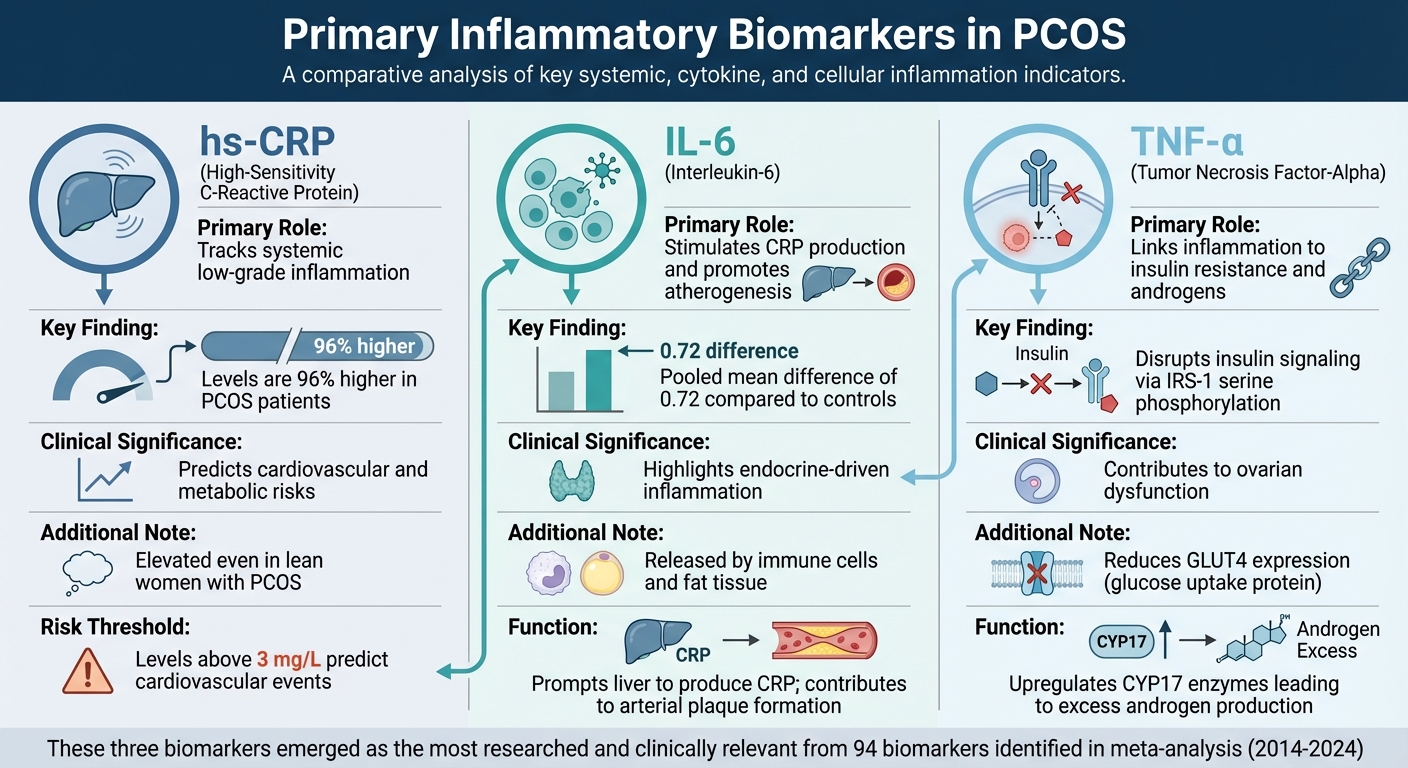
Primary Inflammatory Biomarkers in PCOS: hs-CRP, IL-6, and TNF-α
When it comes to understanding inflammation in PCOS, three biomarkers stand out: high-sensitivity C-reactive protein (hs-CRP), interleukin-6 (IL-6), and tumor necrosis factor-alpha (TNF-α). A meta-analysis spanning studies from 2014 to 2024 identified 94 biomarkers linked to PCOS, with these three emerging as the most researched and clinically relevant ones.
These markers don't just indicate inflammation - they also highlight risks for conditions like type 2 diabetes and cardiovascular disease, even before symptoms appear.
hs-CRP: A Window into Systemic Inflammation
High-sensitivity C-reactive protein (hs-CRP) is widely regarded as the most reliable marker of systemic inflammation in PCOS. Produced by the liver in response to inflammatory signals, hs-CRP provides a clear, measurable snapshot of the body’s overall inflammatory state.
Interestingly, elevated hs-CRP levels are found even in lean women with PCOS, pointing to inflammation that’s independent of body weight. As Dr. Héctor F. Escobar-Morreale from the University of Alcalá explains:
"Women with PCOS exhibit elevation in circulating CRP that is independent of obesity. This finding corroborates existing molecular evidence of the chronic low-grade inflammation that may underpin the pathogenesis of this disorder."
Clinically, CRP levels above 3 mg/L are considered a strong predictor of cardiovascular events. However, lean women with PCOS often have levels below this threshold, which is why high-sensitivity assays are essential for accurate detection. Beyond cardiovascular concerns, elevated hs-CRP is tied to dyslipidemia, insulin resistance, and endothelial dysfunction.
IL-6 and TNF-α: The Inflammatory Drivers
While hs-CRP reflects the downstream effects of inflammation, IL-6 and TNF-α are key upstream players. These cytokines, released by immune cells and fat tissue, directly disrupt metabolic and ovarian functions.
Interleukin-6 (IL-6) acts as a hormonal signal that prompts the liver to produce CRP. Research shows that women with PCOS have significantly higher IL-6 levels, with a pooled mean difference of 0.72 compared to controls. Beyond CRP production, IL-6 plays a role in atherogenesis, or arterial plaque formation, which compounds cardiovascular risks.
Tumor necrosis factor-alpha (TNF-α), on the other hand, is a major driver of insulin resistance. It disrupts insulin signaling by triggering serine phosphorylation of insulin receptor substrate-1 (IRS-1), which reduces the expression of GLUT4 - the protein responsible for glucose uptake into cells. Additionally, TNF-α amplifies ovarian dysfunction by upregulating enzymes like CYP17 in theca cells, leading to excess androgen production - a hallmark of PCOS.
| Biomarker | Primary Role in PCOS | Clinical Significance |
|---|---|---|
| hs-CRP | Tracks systemic low-grade inflammation | Predicts cardiovascular and metabolic risks; levels are 96% higher in PCOS patients |
| IL-6 | Stimulates CRP production and promotes atherogenesis | Highlights endocrine-driven inflammation; pooled mean difference of 0.72 compared to controls |
| TNF-α | Links inflammation to insulin resistance and androgens | Disrupts insulin signaling and contributes to ovarian dysfunction |
These findings provide a foundation for tailoring treatments to individual inflammatory profiles.
Additional Biomarkers in Hormonal Imbalances
Beyond hs-CRP, IL-6, and TNF-α, other biomarkers provide a clearer picture of the inflammatory complexity in PCOS. These markers shed light on how fat tissue and blood vessels contribute to the condition.
Adipokines and Vascular Markers
Adipokines, which are cytokines produced by fat tissue, play a role in regulating metabolism and inflammation. In PCOS, dysfunctional fat tissue disrupts the balance of these adipokines, negatively affecting insulin sensitivity and reproductive health.
Leptin, a pro-inflammatory adipokine, is often elevated in individuals with PCOS. High levels of leptin can lead to leptin resistance and interfere with follicular development. Interestingly, body weight accounts for about 54% of the variation in serum leptin levels. On the other hand, adiponectin, known for its anti-inflammatory and insulin-sensitizing properties, is typically reduced in PCOS. This hormone normally suppresses LH and androgen secretion, so lower levels are linked to hyperandrogenism and ovulatory problems.
Other adipokines also play a role. Resistin promotes testosterone production by increasing 17α-hydroxylase activity, while chemerin inhibits progesterone secretion and serves as an indicator of PCOS severity. Visfatin, which has insulin-like and pro-inflammatory effects, shows a negative correlation with HDL-C levels.
Vascular markers, such as Vascular Endothelial Growth Factor (VEGF) and Vascular Cell Adhesion Molecule-1 (VCAM-1), are often elevated in PCOS. These markers contribute to chronic inflammation and endothelial dysfunction. Notably, pro-inflammatory adipokines like leptin can increase the expression of adhesion molecules on vascular endothelial cells. Measuring these biomarkers typically involves high-sensitivity ELISA assays.
A 2025 study involving 150 PCOS patients revealed that those with insulin resistance had significantly higher levels of leptin, visfatin, resistin, and TNF-α. Central adiposity emerged as a key predictor of elevated leptin levels and adverse atherogenic profiles. As Daniela Koleva-Tyutyundzhieva explained:
"Central adiposity rather than IR explains a substantial part of the adverse adipokine and inflammatory profile, thereby contributing to elevated cardiometabolic risk."
These individual markers provide the foundation for composite indices that assess the broader inflammatory state.
Composite Markers
Composite markers take the insights from individual biomarkers and combine them to offer a more comprehensive view of metabolic dysfunction. Ratios like leptin-to-adiponectin (L/A) and adiponectin-to-resistin (A/R) reflect the balance between pro-inflammatory and insulin-sensitizing signals. Additionally, the Atherogenic Index of Plasma (AIP) serves as an important measure of cardiovascular risk, particularly in insulin-resistant individuals with PCOS. These composite markers are especially valuable for tracking treatment effectiveness, as they capture the interactions among multiple inflammatory pathways rather than focusing on a single marker.
How Biomarkers Guide Diagnosis and Treatment
Biomarkers have transformed the ability to detect chronic low-grade inflammation in PCOS, even in individuals who are lean, making diagnosis more precise. This precision enables healthcare providers to classify patients into specific phenotypes (A, B, C, and D), helping them decide whether to focus on reproductive dysfunction, metabolic risks, or both. For instance, a patient with elevated hs-CRP and IL-6 levels has distinct long-term risks compared to someone with normal inflammatory markers but high androgen levels. This classification paves the way for treatments that align with a patient’s unique inflammatory and metabolic profile.
Using Biomarkers for Personalized Therapies
Inflammatory biomarkers directly influence treatment strategies, allowing clinicians to address the complex challenges of PCOS more effectively. For example, biomarkers like CRP and IL-6 help guide the use of treatments such as metformin, insulin sensitizers, and GLP-1 receptor agonists, tailored to a patient’s metabolic needs. In cases where obesity or a family history of diabetes is present, a 75-gram OGTT is recommended to uncover potential glucose intolerance. Additionally, patients showing elevated inflammatory cytokines alongside hyperandrogenism symptoms might benefit from medications like spironolactone.
Tracking biomarkers throughout treatment offers measurable evidence of progress. For example, reductions in CRP levels and improvements in adipokine ratios indicate lower disease risk and successful therapy outcomes. As Alexandra M. Huffman puts it:
"Biomarkers are critical for the diagnosis, stratification, prognosis prediction, progression, regression, or outcome of disease treatment."
Telehealth Access to Personalized Treatments
Personalized care has become even more accessible through telehealth platforms, which use biomarker assessments to guide treatment plans. Blood-based tests and anthropometric measurements can now enhance PCOS diagnosis and management remotely. This approach is particularly beneficial in situations where tools like transvaginal ultrasound may not be appropriate due to specific circumstances or cultural sensitivities.
Oana Health provides evidence-based, prescription treatments tailored to individual biomarker profiles. Licensed professionals analyze inflammatory markers to recommend therapies such as metformin for insulin resistance or oral GLP-1 medications for advanced metabolic issues. Additional treatments, like oral minoxidil for hair loss and topical spironolactone for androgenic symptoms, are shipped directly to patients’ homes, offering convenience alongside personalized care.
Telehealth enables patients to complete blood work locally and receive tailored treatment plans remotely. Ongoing biomarker monitoring through these platforms ensures that treatments remain effective, with follow-up testing to track progress and adjust therapies as needed.
sbb-itb-6dba428
Limitations and Future Research in Biomarker Studies
Inflammatory biomarkers come with notable challenges that affect their clinical reliability. Common markers like CRP, ESR, and plasma viscosity are non-specific - they can indicate the presence of inflammation but fail to pinpoint its cause. This means they can't differentiate between something as minor as a mild infection and more severe conditions like autoimmune diseases or cancer. Dr. Jessica Watson, a GP and Doctoral Research Fellow, highlights this issue:
"Inflammatory marker tests are all non-specific tests. This means they don't identify what's causing the inflammation: it might be as simple as a mild infection, or as serious as cancer."
Another complicating factor is hormonal variability. Biomarkers such as TNF-α, CRP, and IL-6 can fluctuate significantly during the menstrual cycle, often peaking during menstruation. This variability makes single diagnostic readings less reliable. Furthermore, conflicting findings about inflammatory cytokines add to the uncertainty. For example, some meta-analyses report elevated IL-6 levels in PCOS patients, while others find no significant differences in IL-6 or TNF-α compared to control groups. Additional factors like age, smoking habits, anemia, and BMI further complicate biomarker interpretation. For instance, circulating hsCRP levels increase by 19% to 20% for every 10% rise in BMI.
Racial and ethnic differences also play a role in biomarker applicability. For instance, metabolic symptoms of PCOS are more frequently observed in American and Asian populations, while hyperandrogenism is more common in the Middle East and Europe. Biomarkers tied to anthropometric measures, such as BMI and waist circumference, may fail to detect insulin resistance in lean PCOS patients, as metabolic dysfunction in these individuals can occur independently of body fat. Compounding these issues is the reliance on studies with retrospective designs and small sample sizes, making it difficult to establish universally applicable diagnostic thresholds. These demographic and methodological limitations highlight the need for more refined approaches in biomarker research.
To overcome these challenges, future research must focus on technological and methodological advancements. One key issue is the lack of rigorous clinical validation for biomarkers, including the absence of clear reference values for healthy individuals and specific cut-offs for diagnosing diseases. Bridging this gap will require adapting advanced research tools, such as liquid chromatography-mass spectrometry (LC-MS), into cost-effective options suitable for clinical use. Promising areas for innovation include non-coding RNAs, digital biomarkers derived from wearable devices, and composite indices like SII and PIV. These tools offer potential for more precise and continuous monitoring of inflammatory and metabolic health. By advancing these methods, researchers can pave the way for more accurate diagnostics and personalized treatment options.
Conclusion
Biomarkers have transformed how we approach PCOS, shedding light on the role of chronic low-grade inflammation and uncovering the molecular connections between reproductive challenges and long-term risks like Type 2 Diabetes and cardiovascular disease. This shift allows healthcare providers to move past generalized treatments and focus on personalized care tailored to individual needs.
Thanks to these advancements, care strategies now incorporate more precise interventions. Biomarker research plays a key role in improving diagnosis, patient stratification, prognosis prediction, and tracking treatment outcomes. By offering objective data, biomarkers streamline decision-making, enabling earlier detection of complications and more effective management.
Modern telehealth platforms, such as Oana Health, are making this cutting-edge research accessible to patients. By leveraging minimally invasive and cost-effective biomarkers - like hs-CRP for inflammation or HOMA-IR for insulin resistance - these platforms deliver personalized treatment plans based on each patient’s unique biology. This approach is especially impactful for the 5% to 15% of reproductive-age women living with PCOS, paving the way for more effective and individualized care.
The integration of biomarker data into clinical practice is a major step forward in hormonal health management. By making biomarker-guided care more accessible, we’re moving closer to a future where personalized therapies can address the complexities of conditions like PCOS with greater precision and success.
FAQs
How do inflammation biomarkers like hs-CRP, IL-6, and TNF-α help in identifying PCOS?
Inflammation biomarkers like hs-CRP, IL-6, and TNF-α are essential in detecting polycystic ovary syndrome (PCOS). These markers reveal the presence of low-grade chronic inflammation, a condition often linked to PCOS and its complications, such as insulin resistance and a higher likelihood of cardiovascular problems.
Tracking these biomarkers gives healthcare providers a clearer picture of a patient’s inflammatory state. This information not only aids in diagnosing PCOS but also helps in creating treatment plans that address the hormonal imbalance and its broader health impacts.
How do adipokines contribute to inflammation in hormonal imbalances like PCOS?
Adipokines are signaling molecules released by fat cells, and they have a significant role in managing inflammation and metabolic functions. In conditions like PCOS, when adipokine levels become imbalanced, they can trigger increased inflammation and insulin resistance - both of which are closely tied to hormonal disruptions.
These molecules impact how the body handles glucose and can also drive chronic inflammation, worsening symptoms like irregular menstrual cycles, weight gain, and other metabolic issues. Gaining a deeper understanding of adipokines is essential for creating treatments that address hormonal imbalances more effectively.
How can telehealth improve PCOS management using biomarker data?
Telehealth is changing the game for managing PCOS by using biomarker data to track inflammation and hormonal imbalances from a distance. Key biomarkers, such as inflammatory markers, insulin resistance indicators, and hormones like kisspeptin, offer crucial insights into a patient’s health. This approach allows for tailored care without the hassle of constant in-office visits.
With advancements like at-home blood sampling kits and remote lab services, keeping tabs on these biomarkers has never been easier. This accessibility means early detection of issues like insulin resistance or hormonal shifts, enabling timely tweaks to treatment plans. By relying on real-time data, telehealth delivers a more precise, convenient, and patient-focused approach to PCOS management.