
How Androgens Affect Mental Health in PCOS
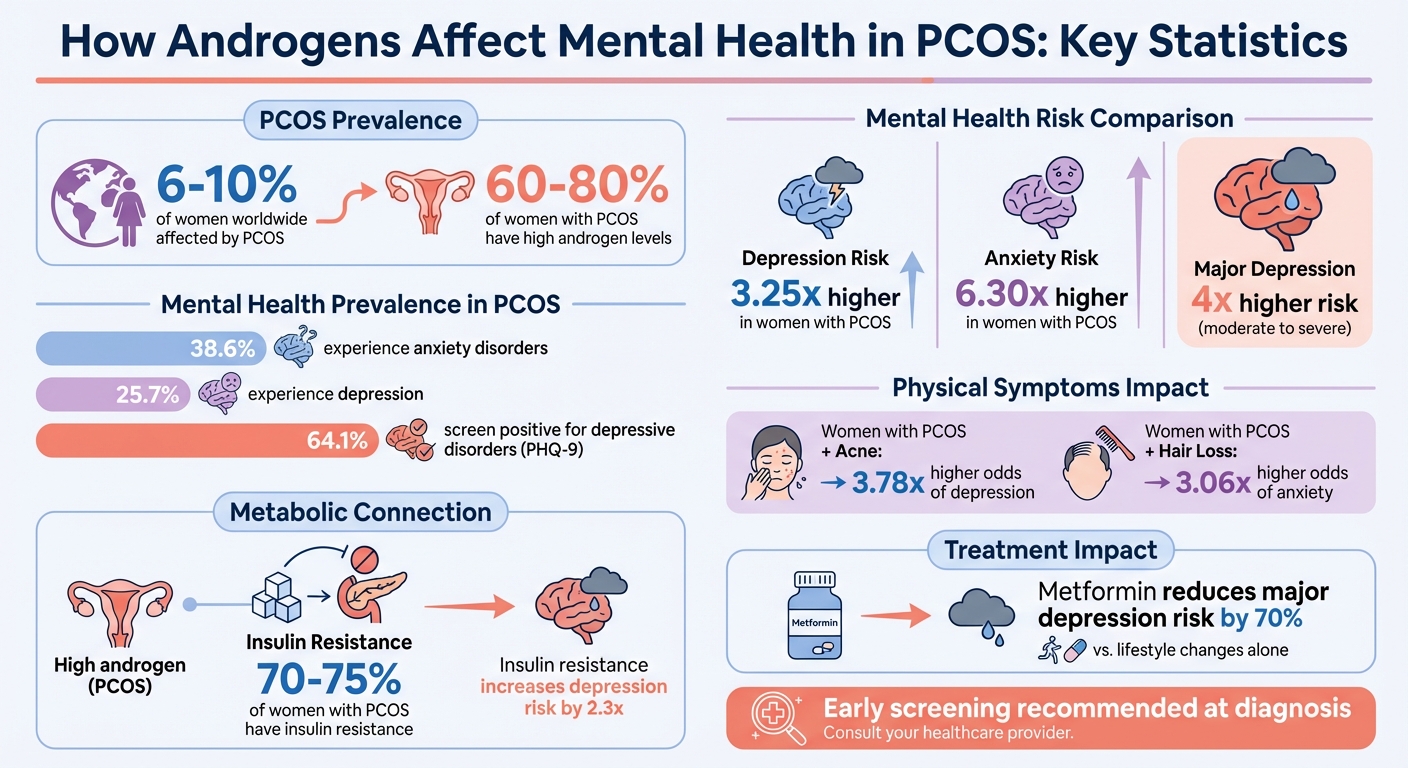
Polycystic Ovary Syndrome (PCOS) affects 6–10% of women worldwide and is linked to elevated androgen levels, which disrupt physical and mental health. High androgens cause visible symptoms like acne, hair loss, and hirsutism, and are strongly associated with depression and anxiety. Women with PCOS are 3–5 times more likely to experience mental health issues due to hormonal imbalances, social stigma, and disrupted brain chemistry.
Key points:
- Androgens Explained: Hormones like testosterone impact hair growth, skin, and emotional well-being.
- PCOS Impact: 60–80% of women with PCOS have high androgen levels, leading to physical and emotional challenges.
- Mental Health Risks: Women with PCOS face a 3.25x higher risk of depression and a 6.30x higher risk of anxiety.
- Treatment Options: Medications like metformin and spironolactone, combined with lifestyle changes, can reduce symptoms and improve mental health.
Addressing both hormonal imbalances and emotional challenges is key to managing PCOS effectively.
PCOS Mental Health Statistics: Depression and Anxiety Risk Factors
The Connection Between Androgens and Mental Health
Hormonal Imbalances and Mental Health
Elevated androgen levels in individuals with PCOS directly influence mental health by altering brain chemistry and indirectly through the societal stigma tied to visible symptoms. Research shows that high levels of testosterone and androstenedione are linked to increased tension and difficulty managing stress. These findings highlight how these hormones affect emotional well-being, separate from physical symptoms.
Symptoms of hyperandrogenism, such as hirsutism, acne, and alopecia, often carry a social stigma that can deeply impact self-esteem. These visible traits can undermine a sense of femininity, significantly increasing the risk of depression and anxiety. For instance, women with PCOS and acne face 3.78 times higher odds of depression compared to those without acne, while those experiencing alopecia have 3.06 times higher odds of anxiety.
"Visible features of PCOS such as hirsutism, acne, and alopecia... can be deeply stigmatizing to women... making PCOS the 'thief of womanhood.'"
- Aditi P. Chaudhari, Department of Psychiatry, BARC Hospital
The Free Androgen Index (FAI), which calculates the ratio of testosterone to SHBG, has emerged as a critical independent factor linked to anxiety-like and depression-like behaviors in women with PCOS. Additionally, many women with PCOS tend to adopt less effective coping mechanisms, such as alcohol use, when dealing with stress.
These patterns are supported by extensive research findings.
What Research Shows
Studies reveal that women with PCOS are 3.25 times more likely to experience depression and 6.30 times more likely to face anxiety. Anxiety disorders affect 38.6% of PCOS patients, while depression impacts 25.7%. A study conducted in China reported even higher rates, with 52% of participants displaying depression-like behaviors and 26.1% showing anxiety-like symptoms.
Recent research from 2024 and 2025 underscores hyperandrogenism as the primary factor contributing to depression and stress-coping challenges, rather than obesity or insulin resistance. These findings have led to updated international guidelines recommending mental health evaluations at the time of PCOS diagnosis.
How Androgens Affect Mood and Brain Function
Androgens and Brain Chemistry
Research has shown that elevated androgen levels can directly influence brain chemistry, particularly in women with PCOS. These individuals often experience lower levels of key inhibitory neurotransmitters like serotonin, dopamine, GABA, and acetylcholine. At the same time, the excitatory neurotransmitter glutamate tends to be elevated, which can lead to overstimulation of the brain’s neural pathways.
Inflammatory markers such as TNF-α and IL-6 also play a role by activating indoleamine 2,3-dioxygenase. This enzyme diverts tryptophan - an essential precursor for serotonin - away from serotonin production. Additionally, inflammation may increase the activity of serotonin reuptake transporters, further reducing serotonin availability.
According to Frontiers in Psychiatry, "In PCOS, GnRH and LH inhibitory neurotransmitters such as 5-HT, DA, GABA and Ach are decreased. In contrast, glutamate levels... are raised."
Elevated testosterone levels in PCOS can heighten the body’s response to stress. This is evident in an amplified sympathetic nervous system reaction, including increased heart rate when encountering negative stimuli.
The hypothalamic-pituitary-adrenal (HPA) axis, which manages the body’s stress response, is also disrupted in PCOS. Elevated androgen levels and altered cortisol metabolism interfere with the normal feedback mechanisms of the HPA axis, often resulting in prolonged hypercortisolism. This imbalance can contribute to depression. In fact, when assessed using the PHQ-9 screening tool, 64.1% of women with PCOS were found to have depressive disorders .
These neurochemical changes often interact with metabolic factors, such as insulin resistance, further complicating mental health outcomes.
Insulin Resistance and Mental Health
Insulin resistance, a condition that affects about 70%–75% of women with PCOS, creates a direct link between metabolic dysfunction and mental health issues . High insulin levels reduce sex hormone-binding globulin (SHBG), which increases the amount of bioavailable testosterone. This hormonal imbalance can disrupt brain chemistry and impair mood regulation.
As noted in Fertil Steril, "High concentrations of insulin reduce circulating SHBG levels, resulting in increased bioavailable (free) testosterone."
This dynamic sets off a vicious cycle: insulin resistance stimulates the ovaries to produce more androgens, which in turn exacerbates insulin resistance. Women with insulin resistance are 2.3 times more likely to experience depression compared to those without it.
Chronic inflammation, another hallmark of PCOS, can lead to glucocorticoid resistance, weakening the body’s ability to respond to cortisol’s anti-inflammatory effects. This disruption can affect stress regulation and contribute to depressive symptoms. Common manifestations include fatigue, social withdrawal, and anhedonia - symptoms often associated with “sickness behavior”.
Managing Androgen Levels to Improve Mental Health
Medical Treatments for Androgen Control
For women with PCOS, managing androgen levels isn't just about addressing physical symptoms - it can have a profound impact on mental health too. Treatments like combined oral contraceptives help regulate menstrual cycles while lowering androgen levels. This not only reduces acne and unwanted hair growth but also supports self-esteem, which can take a hit from these visible symptoms.
Medications such as Spironolactone and its topical form are highly effective at blocking male hormones. They help combat scalp hair loss and unwanted facial hair, offering relief from some of the most distressing physical effects of PCOS.
Another key player is Metformin, which enhances insulin sensitivity. By stabilizing blood sugar levels and lowering androgen production, it helps reduce mood swings and supports a more balanced emotional state. Newer options, like GLP‑1 receptor agonists, are also being explored for managing metabolic issues tied to PCOS.
Early psychiatric screening is increasingly recognized as a critical step in PCOS care, allowing mental health symptoms to be addressed sooner rather than later. Studies consistently show that treating PCOS can alleviate depressive symptoms, reduce anxiety, and improve overall quality of life by tackling the physical issues that often fuel emotional distress. When combined with lifestyle adjustments, these treatments create a well-rounded approach to hormonal and mental well-being.
Lifestyle Changes for Better Hormonal Balance
While medical treatments are essential, lifestyle changes can amplify their benefits and further support mental health. Regular exercise not only improves physical health but also boosts endorphins and regulates serotonin levels, which can be disrupted by high androgen levels. For women with PCOS, intermittent aerobic training has shown particular promise in enhancing quality of life and easing depressive symptoms.
Diet also plays a big role. Choosing whole foods and high-fiber options while cutting back on refined carbs helps stabilize blood sugar levels. This approach addresses the insulin–androgen connection by lowering insulin levels, which reduces the activity of ovarian cells that produce excess androgens.
Stress management techniques like mindfulness, yoga, and meditation are powerful tools for emotional stability. Chronic stress can worsen hormonal imbalances, so finding ways to relax and reset is crucial. Pairing these lifestyle changes with psychological therapies, such as cognitive behavioral therapy (CBT) or mindfulness-based stress reduction, can build emotional resilience and help women navigate the challenges of PCOS.
Mental health screenings at the time of diagnosis are a key part of this comprehensive approach. By combining targeted medical treatments with thoughtful lifestyle adjustments, women with PCOS can tackle both the physical and emotional hurdles of this condition more effectively.
sbb-itb-6dba428
The Cloudy Side of PCOS: It's Not Infertility
Conclusion: Addressing Both Physical and Mental Health in PCOS
PCOS doesn’t just affect the body - it also takes a toll on mental health, making it crucial to approach treatment from both angles. Elevated androgen levels play a key role in this connection, contributing to physical symptoms like acne and hair loss, as well as mental health issues such as depression and anxiety. Research reveals that women with PCOS are more than twice as likely to experience depressive symptoms and face a four-fold higher risk of moderate to severe depression compared to those without the condition.
This link between hormones and mental health highlights the importance of targeted treatments. For instance, metformin, a medication that improves insulin sensitivity and lowers free testosterone, has been shown to reduce the likelihood of major depression by 70% compared to lifestyle changes alone. By addressing hormonal imbalances, treatments can simultaneously improve physical symptoms and emotional well-being.
"In women with PCOS, screening for depressive and anxiety symptoms should be offered at the time of diagnosis and screening for disordered eating should be considered." - Androgen Excess-PCOS Society
A personalized care plan is essential for effectively managing PCOS. When mental health challenges go untreated, they can interfere with the ability to maintain the lifestyle changes and medical treatments necessary for managing the condition. This is why early screening and individualized care are so important. Treatments like metformin, spironolactone, and other evidence-based approaches not only alleviate physical symptoms but also significantly reduce depression and anxiety. Combining these medical interventions with lifestyle adjustments and psychological support creates the strongest path to long-term health.
Oana Health provides personalized, science-backed treatments for PCOS, addressing both hormonal imbalances and their mental health effects. With licensed medical professionals offering therapies like metformin for insulin resistance and spironolactone for androgen control, care is delivered directly to your home. By tackling PCOS from every angle, you can take back control of both your physical and emotional health.
FAQs
How do high androgen levels in PCOS impact mental health?
High androgen levels in women with PCOS can have a profound impact on mental health. These hormones are often tied to physical changes like acne, unwanted facial hair, and hair thinning, which can take a toll on self-esteem and lead to emotional challenges. For many, these changes also bring concerns about body image and trigger social anxiety, compounding the strain on mental well-being.
Studies indicate that elevated androgens might also influence brain function, potentially affecting memory, focus, and decision-making. When paired with other common PCOS-related issues - like insulin resistance, weight gain, and hormonal shifts - the risk of depression and anxiety increases. Managing androgen levels and addressing their effects is a key part of improving both the physical and emotional health of those living with PCOS.
What are the best ways to manage both physical and mental health symptoms of PCOS?
Managing PCOS symptoms involves a personalized strategy that takes care of both physical and mental well-being. For physical issues like acne, irregular periods, or unwanted hair growth, lifestyle adjustments often play a key role. Eating a balanced diet, staying active with regular exercise, and maintaining a healthy weight can make a noticeable difference. Additionally, medical treatments such as insulin-sensitizing medications, hormonal birth control, or anti-androgens are commonly used to help balance hormones and manage symptoms effectively.
Addressing mental health concerns like anxiety, depression, or body image struggles is just as important. Therapeutic approaches such as cognitive-behavioral therapy (CBT) or mindfulness-based techniques have shown to be highly beneficial. In some situations, medications like antidepressants might also be recommended. Partnering with a healthcare provider who can regularly assess your mental health and develop a custom treatment plan is essential.
For accessible and science-based care, platforms like Oana Health offer personalized telehealth services, including prescription treatments conveniently delivered to your doorstep.
Why is it important to screen for mental health issues early in women with PCOS?
Women with PCOS face a higher risk of mental health challenges, including depression, anxiety, and eating disorders. These struggles are often tied to the physical symptoms of PCOS - such as unwanted hair growth, acne, weight gain, and concerns about infertility - which can significantly impact self-esteem and body image.
Catching mental health issues early is crucial. Early identification means women can access treatment sooner, enhancing emotional well-being and reducing the chances of long-term complications. When both the physical and emotional aspects of PCOS are addressed together, it leads to better overall health and a more positive quality of life.