
How Hormonal Medications Impact Insulin Sensitivity
Hormonal medications, like birth control, hormone replacement therapy, and PCOS treatments, can affect how your body processes sugar. These medications influence insulin sensitivity, often making it harder to manage blood sugar levels, especially if you have conditions like PCOS, prediabetes, or diabetes. Here's what you need to know:
- Estrogen: Improves insulin sensitivity at low to moderate doses but can impair glucose metabolism at higher doses. Delivery methods like patches or injections tend to have fewer metabolic effects than oral forms.
- Progestogens: Often reduce insulin sensitivity, especially when combined with estrogen, by increasing inflammation and altering fat cell function.
- PCOS and Androgens: High androgen levels in PCOS worsen insulin resistance, creating a cycle of rising insulin and testosterone levels.
Managing Insulin Sensitivity:
- Medications like Metformin, GLP-1 receptor agonists, and Spironolactone can help.
- Lifestyle changes, such as weight loss, regular exercise, and low-glycemic diets, are key.
- Regular monitoring of fasting insulin, glucose, and A1C levels is critical, especially for those at higher risk of type 2 diabetes.
How to Prevent or Reverse Insulin Resistance
How Hormonal Medications Affect Insulin Sensitivity
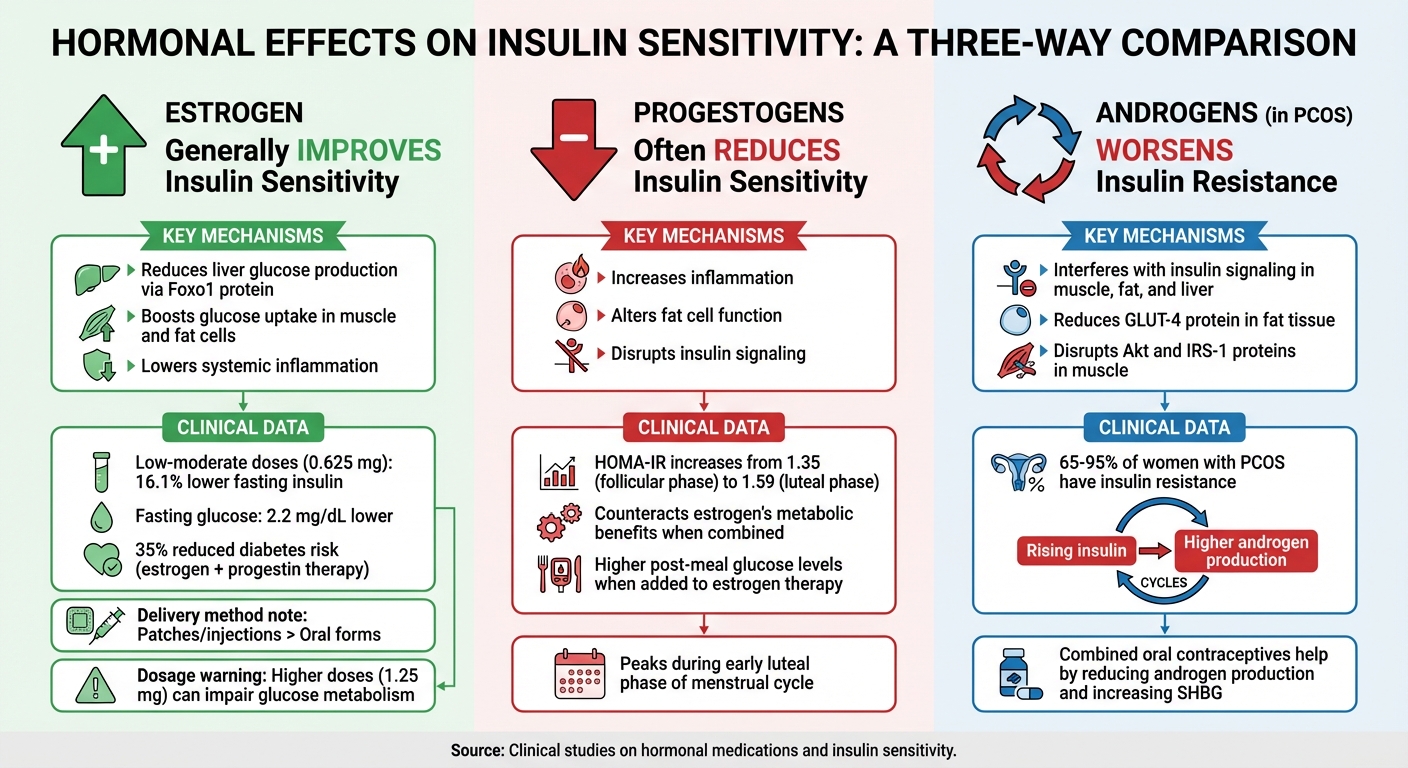
How Different Hormones Affect Insulin Sensitivity: Estrogen, Progestogens, and Androgens
Hormonal medications influence insulin sensitivity in various ways, with estrogen generally improving the body's response to insulin, while progestogens and androgens often have the opposite effect. These differences help explain why hormonal treatments can impact blood sugar control. Let’s break down how each hormone interacts with insulin sensitivity.
Estrogen's Effect on Insulin Sensitivity
Estrogen plays a key role in enhancing insulin sensitivity. It does so by reducing glucose production in the liver through a protein called Foxo1, boosting glucose uptake in muscle and fat cells, and lowering systemic inflammation.
"Estrogen improves insulin sensitivity and suppresses gluconeogenesis via the transcription factor Foxo1."
– Shaodong Guo, Department of Nutrition and Food Science, Texas A&M University
Clinical studies back this up. For example, a trial involving women with coronary heart disease showed that those taking estrogen plus progestin reduced their diabetes risk by 35%, even without changes in weight or waist size. Similarly, the 3-year PEPI Study found that postmenopausal women taking 0.625 mg/day of conjugated equine estrogen had fasting insulin levels 16.1% lower and fasting glucose levels 2.2 mg/dL lower than those on a placebo. However, their 2-hour post-meal glucose levels were slightly higher (6.4 mg/dL), indicating delayed glucose clearance.
Interestingly, the dosage and delivery method make a difference. Low to moderate doses of estrogen (like 0.625 mg) improve insulin sensitivity, while higher doses (1.25 mg) can impair glucose metabolism. Additionally, transdermal and subcutaneous estrogen delivery methods tend to have a more consistent positive effect on insulin sensitivity compared to oral formulations.
Progestogens and Insulin Resistance
Progestogens, whether natural or synthetic, often counteract the insulin-sensitizing effects of estrogen. During the menstrual cycle, insulin resistance tends to peak in the early luteal phase when progesterone levels are higher. For instance, the HOMA-IR index, a measure of insulin resistance, increases from 1.35 in the follicular phase to 1.59 in the luteal phase.
When progestogens are combined with estrogen therapy, they can reduce the metabolic benefits of estrogen. The PEPI trial revealed that while estrogen alone lowered fasting insulin by 16.1%, adding progestogens (like medroxyprogesterone acetate or micronized progesterone) did not enhance this effect and was linked to higher post-meal glucose levels. This may be due to progestogens disrupting insulin signaling through increased inflammation and changes in fat cell function.
"E2 given in a moderate dose (0.625 mg) increased insulin sensitivity; however, higher doses (1.25 mg) or progestins cotreatment attenuated this benefit."
– Anisha A. Gupte, Bioenergetics Laboratory, Houston Methodist Research Institute
High Androgen Levels and Insulin Resistance in PCOS
Androgens also play a significant role in insulin resistance, particularly in women with polycystic ovary syndrome (PCOS). Elevated androgen levels in PCOS worsen insulin resistance by interfering with insulin signaling in muscle, fat, and liver tissues. For example, in fat tissue, androgens reduce the amount of GLUT-4, a protein essential for moving glucose into cells, and disrupt enzymes critical for insulin activity. In muscle tissue, androgens further impair insulin sensitivity by altering key signaling proteins like Akt and IRS-1.
This creates a vicious cycle: rising insulin levels drive higher androgen production, worsening the problem. It’s estimated that 65% to 95% of women with PCOS experience insulin resistance and compensatory hyperinsulinemia. Hormonal treatments, such as combined oral contraceptives, can help break this cycle by reducing androgen production and increasing sex hormone-binding globulin (SHBG), which lowers free testosterone levels.
Understanding these hormone-driven pathways is crucial for tailoring treatments that address both insulin resistance and hormonal imbalances effectively.
Managing Insulin Sensitivity While Taking Hormonal Medications
If you're using hormonal medications, there are proven ways to protect your metabolic health. By combining medical treatments, lifestyle changes, and carefully chosen hormone therapies, you can help minimize the impact on blood sugar control.
Medical Treatments for Insulin Sensitivity
Metformin is often the go-to treatment for improving insulin sensitivity, particularly for women with PCOS who are overweight or obese. It works by reducing glucose production in the liver and enhancing the body's response to insulin. Over an average of 2.8 years, Metformin has been shown to lower the risk of developing diabetes by 31% in pre-diabetic individuals.
"Metformin should be considered in the initial treatment of PCOS, especially for patients who are overweight or obese."
– American Association of Clinical Endocrinologists
A study from Massachusetts General Hospital revealed that taking 1,500 mg/day of Metformin ER for 12 weeks improved glucose effectiveness (P=.002), reduced basal glucose (P=.001), and restored ovulatory function in 61% of participants. Many patients find the extended-release version easier to tolerate.
GLP-1 receptor agonists, such as semaglutide and tirzepatide, are another option. These medications boost insulin secretion in response to glucose, slow digestion, and support weight loss. Healthcare providers often pair GLP-1 agonists with Metformin to enhance glycemic control and encourage weight loss.
For managing excess androgens, Spironolactone is commonly prescribed. It addresses issues like acne, unwanted hair growth, and the insulin resistance associated with high androgen levels. Other medications include SGLT2 inhibitors (e.g., Canagliflozin and Dapagliflozin), which lower blood sugar by promoting glucose excretion through urine, and Thiazolidinediones (e.g., Pioglitazone), which improve glucose uptake in muscle and fat tissues.
For affordable access to these treatments, Oana Health offers options like Metformin ER for $22 per month and combination packs with GLP-1 and Metformin for $199 per month. These medications are prescribed by licensed professionals and shipped to your home for free.
While medications address insulin sensitivity at a biological level, lifestyle habits can amplify their benefits.
Lifestyle Changes to Improve Insulin Sensitivity
Weight management is one of the most effective ways to enhance insulin sensitivity. Losing just 5% to 10% of your body weight can help reduce inflammation and improve how your body handles insulin. With nearly 40% of U.S. adults experiencing insulin resistance, these changes could have a big impact.
"Exercise opens the door for glucose transport into the muscle cell, bypassing the block in insulin action."
– Gerald I. Shulman, MD, PhD, Professor of Medicine at Yale
Physical activity is another key factor. Aim for 30 minutes of moderate exercise five days a week, plus muscle-strengthening activities twice a week. Research shows that consuming about 1,200 calories per day can reverse liver insulin resistance, while losing 10% of body weight can normalize carbohydrate storage in muscles.
Dietary adjustments also play a major role. Stick to low-glycemic foods that stabilize blood sugar, such as non-starchy vegetables (like leafy greens and asparagus), legumes, nuts, and lean proteins. Diets like DASH, Mediterranean, or plant-based plans consistently support better insulin function.
Lastly, don't overlook stress management and sleep quality. High cortisol levels can reduce insulin sensitivity, so incorporating relaxation techniques like yoga or journaling and ensuring adequate sleep can help.
These lifestyle strategies work alongside hormonal therapy options to support better metabolic health.
Selecting the Right Hormonal Therapy
When managing insulin sensitivity, choosing the right hormonal treatment is essential. Oral contraceptives are effective for regulating menstrual cycles and lowering androgen levels, but they may not improve insulin sensitivity as much as other options. While oral contraceptives are less effective than Metformin at lowering fasting insulin levels, they outperform it in improving menstrual cycle regularity (Odds Ratio = 0.08).
Low-dose or transdermal hormonal therapies often have a less pronounced effect on insulin resistance compared to high-dose oral treatments. Transdermal patches, which deliver hormones through the skin, bypass the liver and reduce systemic metabolic effects. If insulin resistance is a concern, combining hormonal therapy with an insulin sensitizer like Metformin may be a better approach.
Combining Metformin with oral contraceptives can also improve outcomes for conditions like hirsutism. It's important to work closely with licensed healthcare providers to create a treatment plan tailored to your needs.
Regular monitoring is crucial to track progress. Check fasting insulin and glucose levels when starting or changing medications, and recheck your A1C every three to six months after adjusting treatments or experiencing significant weight changes. This ensures your therapy supports both hormonal balance and metabolic health.
sbb-itb-6dba428
Tracking Insulin Sensitivity During Hormonal Treatment
If you're on hormonal medications, keeping an eye on your insulin sensitivity is a must. Around 40% of U.S. adults aged 18 to 44 are insulin-resistant based on HOMA-IR measurements. For women with PCOS, this figure is even higher. Regular monitoring can help spot issues early, reducing the risk of developing prediabetes or type 2 diabetes. This means relying on accurate tests to assess your metabolic health.
Metrics for Measuring Insulin Sensitivity
Fasting blood tests are the go-to method for tracking insulin sensitivity. The HOMA-IR calculation, derived from fasting insulin and glucose levels, is widely used. QUICKI, which uses a log-transformed formula, may offer even better precision.
Other helpful tests include the A1C test and OGTT (Oral Glucose Tolerance Test). The A1C test measures average blood sugar levels, while the OGTT can reveal early problems with glucose handling. For PCOS patients, a fasting glucose-to-insulin ratio below 4.5 is highly sensitive (95%) and specific (84%) for identifying insulin resistance.
"Identifying insulin-resistant patients may assist in planning interventions for patients at high risk for Type 2 diabetes, hypertension, dyslipidemia, and cardiovascular disease."
– Robert P. Kauffman, MD
Physical signs can also be telling. Look for symptoms like acanthosis nigricans (dark, velvety patches on the neck, armpits, or groin). Unexplained abdominal weight gain (waist circumference over 31 inches in women), skin tags, irregular periods, or symptoms like persistent fatigue, increased thirst, and frequent urination are additional red flags.
Platforms like Oana Health simplify monitoring by offering telehealth services. Their licensed professionals can order tests and adjust your treatment plan based on your results, saving you from frequent in-office visits.
When to Adjust Your Hormonal Medication
Once you’ve established your baseline, it’s important to reassess regularly. Retest your insulin sensitivity after gaining or losing 10 pounds, and schedule A1C checks every three to six months after starting or changing medications. If your total daily insulin dose exceeds 1 unit per kilogram of body weight, this signals insulin resistance and may require medication adjustments.
Certain times require extra vigilance. For example, the late luteal phase of your menstrual cycle (the week before your period) naturally increases insulin resistance due to progesterone. Medications like glucocorticoids, atypical antipsychotics, or fluoroquinolone antibiotics can also worsen insulin resistance, necessitating changes to your treatment plan.
Contact your healthcare provider immediately if you notice symptoms like blurred vision, extreme fatigue, or the "three polys" - excessive thirst (polydipsia), hunger (polyphagia), and urination (polyuria). Your provider might recommend switching to concentrated insulin, adding Metformin or other insulin sensitizers, or incorporating GLP-1 receptor agonists into your regimen. Considering that over 50% of women with PCOS are diagnosed with type 2 diabetes by age 40, proactive monitoring and timely adjustments are essential for maintaining long-term health.
Conclusion
Hormonal medications can influence insulin sensitivity in profound ways, with the effects depending on factors like the specific formulation, dosage, and an individual’s health profile. For women with PCOS, this is especially relevant, as studies show that 65–95% of them experience insulin resistance.
"Every professional is morally obliged to properly inform the patient; in fact, patients are legally entitled to be informed." – Manuel E. Cortés, Professor of Physiology and Pathophysiology
The encouraging part? With a personalized, evidence-backed plan, these metabolic challenges can be effectively managed. Regular monitoring, paired with a focus on balanced nutrition, consistent exercise, and the use of insulin-sensitizing medications like Metformin or GLP-1 agonists, can significantly mitigate the metabolic side effects of hormonal therapies. These approaches, combined with earlier-discussed medical and lifestyle strategies, offer a well-rounded way to tackle hormone-induced insulin resistance.
For those seeking expert care, Oana Health provides telehealth services tailored to your needs. Licensed professionals can review your health history, arrange metabolic screenings, and prescribe treatments delivered straight to your door. Whether it’s insulin sensitizers, adjustments to hormonal therapy, or a comprehensive PCOS management plan, their platform ensures your hormonal health is balanced while safeguarding your metabolic well-being.
FAQs
How does the delivery method of hormonal medications impact insulin sensitivity?
Hormonal medications can affect insulin sensitivity in different ways, depending on how they are administered. For instance, oral medications - such as certain types of hormone replacement therapies (HRT) - may lower insulin sensitivity. This happens because oral medications pass through the liver first, a process that increases hepatic insulin uptake and can alter glucose tolerance.
On the other hand, transdermal therapies - which deliver hormones through the skin - tend to have a less pronounced effect on insulin sensitivity. Since these bypass the liver’s first-pass metabolism, they are less likely to interfere with insulin regulation and glucose tolerance.
If you’re dealing with conditions like insulin resistance or PCOS, the delivery method of your medication could play a role in managing your symptoms. It’s always a good idea to discuss these details with your healthcare provider to find the best approach for your situation.
How can I improve insulin sensitivity while taking hormonal medications?
Improving insulin sensitivity while on hormonal medications often comes down to making practical lifestyle adjustments. Regular exercise - whether it’s walking, strength training, or another activity - can help your muscles process glucose more effectively. Pair this with a balanced diet filled with whole, nutrient-packed foods, and you’ll be supporting both your insulin response and overall hormonal balance. Managing your weight is another important piece of the puzzle, as it can play a role in reducing insulin resistance.
Don’t overlook the impact of stress and sleep, either. High stress levels and poor sleep can throw your insulin sensitivity off track. Prioritizing relaxation techniques and aiming for consistent, quality sleep can make a big difference. These steps are especially helpful for those managing hormone-related conditions like PCOS while on medication. For a plan tailored to your needs, consider reaching out to a healthcare provider, such as the experts at Oana Health, who can guide you in optimizing your hormonal and metabolic health.
Why is it important to monitor your health while taking hormonal medications for insulin sensitivity?
Keeping a close eye on your health while taking hormonal medications is crucial for managing insulin sensitivity effectively. Regular monitoring allows you to observe changes in blood sugar and insulin levels, spot potential side effects early, and make adjustments to your treatment plan as necessary.
By staying proactive, you can lower the risk of complications and ensure your treatment continues to work safely and efficiently. Be sure to work with your healthcare provider to establish a monitoring routine that fits your specific needs.