
How HRT Improves Menopausal Symptoms
Hormone Replacement Therapy (HRT) is one of the most effective treatments for managing menopause symptoms like hot flashes, night sweats, mood swings, sleep disturbances, and vaginal dryness. By replenishing estrogen and progestogen levels that naturally decline during menopause, HRT helps regulate body temperature, stabilize mood, and improve overall comfort.
Key Takeaways:
- Hot Flashes & Night Sweats: HRT reduces these symptoms by up to 85%, improving daily life and sleep quality.
- Mood Stabilization: Estrogen boosts serotonin, while progesterone supports calming effects, reducing irritability and anxiety.
- Sleep Quality: Combines hormone regulation with reduced night sweats for better rest.
- Vaginal Health: Localized estrogen therapy addresses dryness and discomfort without impacting the whole body.
- Options: Systemic treatments (pills, patches) for broad symptoms; localized options (creams, rings) for specific issues.
HRT is most effective when started before age 60 or within 10 years of menopause. Consult your healthcare provider to determine the right type and dosage for your needs.
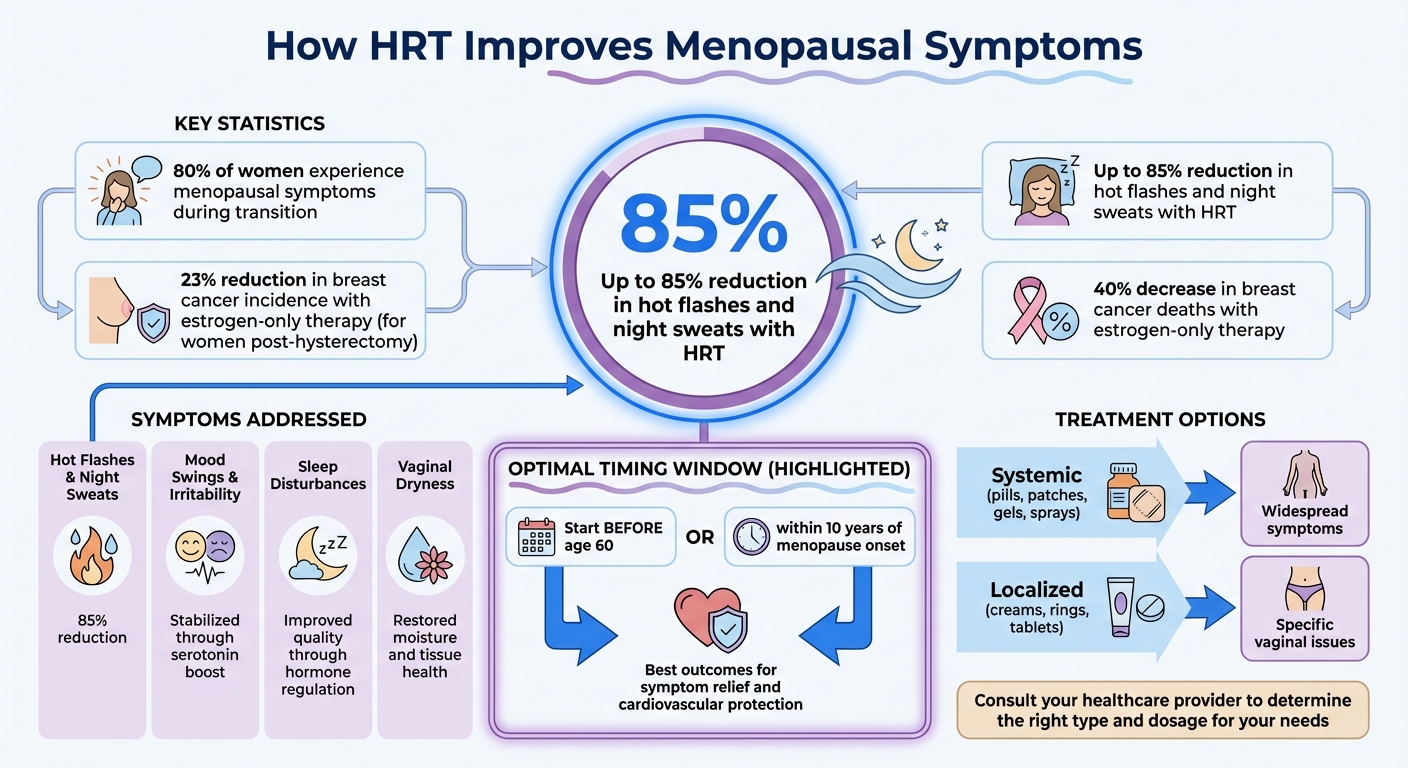
How HRT Relieves Menopause Symptoms: Key Statistics and Benefits
Hormone Replacement Therapy (HRT) explained - a British Menopause Society video

What Is Hormone Replacement Therapy (HRT)?
Hormone replacement therapy (HRT) is a treatment designed to address the hormonal changes that occur during menopause. It involves prescription medications that supplement hormones - mainly estrogen and progestogens - that naturally decline as the ovaries reduce their activity.
This therapy works by restoring hormonal balance, which helps regulate disrupted body functions. During menopause, the drop in estrogen and progestogen levels can interfere with processes like temperature control, mood stability, and tissue health. By replenishing these hormones, HRT helps alleviate these disruptions. The different formulations of HRT cater to various needs, as outlined below.
As The Menopause Society explains:
"At the most basic level, hormone therapy replaces female hormones, primarily estrogen and progestogens, that are lost during the menopause transition." – The Menopause Society
HRT can be tailored to address both widespread and localized menopausal symptoms. It typically involves two key components: estrogen, which alleviates most symptoms, and progestogen, included for women with an intact uterus. The progestogen component is crucial because it prevents the uterine lining from overgrowing, which could otherwise increase the risk of cancer. For women who have undergone a hysterectomy, estrogen-only therapy is usually recommended since the progestogen is unnecessary in their case.
There are two main ways HRT is administered:
- Systemic treatments: These include pills, patches, gels, or sprays to manage widespread symptoms like hot flashes and bone loss.
- Localized treatments: These involve creams, tablets, or rings designed to address specific issues such as vaginal dryness or urinary discomfort. These methods focus on minimal absorption into the bloodstream.
HRT offers a flexible approach to managing menopausal symptoms, with options tailored to individual needs and health considerations.
Menopausal Symptoms That HRT Addresses
Hormone replacement therapy (HRT) helps manage many of the challenging symptoms women face during menopause. Around 80% of women experience these symptoms during the menopausal transition, and for some, they can last over eight years.
Hot Flashes and Night Sweats
Hot flashes and night sweats are some of the most well-known menopausal symptoms. HRT works by targeting the brain's thermoregulatory center. Specifically, estrogen therapy adjusts neurokinin B signaling in the hypothalamus, which helps regulate body temperature. Studies show that HRT can reduce vasomotor symptoms by up to 85%. As Harvard Health Publishing highlights:
"If you're plagued by hot flashes, nothing delivers more effective relief than systemic HT."
It's important to note that local vaginal treatments don’t provide enough circulating hormones to impact the brain’s thermostat. For relief from hot flashes and night sweats, systemic therapy is generally required.
These hormonal changes also affect emotional well-being.
Mood Swings and Irritability
Shifting hormone levels during menopause can disrupt neurotransmitters like serotonin and GABA, which are crucial for mood regulation. Declining estrogen levels can lead to reduced serotonin production, potentially causing heightened irritability, anxiety, and mood swings. Women are also at a greater risk of depression during this phase. HRT helps stabilize these hormonal shifts, with estrogen boosting serotonin and endorphin production, while progesterone supports GABA synthesis. For women with a uterus, progesterone is often taken at bedtime - not only to protect the uterine lining but also to promote a calming effect. Psychiatrist Dr. Susan B. Trachman explains:
"Decreasing levels of estrogen in the years leading up to menopause can cause an increase in anxiety... estrogen acts as a natural mood stabilizer."
By addressing the hormonal imbalance, HRT offers a more targeted approach to mood stabilization compared to treating these symptoms individually.
Balanced hormones also play a key role in improving sleep.
Sleep Disturbances
Sleep issues during menopause often stem from hormonal changes and secondary factors like frequent night sweats. HRT can improve sleep by regulating the hormones that influence body temperature and neurotransmitter activity. Progesterone, with its calming properties, combined with reduced night sweats from systemic HRT, leads to better sleep quality. Gina Harper-Harrison from StatPearls notes:
"Progesterone can help with sleep disturbances and mood instability and is frequently given before bedtime."
In November 2025, the U.S. FDA began removing broad "black box" warnings from HRT products, acknowledging their effectiveness in addressing sleep problems and night sweats.
Vaginal Dryness
Declining estrogen levels can cause vaginal atrophy, leading to dryness, thinning, and reduced elasticity. These changes can affect daily comfort and intimacy. HRT helps by restoring moisture and improving tissue health. For women with vaginal symptoms but no systemic issues like hot flashes or sleep disturbances, localized estrogen therapy - available as creams, tablets, or low-dose vaginal rings - provides targeted relief with minimal absorption into the bloodstream. However, for women experiencing multiple symptoms, systemic HRT is often the better option. The choice between localized and systemic treatments depends on the severity and scope of symptoms.
How HRT Works to Relieve Symptoms
Hormone replacement therapy (HRT) helps ease menopausal symptoms by replenishing the hormones that the ovaries stop producing. As Leeds Teaching Hospitals NHS Trust puts it:
"HRT aims to replace the declining levels of oestrogen that your ovaries used to make, and this helps to reduce your menopause symptoms."
This process addresses a variety of symptoms by reintroducing hormones like estrogen, progestogens, and sometimes testosterone into the body. By restoring hormonal levels, HRT can alleviate issues such as hot flashes, mood swings, sleep problems, and vaginal dryness all at once.
HRT works at the cellular level to restore hormonal balance. Estrogen receptors, found in areas like the brain, bones, and urogenital tract, play a key role. When estrogen binds to these receptors, it helps regulate disrupted biological functions. For instance, estrogen aids in controlling body temperature through central pathways. As StatPearls explains:
"HRT with estrogen is thought to affect the hypothalamus by influencing the neurokinin B signaling pathway, which plays a key role in regulating reproductive and thermoregulatory responses."
This mechanism is why HRT can reduce vasomotor symptoms, such as hot flashes, by up to 85%. For women with a uterus, progesterone is added to HRT to prevent abnormal thickening of the uterine lining. Progesterone also interacts with GABA receptors in the brain, which may contribute to better mood and improved sleep.
There are two main types of HRT: systemic and local. Systemic therapy, delivered via pills, patches, gels, or sprays, addresses widespread symptoms. Local therapy, using creams or vaginal rings, specifically targets urogenital issues with minimal absorption into the bloodstream.
sbb-itb-6dba428
Types of HRT Available
The type of hormone replacement therapy (HRT) you choose largely depends on whether or not you still have your uterus. If you've had a hysterectomy, estrogen-only therapy is typically recommended. However, if your uterus is intact, you'll need a combination of estrogen and progestogen to protect the uterine lining from overgrowth, which can lead to complications. These options are designed to address your specific needs and help alleviate menopausal symptoms.
Estrogen-Only Therapy
Estrogen-only therapy (ET) is intended for women who have had a hysterectomy. Without a uterus, there's no need for progestogen, making ET a straightforward option. This therapy replenishes diminished estrogen levels, helping to alleviate symptoms like hot flashes and night sweats. Studies, including long-term data from the Women's Health Initiative, have shown that ET is linked to a 23% reduction in breast cancer incidence and a 40% decrease in breast cancer deaths among women who have undergone a hysterectomy. You can choose from various delivery methods, such as pills, patches, gels, sprays, vaginal rings, or creams.
Combined Estrogen-Progestin Therapy
For women with an intact uterus, a combination of estrogen and progestogen is essential. Progestogen, which can be natural progesterone or synthetic progestin, helps prevent the uterine lining from thickening - a condition that can increase the risk of uterine cancer when estrogen is used alone. This combination therapy is available in forms like pills or patches, and progestin can also be delivered through an intrauterine device (IUD). Depending on your preference, you can opt for:
- Cyclic regimens: Periodic progestogen use that induces withdrawal bleeding.
- Continuous-combined regimens: Daily use of both hormones, which eventually eliminates bleeding.
Bioidentical Hormone Therapy
Bioidentical hormones are designed to replicate the structure of your body's natural hormones. FDA-approved options, such as micronized progesterone and certain estradiol products, are regulated to ensure consistent dosing and safety. These differ from custom-compounded bioidentical hormones, which are prepared by pharmacists but aren't FDA-tested for effectiveness or purity. According to The Menopause Society:
"Custom-compounded hormones are not safer or more effective than approved bioidentical hormones. They are not tested for safety and effectiveness or to prove that the active ingredients are absorbed appropriately."
FDA-approved bioidenticals share the same general risks and benefits as traditional HRT. Like other forms of HRT, they aim to restore hormonal balance and manage menopausal symptoms effectively.
When to Start HRT: Timing and Considerations
When it comes to hormone replacement therapy (HRT), timing is everything. Research supports the idea that starting HRT before age 60 or within 10 years of menopause offers the best outcomes. Dr. Stephanie S. Faubion, Medical Director of The Menopause Society, explains:
"Women who start therapy before age 60 or within 10 years of their final menstrual period tend to experience the greatest symptom relief and cardiovascular protection".
This early window not only helps manage symptoms like hot flashes and mood swings but also provides added protection for heart and bone health.
For many, the ideal time to begin HRT is during perimenopause, as symptoms such as night sweats or mood changes first appear. Women who experience premature menopause (before age 40) or early menopause (before age 45) are often advised to start HRT to lower their risks of osteoporosis and cardiovascular issues. In most cases, treatment continues until around age 51, the average age of natural menopause.
However, starting HRT after age 60 - or more than 10 to 20 years post-menopause - comes with increased risks, including heart disease, stroke, and blood clots, due to changes in vascular health over time. For women in this age group who still need symptom relief, healthcare providers may suggest low-dose transdermal options like patches or gels. These forms are gentler on blood clotting factors and blood pressure, making them a safer choice.
The length of time you stay on HRT is highly individual. While many women use it for two to five years, ongoing treatment should be assessed annually with your healthcare provider to ensure the benefits continue to outweigh the risks. If you decide to stop, tapering the dosage over three to six months can help reduce the likelihood of symptoms returning.
Ultimately, HRT is not a one-size-fits-all solution. A healthcare provider will consider your medical history, severity of symptoms, cardiovascular risk, and whether or not you have a uterus to create a plan tailored to your needs. For expert guidance, you can consult with a licensed provider at Oana Health (https://oanahealth.com) to develop a personalized and safe treatment approach.
Conclusion
Hormone replacement therapy (HRT) can significantly alleviate menopausal symptoms. It’s been shown to reduce hot flashes and night sweats by about 85%, while also improving sleep, stabilizing mood, addressing vaginal dryness, and safeguarding bone health. Additionally, when started at the right time, HRT may lower the risks of heart disease and type 2 diabetes.
However, the decision to pursue HRT should be tailored to your individual health needs, symptom severity, and medical history. The North American Menopause Society emphasizes:
"The benefits of hormone therapy outweigh the risks for most healthy women [with bothersome symptoms] who are aged younger than 60 years and within 10 years of menopause onset."
If menopausal symptoms are affecting your quality of life, it’s essential to consult with a healthcare provider. They can help you weigh the risks and benefits and determine the best type and dosage of HRT for your situation.
For specialized guidance, consider reaching out to Oana Health. Their telehealth services focus on science-based hormone treatments, offering personalized care and prescriptions delivered straight to your home.
FAQs
What are the potential risks of starting hormone replacement therapy (HRT) after age 60?
Starting hormone replacement therapy (HRT) after the age of 60 can carry certain risks, such as a higher chance of developing cardiovascular disease, breast cancer, or dementia. That said, updated medical guidelines indicate that, for some people, the potential benefits might still outweigh these risks. It all depends on individual health factors and specific needs.
The best approach? Talk to a licensed healthcare provider. They can evaluate your health history and help determine if HRT is a safe and effective choice for managing menopausal symptoms. With personalized care, treatments can be tailored to fit your unique situation, empowering you to make well-informed decisions.
How does hormone replacement therapy help stabilize mood during menopause?
Hormone replacement therapy (HRT) plays a role in balancing mood during menopause by targeting hormonal shifts that are common during this phase. These changes often lead to emotional challenges such as anxiety, irritability, and mood swings.
By supplementing the hormones that naturally decrease during menopause, HRT can help create a steadier hormonal environment. This, in turn, may lead to improved emotional stability and an overall sense of well-being. For many women, HRT provides relief and helps them feel more in tune with themselves during this transitional period.
What’s the difference between systemic and localized HRT?
Hormone replacement therapy (HRT) comes in two main forms, each designed to address different needs: systemic HRT and localized HRT.
Systemic HRT works throughout the entire body. It delivers hormones like estrogen and progestogen via pills, patches, gels, or injections. This approach is often used to manage widespread menopausal symptoms, including hot flashes, night sweats, and mood swings.
In contrast, localized HRT targets specific areas, most commonly the vaginal tissue. This type of therapy is applied through creams, rings, or tablets and is primarily used to alleviate vaginal dryness and discomfort. Unlike systemic HRT, localized treatments have minimal impact on the rest of the body, making them a more focused option for certain symptoms.
The main distinction between the two lies in their reach: systemic HRT addresses symptoms affecting the whole body, while localized HRT is tailored to relieve specific, localized issues.