
How Metformin Reduces Inflammation in Chronic Diseases
Metformin isn’t just a diabetes medication - it’s also a powerful tool for reducing chronic inflammation, which plays a role in conditions like PCOS, cardiovascular disease, and neurodegenerative disorders. By activating AMPK, reducing oxidative stress, and suppressing the NLRP3 inflammasome, metformin directly targets inflammatory pathways at the cellular level. Clinical studies show it lowers markers like CRP, TNF-α, and IL-6, improving outcomes in conditions tied to inflammation. Long-term use (24+ weeks) enhances these effects, making it a valuable option for managing chronic diseases.
Key Points:
- Activates AMPK to regulate inflammation.
- Reduces oxidative stress and harmful ROS.
- Suppresses the NLRP3 inflammasome to lower cytokine production.
- Decreases inflammation markers like CRP by up to 14%.
- Benefits extend to non-diabetic patients with inflammatory conditions.
Metformin’s anti-inflammatory effects go beyond blood sugar control, offering a pathway to better health for those with chronic inflammatory diseases.
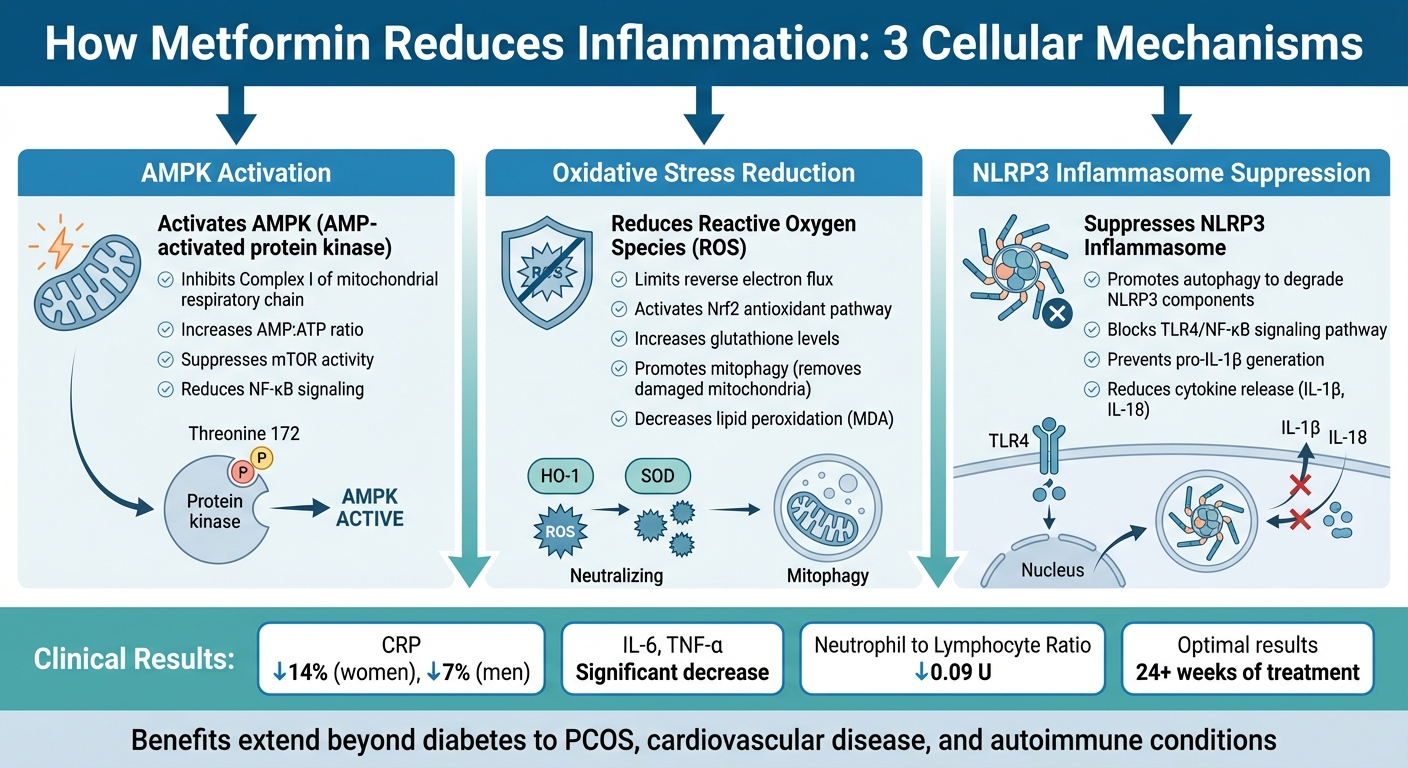
How Metformin Reduces Inflammation: 3 Cellular Mechanisms
Metformin suppresses inflammation and cellular metabolism in HS, A. Petrasca et al.
How Metformin Reduces Inflammation
Metformin works at a cellular level to interrupt processes that drive chronic inflammation, offering benefits for conditions like PCOS and cardiovascular disease.
AMPK Activation and Inflammation Control
The key to metformin's anti-inflammatory effects lies in its ability to activate AMP-activated protein kinase (AMPK). By inhibiting Complex I of the mitochondrial respiratory chain, metformin reduces ATP production and increases the AMP:ATP ratio. This change activates AMPK through phosphorylation of its catalytic α subunit at threonine 172. Once AMPK is activated, it suppresses inflammation by inhibiting mTOR activity and reducing NF-κB signaling. These actions also help lower oxidative stress, which is closely tied to inflammation.
Reduction in Oxidative Stress and ROS
Reactive oxygen species (ROS) are harmful molecules that contribute to inflammation and cellular damage. Metformin helps reduce oxidative stress in several ways. It limits reverse electron flux, a major source of mitochondrial ROS, and activates Nrf2, which enhances the production of antioxidant enzymes like HO-1 and SOD. Additionally, metformin encourages mitophagy, a process that removes damaged mitochondria, increases glutathione levels, and decreases lipid peroxidation markers such as MDA.
"Metformin-mediated inhibition of complex 1 is weak and reversible compared with canonical inhibitors, which can be advantageous because the fast but weak and reversible inhibition is modulated according to cellular needs."
– AJP Cell Physiology
By addressing oxidative stress, metformin further supports its anti-inflammatory role by directly targeting inflammasome activity.
Suppression of the NLRP3 Inflammasome
The NLRP3 inflammasome is a key driver of inflammation, responsible for releasing cytokines like IL-1β and IL-18 when activated. Metformin disrupts this process in several ways. First, through AMPK activation and mTOR inhibition, it promotes autophagy, which helps degrade NLRP3 protein components. Second, it blocks the TLR4/NF-κB signaling pathway, preventing the priming step that generates pro-IL-1β and other inflammasome components.
"Mitochondrial dysfunction and consequent overproduction of ROS are necessary to activate the NLRP3 inflammasome."
– Huan Lin, Medical Center of Burn Plastic and Wound Repair
This suppression is particularly beneficial in conditions like PCOS and cardiovascular disease, where inflammation is a significant factor. For instance, studies in women with PCOS show that metformin restores leukocyte oxygen consumption and reduces pro-inflammatory cytokines such as IL-6 and TNF-α. These anti-inflammatory effects enhance metformin's role in managing chronic diseases effectively.
Research Evidence Across Chronic Diseases
Clinical research builds on metformin's cellular actions, showcasing its ability to reduce inflammation across a range of chronic diseases. These effects are often observed through measurable changes in biomarkers and patient health outcomes.
Osteoarthritis and Pain Reduction
Metformin has been shown to lower levels of key matrix-degrading enzymes like matrix metalloproteinases (MMP‑13, MMP‑1, MMP‑3) and aggrecanases (ADAMTS4, ADAMTS5), which contribute to cartilage breakdown in osteoarthritis. Beyond that, it boosts the synthesis of type II collagen and aggrecan - both critical for maintaining healthy cartilage. In rheumatoid arthritis, metformin helps regulate the immune response by reducing pro-inflammatory Th17 cells and increasing anti-inflammatory T-regulatory (Treg) cells. These combined effects on cartilage preservation and immune modulation underscore metformin's broader anti-inflammatory potential.
Cardiovascular and Autoimmune Diseases
The GoDARTS study, which followed 3,575 patients with Type 2 Diabetes from October 1997 to March 2010, revealed that metformin significantly reduced the Neutrophil to Lymphocyte Ratio (NLR) within 8 to 16 months. Patients on metformin were 1.83 times more likely to see a reduction in their baseline NLR compared to those on sulfonylureas. In cardiovascular disease, metformin improves endothelial function by lowering levels of adhesion molecules like VCAM‑1, ICAM‑1, and MCP‑1, which reduces the risk of atherosclerosis.
Another noteworthy study - a double-blind, placebo-controlled trial (NCT00473876) involving 33 non-diabetic patients with insulin-resistant congestive heart failure - found that taking 2 g of metformin daily for 4 months significantly decreased plasma cytokines, including CCL11, a chemokine linked to aging and inflammation.
"Anti-inflammatory properties of metformin are exerted irrespective of diabetes mellitus status."
– Circulation Research
Metformin's anti-inflammatory effects have also been observed in hospitalized COVID-19 patients with pre-existing Type 2 Diabetes, further highlighting its role in reducing inflammation across various chronic conditions.
sbb-itb-6dba428
Implications for Chronic Disease Management
Metformin's effects go beyond its well-known role in managing blood sugar levels. Its anti-inflammatory properties make it a valuable tool in addressing chronic conditions like PCOS, insulin resistance, and cardiovascular disease. Research shows that metformin directly impacts inflammatory pathways, independent of its glucose-regulating abilities.
"Metformin not only improves chronic inflammation by improving metabolic parameters but also has a direct anti-inflammatory effect." – AJP Cell Physiology
For individuals dealing with PCOS or insulin resistance, metformin helps reduce inflammation by improving the function of leukocyte mitochondria. This process increases oxygen consumption and reduces oxidative stress. These cellular benefits are linked to lower levels of systemic inflammation markers, such as the Neutrophil to Lymphocyte Ratio (NLR) and specific cytokines, as demonstrated in clinical trials.
Reductions in Inflammatory Markers
Clinical studies consistently highlight metformin's ability to lower inflammatory markers. A meta-analysis of 13 randomized controlled trials, involving 1,776 participants with Type 2 Diabetes, reported a standardized mean reduction of -0.76 mg/L in C-reactive protein (CRP) levels. Similarly, the Diabetes Prevention Program found that metformin reduced CRP levels by 14% in women and 7% in men over the course of a year.
In PCOS patients, metformin treatment has been shown to decrease reactive oxygen species (ROS), IL-6, and TNF-α, while simultaneously increasing protective glutathione levels in leukocytes. The duration of treatment plays a key role; studies indicate that using metformin for at least 24 weeks leads to more significant reductions in CRP levels compared to shorter treatment periods.
Inflammatory Marker Changes with Treatment
The measurable reductions in inflammatory biomarkers lead to real-world health improvements across various conditions. The table below summarizes how metformin impacts these markers before and after treatment:
| Condition | Inflammatory Marker | Pre-Treatment Level | Post-Treatment Change | Duration |
|---|---|---|---|---|
| Type 2 Diabetes | C-Reactive Protein (CRP) | N/A | -0.76 mg/L (SMD) | Varies |
| Impaired Glucose Tolerance (Women) | CRP | 4.9 mg/L | -14% | 12 months |
| Impaired Glucose Tolerance (Men) | CRP | 1.9 mg/L | -7% | 12 months |
| PCOS | IL-6 and TNF-α | N/A | Significant decrease | Varies |
| PCOS | Reactive Oxygen Species (ROS) | N/A | Significant reduction | Varies |
| Diabetes (General Cohort) | Neutrophil to Lymphocyte Ratio (NLR) | N/A | -0.09 U | 8-16 months |
| COVID-19 with Type 2 Diabetes | CRP, IL-6, IL-2, TNF-α | N/A | Significant reduction | Varies |
For those managing PCOS or insulin resistance, personalized metformin treatment plans are available through Oana Health, starting at just $22 per month.
Conclusion and Practical Takeaways
Metformin offers a range of anti-inflammatory benefits that go far beyond its well-known role in managing blood sugar levels. By activating AMPK pathways, suppressing the NLRP3 inflammasome, and reducing oxidative stress, it addresses key drivers of chronic inflammation. Studies have shown it significantly lowers CRP levels, a marker of inflammation. Additionally, clinical data reveal that metformin use is associated with a 21% reduction in myocardial infarction mortality and a 16% reduction in heart failure mortality.
Key Benefits of Metformin for Chronic Inflammation
Metformin’s cellular-level effects translate into real-world health benefits. Its anti-inflammatory properties make it an effective option for managing conditions like PCOS, insulin resistance, cardiovascular disease, and autoimmune disorders. It also helps rebalance the immune system by restoring harmony between pro-inflammatory Th17 cells and anti-inflammatory Treg cells. Furthermore, it inhibits the NF-κB signaling pathway, reducing the production of inflammatory cytokines. For optimal results, consistent use is crucial, as significant CRP reductions are typically seen after at least 24 weeks of treatment.
"Metformin is a multi-functional drug and metformin use will increase in treatment and prevention of many kinds of diseases." – Natsumi Sakata, School of Medicine, Tohoku University
To minimize side effects, take metformin with meals to reduce gastrointestinal discomfort. Long-term users should monitor Vitamin B12 levels and ensure normal kidney function before starting treatment.
How Oana Health Can Help

With these proven benefits in mind, personalized treatment plans can help effectively manage chronic inflammation. Oana Health offers telehealth consultations with licensed professionals who can prescribe customized metformin treatments. These are delivered directly to your door with free shipping. Oral Metformin ER is available for just $22 per month, while the Metformin & Spironolactone plan, designed to provide additional hormonal balance and anti-inflammatory support, is offered at $32 per month.
FAQs
How does metformin help reduce inflammation in chronic conditions?
Metformin plays a role in reducing inflammation by activating an enzyme known as AMP-activated protein kinase (AMPK). This activation happens when metformin increases the AMP-to-ATP ratio within cells, essentially signaling that energy levels are low. Once AMPK is activated, it helps maintain energy balance and dampens inflammatory responses throughout the body.
This process has proven helpful in managing chronic conditions tied to inflammation, such as insulin resistance and metabolic disorders. By influencing these pathways, metformin not only aids in energy regulation but also decreases inflammation markers like C-reactive protein (CRP).
Can metformin help reduce inflammation in people without diabetes?
Metformin's ability to reduce inflammation can be beneficial even for those without diabetes. Studies indicate that it lowers inflammation by targeting markers like C-reactive protein (CRP), a common indicator of chronic inflammation. Interestingly, this anti-inflammatory effect works independently of its role in managing blood sugar, making it a potential option for non-diabetic individuals dealing with inflammation.
For those exploring how treatments like metformin might improve their health, consulting a healthcare provider is essential. Services like Oana Health focus on tailored care for issues like insulin resistance and inflammation, providing science-based solutions conveniently delivered to your home.
What are the possible side effects of using metformin long-term?
Metformin is generally safe for long-term use, but like any medication, it can sometimes lead to side effects. One potential issue is a vitamin B12 deficiency, which might result in fatigue, weakness, or even nerve-related problems if not addressed. Another common concern is gastrointestinal discomfort, including nausea, diarrhea, or an upset stomach. The good news? These symptoms often ease with time.
On rare occasions, metformin has been linked to a serious condition called lactic acidosis, where lactic acid builds up in the bloodstream. While this is extremely rare, it’s a situation that demands immediate medical attention. To stay on the safe side, regular check-ups with your healthcare provider are key. These visits can help track any side effects and ensure that your treatment is working as effectively as possible.