
How Online PCOS Consultations Work
Online PCOS consultations make it easier to manage symptoms like irregular periods, acne, or insulin resistance from home. Here's how it works:
- Simple Process: Fill out a quick questionnaire, meet with a specialist via video, and get a personalized treatment plan.
- Convenience: Book same-day appointments, access lab tests remotely, and receive prescriptions delivered to your home.
- Preparation: Gather your medical history, track symptoms (like hair growth or energy levels), and monitor your menstrual cycle for accurate diagnosis.
- Treatment Options: Medications like Metformin or Spironolactone target specific symptoms, while lifestyle changes support long-term management.
- Follow-Up: Regular check-ins ensure your treatment evolves based on progress and lab results.
Platforms like Oana Health simplify the process, offering secure consultations and ongoing support, all tailored to your needs.
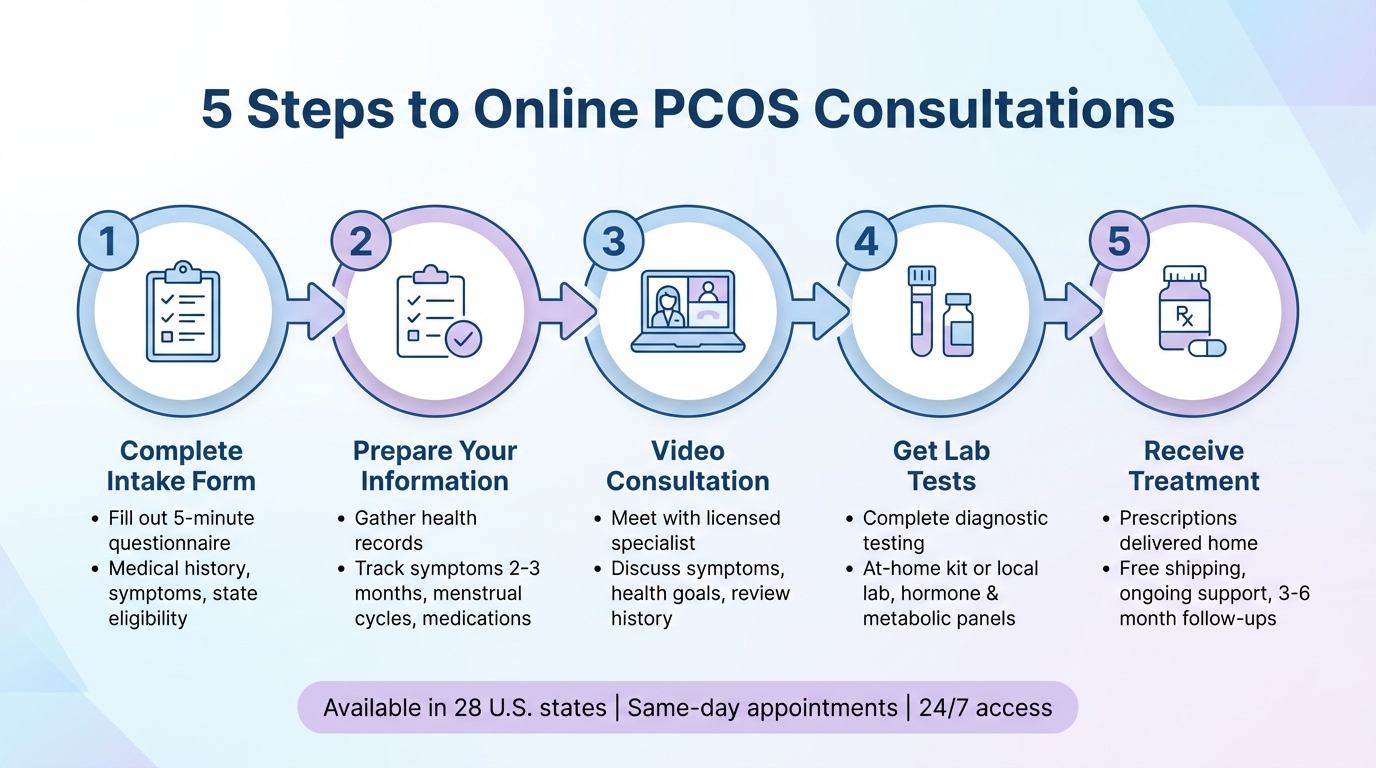
5 Steps to Complete Your Online PCOS Consultation
Preparing for Your PCOS Consultation
Gathering Your Medical and Health Information
Before heading to your appointment, it’s a good idea to organize your medical history - it can make a big difference in shaping your treatment plan. Start by listing all the medications, supplements, and vitamins you’re currently taking, along with their dosages. Don’t forget to include details about any past diagnoses, surgeries, or chronic conditions, like diabetes or thyroid issues. If conditions like PCOS, diabetes, heart disease, or fertility challenges run in your family, make a note of that too. These details are essential, as such conditions often have genetic links.
If you’ve had any recent lab work done - like blood sugar levels, cholesterol tests, or hormone panels - be sure to gather those results and bring them along. Having everything ready not only saves time but also helps your provider get a clearer picture of your overall health. Once you’ve done this, move on to documenting your symptoms and lifestyle factors to give your doctor even more context.
Tracking Your Symptoms and Lifestyle Factors
Keeping track of your symptoms is key to creating a treatment plan that’s tailored to your needs. Make a note of any signs of androgen excess, such as acne, unwanted facial or body hair (hirsutism), or thinning hair on your scalp in a male-pattern distribution. Taking photos of these changes can also be incredibly useful, especially since it can take 6–12 months of treatment to see noticeable improvements in symptoms like hirsutism.
Beyond physical symptoms, jot down details about your daily energy levels, mood changes, appetite shifts, and sleep patterns. These factors can provide clues about how PCOS is affecting your overall well-being. Also, document your current activity level - this will help your provider suggest realistic exercise goals that align with clinical recommendations for managing PCOS.
Once you’ve tracked your symptoms and lifestyle, it’s time to focus on your menstrual cycle, as this is a critical piece of the puzzle.
Monitoring Your Menstrual Cycles
Keeping detailed records of your menstrual cycle is one of the most important steps in preparing for your consultation. Track the frequency, duration, and regularity of your periods. If you’ve experienced missed periods or irregular bleeding, make sure to note that as well, since these are key diagnostic markers for PCOS. Write down when your period starts, how long it lasts, and the intensity of the flow. This information can help your provider identify hormonal imbalances, such as infrequent periods (oligomenorrhea) or absent periods (amenorrhea), which are often tied to elevated androgen levels and insulin resistance.
Using a period tracking app or a simple journal can make this process easier. Try to record this data for at least two to three months before your appointment. The more detailed your records, the better equipped your provider will be to determine if you meet at least two of the three Rotterdam criteria: irregular periods, clinical or biochemical signs of high androgens, or polycystic ovaries visible on an ultrasound. If you’re attending a virtual consultation, this information becomes even more critical, as providers may not have immediate access to ultrasound imaging.
Booking Your Online PCOS Consultation with Oana Health
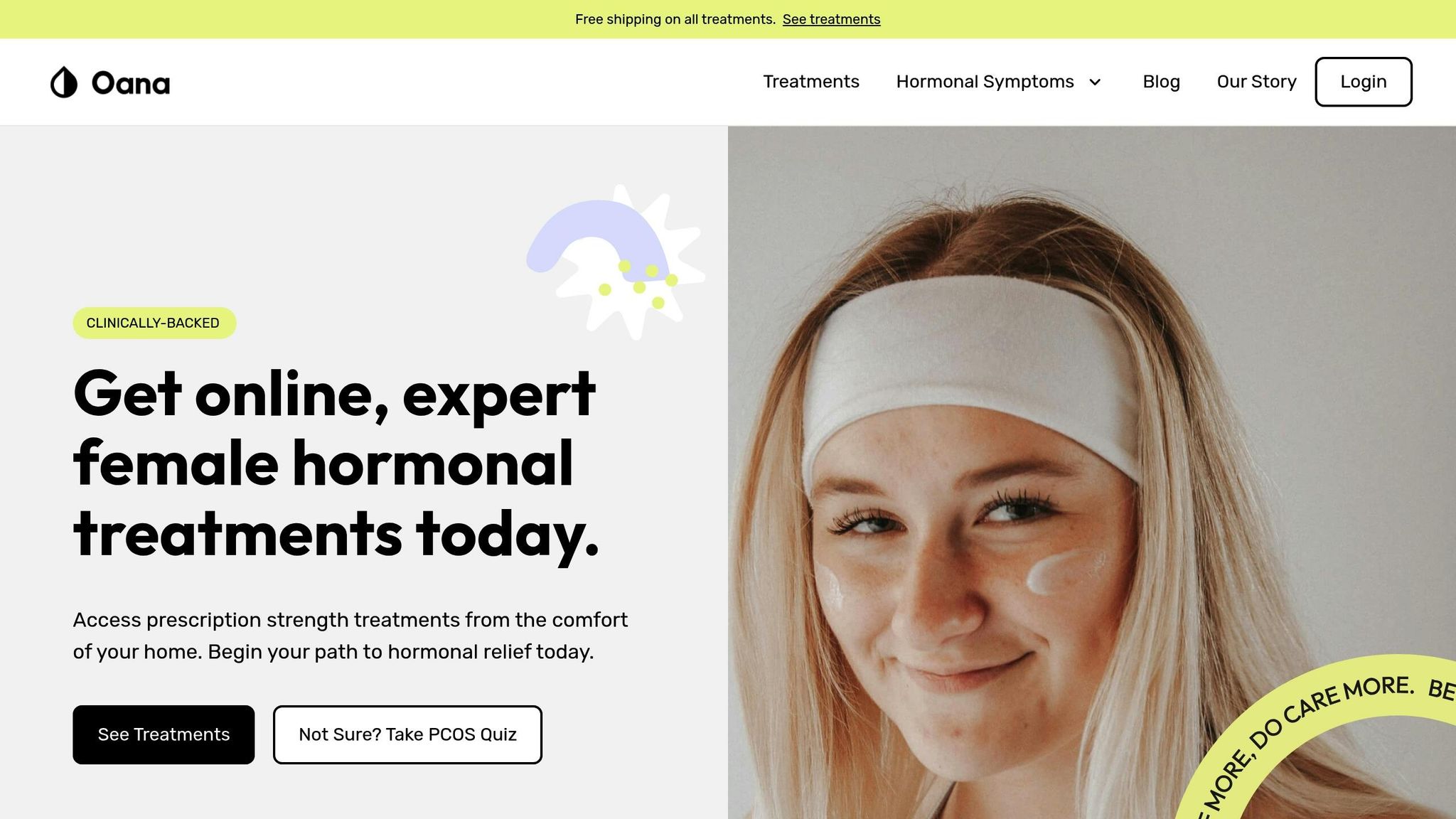
Using the Oana Health Website
Head over to oanahealth.com to kickstart your PCOS treatment journey. The site is available 24/7, so you can begin the process whenever it suits you. Before booking, take the PCOS quiz to receive personalized treatment suggestions tailored to your symptoms.
Once you’re ready, fill out the quick 5-minute online intake form. This form gathers details about your medical history and PCOS symptoms - like irregular periods, acne, or excessive hair growth. It also confirms whether you live in one of the 28 U.S. states and jurisdictions where Oana Health operates. These include AZ, CA, CO, CT, DC, FL, GA, IA, KY, ME, MD, MI, MN, MT, NE, NV, NH, NC, ND, OH, OK, SC, SD, TX, UT, WA, WI, and WY. If you’re outside these areas, the service isn’t available just yet. After completing the form, pick a consultation time that fits your schedule.
Selecting Your Appointment Time
Once the intake form is submitted, choose a video consultation time that works best for your routine - whether it’s around work, family, or other responsibilities. Oana Health connects you with licensed medical professionals who run their own practices independently. For instance, Dr. Bhavesh Patel, a licensed physician with over a decade of experience, is one of the experts available through the platform. This telehealth approach makes it easy to find a time that works without the hassle of traveling to an office.
Submitting Your Health Information
During the booking process, you’ll need to provide your name, email, government-issued ID, current medications, home address, and credit card details. This information allows a licensed physician to review your case and begin your treatment plan - no prior prescription is required.
What to Expect During the Consultation
Discussing Your Symptoms and Health Goals
The consultation kicks off with your provider reviewing your PCOS symptoms, which may include irregular periods, acne, excess facial or body hair, scalp thinning, or weight changes. They’ll also ask about other factors like your energy levels, mood, and any mental health concerns, such as anxiety or depression. This discussion is all about understanding what’s most troubling for you and what you hope to achieve from treatment. Whether your goals are clearer skin, more regular cycles, weight management, or better emotional health, this conversation sets the foundation for a thorough evaluation.
Reviewing Your Health History and Diagnostic Criteria
Your provider will then dive into your health history to better understand your condition. They’ll examine details like your hormone levels, menstrual cycle patterns, and any signs of insulin resistance to confirm a PCOS diagnosis. If you’ve already had lab work done - such as blood tests for testosterone, insulin, or glucose - they’ll go over the results with you. If not, they may recommend additional tests to gather the necessary data. This step ensures that your treatment plan targets the root causes of your symptoms rather than just addressing surface-level concerns. A detailed review like this helps pinpoint the hormonal imbalances that need to be tackled for effective care.
Getting Personalized Treatment Recommendations
Once the assessment is complete, your provider will suggest treatments tailored specifically to your needs. For issues like insulin resistance and blood sugar regulation, options such as Metformin ER or GLP-1 medications like semaglutide might be recommended. If acne or unwanted hair growth is a concern, they may suggest Spironolactone or Eflornithine Cream. For scalp hair thinning, Oral Minoxidil is a common choice. During this discussion, your provider will explain how each medication works, what side effects to expect, and what kind of results you can anticipate, empowering you to make informed decisions about your care.
| Treatment Category | Common Medications | Primary Goal |
|---|---|---|
| Insulin Resistance | Metformin ER, GLP-1s (Semaglutide) | Improve insulin sensitivity and lower blood sugar |
| Androgen Excess | Spironolactone, Eflornithine, Azelaic Acid | Reduce acne and unwanted facial/body hair |
| Hair Regrowth | Oral Minoxidil, Spironolactone | Slow hair thinning and promote scalp hair density |
| Weight/Metabolic | Semaglutide (GLP-1), Bupropion XL | Support weight loss and regulate appetite |
| Mental Health | Bupropion XL | Improve mood, energy, and sense of well-being |
sbb-itb-6dba428
After Your Consultation: Starting Treatment
Diagnostic Tests and Follow-Up Appointments
To confirm hormone levels and assess metabolic health, your provider will order lab tests. These typically include checks for testosterone, FSH, LH, cortisol, and glucose levels. These tests not only help confirm a PCOS diagnosis but also rule out other potential health issues. You have two options for completing these tests: using at-home collection kits (a simple finger prick for blood and saliva samples) or visiting a local lab, such as Quest Diagnostics, with a referral from your provider.
Timing is key for accurate results. Hormone tests should be done between days 3 and 7 of your cycle, while metabolic panels require a 12-hour fast and morning sample collection. If you've used hormonal birth control in the past three months, let your provider know, as it can significantly impact results for testosterone, FSH, and LH. As Dr. Ana Maria Kausel, a board-certified endocrinologist, explains:
"The blood test is a help to see if we can/can't start medications."
Follow-up appointments, usually scheduled every 3 to 6 months, allow your provider to review lab results and adjust your treatment plan as needed. Once your test results are in, you’ll be ready to move forward with your prescribed treatment.
Receiving Your Prescriptions at Home
After your treatment plan is finalized, your prescriptions are shipped from an FDA-regulated pharmacy with free, discreet home delivery. Common prescriptions include Metformin ER for $22/month, Spironolactone for $14/month, and Oral Minoxidil for $25/month. For topical treatments like Metformin cream, applying it nightly after a shower ensures optimal absorption. If you’re prescribed GLP-1 medications such as semaglutide, you can expect gradual weight loss - most patients lose 5% to 10% of their starting weight within 12 weeks.
Once your medications arrive, your journey toward managing PCOS begins in earnest, supported by regular monitoring and adjustments.
Ongoing Support and Treatment Adjustments
PCOS treatment plans are tailored to your needs. Your provider will make adjustments based on symptom tracking and lab results. For example, Metformin ER may require monitoring blood sugar levels and adjusting dosages to manage digestive side effects. Oral Minoxidil, on the other hand, may need monitoring for fluid retention, blood pressure, and heart rate. For hair regrowth treatments, patience is crucial - it typically takes 3 to 6 months to see noticeable results.
Allison L., a patient, shared her experience:
"It's been a little over 5 weeks, and I've noticed a dramatic reduction in my facial hair growth... You really have to stick with it and be patient to notice results!"
Your provider will remain accessible throughout your treatment to adjust dosages, switch medications if necessary, and address any questions or concerns. This ongoing support ensures your treatment stays effective and aligned with your needs.
Conclusion
Oana Health’s online PCOS consultations break down the usual barriers - long wait times and the inconvenience of in-person visits - by connecting you directly with licensed specialists from the comfort of your home. The process is simple: a quick 5-minute online intake leads to personalized prescriptions delivered right to your door with free shipping. It’s all designed to fit effortlessly into your daily routine.
The care doesn’t stop there. Treatment plans are tailored to your unique symptoms, whether it’s managing insulin resistance, addressing unwanted hair growth, combating hair loss, or tackling weight concerns. Plus, these personalized solutions come with the added benefit of being budget-friendly. Studies show that telehealth’s faster follow-ups and easy treatment adjustments can significantly improve adherence and outcomes.
Another standout feature is the ongoing support and monitoring provided through the telehealth platform. Your provider stays accessible to tweak dosages, switch medications if needed, and answer any questions as your treatment evolves - an essential part of managing PCOS over the long term. As Margaret K. put it:
"Thanks to Oana, my menstrual cycles are more regular, and my skin has never looked better! I also love the 24/7 accessibility and customer service that always goes the extra mile."
FAQs
How should I prepare for my online PCOS consultation?
To make the most of your online PCOS consultation, here are a few steps to keep in mind:
- Check your device and internet connection ahead of time. A quick test ensures your video call runs smoothly, and you can access the telehealth platform without any hiccups.
- Organize your medical details like current medications, symptoms, medical history, and any past test results or treatments. Having this information ready helps your provider give you a more thorough assessment.
- Find a quiet, private space for your appointment. This keeps the conversation confidential and allows you to stay focused without distractions.
- Write down your questions or concerns about your symptoms and treatment goals. This way, you won’t forget to bring up anything important during the consultation.
Taking these steps sets you up for a productive and tailored discussion with your healthcare provider.
What medications are commonly prescribed during online PCOS consultations?
During online consultations for PCOS, medications are chosen to align with your individual symptoms and medical history. Common options include Metformin, which is often used to address insulin resistance and hormonal imbalances, and Spironolactone, a medication commonly prescribed for managing unwanted hair growth. Your healthcare provider will create a treatment plan specifically designed for you, ensuring a targeted approach to managing PCOS symptoms.
What kind of ongoing support is provided after starting a PCOS treatment plan?
After starting a PCOS treatment plan, staying on track usually involves regular follow-up appointments with licensed healthcare providers. These virtual check-ins allow your doctor to track your progress, address any questions or concerns, and make adjustments to your medications if necessary to ensure the treatment continues to meet your needs.
Beyond these consultations, support often includes customized lifestyle advice to help manage symptoms like weight fluctuations, acne, or unwanted hair growth. If medications are part of your plan, they’re delivered straight to your doorstep, making it simple to stick to your regimen. This setup provides consistent, personalized care without requiring in-person visits.