
How Spironolactone Reduces Androgenic Symptoms
Spironolactone is a prescription medication that helps manage androgenic symptoms like acne, unwanted facial hair, and hair thinning. It works by:
- Blocking androgen receptors: Prevents hormones like testosterone and DHT from affecting skin and hair follicles.
- Reducing androgen production: Lowers testosterone levels by inhibiting certain enzymes.
This dual action makes it effective for hormonal acne, hirsutism, and hair loss, especially in conditions like PCOS. Results typically take 3–6 months for acne and 6–12 months for hair-related changes. However, regular monitoring for side effects like high potassium levels is essential.
For best results, consult a healthcare provider who can tailor treatment and ensure safe use.
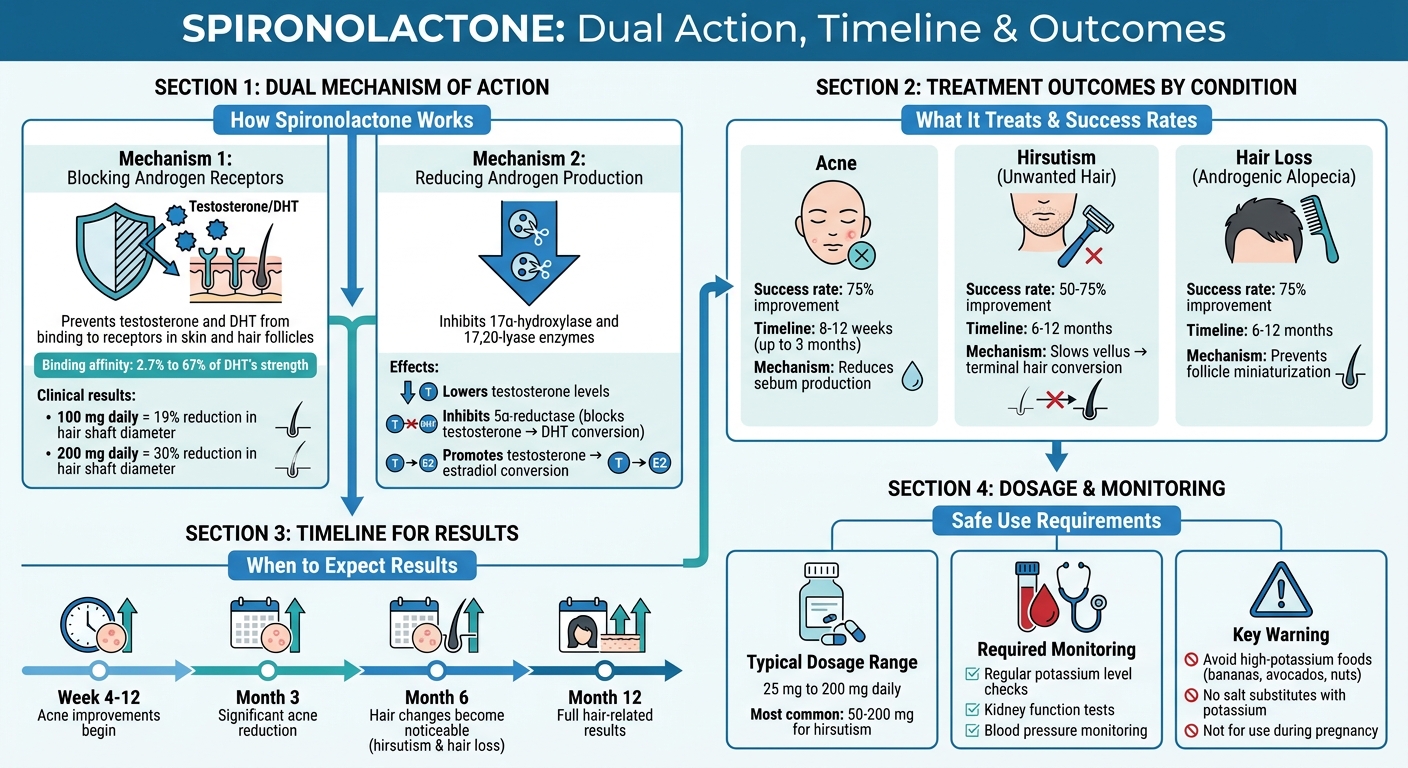
How Spironolactone Works: Dual Mechanism and Treatment Timeline
A Magic Pill for Acne, PCOS, Female Hair Loss, Hirsutism and HS
sbb-itb-6dba428
How Spironolactone Reduces Androgenic Symptoms
Spironolactone helps manage androgenic symptoms like acne, unwanted facial hair, and hair loss by working through two key mechanisms: blocking androgen receptors and reducing androgen production. These processes address the hormonal imbalances that often drive these conditions.
Blocking Androgen Receptors
Spironolactone acts as a competitive antagonist at androgen receptors found in skin and hair follicles. By binding to these receptors, it prevents testosterone and dihydrotestosterone (DHT) from attaching. This reduces excessive sebum production and limits terminal hair growth. As described in one source:
"The AR antagonism of spironolactone mostly underlies its antiandrogenic activity and is the major mechanism responsible for its therapeutic benefits in the treatment of androgen-dependent conditions like acne, hirsutism, and pattern hair loss." – Wikipedia
Its ability to block androgen receptors varies, with an affinity ranging from 2.7% to 67% of DHT's binding strength. Clinical studies have shown that a daily dose of 100 mg can reduce hair shaft diameter by 19%, while 200 mg per day achieves a 30% reduction. These results underscore its effectiveness at the follicular level.
But spironolactone doesn’t stop there - it also works to reduce androgen production.
Reducing Androgen Production
Beyond receptor blockade, spironolactone inhibits key enzymes involved in testosterone synthesis, specifically 17α-hydroxylase and 17,20-lyase. This lowers overall androgen levels in the bloodstream. It may also mildly inhibit 5α-reductase, the enzyme responsible for converting testosterone into the more potent DHT. Additionally, spironolactone promotes the conversion of testosterone into estradiol, which helps lower the testosterone-to-estradiol ratio.
Unlike some androgen receptor blockers, such as flutamide, which can cause a compensatory increase in testosterone production, spironolactone has weak antigonadotropic effects. This helps maintain a more balanced hormonal environment, making it a versatile option for treating androgen-driven conditions.
Effects on Acne, Hirsutism, and Hair Loss
Spironolactone's ability to block androgen receptors and reduce androgen levels makes it a powerful option for addressing skin and hair conditions influenced by hormones.
Reducing Acne
Spironolactone targets hormonal acne by reducing sebum production. By blocking androgen receptors, it helps decrease the oil that clogs pores and causes inflammation. This is particularly effective for stubborn acne around the jawline and chin.
Most people see improvements in their skin within 8 to 12 weeks of regular use. For some, it may take up to 3 months to notice significant changes. Since spironolactone addresses the hormonal cause of acne rather than just treating surface-level symptoms, long-term use is often necessary. Stopping the medication can lead to acne returning. For women with PCOS-related acne, spironolactone effectively manages skin symptoms, though it doesn’t address the underlying condition.
Managing Unwanted Facial Hair
Spironolactone also helps with hirsutism in PCOS by slowing the conversion of fine vellus hair into thicker, darker terminal hair. This reduces both the growth rate and the size of unwanted hair on the face and body.
Dr. George T. Griffing explains:
"Spironolactone, in daily doses of 50-200 mg, blocks androgen receptors. Spironolactone also decreases testosterone production, making it additionally effective for hirsutism."
Results typically become noticeable after 6 to 12 months of consistent use. The delay is due to the time it takes for hair follicles to respond, as they can persist for 6 months to a year even after androgen levels are reduced. Research shows that 50% to 75% of patients experience improvement in hirsutism symptoms with spironolactone. For optimal results, combining the medication with methods like shaving or laser therapy can help remove existing hair while spironolactone prevents new growth.
Additionally, spironolactone’s action on hair follicles makes it a helpful treatment for hair loss.
Treating Hair Loss
Spironolactone combats androgenic alopecia in women by preventing the miniaturization of hair follicles, a key cause of thinning hair. It blocks dihydrotestosterone (DHT) from attaching to androgen receptors in the follicles and inhibits 5α-reductase, the enzyme responsible for converting testosterone into DHT. These combined effects directly counteract the follicle shrinkage linked to androgenic alopecia. The Journal of the Dermatology Nurses' Association highlights this dual action:
"Spironolactone is a synthetic 17-lactone steroid that is a competitive inhibitor of the androgen receptor and also inhibits 5α-reductase."
Visible hair regrowth often takes several months of treatment. For women dealing with female pattern hair loss - especially those with PCOS or elevated androgen levels - spironolactone offers a targeted solution to maintain or even restore hair density. However, regular monitoring for potential side effects, such as elevated potassium levels, is essential during treatment.
Clinical Evidence and Timeline for Results
Clinical research supports spironolactone's effectiveness in addressing androgenic symptoms, building on its known mechanisms of action.
Research on Spironolactone's Effectiveness
Spironolactone's role as an androgen receptor blocker has been demonstrated in various clinical trials for androgen-related conditions. For female pattern hair loss, clinical evaluations often take place around the 6-month mark, as this timeframe allows for meaningful observation of its impact on follicle miniaturization. While spironolactone is effective in reducing androgenic symptoms, some studies indicate that certain other antiandrogens may show greater reductions in hair loss severity. However, spironolactone is still widely prescribed due to its well-documented safety record. These findings provide a clearer picture of when patients can expect to notice improvements in their symptoms.
When to Expect Results
The timeline for results varies depending on individual hormonal factors and the specific condition being treated. For acne, most patients begin noticing clearer skin within 4 to 12 weeks of consistent use. During the first month, some may experience temporary skin dryness or even a brief worsening of acne as their sebum levels adjust.
Kathleen Morrison from Wisp highlights the gradual nature of spironolactone's effects:
"It's not a quick-fix zit zapper, but more like a slow, steady assistant helping your skin chill out over time."
This gradual timeline underscores spironolactone's steady yet effective approach to improving skin and hair conditions over time.
Safety and Monitoring Requirements
Spironolactone requires careful oversight because of its effects on potassium levels and blood pressure, making regular monitoring essential - especially when addressing androgenic symptoms. The primary concern with this medication is hyperkalemia (elevated potassium), which can cause symptoms like muscle weakness, heart palpitations, and, in severe cases, dangerous heart rhythm issues. To mitigate these risks, regular blood tests are necessary to monitor potassium levels and kidney function, particularly during the initial months of treatment. These safeguards help ensure effective and safe use of spironolactone while minimizing potential complications.
Common Side Effects
Many users experience manageable side effects, often addressed through minor adjustments. Since spironolactone acts as a diuretic, increased urination is common. To reduce nighttime disruptions, taking the second dose earlier in the day - before 4:00 PM - is recommended. Other frequently reported side effects include dizziness and fatigue. Taking the medication in the evening and standing up slowly can help lower the risk of fainting.
Hormonal changes may lead to irregular menstrual cycles and breast tenderness. Healthcare providers often prescribe spironolactone and oral contraceptives to help manage these effects while also offering contraception. Additional side effects like nausea, headaches, and low blood pressure can often be alleviated by taking the medication with food.
To avoid complications, patients should steer clear of salt substitutes with high potassium content and limit potassium-rich foods like bananas, avocados, and nuts. If severe symptoms arise, seeking immediate medical attention is crucial.
The following section outlines who should avoid spironolactone to prevent adverse reactions.
Who Should Not Use Spironolactone
Identifying individuals for whom spironolactone is unsuitable is a key step in ensuring safe treatment for androgenic conditions. This medication is contraindicated for those with Addison's disease, severe kidney disease, or already elevated potassium levels. Additionally, spironolactone should not be used during pregnancy. The British Association of Dermatologists provides this caution:
"Spironolactone is not known to cause serious harm to an unborn baby. However, it may affect the development of a male baby's sex organs during pregnancy".
Certain medications can heighten the risk of elevated potassium when combined with spironolactone. These include eplerenone (Inspra), ACE inhibitors, and potassium supplements. Since spironolactone is only available by prescription, a licensed medical professional must determine the appropriate dosage and monitor for complications throughout treatment.
For tailored treatment plans and safe spironolactone use, consult a licensed healthcare provider through Oana Health.
Conclusion
Spironolactone offers a well-documented solution for managing androgenic symptoms by blocking androgen receptors and lowering testosterone levels. Clinical studies highlight its effectiveness, with 75% of women with female pattern hair loss and 75% of patients with inflammatory acne reporting noticeable improvements.
The benefits of spironolactone take time to appear - typically 3 to 6 months for acne relief and 6 to 12 months for hair-related changes. As Ubie Health explains, "For many women, this can significantly improve quality of life - especially when acne or hair issues affect self-confidence".
Since the treatment's effects depend on dosage (usually between 25 mg and 200 mg daily) and require monitoring of potassium levels, professional guidance is crucial. Regular check-ins with a healthcare provider ensure the treatment remains both effective and safe.
For tailored care targeting hormonal acne, unwanted facial hair, or hair loss, you can explore science-based solutions with licensed professionals at Oana Health. They even offer home-delivered care with free shipping for added convenience.
FAQs
What dose of spironolactone is right for me?
The correct dosage of spironolactone varies depending on your specific needs and must be determined by a healthcare provider. It’s usually taken either once in the morning or split into two doses, with the second dose taken before 4 p.m. The prescribed amount will depend on the condition being addressed, whether it’s acne, hair loss, or excessive facial hair.
Do I need birth control while taking spironolactone?
Yes, it’s usually advised to use reliable contraception while taking spironolactone, particularly for women of reproductive age. This is because the medication has antiandrogenic effects and may pose risks if taken during pregnancy.
Which medicines or foods can raise potassium with spironolactone?
Foods and medications rich in potassium can raise potassium levels when combined with spironolactone. Some examples of potassium-rich foods include bananas, avocados, beans, nuts, and salmon. It's important to consult your healthcare provider to ensure you're using spironolactone safely alongside these foods.