
How to Build a PCOS-Friendly Daily Routine
Living with PCOS can feel overwhelming, but small, consistent changes to your daily routine can make a big difference. The key is balancing blood sugar, improving insulin sensitivity, and reducing stress. Here’s a quick breakdown of what works:
- Nutrition: Eat every 3–4 hours, starting with a high-protein breakfast. Pair carbs with protein or healthy fats to avoid blood sugar spikes.
- Exercise: Strength train 2–3 times a week and take short walks after meals to improve glucose processing.
- Stress Management: Use deep breathing, yoga, or journaling to lower cortisol levels.
- Sleep: Aim for 7–9 hours nightly, with consistent sleep and wake times.
A structured plan focusing on these areas can help ease PCOS symptoms like irregular cycles, weight gain, and skin issues. Let’s dive into how to create a routine tailored to your needs.
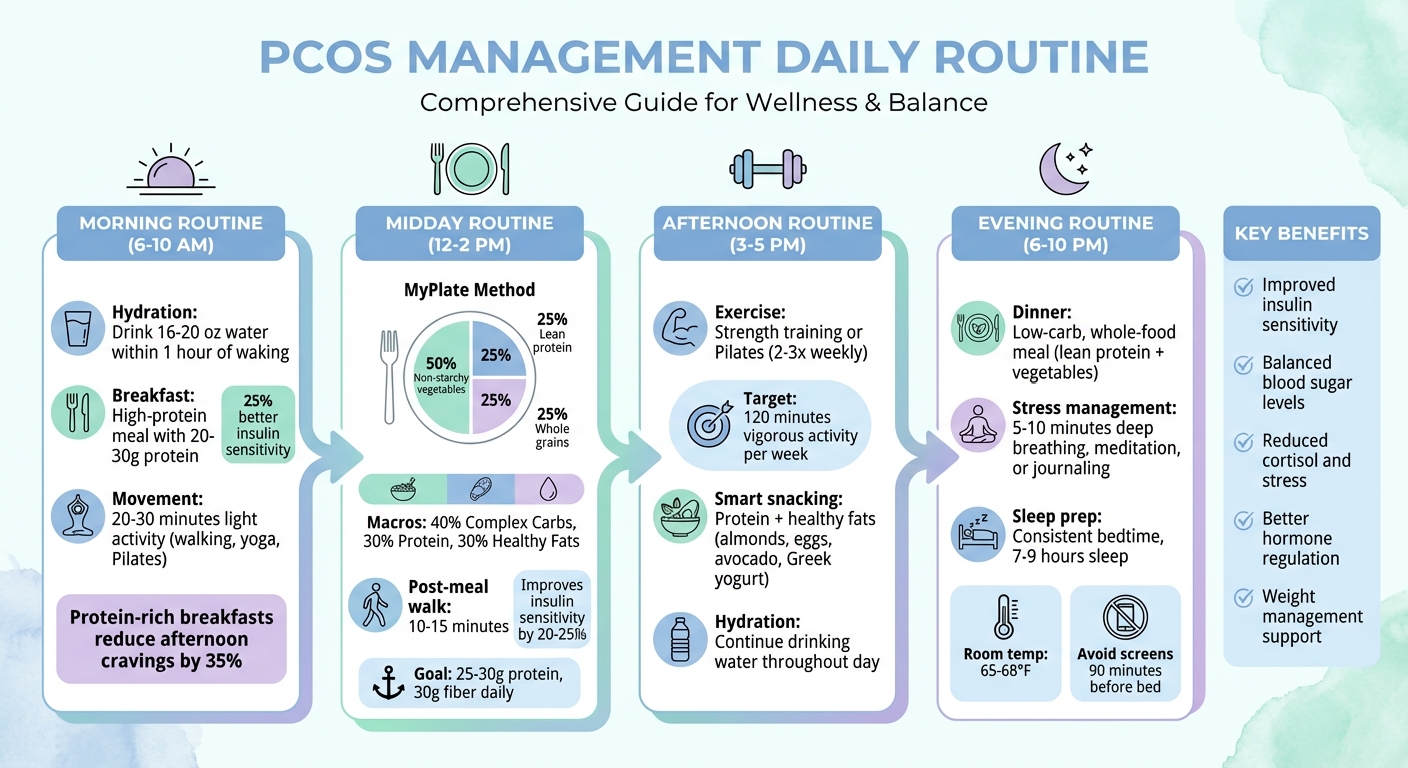
PCOS-Friendly Daily Routine: Morning to Evening Schedule
Morning Routine: Start Your Day Right
Drink Water and Eat a High-Protein Breakfast
After a night of sleep, your body can wake up dehydrated, which affects insulin function - a critical concern for those managing PCOS. Kickstart your day by drinking 16–20 ounces of water within an hour of waking. Staying hydrated supports your metabolism and helps balance cortisol and blood sugar levels.
"Hydration plays a crucial role within the body by regulating cortisol and blood sugar levels, as well as overall reproductive well-being." - Trista Chan, Registered Dietitian and reproductive health expert
Pair hydration with a high-protein breakfast, aiming for 20–30 grams of protein within one to two hours of waking. Studies show that women with PCOS who prioritize protein in the morning experience 25% better insulin sensitivity compared to those who opt for carbohydrate-heavy breakfasts. Additionally, protein-rich meals can curb afternoon cravings by 35% and improve testosterone-to-estrogen balance by 18%.
For a well-rounded breakfast, combine protein with healthy fats and fiber-packed carbs. Here are some ideas:
- A veggie scramble with 2–3 eggs provides 25–30 grams of protein and choline, which supports liver health.
- Greek yogurt parfaits topped with berries and chia seeds offer a gut-friendly option.
- Other choices include cottage cheese bowls, tofu scrambles with turmeric, or smoked salmon on sprouted grain toast.
Sprinkle a little cinnamon on yogurt or oatmeal - it’s a simple way to further boost insulin sensitivity.
Add Light Movement or Stretching
After breakfast, dedicate 20–30 minutes to light activities like walking, yoga, Pilates, or tai chi. These gentle movements help your body process glucose, lower androgen levels, and reduce stress - key factors in managing PCOS. Morning exercise aligns with your natural cortisol rhythm, preventing prolonged high levels that can worsen insulin resistance. Even small increases in activity can improve ovulation and aid in weight management, which is especially important since more than 50% of women with PCOS face challenges with excess weight.
Midday Routine: Balance Meals and Stay Productive
Eat a Nutrient-Dense Lunch
By midday, energy levels often dip, and cravings can kick in. A well-rounded lunch can help stabilize both energy and hormone levels. The MyPlate Method is a simple way to ensure balance: fill half your plate with non-starchy vegetables like spinach, broccoli, or peppers, one-quarter with lean protein such as grilled chicken or lentils, and the last quarter with whole grains like quinoa or brown rice. Aim for a breakdown of 40% complex carbohydrates, 30% lean protein, and 30% healthy fats to support insulin sensitivity and steady energy.
To prevent afternoon fatigue, include 25–30 grams of protein and aim for 30 grams of fiber daily through vegetables, beans, and whole grains. These nutrients slow digestion and help avoid blood sugar spikes. Incorporating anti-inflammatory foods like fatty fish, leafy greens, turmeric, and ginger can also help reduce PCOS symptoms by up to 40%.
"The most successful PCOS meal plans aren't about perfection - they're about consistency with foods that support your body's unique metabolic needs." - Nancy Sidnam, MS, RD, PCOS Nutrition Specialist
Some meal ideas? Try a quinoa Buddha bowl with grilled chicken and roasted vegetables, a chickpea and vegetable curry with cauliflower rice, or chicken and apple kale wraps. Whatever you choose, always pair carbohydrates with protein or healthy fats to control glucose release. Avoid refined white bread, white rice, processed meats, and sugary drinks - these can worsen insulin resistance and leave you feeling drained by the afternoon.
Take a Short Walk After Eating
A 10–15 minute walk after lunch can make a big difference in how your body processes food. This habit improves insulin sensitivity by 20% to 25%, helping your body use less insulin to manage blood sugar. Walking also boosts your mood by increasing endorphins and serotonin, which can help reduce stress and curb emotional eating.
"Exercise is a great way to help your body become more sensitive to insulin because it decreases the amount of insulin you need to signal cells to decrease your blood sugar." - Ula Abed-Alwahab, MD, Endocrinologist, Cleveland Clinic
If heading outdoors isn’t an option, simply walk around your home or office. The key is to keep moving right after eating - this helps your body use sugar as energy rather than storing it as fat. Incorporating these short, active breaks into your day can help you maintain stable energy levels and stay productive.
Use Time-Blocking for Work and Breaks
After your post-lunch walk, structure your remaining workday to manage stress and maintain consistency in your routine. Midday stress can trigger cortisol spikes, which worsen insulin resistance and increase cravings for sugary, inflammatory foods. Time-blocking - scheduling specific periods for meals, movement, and tasks - can help you stay in control.
"Smaller, more frequent meals can really help, combined with balanced snacks so you're eating about every four hours." - Amanda Stathos, M.S., R.D., L.D.N., Johns Hopkins
Keep your lunch and breaks on a consistent schedule, aiming for meals every 4 hours to stabilize blood sugar and avoid energy crashes. Include 10-minute breaks for deep breathing or stretching to lower cortisol levels and manage stress. Protect your energy by setting boundaries around demanding tasks during work hours, which helps maintain hormonal balance. These structured breaks not only reduce stress but also help reinforce the eating and movement habits that are essential for managing PCOS effectively.
Afternoon Routine: Exercise and Smart Snacking
Schedule Strength Training or Pilates
Exercising between 3:00–5:00 PM is a great way to use the energy from your midday meals and still allow enough time for recovery before bedtime. Strength training can be particularly helpful for managing PCOS, as it improves insulin sensitivity and boosts your metabolism by working large muscle groups like the legs, back, and core. Aim to include 2–3 sessions per week, focusing on movements such as squats, lunges, or resistance band exercises.
"Increasing muscle mass in those areas [large muscle groups] can also increase your metabolism." - Monica Moore, MSN, APRN, Illume Fertility
If high-impact workouts feel daunting, try Pilates or yoga instead. These forms of exercise not only build strength and flexibility but also support mental well-being by helping manage anxiety and depression, which are often linked to PCOS. Studies suggest that committing to 120 minutes of vigorous activity weekly can lead to improvements in BMI and insulin sensitivity. The most important thing? Consistency. Whether you prefer lifting weights, following a Pilates video at home, or attending a yoga class, stick with a routine that keeps you motivated. After your workout, refuel with a balanced snack to maintain energy levels.
Choose Protein and Fat Snacks
By 4:00 PM, energy can start to wane, making sugary snacks tempting. Instead, reach for protein- and fat-rich snacks that stabilize blood sugar and keep you feeling full until dinner. Here are some easy options: a handful of almonds or walnuts, a boiled egg, avocado slices sprinkled with sea salt, or hummus paired with bell pepper sticks.
| Snack Component | PCOS-Friendly Examples | Primary Benefit |
|---|---|---|
| Lean Protein | Hard-boiled eggs, Greek yogurt, edamame, turkey slices | Stabilizes blood sugar and supports muscle maintenance |
| Healthy Fats | Avocado, walnuts, chia seeds, almond butter, olives | Reduces inflammation and supports hormone balance |
| Fiber/Complex Carbs | Berries, cucumber, bell pepper, chickpeas, apple | Slows glucose release into the bloodstream |
For a balanced snack, pair carbohydrates with protein or fat. For example, enjoy apple slices with almond butter or mix berries into Greek yogurt. Pre-portion your snacks during meal prep to avoid impulsive choices later. Also, consider foods rich in magnesium (like pumpkin seeds or almonds) and zinc (such as chickpeas or hummus), as these nutrients are often lacking in those with PCOS. Don’t forget to hydrate - sometimes thirst can feel like hunger, so drinking a glass of water with your snack can help combat fatigue.
PCOS Breakfast: High Protein Morning Routine for PCOS Weight Loss
sbb-itb-6dba428
Evening Routine: Wind Down and Recover
Your evening habits play a key role in managing PCOS, helping to bring your day full circle for better hormonal balance.
Eat a Low-Carb, Whole-Food Dinner
An early, balanced dinner featuring whole, low-carb foods can help stabilize blood sugar levels and support restful sleep. For instance, you could try grilled salmon with roasted broccoli and cauliflower or a chicken breast served with sautéed spinach and a side of quinoa. These meals prevent blood sugar spikes and crashes, which can disrupt sleep and worsen insulin resistance.
Keep your dinner light to avoid adrenaline spikes. Focus on lean proteins, healthy fats, and fiber-rich vegetables, as these promote steady glucose levels, better sleep quality, and improved menstrual and androgen balance. Avoid heavy or greasy meals that might cause discomfort, and aim for moderate portions. A thoughtfully planned dinner helps set the tone for a peaceful evening.
Practice Stress Management Techniques
Stress can significantly impact insulin resistance and androgen levels in women with PCOS, so managing it is crucial. Dedicate part of your evening to activities that help lower cortisol. Consider deep breathing exercises for 5–10 minutes, guided mindfulness meditation, or journaling to clear your mind and process emotions.
A warm bath with Epsom salts can ease muscle tension and signal your body to relax. Other calming activities include gentle yoga stretches, reading a physical book (preferably away from screens), or listening to soothing music. Establishing a consistent pre-sleep ritual not only supports your circadian rhythm but also reduces stress-induced hormonal imbalances. These habits help prepare you for a restful night.
Keep a Consistent Sleep Schedule
Consistency is key when it comes to sleep. Aim for 7–9 hours each night, sticking to the same bedtime and wake-up time, even on weekends. Keep your bedroom cool (65°F–68°F), dark, and quiet to create an ideal sleep environment. A regular schedule helps your body regulate glucose, insulin, appetite-controlling hormones, and cortisol levels more effectively.
Avoid screens at least 90 minutes before bed to allow melatonin levels to rise naturally. In the morning, exposing yourself to sunlight within the first hour can boost serotonin, which later converts to melatonin, supporting your sleep-wake cycle. You might also consider taking magnesium citrate about an hour before bed to relax your muscles and calm your nervous system. These small adjustments can make a big difference in promoting restorative sleep.
Sample Weekly Schedule for PCOS Management
A well-structured weekly plan can help balance meals, exercise, and self-care, making PCOS management more effective. Below is an example of how to combine strength training, cardio, and recovery activities with PCOS-friendly meals and self-care practices.
| Day | Exercise Activity | Meal Focus | Self-Care / Management |
|---|---|---|---|
| Monday | Strength Training (30 min) | High-protein breakfast; Salmon & veg dinner | Habit stacking: Wall sit while brushing teeth |
| Tuesday | Cardio or HIIT (20-30 min) | Grilled chicken & quinoa salad | 30/30/30 morning routine |
| Wednesday | Hatha Yoga (20-90 min) | Probiotic-rich foods (Kimchi/Sauerkraut) | Evening meditation or deep breathing |
| Thursday | Strength Training (30 min) | Low-carb, high-fiber meals | Midday 10-minute walk after lunch |
| Friday | Meditative Walking (20-60 min) | Omega-3 rich fish (Salmon/Mackerel) | Stress management: Journaling |
| Saturday | Strength Training (30 min) | Healthy fats (Avocado/Nuts/Olive Oil) | Social movement (Dance or group class) |
| Sunday | Light Activity (Yard work/Chores) | Meal prep for the upcoming week | Bedtime balancing pose (Tree pose) |
This plan ensures a balance of strength training, cardio, and recovery, while focusing on consistent, PCOS-friendly meals and self-care routines.
Strength training three times a week is particularly beneficial for building muscle, which plays a key role in managing insulin resistance. As Erika highlights, maintaining muscle mass is essential for metabolic health:
"Your muscles are crucial for combating PCOS. They help you maintain healthy blood sugar levels and hormonal balance. When you lose muscle, your body interprets it as a threat and tries to compensate by making you feel hungrier".
Incorporating active recovery days, such as yoga or meditative walking, on Wednesday and Friday helps reduce stress without overloading the body. Studies reveal that just 120 minutes of vigorous exercise per week can significantly improve metabolic and hormonal health in women with PCOS. This plan not only meets but exceeds that benchmark, while still allowing for adequate rest.
For meals, keeping a consistent schedule - eating every four hours - helps regulate blood sugar levels. At lunch and dinner, filling half your plate with non-starchy vegetables supports gut health and lowers insulin resistance. Dedicating Sundays to meal prep ensures that you have quick, PCOS-friendly options ready for the week ahead.
How Oana Health Supports Your PCOS Routine

Oana Health provides access to licensed professionals who offer tailored, evidence-based treatments for PCOS. Plus, they deliver prescriptions right to your doorstep with free shipping, making symptom management more convenient. Here’s a closer look at how their medications can fit into your daily life:
Prescription Treatments for PCOS Symptoms
Managing Insulin Resistance
Insulin resistance affects between 50% and 75% of women with PCOS. To address this, Oana Health offers Metformin for $22/month. This medication helps regulate blood sugar levels and works best when taken with a high-protein breakfast to minimize side effects.
Addressing Hair Concerns
For unwanted facial or body hair, oral Spironolactone is available starting at $14/month. If you're dealing with hair thinning or loss, you can opt for Oral Minoxidil at $25/month or Topical Spironolactone for $43/month. These options integrate easily into your daily routine, helping you manage symptoms effectively.
Supporting Weight Management
For individuals focusing on weight management, GLP-1 treatments like Oral Semaglutide are available for $199/month. Losing just 5%–10% of your body weight can significantly improve PCOS symptoms and help restore regular ovulation. To maximize effectiveness, align these medications with your meal schedule for better results.
Access Care Through Telehealth
With Oana Health’s telehealth platform, you can consult with specialists from the comfort of your home. Licensed physicians review your health history, prescribe treatments tailored to your needs, and monitor your progress through regular follow-ups. This flexible approach allows your treatment plan to evolve as your symptoms change. You’ll also receive guidance on lifestyle adjustments, empowering you to take control of your hormonal health.
Conclusion
Your daily habits play a vital role in managing PCOS effectively. Creating a routine that supports your body doesn’t require dramatic changes - small, consistent steps can make a big difference. Simple practices like staying hydrated, eating a high-protein breakfast, and maintaining a regular sleep schedule can help improve insulin sensitivity, balance hormones, and alleviate symptoms over time. Even small actions, like taking a walk after meals or setting aside a few minutes for meditation, can set the stage for long-term benefits.
A well-rounded approach that combines balanced nutrition, regular exercise, stress reduction, and quality sleep can address the underlying challenges of PCOS in ways that often go beyond medication alone. For example, focusing on low-glycemic foods and finding movement you enjoy are practical ways to support your body.
Start with just one change - whether it’s a short, fun workout or a small dietary adjustment - and build from there. Tailor your routine to fit your lifestyle, because PCOS management is a personal journey that looks different for everyone.
Professional support can also make a big difference. Oana Health offers a convenient way to incorporate telehealth into your routine, connecting you with licensed physicians who provide personalized treatments for issues like insulin resistance, weight management, and hair concerns. With medications delivered straight to your door (and free shipping), Oana Health simplifies the process of getting expert care.
Keep track of your progress and trust the process - consistent efforts can lead to lasting relief and a healthier, happier you.
FAQs
Why is a high-protein breakfast important for managing PCOS?
A breakfast packed with protein can make a big difference for women managing PCOS. It plays a key role in stabilizing blood sugar levels, which is essential for addressing insulin resistance - a frequent issue with PCOS. Plus, starting your day with protein helps you feel fuller for longer, curbing cravings later on and aiding in balanced hormone production.
Adding protein-rich options like eggs, Greek yogurt, or lean meats to your morning routine can boost energy levels and help manage symptoms more effectively. These small but steady changes to your diet can significantly improve how you feel every day.
What are the best ways to manage stress with PCOS?
Managing stress is a key part of managing PCOS, as stress can amplify symptoms like hormonal shifts, insulin resistance, and weight changes. Adding stress-relief techniques to your daily routine can have a positive impact. Activities such as yoga, meditation, or deep breathing can help bring down cortisol levels, leading to better mood and hormonal balance.
Gentle exercises like walking or swimming are also great options. They support hormone regulation without putting too much strain on your body. In the evenings, adopting calming habits - like reducing screen time, journaling, or practicing mindfulness - can improve sleep quality and lower stress. When combined with a nutritious diet and adequate rest, these practices can play a big role in managing PCOS effectively.
Why is getting consistent sleep important for managing PCOS?
Getting consistent sleep is crucial for managing PCOS because it directly impacts hormone balance, reduces inflammation, and supports overall health. When sleep patterns are irregular, common PCOS challenges - like elevated androgens, insulin resistance, and fatigue - can worsen. This can lead to symptoms such as weight gain and mood swings, making daily life more difficult.
Keeping a regular sleep schedule helps sync your body’s natural circadian rhythms, which play a key role in hormone regulation and metabolism. Small changes, like exposing yourself to morning sunlight or creating a calming bedtime routine, can have a big impact. By focusing on good sleep hygiene, you can help minimize symptom flare-ups and feel better day-to-day.