
HRT and Weight Loss: Lifestyle Tips That Help
Managing weight during hormone replacement therapy (HRT) can be challenging, especially during menopause when hormonal shifts often lead to weight gain and increased visceral fat. While HRT isn’t a weight-loss solution, it supports metabolism, appetite regulation, and muscle preservation, making weight management more achievable when paired with targeted lifestyle changes. Here's a quick overview of strategies to help:
- Strength Training: Build muscle to boost metabolism. Aim for at least 2 sessions per week, focusing on compound movements like squats and push-ups.
- Fiber-Rich Diet: Include whole grains, fruits, vegetables, and legumes to stabilize blood sugar and reduce fat storage.
- Protein Intake: Eat 20–30 grams of protein per meal to maintain muscle mass and support metabolism.
- Better Sleep: Prioritize 7–9 hours of quality sleep to regulate hunger hormones and reduce cortisol.
- Mindful Eating: Slow down, avoid distractions, and listen to your hunger cues to prevent overeating.
- Hydration: Drink 8–10 cups of water daily to support metabolism and reduce bloating.
- Stress Management: Use techniques like deep breathing, yoga, or journaling to lower cortisol and curb stress-related fat storage.
- Cardio Exercise: Aim for 150 minutes of moderate aerobic activity weekly to burn calories and improve heart health.
- Limit Trigger Foods: Cut back on processed snacks, sugary drinks, and alcohol to avoid unnecessary calories.
- Personalized Support: Consider telehealth services for tailored plans combining HRT with weight-loss medications.
Small, consistent lifestyle adjustments combined with HRT can help you manage weight effectively and improve overall well-being during menopause.

10 Lifestyle Tips for Weight Loss During HRT
HRT & weight gain / weight loss | Felice Gersh, MD
1. Add Strength and Resistance Training
Incorporating strength and resistance training into your routine can be a game-changer for weight management during HRT. Why? Because muscle tissue burns more calories at rest than fat, meaning that building lean muscle mass can give your resting metabolism a boost. This becomes even more critical during menopause, as muscle mass naturally declines - typically dropping by 3% to 8% per decade after age 30, and accelerating to 5% to 10% after age 50.
Resistance training does more than just build muscle; it also helps reduce stubborn abdominal fat and improves how your body processes sugar. Dr. Deb Matthew highlights the role of estrogen in this process:
"Estrogen helps preserve lean muscle mass, which is metabolically more active than fat."
To get started, aim for at least two strength-training sessions each week, focusing on all major muscle groups. Prioritize compound movements like squats, lunges, push-ups, and rows, as these exercises engage multiple joints and provide a greater metabolic boost. For beginners, bodyweight exercises such as wall push-ups, bodyweight squats, and lunges are excellent options. Perform 3 sets of 10–12 repetitions to build a solid foundation.
Post-menopausal women may benefit from higher training volumes - more than 6–8 sets per muscle group weekly - to see meaningful muscle growth. A 2024 study from the University of Exeter found that participating in a low-impact resistance program four times a week (30–35 minutes per session) for 12 weeks led to a 19% increase in lower body strength, a 21% improvement in flexibility, and gains in lean muscle mass.
2. Eat More Fiber and Heart-Healthy Foods
Incorporating fiber-rich foods like whole grains, fruits, vegetables, and legumes into your diet can significantly enhance the benefits of hormone replacement therapy (HRT). These foods help slow down glucose absorption, stabilize blood sugar levels, and reduce fat storage.
Dr. Kameelah Phillips, M.D., OB/GYN, highlights the importance of fiber in your diet:
"A diet rich in fiber and complex carbohydrates helps improve insulin sensitivity, gut health, and can help regulate your appetite."
Soluble fiber, found in foods such as oatmeal, chia seeds, beans, and pistachios, has been linked to a reduced risk of belly fat. For women going through menopause, aiming for 30–45 grams of fiber daily can support weight management and hormonal balance. For example, one cup of cooked lentils contains about 15 grams of fiber, while a medium pear with the skin offers around 6 grams .
To increase your fiber intake, consider swapping out white bread and pasta for whole-grain options like quinoa or brown rice. Keep the skins on potatoes or sweet potatoes to maximize fiber content. For snacks, reach for air-popped popcorn, pistachios, or pumpkin seeds. Adding lentils, chickpeas, or black beans to soups and salads is another easy way to boost fiber and keep you feeling full longer.
Another helpful strategy is food sequencing - start your meal with vegetables and protein before moving on to starchy carbohydrates. This can help improve glucose control and reduce insulin spikes. Pairing carbohydrates with healthy fats, such as apple slices with almond butter or whole-grain toast with avocado, can also help manage blood sugar levels. And don’t forget to drink plenty of water as you increase your fiber intake to avoid digestive discomfort.
3. Increase Your Daily Protein
Getting enough protein is essential for maintaining muscle mass and keeping your metabolism steady, especially during weight loss while on HRT. Menopause often speeds up muscle loss due to declining estrogen levels, but boosting your protein intake can help offset this. Dr. Margo Harrison, M.D., M.P.H., an OB-GYN, highlights:
"As muscle mass decreases, eating more protein can preserve muscle, which can also preserve metabolic rate."
This approach works hand in hand with other healthy lifestyle adjustments to enhance the benefits of HRT.
To support muscle maintenance, aim for protein to make up 18–20% of your daily calories, with 20–30 grams per meal . Even a small increase - around 1% to 3% - in your protein intake can help combat muscle loss and weight gain during menopause.
Focus on lean protein sources to hit these targets. Great options include white-fleshed fish like cod or tilapia (20–25 grams of protein per 3.5-ounce serving), skinless chicken or turkey breast (around 30 grams per 3.5-ounce serving), and plant-based choices like tofu, lentils, and beans . Dairy options like low-fat cottage cheese (28 grams of protein per cup) and plain Greek yogurt (about 9 grams per 3.5 ounces) are also excellent, with Greek yogurt offering more than twice the protein of regular yogurt. If you prefer red meat, choose cuts labeled “loin” or “round” and go for ground beef that’s at least 90% lean to keep calories and fat under control.
For an extra boost, consider whey or plant-based protein powders with fewer than 200 calories per serving and no added sugars . If plant proteins like beans and lentils are a big part of your diet, pair them with whole grains or nuts throughout the day to ensure you’re getting all the essential amino acids your body needs.
4. Get Better Sleep
Getting enough quality sleep plays a huge role in maintaining a healthy lifestyle, especially during hormone replacement therapy (HRT). Poor sleep can throw your hormones out of balance - raising ghrelin (the hunger hormone) and lowering leptin (the hormone that signals fullness). This combination often leads to cravings for high-calorie foods. On top of that, lack of sleep increases cortisol levels, which encourages fat storage. It doesn't stop there: just four nights of inadequate sleep can reduce insulin sensitivity by more than 30%, making it easier for your body to store excess glucose as fat. One study even showed that dieters experiencing poor sleep lost 55% less fat over 14 days, even though they didn’t change their calorie intake.
HRT can help improve sleep quality during menopause by addressing common issues like night sweats and hot flashes. Dr. Tara Scott, an OB-GYN and Menopause Specialist, highlights the benefits:
"Progesterone has calming, sedative-like effects that help you fall asleep, while estrogen helps regulate melatonin and body temperature to keep you asleep".
To create the perfect sleep environment, aim to keep your bedroom cool - around 65°F is ideal - and use breathable bedding made of cotton or linen to help manage temperature changes. Stick to a consistent sleep routine by going to bed and waking up at the same time every day. Avoid screens at least an hour before bedtime to reduce blue light exposure, and try to limit your liquid intake a few hours before bed to avoid waking up during the night.
These small adjustments can make a big difference. Better sleep not only supports your body’s natural functions but can also lead to noticeable weight loss benefits. For instance, one study found that adding just 1.2 hours of sleep per night led to a spontaneous reduction in daily calorie intake by about 270 calories. By committing to 7–9 hours of quality sleep each night, you’ll help regulate your appetite, boost your metabolism, and set yourself up for success with your weight loss goals while on HRT.
5. Practice Mindful Eating
Refining your eating habits is just as important as exercise and diet when managing hormonal changes brought on by HRT. Hormonal shifts from HRT can disrupt your natural hunger cues. For example, lower estrogen levels can increase the hunger hormone ghrelin and may lead to leptin resistance, which makes it easier to overeat. As Kim Shapira, M.S., R.D., explains:
"Our hunger cues get disrupted when estrogen decreases, causing an increase in the hunger hormone ghrelin".
This is where mindful eating can make a big difference. By paying closer attention to your body's hunger and fullness signals, you can regain control. The idea is simple: slow down and remove distractions like your phone or TV. Instead, focus on the flavors, textures, and aromas of your food. This pause gives your body about 15 minutes to recognize when you're full.
One helpful technique is the "Half-Portion Rule." Start by serving yourself half of what you’d normally eat. Take your time with each bite, and after 15 minutes, check in with yourself to see if you’re still hungry.
Another way to stay on track is by keeping a food journal. Writing down what you eat can help you spot patterns of mindless snacking and keep you accountable.
sbb-itb-6dba428
6. Drink Enough Water
Drinking enough water is a straightforward way to support weight loss during hormone replacement therapy (HRT). Water not only helps boost your metabolism but also curbs hunger. Serenity Wellness and Family Practice explains it best:
"Water helps your body burn calories more efficiently. It's like giving your metabolism a friendly nudge to work harder, which is beneficial for weight loss."
Staying hydrated ensures that hormones and nutrients are effectively transported throughout your body, which can enhance the benefits of bio-identical hormone replacement therapy. Plus, drinking enough water encourages lipolysis - the process your body uses to break down stored fat.
A few simple habits can make hydration easier. Start your day with a glass of water to rehydrate and kickstart your metabolism. Drinking a glass about 30 minutes before meals can help you feel fuller and eat less. Carrying a reusable water bottle can remind you to hit your daily goal of 8–10 cups.
You can also monitor your hydration levels by checking the color of your urine - light yellow is a good indicator. And don’t forget, around 20% of your water intake comes from food. Including water-rich options like cucumbers, watermelon, and oranges in your diet can help. Be sure to drink extra water during workouts or on hot days to stay properly hydrated.
Adequate hydration also helps reduce some of the side effects of HRT, like temporary water retention and bloating. It can even help regulate cortisol levels, which play a role in preventing fat storage. When combined with other healthy habits, staying hydrated can make a big difference in how you feel and how well your HRT works.
7. Reduce Your Stress
Chronic stress sets off the release of cortisol, a hormone that not only ramps up your appetite but also encourages fat storage around your abdomen. When you're on HRT, managing stress becomes even more critical for maintaining hormonal balance and supporting weight loss. These hormonal changes make stress management an essential part of your lifestyle.
Elevated cortisol impacts your hunger and fullness hormones - boosting ghrelin (the "hunger hormone") while reducing leptin (the "satiety hormone"). Dr. M. Elizabeth Swenor from Henry Ford Health highlights one simple yet powerful tool:
"Deep-breathing exercises help to lower cortisol, ease anxiety and depression, and improve memory".
Breaking the stress cycle can start with small, manageable steps. Try deep-breathing exercises for 5 minutes, three to five times a day, to help reduce cortisol levels. Mindfulness practices like yoga, meditation, tai chi, or qigong can also trigger your body’s relaxation response, helping you step out of the constant "fight or flight" mode. Adding 30 to 50 minutes of moderate exercise to your daily routine is another excellent way to relieve stress and improve your mood.
Even though HRT works to balance estrogen and progesterone, chronic stress can interfere with these efforts, making weight loss more challenging. Keeping a journal can help you identify emotional triggers that lead to stress-eating and give you insights into how stress affects your food choices. Build a "stress toolbox" filled with activities that bring you joy, whether it’s reading, spending time with loved ones, or diving into hobbies you enjoy. These techniques not only help manage stress but also enhance the benefits of the exercise and dietary changes you've already put into place.
8. Do Regular Cardio Exercise
Cardio is a key player when it comes to burning calories and keeping your heart strong - two things that are especially important during hormone replacement therapy (HRT). The American Heart Association suggests aiming for 150 minutes of moderate aerobic activity each week, which breaks down to about 30 minutes a day, five days a week. Activities like brisk walking, jogging, cycling, or swimming are excellent options. Women on HRT often report feeling more energetic, which can give their weight-loss efforts an extra push.
A 2021 study published in the American Journal of Pathology highlighted that women on HRT who incorporated aerobic exercise saw improved insulin sensitivity - a critical factor for managing weight during menopause.
"Regular aerobic activity can help prevent and reduce health problems, such as high blood pressure and high blood glucose." - U.S. Department of Health & Human Services
If your schedule is packed, you can still weave movement into your day. Try walking during phone calls, taking the stairs instead of the elevator, or parking farther from your destination. Even short bursts of activity - like 10-minute sessions - can quickly add up to meet your weekly goal. For an extra boost, consider mixing in some high-intensity interval training (HIIT) with your moderate cardio to ramp up fat burning and improve metabolic health. This approach is becoming increasingly popular among women on HRT.
Pairing cardio with the strength training and stress management techniques you’ve already adopted can create a strong foundation for weight loss. On top of that, aerobic exercise can help ease menopausal symptoms like mood swings and fatigue. Combine these cardio sessions with your dietary adjustments to support a balanced approach to weight management as you continue refining your eating habits in the next section.
9. Cut Back on Trigger Foods and Alcohol
When you're navigating weight loss during HRT, steering clear of certain high-calorie, low-nutrient foods can make a big difference. Processed snacks like cookies, chips, white bread, and sugary drinks can cause your insulin levels to spike, often leading to overeating. This can be especially challenging when hormonal changes or poor sleep increase cravings.
Alcohol can also throw a wrench into your progress. It packs 7 calories per gram - more than carbs or protein, which each have 4 calories per gram. Plus, it doesn't offer much in the way of nutrition. For example, a 7-ounce piña colada can contain anywhere from 380 to 500 calories. Beyond the calorie count, alcohol - especially red wine - can trigger hot flashes and night sweats, which can interfere with the benefits of HRT.
"Often, any beverages are a big source of empty calories - whether it's soda, juice, sweet tea, beer, wine or cocktails. Any of those things add calories, but really, without nutrition and without the sense of feeling full."
– Leslie Heinberg, PhD, Psychologist
One way to tackle this is by tracking your food and mood. This can help you identify patterns that lead to overeating. In fact, research shows that women who kept a food journal lost an average of 6 pounds more than those who didn’t. Pay attention to foods or drinks that seem to spark cravings or trigger hot flashes, such as caffeine or processed snacks. If you choose to drink alcohol, stick to the recommended limit of one standard drink per day - like 5 ounces of wine, 12 ounces of beer, or 1.5 ounces of spirits.
The good news? You don’t have to give up your favorite treats completely. Try following the 90/10 rule: eat healthily 90% of the time, but allow yourself a small, planned indulgence to avoid feeling deprived, which can lead to binge eating. When cravings strike, drink a glass of water first - it might help curb the urge. These small but effective changes can keep you on track while still giving you room to enjoy life.
10. Try Telehealth Services like Oana Health for Personalized Support
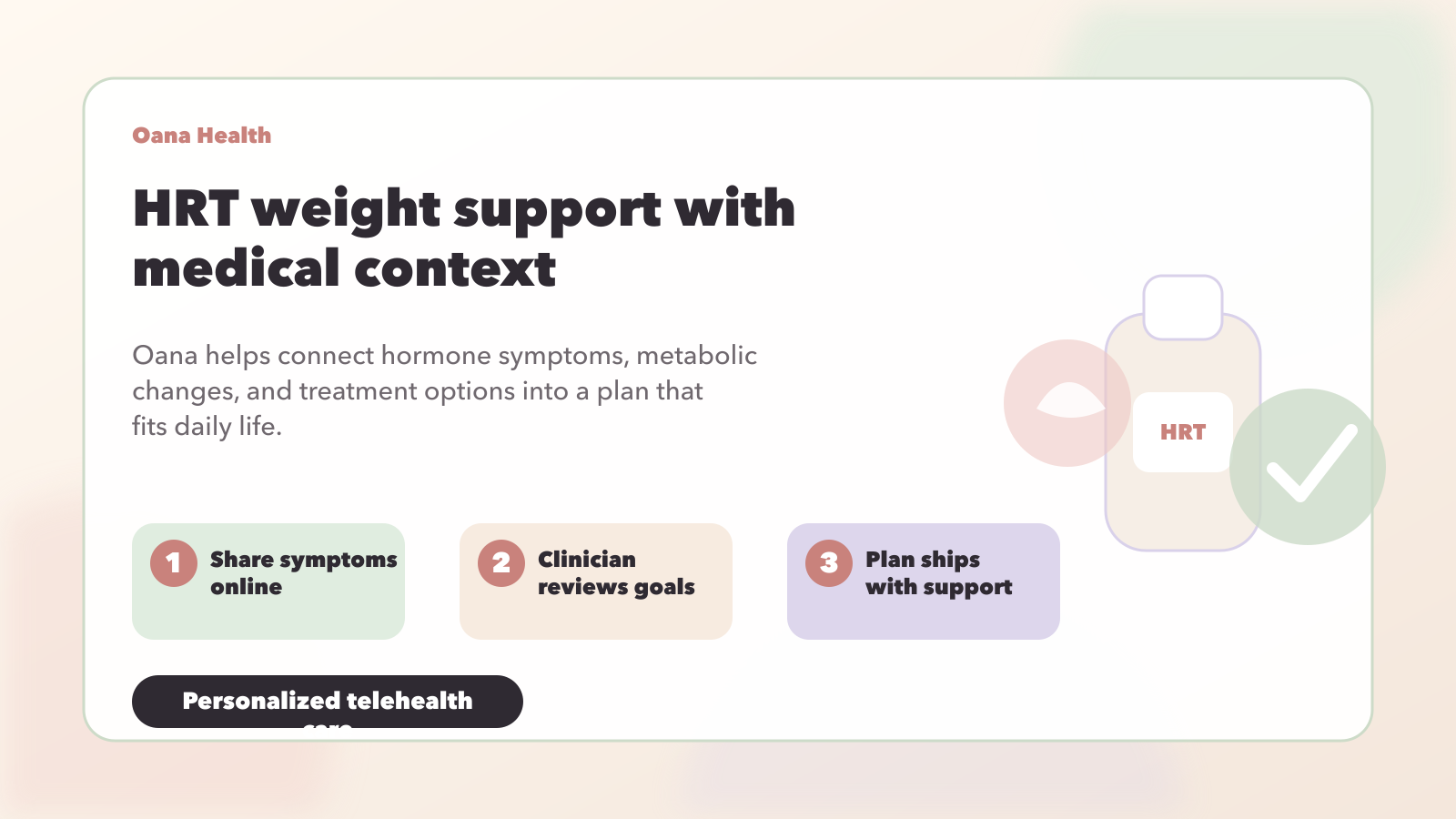
Losing weight during HRT can feel like an uphill battle as you juggle hormonal shifts alongside lifestyle changes. Telehealth services step in as a practical solution, connecting you with experts who focus not just on lifestyle factors but also the hormonal causes of weight gain. Platforms like Oana Health specialize in creating science-based, personalized plans to address issues like estrogen imbalances, insulin resistance, or PCOS.
Building on the lifestyle tips discussed earlier, telehealth offers a tailored approach that blends medical expertise with everyday strategies. These services often combine HRT with weight loss medications - such as GLP-1 options like semaglutide or tirzepatide - alongside supplements and individualized lifestyle plans. Research has shown that postmenopausal women using both hormone therapy and the GLP-1 medication tirzepatide lost an average of 17% of their body weight, compared to 14% for those relying on the medication alone. Additionally, 45% of patients undergoing combined hormone and weight loss treatments achieved a body mass reduction of 20% or more, compared to just 18% among those not using hormone therapy.
But telehealth isn’t just about weight loss. These providers also tackle symptoms that can derail healthy habits, such as night sweats, joint pain, and mood swings. By addressing these issues with HRT, you may find it easier to stay motivated to exercise and stick to a nutritious diet. Oana Health, for example, offers virtual consultations, prescription delivery with free shipping, and ongoing support to ensure your progress is closely monitored. Incorporating telehealth into your routine can be a game-changer for managing weight and hormones during HRT. To explore personalized treatment options, visit Oana Health and take the first step toward a plan designed just for you.
Conclusion
Managing weight during HRT involves adopting strategies tailored to your body's evolving needs. Achieving lasting results means combining dietary adjustments, regular exercise, and effective stress management. By stabilizing estrogen levels, HRT creates a metabolic foundation that can support your weight management efforts. As Dr. Stephanie Faubion from Mayo Clinic's Center for Women's Health explains:
"Hormone therapy isn't going to reverse all of these changes. That's why lifestyle [modifications] during midlife are especially important and can set women up for staying healthy as they age".
Incorporating key lifestyle changes amplifies the positive effects of HRT. Building muscle through strength training, focusing on a diet rich in fiber and protein, and managing stress effectively are essential steps to combat muscle loss and avoid excess fat gain. Additionally, prioritizing quality sleep, staying hydrated, and practicing mindful eating can further enhance your progress. Even losing just 5% of your body weight can significantly reduce the risk of heart disease and type 2 diabetes.
FAQs
Can hormone replacement therapy (HRT) affect weight management during menopause?
Hormone replacement therapy (HRT) isn’t primarily intended for weight loss, but it can assist with weight management during menopause. By balancing levels of estrogen, progesterone, and testosterone, HRT may help maintain a steady metabolism, regulate hormones that affect appetite, and ease symptoms like fatigue or mood swings - factors that can make it harder to manage weight.
Although HRT is generally considered weight-neutral, some people might notice minor weight fluctuations. Pairing HRT with healthy habits, like eating a well-rounded diet and staying active, can provide extra support for managing weight during this stage of life.
How does strength training support weight loss during HRT?
Strength training plays an important role in supporting weight loss for those undergoing hormone replacement therapy (HRT). By building and maintaining lean muscle, you can give your metabolism a boost, improve insulin sensitivity, and help your body utilize hormones like estrogen, progesterone, and testosterone more effectively. This can reduce fat storage, particularly around the abdomen, while amplifying the benefits of HRT.
To get the most out of your efforts, aim for 2–3 full-body strength workouts per week. Focus on compound movements like squats, deadlifts, and presses - they engage multiple muscle groups and deliver maximum impact. Pair these workouts with a high-protein diet (about 0.8 grams per pound of body weight) and prioritize quality sleep to support muscle growth and fat loss. With the hormonal balance provided by HRT, your body becomes more responsive, making it easier to achieve your weight loss goals. For tailored, prescription-based programs, Oana Health offers resources to guide you every step of the way.
Why is eating more fiber important for women on hormone replacement therapy (HRT)?
A diet packed with fiber is a smart choice for women on HRT, as it contributes to both overall health and weight management. Fiber supports healthy digestion, helps you stay full for longer periods, and keeps blood sugar levels steady. Plus, it assists in balancing hormones by helping the gut eliminate excess estrogen metabolites, which may help reduce inflammation and alleviate menopausal symptoms.
Adding fiber-rich foods like fruits, vegetables, whole grains, and legumes to your meals not only aligns with weight-loss goals but also boosts gut health and enhances overall wellness during HRT.