
How to Manage Anxiety During Menopause Without HRT
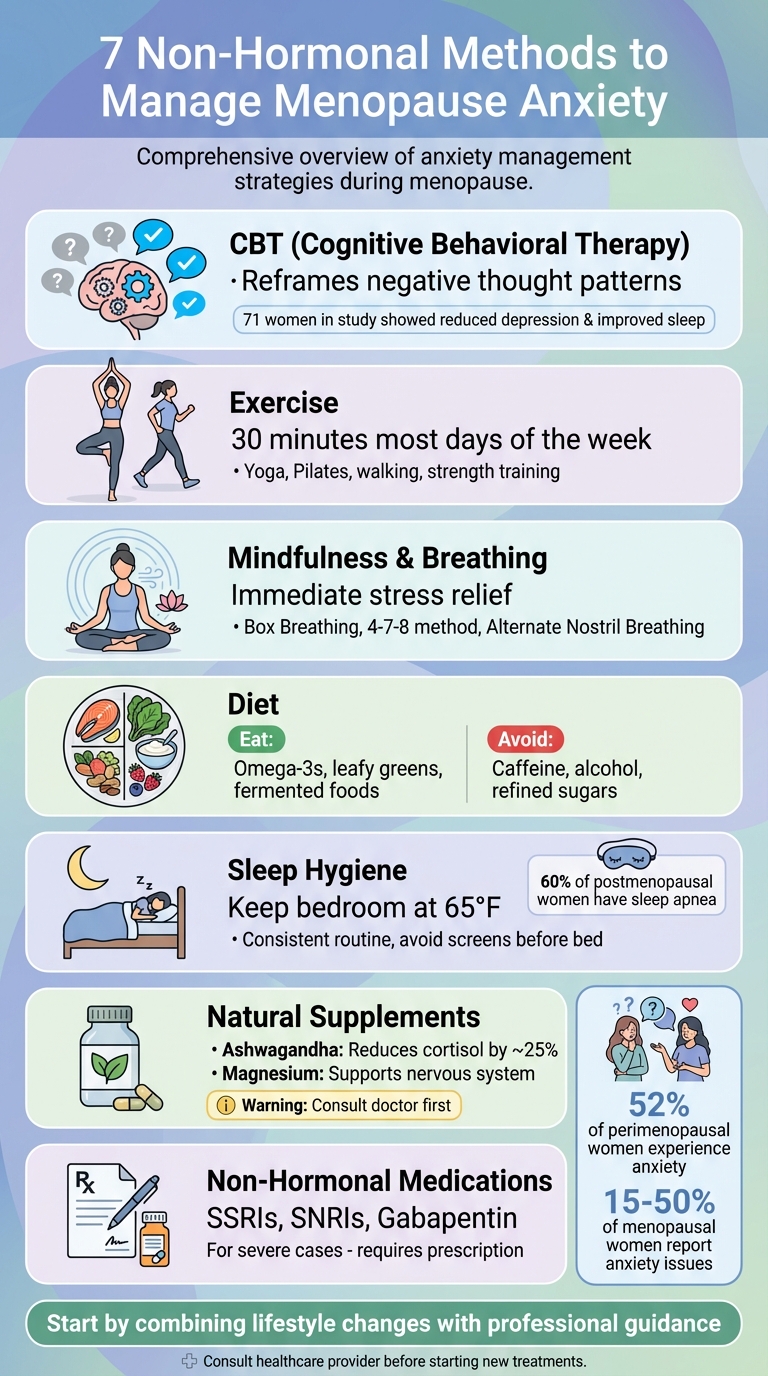
- Therapies: Cognitive Behavioral Therapy (CBT) helps reframe negative thought patterns and reduce anxiety.
- Exercise: Regular physical activity like yoga, Pilates, or walking can improve mood and stabilize emotions.
- Mindfulness: Meditation and breathing techniques (e.g., Box Breathing, 4-7-8) provide immediate stress relief.
- Diet: Focus on omega-3-rich foods (salmon, nuts), leafy greens, and fermented foods. Avoid caffeine, alcohol, and sugars.
- Sleep: Maintain a consistent sleep routine, keep your bedroom cool, and avoid screens before bed.
- Supplements: Options like ashwagandha and magnesium may help, but consult your doctor first.
- Medications: Non-hormonal prescriptions like SSRIs, SNRIs, or gabapentin can be considered for severe cases.
Start by combining lifestyle changes with professional guidance to create a tailored plan. If needed, telehealth services like Oana Health can provide accessible, non-hormonal treatment options.
7 Non-Hormonal Methods to Manage Menopause Anxiety
How to reduce anxiety during perimenopause, menopause and midlife with Dr Wendy Molefi
How Menopause Causes Anxiety
Menopause throws off the balance of estrogen and progesterone, which in turn disrupts neurotransmitter activity in the brain. This hormonal chaos can lead to heightened anxiety.
How Hormones Affect Anxiety During Menopause
Estrogen plays a key role in regulating neurotransmitters like serotonin, GABA, and dopamine - chemicals that help stabilize mood. When estrogen levels drop or fluctuate during menopause, it disrupts this balance, often leading to increased anxiety.
"Estrogen modulates several neurotransmitters or brain chemicals." – Natalie Kunsman, M.D.
Progesterone, another critical hormone, works to regulate GABA, a calming neurotransmitter. When progesterone levels plummet suddenly, it can leave the brain overstimulated. As Dr. Kunsman explains:
"When progesterone is declining at a fast rate, it can leave you feeling overstimulated, overwhelmed, agitated, short-fused, and anxious."
Adding to the problem, cortisol - the body’s stress hormone - often spikes during menopause, amplifying these effects.
Menopausal symptoms like hot flashes, night sweats, and insomnia can further exacerbate anxiety. These symptoms may trigger adrenaline surges and elevate cortisol levels, creating a cycle that worsens anxiety. Studies reveal that 52% of women in perimenopause experience anxiety, and between 15% and 50% of menopausal women report similar issues.
Signs of Anxiety During Menopause
Anxiety during menopause can show up as both mental and physical symptoms. Mentally, it might feel like restlessness, racing thoughts, trouble focusing, irritability, or persistent worry. Physically, you might notice a rapid heartbeat, sweating, shaking, dizziness, muscle tension, or even digestive problems. Women with a history of anxiety or mood changes are especially at risk of experiencing these symptoms more intensely.
Recognizing how hormonal changes contribute to anxiety is a crucial first step in finding ways to manage it without relying on hormones.
Non-Hormonal Methods to Reduce Anxiety
Understanding how hormonal shifts impact anxiety is important, but there are also effective non-hormonal strategies to help manage menopausal anxiety. These approaches offer practical and proven methods that don't rely on hormone replacement therapy (HRT).
Cognitive Behavioral Therapy and Stress Reduction
Cognitive Behavioral Therapy (CBT) is a highly recommended treatment for managing anxiety disorders. It focuses on identifying and reshaping thought patterns that may worsen anxiety. Dr. Pelin Batur, a women's health expert, explains:
"This type of therapy helps to correct harmful or illogical patterns of thinking. It helps with both stress and anxiety, and it teaches you to calm your nervous system."
CBT often incorporates techniques like cognitive restructuring to challenge distorted thoughts and exposure therapy to reduce fear-based responses.
For example, a 2022 study on group CBT sessions found that 71 perimenopausal and postmenopausal women experienced reduced depression symptoms, improved beliefs about menopause, and relief from hot flashes, sleep issues, and mood swings. If you're interested in CBT, consult your doctor for a referral to a qualified therapist who specializes in this method.
While CBT works on mental patterns, physical activity is another powerful tool for emotional stability.
Physical Activity and Exercise
Regular exercise is one of the best ways to ease menopausal anxiety. Physical activity stimulates the release of anxiety-reducing chemicals in the brain and supports mood-regulating neurotransmitters. The key is to pick activities you enjoy.
Options like strength training, Pilates, or even a brisk daily walk can help improve your mood, reduce anxiety, and support overall health.
Experts recommend aiming for at least 30 minutes of physical activity on most days of the week. Activities like yoga and tai chi are especially beneficial, as they combine movement with controlled breathing.
While exercise supports long-term emotional balance, mindfulness practices can provide immediate stress relief.
Mindfulness and Breathing Exercises
Mindfulness meditation and deep breathing exercises are excellent tools for calming a racing mind. These practices can be used on their own or alongside CBT to reduce your emotional reactions to stress.
Specific techniques like Box Breathing, the 4-7-8 method, Alternate Nostril Breathing, and Lion's Breath are particularly effective for creating a sense of calm. The key is consistency - practice these techniques regularly so they become second nature when you need them most.
sbb-itb-6dba428
Lifestyle Changes for Better Emotional Health
Eating a nutrient-rich diet is a powerful way to support hormonal balance and mental well-being during menopause. Specific nutrients like omega-3 fatty acids, magnesium, B vitamins, folate, and selenium play a key role in hormone production and neurotransmitter function, both of which influence mood and anxiety levels. Pairing these dietary adjustments with quality sleep and natural supplements can help create a well-rounded approach to managing anxiety effectively.
Foods That Support Mental Health
What you eat can have a direct impact on your emotional health. For example, fatty fish like salmon and sardines are rich in omega-3 fatty acids, which are known to help regulate mood. Leafy greens, nuts, seeds, and whole grains are excellent sources of magnesium and B vitamins - both essential for maintaining emotional balance. Fermented foods such as yogurt and kimchi can promote a healthy gut microbiome, which plays a role in hormone regulation and mood stability.
On the flip side, cutting back on caffeine, alcohol, processed foods, and refined sugars can make a big difference. These items can trigger hot flashes and disrupt sleep, which in turn can worsen anxiety. Focus on meals made with whole foods that keep your blood sugar steady and provide consistent energy throughout the day.
Better Sleep Habits
Sleep issues are a common challenge during menopause and can significantly impact emotional health. Poor sleep often worsens anxiety, brain fog, and emotional sensitivity. Dr. Natalie Kunsman, a women's hormone expert, emphasizes:
"Low-quality sleep can exacerbate emotional instability, brain fog, and mental fatigue, leading to increased emotional sensitivity."
To improve sleep, stick to a consistent bedtime routine, keep your bedroom cool (around 65°F), and avoid caffeine, heavy meals, and screen time before bed. Natural fiber bedding can also help by reducing heat buildup that might trigger night sweats. Relaxing activities like aromatherapy or deep breathing exercises can help you wind down for the night. If sleep problems persist, consider seeing a specialist to check for underlying issues like sleep apnea, which affects about 60% of postmenopausal women.
Natural Supplements for Anxiety
Certain natural supplements may offer additional support for managing anxiety during menopause. Ashwagandha, for example, is an adaptogen that has been shown to lower cortisol levels by roughly 25%, helping to reduce stress and anxiety. Research suggests that a daily dose of 600 mg may provide noticeable benefits. Magnesium is another helpful option - it supports nervous system function and may ease mild to moderate anxiety symptoms.
Before starting any supplement, it’s important to consult your healthcare provider. Some supplements may interact with medications or may not be suitable for your specific health needs. Always prioritize safety when incorporating new elements into your wellness routine.
Non-Hormonal Prescription Options for Anxiety
Sometimes, anxiety persists even after making lifestyle adjustments. In such cases, non-hormonal prescription options can offer effective relief.
When to Consider Prescription Medications
Prescription medications might be a good choice if anxiety symptoms are intense, persistent, or unresponsive to lifestyle changes. Medications like SSRIs (Selective Serotonin Reuptake Inhibitors) and SNRIs (Serotonin-Norepinephrine Reuptake Inhibitors) are often the first treatment options for anxiety and menopause-related hot flashes. These are typically prescribed in lower doses to reduce the risk of side effects.
Gabapentin is another option that can help with both anxiety and hot flashes. Among SSRIs, paroxetine holds the distinction of being the only one FDA-approved for treating hot flashes. However, other SSRIs and SNRIs are frequently prescribed off-label for similar symptoms.
Before starting any prescription medication, it’s essential to talk to your healthcare provider about your overall health and current medications. This is particularly important if you’re taking tamoxifen, as some SSRIs and SNRIs can interfere with its effectiveness. For those on venlafaxine (an SNRI), your doctor may monitor your blood pressure closely, especially if you’re at a higher risk for hypertension. It’s also critical not to stop taking SSRIs or SNRIs abruptly - work with your doctor to taper off gradually and avoid withdrawal symptoms.
If you think prescription medications might be the right path for you, a telehealth consultation can make the process easier and more accessible.
How Oana Health Can Help
Oana Health offers a convenient telehealth solution for managing anxiety during menopause. Through their online platform, licensed medical professionals review your health history and can prescribe personalized, non-hormonal treatments. For example, bupropion XL is available for just $25 per month. This approach saves you the hassle of scheduling in-person visits or frequent trips to the pharmacy. You can discuss your symptoms, explore treatment options, and receive ongoing care - all from the comfort of your home. For more details on their mental health services, visit Oana Health.
Creating Your Anxiety Management Plan
To effectively manage menopausal anxiety, it's essential to create a plan tailored to your unique needs. Start with the basics: focus on a well-balanced, nutrient-rich diet, engage in physical activities you genuinely enjoy, and prioritize consistent sleep habits. These foundational practices can set the stage for more targeted strategies, such as Cognitive Behavioral Therapy (CBT) or mindfulness meditation, which are known to help ease anxiety symptoms.
Collaborating with a healthcare professional is key. They can assess your symptoms, medical history, and personal preferences to guide your treatment plan. As the Cleveland Clinic emphasizes:
"Clinicians should individualize treatment based on patient needs, history, response, and preferences".
By consulting your doctor, you can identify the right combination of approaches that work best for you.
Blend these strategies with any non-hormonal methods you’re already using to create a well-rounded plan. Keep track of your progress and be open to adjusting your approach as you discover what works. While some methods might offer relief quickly, others may take time - weeks, even - to show their full benefits. Patience is crucial, as is the understanding that your plan can evolve alongside your changing needs.
For prescription-based non-hormonal treatments, consider telehealth services like Oana Health. These platforms allow you to consult licensed professionals, receive personalized care, and even have medications delivered right to your door.
FAQs
What are effective non-hormonal ways to manage anxiety during menopause?
Managing anxiety during menopause without turning to hormone replacement therapy (HRT) often involves a mix of medications, lifestyle tweaks, and mind-body practices. Non-hormonal medications like SSRIs (e.g., escitalopram, sertraline) and SNRIs (e.g., venlafaxine) are commonly prescribed at low doses. These treatments not only help reduce anxiety but may also provide relief from hot flashes. Other medications, such as gabapentin or pregabalin, can address anxiety, improve sleep, and alleviate nerve-related discomfort. If insomnia is a factor, trazodone might be an option to consider.
Making lifestyle changes can also play a big role in managing menopausal anxiety. Engaging in regular physical activity, following a nutrient-dense diet, staying hydrated, and incorporating stress-relief practices - like mindfulness, yoga, or cognitive-behavioral therapy (CBT) - can all contribute to feeling more balanced. For those seeking a personalized approach, Oana Health provides telehealth consultations with licensed clinicians who can design custom treatment plans and deliver medications right to your doorstep.
How can diet and exercise help manage anxiety during menopause without HRT?
Diet and exercise are powerful tools for managing menopause-related anxiety, as they address both physical and emotional triggers. A nutritious diet filled with whole grains, lean proteins, vegetables, and healthy fats can help keep blood sugar levels steady, which may reduce mood swings often mistaken for anxiety. Staying hydrated and cutting back on caffeine and alcohol can also ease symptoms like hot flashes that sometimes lead to feelings of panic.
Incorporating regular exercise into your routine can significantly boost emotional well-being. Activities like walking, cycling, or swimming not only release feel-good endorphins but also improve sleep quality. Strength training, on the other hand, helps maintain a healthy weight, which can lessen the intensity of menopausal symptoms. Even something as simple as a 30-minute walk most days can make a noticeable difference in how you feel.
For tailored support, Oana Health provides telehealth services designed to help you create a personalized plan to manage anxiety and other menopause-related symptoms - all from the comfort of your home.
When is it a good idea to consider prescription medication for menopause-related anxiety?
If menopause-related anxiety feels overwhelming, occurs often, or disrupts your daily life, it might be worth considering prescription medication. This can be particularly helpful if lifestyle adjustments, therapy, or other non-medication approaches haven’t brought the relief you need.
A licensed healthcare provider can guide you through treatment options that align with your specific needs. Tackling anxiety early can make a big difference in your emotional health and overall quality of life.