
Medicinal Plants for PCOS: Role of Phytoestrogens
Phytoestrogens, plant-based compounds, may help manage PCOS symptoms like irregular cycles, hirsutism, and insulin resistance. Found in foods like soy, flaxseed, and licorice, they mimic estrogen and support hormonal balance. By improving the LH/FSH ratio, reducing testosterone, and enhancing insulin sensitivity, they target key PCOS challenges. Research highlights their potential, but long-term safety and effectiveness remain under study. Consult a healthcare provider before use to ensure they fit your needs.
Key plants for PCOS include:
- Vitex agnus-castus: Supports ovulation but may not suit insulin-resistant cases.
- Licorice: Lowers testosterone and aids hormonal balance.
- Flaxseed: Reduces androgens and ovarian cysts.
- Soy: Improves insulin sensitivity and reduces free androgens.
- Fennel: Regulates cycles and combats oxidative stress.
Phytoestrogens can complement medical treatments like Metformin or Spironolactone but require professional guidance to avoid interactions and side effects.
Medicinal Plants with Phytoestrogens for PCOS
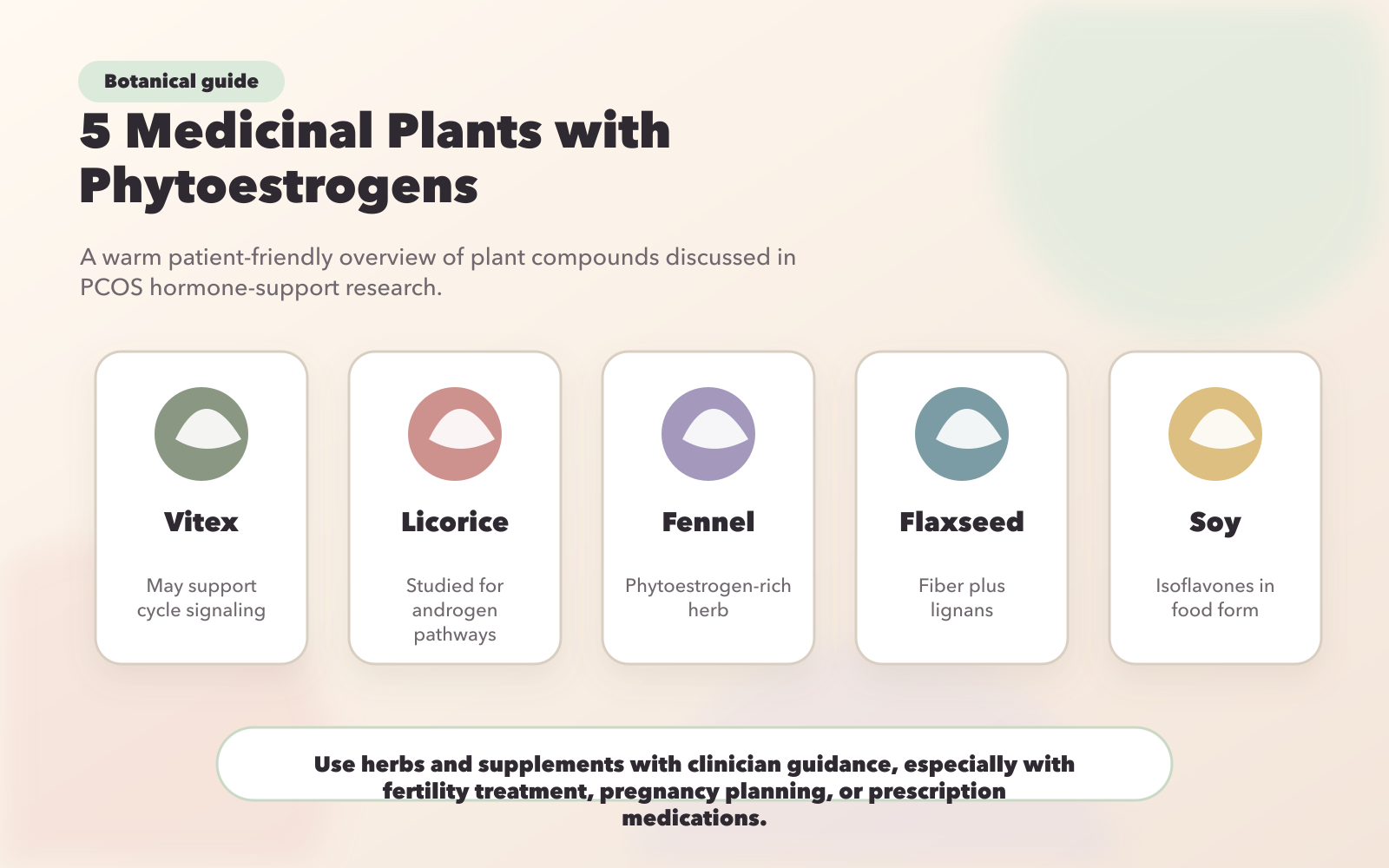
5 Medicinal Plants with Phytoestrogens for PCOS Treatment
Medicinal plants packed with phytoestrogens can help manage PCOS by reducing testosterone levels and promoting regular menstrual cycles. Each plant works on specific PCOS-related issues, such as high androgen levels and insulin resistance. Here’s a closer look at some of these plants and how they might support PCOS management.
Vitex agnus-castus (Chaste Tree)
Vitex agnus-castus stands out among phytoestrogen-rich plants. Its flavonoids, like castidin and quercetagetin, interact with dopamine type 2 receptors in the brain, helping to lower prolactin levels. This hormonal shift supports ovulation and boosts mid-luteal progesterone levels, which can lead to more regular cycles.
"VAC has been shown to be efficacious in both pre-clinical and clinical studies for the reduction of prolactin levels, the improvement of the menstrual cycle, and the treatment of infertility." - Frontiers in Endocrinology
One study found that 26% of women using Vitex became pregnant within three months, compared to just 10% in the placebo group.
Note: Vitex may not be suitable for women with insulin-resistant PCOS due to its ability to stimulate luteinizing hormone (LH). It's a good idea to check LH levels before starting this herb.
Glycyrrhiza glabra (Licorice)
Licorice works to reduce androgens through its phytoestrogens, such as liquiritigenin and glabridin. These compounds help lower serum testosterone levels and may even complement medications like spironolactone to improve hormonal balance. If you’re considering licorice, consult your healthcare provider to ensure it aligns with your hormonal needs.
Foeniculum vulgare (Fennel)
Fennel seeds are rich in trans-anethole, a phytoestrogen, and antioxidants that support ovarian health. Research suggests fennel may help regulate menstrual cycles, improve endometrial health, and counteract oxidative stress - an issue often linked to PCOS.
Linum usitatissimum (Flaxseed)
Flaxseed is loaded with lignans, which help balance estrogen levels and lower circulating androgens. Studies show that flaxseed can reduce the free androgen index, ease symptoms like hirsutism, decrease ovarian cysts, and support healthy corpus luteum formation. Adding flaxseed to your meals is a simple way to help regulate PCOS-related hormonal imbalances.
Glycine max (Soy) and Isoflavones
Soy contains isoflavones, including genistein, daidzein, and glycitein, which mimic 17β-estradiol. These compounds bind to estrogen receptors and can moderate the high-androgen environment often seen in PCOS. In a 12-week clinical trial, women with PCOS who took soy isoflavones (37.5 mg genistein and 10 mg daidzein) saw a reduction in their free androgen index, serum triglycerides, and insulin levels. Soy isoflavones may also enhance insulin sensitivity and reduce oxidative stress, although more research is needed on their long-term effects.
| Plant Species | Primary Phytoestrogen/Compound | Main Benefit for PCOS |
|---|---|---|
| Vitex agnus-castus | Castidin, Quercetagetin | Lowers prolactin and boosts progesterone |
| Glycyrrhiza glabra | Liquiritigenin, Glabridin | Reduces testosterone and manages hirsutism |
| Foeniculum vulgare | Trans-anethole | Regulates cycles and provides antioxidant support |
| Linum usitatissimum | Secoisolariciresinol (Lignans) | Lowers androgens and reduces ovarian cysts |
| Glycine max | Genistein, Daidzein | Improves insulin sensitivity and lowers androgens |
These plants offer a natural way to address hormonal imbalances tied to PCOS. While they can complement traditional treatments, it’s crucial to work with a healthcare provider to ensure they’re the right fit for your unique hormonal profile.
How Phytoestrogens Work in PCOS Management
Phytoestrogens play a multifaceted role in managing PCOS by addressing the hormonal imbalances, insulin resistance, and inflammation that characterize this condition. Understanding how these plant-based compounds function at the cellular level sheds light on their growing importance in PCOS research.
Hormonal Regulation
Phytoestrogens, such as genistein and daidzein, help regulate hormones by interacting with estrogen receptors, which can balance the LH/FSH ratio.
"Phytoestrogens are structurally similar to endogenous estrogen and have affinity to estrogen receptors." - Behnaz Khani et al., Isfahan University of Medical Sciences
These compounds also work by increasing SHBG (sex hormone-binding globulin) levels, which reduces the amount of free testosterone in the body. This helps alleviate symptoms like hirsutism and acne. Additionally, phytoestrogens inhibit 5α-reductase, the enzyme responsible for converting testosterone into dihydrotestosterone (DHT), a more potent androgen that contributes to PCOS symptoms.
A clinical study conducted from December 2009 to February 2010 at Isfahan University of Medical Sciences tested these effects on 146 women with PCOS. Participants who took 18 mg of genistein twice daily for three months experienced significant reductions in LH, testosterone, and DHEAS levels compared to a placebo group.
Improved Insulin Sensitivity
Phytoestrogens also target metabolic pathways that play a critical role in PCOS management, particularly in addressing insulin resistance.
Insulin resistance is a common issue for women with PCOS, often leading to elevated insulin levels that stimulate excess androgen production. Phytoestrogens help disrupt this cycle by activating AMPK and SIRT1 pathways and increasing GLUT4 expression, which enhances the body's cellular response to insulin.
In one clinical trial, 15 overweight women with PCOS took 1,500 mg of resveratrol daily for three months. The results were impressive: a 31.8% decrease in fasting insulin and a 66.3% improvement in insulin sensitivity. Another study found that taking 500 mg of quercetin twice daily for 12 weeks led to a 6% increase in adiponectin, a hormone that improves glucose and fat metabolism.
Phytoestrogens also help restore the PI3K/AKT signaling pathway, which is often impaired in PCOS-related insulin resistance. This pathway is vital for proper insulin-dependent glucose transport into cells, further supporting metabolic health.
Anti-Inflammatory and Antioxidant Effects
Chronic low-grade inflammation and oxidative stress are hallmarks of PCOS, affecting ovarian health and follicle development. Phytoestrogens combat these issues by reducing pro-inflammatory cytokines such as TNF-α, IL-1β, IL-6, and IL-18. They also enhance the body's natural antioxidant defenses by boosting enzymes like Superoxide Dismutase (SOD), Catalase (CAT), and Glutathione Peroxidase (GPX).
"PCOS can be considered a state of oxidative stress." - Er-Dan Luo, Hai-Mei Jiang, et al., Chengdu Women's and Children's Central Hospital
This anti-inflammatory action complements the hormonal and metabolic benefits provided by phytoestrogens. For instance, a 2016 study led by Banaszewska found that women taking 1,500 mg of resveratrol daily for 90 days experienced a 23.1% decrease in total testosterone and a 22.2% reduction in DHEAS, alongside improved insulin sensitivity. Similarly, a 12-week trial with soy isoflavones demonstrated increased plasma glutathione (GSH) levels and reduced malondialdehyde (MDA), a marker of oxidative damage.
Clinical Evidence for Phytoestrogens in PCOS
Key Study Findings
Research into natural supplements for PCOS has shed light on the potential role of phytoestrogens, though the evidence remains somewhat limited. Recent clinical trials suggest that certain compounds may help improve hormonal and metabolic functions in women with PCOS.
Soy isoflavones have been studied extensively. In a 12-week randomized, double-blind trial, participants with PCOS took daily doses of 37.5 mg genistein, 10 mg daidzein, and 2.5 mg glycitein. The results were encouraging, showing reduced free androgen index, lower serum triglycerides, and improved insulin levels. Additionally, plasma glutathione levels - a marker for antioxidant activity - also increased.
Vitex agnus-castus (commonly known as chaste tree) has demonstrated notable fertility benefits. In one trial, 14 out of 53 women taking Vitex became pregnant, compared to just 4 out of 40 in the placebo group.
Green tea extract (EGCG) has shown promise in addressing metabolic concerns in overweight and obese women with PCOS. Studies reported reductions in body weight, fasting insulin, and free testosterone levels. Similarly, berberine was found to improve insulin resistance (measured by HOMA-IR) while also lowering total testosterone and the free androgen index.
To summarize these findings, here’s a quick overview of key clinical outcomes associated with different phytoestrogens:
| Phytoestrogen | Primary Clinical Outcomes | Study Duration |
|---|---|---|
| Soy Isoflavones | Reduced free androgen index and insulin levels | 12 weeks |
| Vitex agnus-castus | Increased pregnancy rate (14/53 vs. 4/40 placebo) | 3 months |
| Resveratrol | Improved menstruation rate; reduced hair loss | 3 months |
| Quercetin | Decreased testosterone and LH; better insulin sensitivity | 12 weeks |
| EGCG (Green Tea) | Weight loss and reduced free testosterone | Varies |
While these results are promising, they also come with significant caveats.
Limitations of Current Research
Despite the encouraging findings, the research on phytoestrogens for PCOS is far from conclusive. There are several limitations that must be taken into account.
"Despite their therapeutic potential, there is a paucity of data regarding the safety profile, clinical efficacy, and optimal treatment duration of isoflavones." - Pharmacological Research - Modern Chinese Medicine
One major issue is the small sample sizes used in many studies, with some trials involving as few as 10 to 17 participants. This limits the statistical reliability and broader applicability of the results. Additionally, many studies suffer from methodological flaws, such as poor randomization and high dropout rates, further weakening their conclusions. A meta-analysis of 24 randomized controlled trials involving 1,406 women found that none of the studies reviewed had a low risk of bias.
Another significant gap is the absence of long-term safety data. Most studies last only 6 to 12 weeks, leaving unanswered questions about the durability of hormonal improvements and the potential side effects of prolonged use. Variations in the quality and concentration of plant extracts across different products also contribute to inconsistent findings, making it harder to establish standardized treatment protocols.
"There is no high quality evidence to support the effectiveness of nutritional supplements and herbal medicine for women with PCOS and evidence of safety is lacking." - BMC Complementary and Alternative Medicine
The consensus among researchers is that larger, more rigorous studies are needed. These future studies should explore a wider range of dosages and longer treatment durations to determine whether phytoestrogens can be safely and effectively recommended as part of PCOS management.
sbb-itb-6dba428
Adding Phytoestrogens to Your PCOS Treatment Plan
Safety and Recommended Dosages
When incorporating phytoestrogens into your PCOS treatment plan, it's essential to stick to safe, researched dosages. However, it's worth noting that long-term safety data for many of these supplements is still limited.
For example, flaxseed has been studied at 30 grams of powder per day or 1,000 milligrams of oil. Research suggests it may help reduce ovarian volume and androgen levels. Soy isoflavones are often used in doses ranging from 50 to 100 milligrams daily, with one study specifically examining 37.5 milligrams of genistein, 10 milligrams of daidzein, and 2.5 milligrams of glycitein over 12 weeks. Cinnamon has shown promise for improving insulin sensitivity and regulating menstrual cycles, with effective doses falling between 1,000 and 1,500 milligrams daily.
Seed cycling is another approach, involving 30 grams of ground flaxseed and pumpkin seeds during days 1–14 of your cycle, followed by 30 grams of sesame and sunflower seeds on days 15–28. This method has demonstrated modest reductions in LH (1.5% to 2%) and FSH (1.2% to 2.5%) levels over 12 weeks.
For managing symptoms like unwanted hair growth, spearmint tea - two cups daily - has been shown to lower both free and total testosterone levels. Additionally, Vitex agnus-castus extracts, taken at 500 to 1,000 milligrams daily, may help normalize menstrual cycles.
It’s important to remember that phytoestrogens can interact with over 69 medications. They may alter how your body processes common drugs like oral contraceptives, hormone replacement therapies, omeprazole, and ibuprofen. Side effects can include gastrointestinal discomfort, abdominal pain, or muscle aches. Pregnant individuals should avoid phytoestrogen supplements due to unreliable safety data.
| Medicinal Plant / Supplement | Suggested Dosage | Primary Benefit for PCOS |
|---|---|---|
| Flaxseed | 30g powder or 1,000mg oil | Reduces ovarian volume and androgen levels |
| Cinnamon | 1,000mg–1,500mg daily | Improves insulin sensitivity and cycle regularity |
| Soy Isoflavones (Genistein) | 100mg daily | Lowers LH, LDL cholesterol, and testosterone |
| Vitex agnus-castus | 500–1,000mg (dried berries) | Normalizes menstrual cycle duration |
| Spearmint | 2 cups of tea daily | Reduces hirsutism and free testosterone |
These guidelines can help you safely incorporate phytoestrogens into your routine alongside conventional treatments.
Combining Phytoestrogens with Medical Treatments
When used alongside standard therapies, phytoestrogens can complement PCOS management. For instance, they pair well with medications like Metformin (commonly prescribed for insulin resistance) and Spironolactone (used to address acne and unwanted hair growth).
Licorice (Glycyrrhiza glabra) is another option that can be combined with Spironolactone to reduce androgens while counteracting potential volume depletion. Keep in mind that herbal treatments often take time to show results - on average, about 3.2 months. Patience and consistency are key when integrating these approaches.
For added convenience, platforms like Oana Health offer telehealth services that simplify access to treatments. For example, Spironolactone starts at $14/month, while their Metformin & Spironolactone combination pack is $32/month. They even provide an Oral GLP-1 & Metformin pack for $199/month, which combines pharmaceutical solutions with expert guidance.
Interestingly, 71% of herbal practitioners report success in managing PCOS symptoms with phytotherapy. However, because phytoestrogens bind to the same receptors as human estrogens, they may impact how hormonal medications work. This highlights the importance of professional oversight when combining treatments.
Consulting with Healthcare Professionals
Professional guidance is crucial when tailoring phytoestrogen use to your specific PCOS needs. PCOS affects an estimated 6% to 12% of women in the United States, and the limited long-term safety data for many phytoestrogens makes consulting a licensed provider essential.
During your consultation, be transparent about your current medications - especially if you're on Metformin or Spironolactone - to identify any potential interactions. Clearly outline your primary goals, whether it’s improving menstrual regularity, reducing acne, or addressing insulin resistance, as different supplements target specific pathways. Other factors, like BMI, the presence of Type 2 diabetes, or risks associated with prolonged hormonal imbalances, should also be considered.
If you're looking for a personalized approach, Oana Health offers tailored PCOS treatment plans that combine supplements with prescription medications. They provide comprehensive health reviews and science-backed recommendations delivered to your door with free shipping. Whether you’re exploring topical options like Metformin HCL Lotion 20% at $43/month or oral treatments, their team can help you create a well-rounded plan for managing PCOS effectively.
Conclusion: Phytoestrogens in PCOS Management
Phytoestrogens can be a helpful addition to traditional PCOS treatments, addressing symptoms like hormonal imbalances, insulin resistance, and inflammation. A 12-week study showed that a specific phytoestrogen regimen (37.5 mg genistein, 10 mg daidzein, 2.5 mg glycitein) led to significant reductions in insulin levels and the free androgen index, while increasing plasma glutathione levels. These findings highlight the potential of incorporating phytoestrogens into tailored PCOS care.
PCOS impacts about one in seven women - roughly 6–15% of those of reproductive age . However, every case is unique. A treatment that addresses hormonal imbalances might not fully resolve issues like insulin resistance or metabolic challenges, making personalized care essential.
As experts point out:
"PCOS is a multifaceted disorder... All these symptoms require a therapeutic approach." – Sidra Malik et al.
Phytoestrogens are most effective when paired with lifestyle changes, such as adopting a balanced diet and maintaining regular physical activity . It’s worth noting that natural supplements often require consistent use for 3 to 6 months to show benefits like improved menstrual cycles or enhanced fertility. Professional oversight is key, especially given the limited long-term safety data on phytoestrogens and the possibility of interactions with medications .
For a personalized and evidence-based approach to PCOS care, Oana Health offers telehealth services that combine phytoestrogen support with prescription treatments. Their licensed professionals create customized plans delivered directly to your door with free shipping, ensuring accessible and comprehensive PCOS management.
FAQs
Are there any side effects of using phytoestrogens to manage PCOS?
Phytoestrogens, like those found in soy, are often used to help manage PCOS symptoms due to their potential to support hormonal and metabolic balance. Studies indicate that consuming typical dietary amounts of phytoestrogens is generally safe and well-tolerated for most women with PCOS. In fact, clinical research has observed improvements in reproductive hormone levels and cholesterol profiles without notable side effects.
That said, since phytoestrogens act as mild estrogen mimics, there are concerns about their impact on estrogen-dominant conditions, which can sometimes be associated with PCOS. Additionally, individuals with a history of thyroid issues or soy allergies should be cautious - soy may interfere with thyroid hormone absorption in certain cases.
For tailored advice on how to include phytoestrogens in your PCOS management plan, Oana Health provides telehealth consultations with licensed providers who specialize in personalized hormone-balancing treatments.
Can phytoestrogens affect how PCOS medications work?
Phytoestrogens are natural compounds found in plants that can mimic estrogen by attaching to estrogen receptors in the body. These compounds can work alongside certain PCOS medications, such as metformin and clomiphene citrate, to help regulate hormones, support ovulation, and improve lipid profiles. For example, phytoestrogens like isoflavones may lower testosterone levels, which could boost the effectiveness of anti-androgen treatments like spironolactone or combination oral contraceptives.
That said, because phytoestrogens have a mild estrogen-like effect, they might intensify the actions of hormone-based therapies. This could lead to side effects such as breast tenderness or changes in menstrual cycles. On the other hand, they are typically well-tolerated when used with non-hormonal medications. Still, it’s always a good idea to consult with a healthcare provider to avoid any unwanted drug interactions.
Oana Health specializes in creating tailored PCOS treatment plans, which can include phytoestrogen-rich foods or supplements. Their licensed medical professionals carefully monitor for potential interactions, ensuring that treatments are both safe and effective for managing symptoms.
How can phytoestrogens be included in a diet to help manage PCOS symptoms?
Phytoestrogens are natural compounds found in plants that act somewhat like estrogen in the body. They’ve been shown to potentially help with hormonal imbalances tied to PCOS. Foods like soy (tofu, tempeh, soy milk, edamame), flaxseeds, and fenugreek are excellent sources of phytoestrogens. Research suggests they may help lower androgen levels, support ovulation, and regulate menstrual cycles. Including 1–2 servings of soy-based foods daily, along with 1–2 tablespoons of ground flaxseed, can provide a helpful dose of these compounds.
To get the most out of phytoestrogen-rich foods, try spreading your intake across meals and pair them with a balanced, low-glycemic diet. Focus on lean proteins, non-starchy vegetables, and healthy fats to maintain steady blood sugar levels. However, if you're pregnant, breastfeeding, or on hormone-related medications, it’s important to check with a healthcare provider before making changes to your diet.
For those looking for personalized advice, Oana Health offers telehealth services with licensed clinicians who can design a nutrition and medication plan tailored to your specific PCOS needs.