
Metformin and Hunger Hormones in PCOS
PCOS disrupts how your body manages hunger, often leaving you feeling unsatisfied after meals and craving carbs. This happens because of insulin resistance, a condition affecting up to 70% of women with PCOS. Insulin resistance impacts key hunger hormones, including ghrelin (which controls appetite) and leptin (which signals fullness), making it harder to manage cravings and weight.
Metformin, commonly used for diabetes, helps by improving insulin sensitivity and rebalancing these hormones. Over time, it can normalize hunger signals, reduce cravings, and support weight management. Studies show that women with PCOS using Metformin experience better appetite control, fewer sugar cravings, and modest weight loss over six months.
Here’s how it works:
- Ghrelin: Restores normal pre- and post-meal cycles, helping you feel satisfied longer.
- Leptin: Improves the brain’s response to fullness signals while lowering leptin levels.
- GLP-1 & PYY: Boosts gut hormones that promote satiety after meals.
Metformin’s effects are gradual, typically noticeable after 2–6 months of consistent use. Side effects like stomach upset can occur, but options like extended-release tablets or topical formulations may help. Pairing Metformin with a low-glycemic diet and exercise can further enhance results.
Metformin for PCOS (what it does & natural treatment options)
sbb-itb-6dba428
How Hunger Hormones Work in PCOS
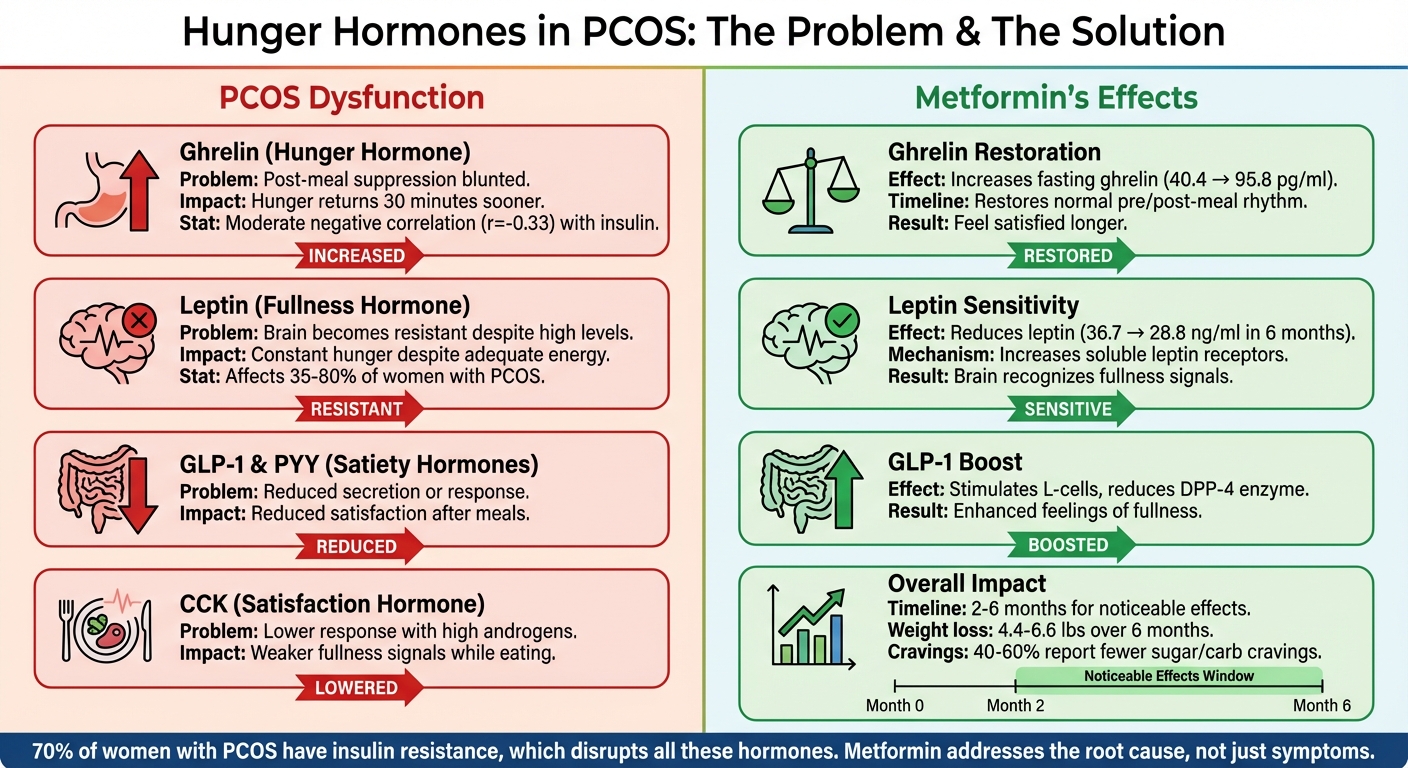
How PCOS Disrupts Hunger Hormones vs How Metformin Restores Balance
Hunger and fullness are controlled by a complex network of hormones. In women with PCOS, at least four of these hormones don’t function as they should, leading to disruptions in metabolism and appetite regulation.
One key issue is insulin resistance, which affects 35–80% of women with PCOS. When cells don’t respond properly to insulin, the pancreas produces even more of it. This excess insulin not only impacts blood sugar but also interferes with the way hunger hormones communicate with the brain. Let’s explore how these hormones - ghrelin, leptin, GLP-1, PYY, and others - become imbalanced and drive appetite issues in PCOS.
"The constant hunger you experience with PCOS isn't psychological. It's the direct result of insulin resistance combined with dysfunction in at least four appetite-regulating hormones." - Rhea Karir, Dietetic Student
Ghrelin and Increased Hunger in PCOS
Ghrelin, often called the "hunger hormone", is produced in the stomach and rises before meals to stimulate appetite. Normally, its levels drop significantly after eating, helping you feel satisfied for hours.
In PCOS, this natural rhythm is disrupted. After meals, ghrelin levels don’t drop as much as they should, leaving you feeling hungry again much sooner than expected. This blunted response explains why fullness feels short-lived. Research shows a moderate negative correlation (r=-0.33) between insulin and ghrelin levels in PCOS, meaning high insulin levels interfere with ghrelin’s ability to regulate hunger.
Leptin Resistance in PCOS
Leptin, produced by fat cells, tells the brain when you’ve stored enough energy and should stop eating. High leptin levels normally suppress appetite by activating neurons that reduce hunger and inhibiting those that stimulate it.
However, PCOS often leads to leptin resistance. Despite having elevated leptin levels, the brain doesn’t respond to the signal. Chronic inflammation or defects in leptin’s ability to cross the blood-brain barrier are likely culprits. As a result, the brain perceives a state of starvation, even when energy stores are sufficient.
"Individuals who show leptin resistance or leptin deficiency tend to correlate with obesity... Leptin resistance can either be associated with a decreased ability of leptin to reach the hypothalamus and the CNS or with leptin's defects in downstream signaling." - Anthony Y. Yeung, Creighton University School of Medicine
This creates a vicious cycle: insulin resistance leads to higher leptin production, but the brain’s resistance to leptin keeps hunger signals active. This encourages overeating, more fat storage, and even higher leptin levels.
GLP-1 and PYY in Appetite Control
Two gut hormones, GLP-1 (glucagon-like peptide-1) and PYY (peptide YY), play essential roles in signaling fullness and slowing digestion after meals. In PCOS, these hormones may not be secreted properly or may lose effectiveness, further reducing the body’s ability to feel satisfied after eating.
Another hormone, cholecystokinin (CCK), also contributes to satiety during meals. Women with PCOS, especially those with high androgen levels, often have a weaker CCK response, which delays the feeling of fullness while eating.
| Hormone | Normal Function | PCOS Dysfunction | Impact on Appetite |
|---|---|---|---|
| Ghrelin | Rises before meals; drops after eating | Post-meal suppression is blunted | Hunger returns 30 minutes sooner |
| Leptin | Signals the brain to stop eating | Brain becomes resistant despite levels | Constant hunger despite adequate energy |
| GLP-1 / PYY | Promote fullness after meals | Secretion or response may be reduced | Reduced satisfaction after meals |
| CCK | Signals satisfaction during meals | Lower response, especially with androgens | Weaker fullness signals while eating |
These hormonal disruptions explain why common advice like "just eat less" doesn’t work for many women with PCOS. When the body’s natural appetite-regulating systems are out of sync, hunger feels relentless, making weight management far more challenging.
How Metformin Affects Hunger Hormones
Metformin does more than just regulate blood sugar - it also helps stabilize hunger hormones in individuals with PCOS. By addressing the underlying issues that disrupt appetite regulation, it aids the body in recognizing when it's time to stop eating.
This medication works in three key ways: it improves sensitivity to leptin while lowering its circulating levels, restores the natural rhythm of ghrelin, and increases gut hormones like GLP-1 and metformin combinations that promote a sense of fullness. These changes take time, often becoming noticeable after 2 to 6 months of consistent use. Let’s dive into how Metformin’s effects on ghrelin, leptin, and gut hormones contribute to better appetite control.
Metformin Reduces Ghrelin Levels
Ghrelin, often called the "hunger hormone", plays a key role in appetite regulation. Early studies hinted that Metformin might lower ghrelin levels, but controlled research tells a different story: as insulin resistance improves, fasting ghrelin levels actually rise.
A 6-month study involving 50 women with PCOS showed that Metformin treatment significantly increased fasting ghrelin from 40.4 ± 32.7 to 95.8 ± 60.1 pg/ml. While this might seem contradictory, it signals better metabolic balance. When insulin resistance improves, ghrelin’s natural pre- and post-meal fluctuations begin to normalize.
"The amelioration of insulin resistance in metformin treated PCOS patients correlates with an increase in fasting ghrelin and a decrease in leptin concentrations." - S Hahn, University of Essen
By restoring ghrelin's natural rhythm, Metformin helps reduce the constant feeling of hunger that many with PCOS experience. Ghrelin rises appropriately before meals and drops effectively afterward, making it easier to feel satisfied.
Metformin Improves Leptin Sensitivity
Leptin, often referred to as the "satiety hormone", tells your brain when you're full. Metformin enhances your brain's ability to respond to leptin, making it one of the most impactful ways the medication helps regulate appetite.
Research shows that Metformin reduces serum leptin levels in PCOS patients - dropping from 36.7 ± 23.1 to 28.8 ± 15.6 ng/ml after 6 months and from 9.6 ± 1.1 to 5.8 ± 0.71 ng/ml after just 2 months at a daily dose of 1,500 mg. It also increases soluble leptin receptors (sOB-R), improving leptin transport to the brain and enhancing its signaling.
"Metformin reduces leptin resistance in PCOS women which induces ovulation." - Prerna Upadhyaya, Mahatma Gandhi Medical College
One study showed that in pregnant women with PCOS, Metformin reduced excessive weight gain during pregnancy to 28%, compared to 62% in a placebo group. This wasn’t about willpower - it was about restoring the brain’s ability to recognize fullness. Researchers believe this is partly due to Metformin’s role in inhibiting the MAPK signaling pathway in fat cells, which reduces leptin secretion, and improving leptin transport across the blood-brain barrier.
Metformin Increases GLP-1 and PYY
Metformin also stimulates the release of GLP-1 (glucagon-like peptide-1), a hormone that enhances feelings of fullness. It achieves this by directly activating the L-cells in the intestines that produce GLP-1 and by reducing the activity of the DPP-4 enzyme, which normally breaks it down.
"Metformin could increase GLP-1 secretion directly by stimulating the GLP-1 producing cells and by decreasing soluble dipeptidyl peptidase-4 activity and thereby inhibit GLP-1 degradation." - Dorte Glintborg, Odense University Hospital
GLP-1 works alongside PYY, another hormone that signals satiety after meals. Together, these "fullness hormones" help reduce the urge to snack and make meals feel more satisfying. The effects of these hormones build gradually, which is why many patients notice a slow but steady reduction in cravings over time. By boosting these hormones, Metformin offers a holistic approach to appetite control in PCOS.
Research on Metformin for Appetite and Weight in PCOS
Clinical trials indicate that Metformin can help reduce appetite and aid in weight management for individuals with PCOS.
Lower Appetite and Food Intake
Metformin's effects on hunger hormones have been linked to reduced appetite and food intake. Studies in pregnant women with PCOS provide compelling evidence. For instance, women taking 2,000 mg of Metformin daily from the first trimester through delivery gained an average of 9.0 kg during pregnancy, compared to 11.6 kg in the placebo group.
"Metformin reduces the risk for eGWG [excessive gestational weight gain] and improves leptin sensitivity in pregnant women with PCOS." - Johanna Molin, Department of Clinical Sciences, Umeå University
The impact on weight gain was striking. The rate of excessive gestational weight gain fell from 62% in the placebo group to just 28% among those taking Metformin. Moreover, women on Metformin were 4.1 times more likely to stay within recommended weight gain guidelines compared to those on placebo.
These short-term appetite reductions set the stage for longer-term weight management benefits.
Weight Loss Results in PCOS Patients
Beyond appetite control, Metformin has been shown to support consistent weight loss over time. A Cochrane review of over 1,000 women with PCOS found that Metformin treatment resulted in an average weight loss of 4.4 to 6.6 pounds over six months. For women with insulin resistance - a common feature of PCOS - weight loss typically ranged from 4 to 7 pounds with regular use.
A meta-analysis further highlighted Metformin's impact, showing a mean BMI reduction of 3.4 to 4.55 units in women with PCOS. While the weight loss may appear modest compared to newer treatments like GLP-1 receptor agonists, Metformin offers a key advantage: lasting results. Long-term follow-up studies reported an average body weight loss of 6.2%, maintained over 15 years for those who achieved success in the first year of treatment.
However, individual responses to Metformin can vary, and side effects like diarrhea may affect adherence. For example, the COMET-PCOS randomized trial, which included 240 women with hyperandrogenic PCOS and a BMI between 25 and 48, found that 2,000 mg of extended-release Metformin daily for 24 weeks did not significantly reduce BMI or waist circumference compared to baseline. Additionally, 64% of participants experienced diarrhea. These findings suggest that while Metformin is effective for many - particularly those with higher baseline glucose levels or a BMI ≥ 35 - its benefits may depend on individual factors, and side effects can influence long-term use.
Oana Health's Metformin Treatments for PCOS
For women managing PCOS, Oana Health offers a telehealth service that addresses insulin resistance and appetite regulation - all from the comfort of home. Their approach combines licensed medical care with personalized treatment plans designed to meet the unique needs of women with PCOS.
Metformin Treatment Plans and Pricing
Oana Health provides a variety of Metformin-based options, each tailored to specific PCOS challenges:
- Oral Metformin ER: Starting at $22/month, this option supports insulin sensitivity and helps regulate blood sugar levels.
- MetSpiro: Priced at $32/month, this package combines Metformin with Spironolactone, addressing insulin resistance while tackling androgen-related symptoms like acne and unwanted hair.
- Topical Metformin (Metformin HCL Lotion 20%): For those who experience gastrointestinal side effects from oral Metformin, this lotion offers a targeted alternative. It improves insulin sensitivity without upsetting the stomach, costing $43/month. Results typically appear after 3–4 weeks of nightly application. Clinical studies report that 81% of women see significant improvements within a year.
"I'm so glad I discovered Oana's metformin lotion! I used to struggle a lot with the side effects for oral metformin and this is a great alternative for me. I get the same benefits but no more upset stomach and nausea." – Carrie S.
- Dual Agonist GLP-1 buccal treatment with Metformin: At $199/month, this option focuses on weight management and appetite control, targeting both insulin resistance and hunger hormones for a more comprehensive approach to PCOS care.
How Oana Health's Telehealth Works
Oana Health simplifies access to Metformin treatments through its telehealth platform. Getting started is easy: patients complete a short online intake form, reviewed by licensed physicians who then craft a personalized treatment plan. For those unsure about their symptoms, the website also features a PCOS quiz to identify areas where Metformin-based treatments might help, such as insulin resistance, weight challenges, or androgen imbalance.
Prescriptions are filled by FDA-regulated compounding pharmacies and shipped directly to patients with free delivery. Oana Health also provides ongoing medical support, making it easy to manage refills online or by phone, ensuring consistent care over the long term.
"Oana's telehealth service is fantastic! It's helped manage my insulin levels and reduce excess hair growth I was experiencing due to PCOS." – Victoria A.
Conclusion
For women managing PCOS, Metformin offers more than just appetite control - it addresses the metabolic issues at the root of PCOS-related hunger. By improving insulin sensitivity and balancing hunger hormone signals, Metformin tackles the underlying dysfunction rather than merely suppressing appetite.
The results speak for themselves: between 40% and 60% of women taking Metformin report fewer sugar and carbohydrate cravings. Clinical studies also show an average weight loss of 2–3 kilograms (around 4.4–6.6 lbs) within six months. By stabilizing blood sugar levels and reducing glucose-related hunger spikes, Metformin helps ease the constant hunger signals that often complicate weight management for women with PCOS.
"Metformin doesn't directly suppress appetite the way some medications do. Instead, it works upstream, fixing the metabolic problems that cause abnormal hunger in the first place." – JM Nutrition Team
For optimal results, Metformin should be combined with a low-glycemic diet and regular exercise. Starting with a small dose and gradually increasing it under a doctor's guidance can help reduce gastrointestinal side effects. Additionally, regular vitamin B12 checks ensure long-term safety.
FAQs
How do I know if my hunger is from insulin resistance?
Persistent and intense hunger, even when you're eating enough, could be a sign of insulin resistance. This is especially worth considering if it’s paired with symptoms like abdominal weight gain or irregular menstrual cycles. To confirm, healthcare providers often use tests like fasting insulin levels or a glucose tolerance test.
Pay attention to patterns in your symptoms, and don’t hesitate to consult a healthcare professional for a thorough evaluation. Early detection can make a big difference.
What dose of metformin helps cravings in PCOS?
The right dose of metformin to help manage cravings in PCOS can vary based on factors like insulin resistance levels and BMI. Generally, it takes at least 8 weeks to start seeing noticeable effects. Doses are usually increased gradually under a doctor’s supervision to balance the benefits with potential side effects. It’s important to work closely with a healthcare provider to figure out the dosage that’s best for your specific needs.
Will metformin still help if I don’t lose weight?
Metformin can help support hormonal balance and manage PCOS symptoms, even if weight loss isn’t achieved. It improves insulin sensitivity and reduces androgen levels, which can lead to better hormonal regulation overall.