
Metformin and Menstrual Regularity: What Studies Show
Metformin can help women with PCOS regulate their menstrual cycles. Around 69% of patients respond positively, with 88% achieving fully regular cycles. This happens because metformin improves insulin sensitivity, lowers testosterone, and restores hormonal balance.
Key takeaways:
- Treatment Duration Matters: Results improve with longer use. 6+ months increases success rates from 55% to 77%.
- Most Effective for Certain Groups: Women with a BMI under 30 and insulin resistance see the best outcomes.
- Hormonal Improvements: Metformin reduces insulin, testosterone, and LH levels, helping ovulation.
- Weight Loss Optional: While weight loss can help, many see cycle improvements without it.
Side effects like nausea and diarrhea are common but manageable by gradually increasing dosage. Metformin also reduces risks of type 2 diabetes and endometrial cancer.
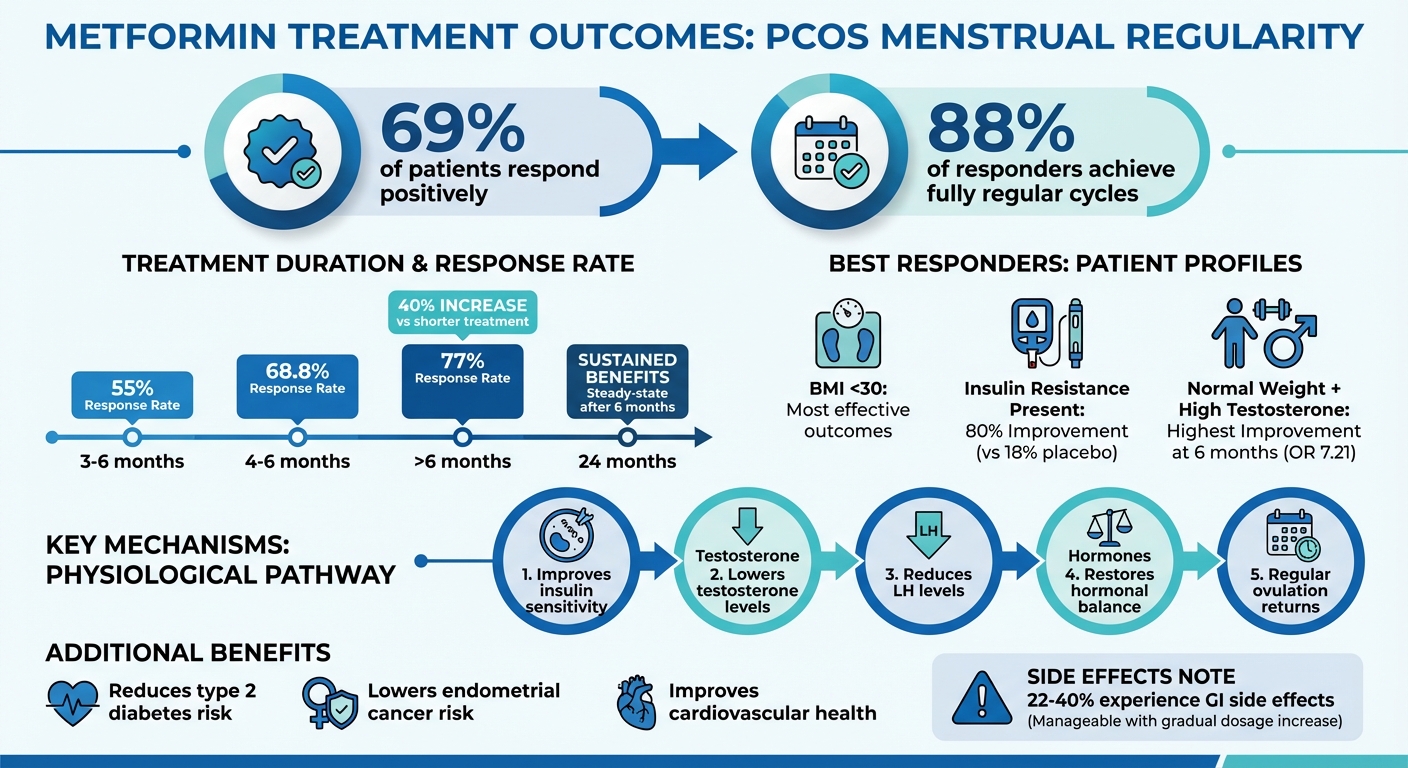
Metformin Treatment Success Rates for PCOS Menstrual Regularity by Duration and Patient Profile
Metformin For PCOS | Weight Loss + Menstrual Cycle
What Studies Show About Metformin and Menstrual Regularity
Research shows that metformin can help restore menstrual cycles in individuals with PCOS, though the results depend on factors like treatment duration and individual characteristics. Here's a breakdown of findings from studies examining different treatment periods.
24-Month Study Results
A prospective study conducted between 2015 and 2017 followed 119 women with PCOS over two years. Participants gradually increased their metformin dosage from 500 mg to 1,500 mg daily. The study observed an increase in menstrual frequency, along with notable reductions in testosterone and LH levels, in both normal-weight and overweight participants.
Interestingly, the outcomes varied based on body weight and initial hormone levels. For example:
- Normal-weight women with high baseline testosterone showed the most significant improvement within six months (OR 7.21).
- Overweight women with normal testosterone levels were more likely to achieve regular menstrual cycles by 12 months (OR 0.63).
Lead researcher P.K. Yang highlighted:
"Metformin was associated with improvements in the menstrual cycle and most hormonal profiles in OW [overweight] and NW [normal‑weight] women with PCOS during 24 months of treatment. Most parameters reached maximal response and steady‑state after 6 months".
6-Month Study Results
Shorter studies also point to early benefits. Research shows that within six months, 68.8% of obese women with menstrual irregularities achieved regular cycles, alongside significant hormonal improvements. This period also saw marked reductions in LH levels and better menstrual patterns across both obese and non-obese groups.
Additionally, women taking metformin experienced higher ovulation rates compared to those on a placebo (OR 2.64), and clinical pregnancy rates were nearly double compared to placebo-treated groups (OR 1.98).
Family medicine researcher Chavi Tejpal summarized:
"Monotherapy with metformin is found to be highly effective in treating menstrual irregularities experienced among patients with the polycystic ovarian syndrome".
Comparing Results Across Studies
The length of treatment plays a major role in effectiveness. A retrospective analysis found that women treated for over six months had a 77% response rate for normalizing menstrual cycles, compared to a 55% response rate for those treated between three and six months - an increase of about 40% with extended treatment.
Key findings include:
- About 69% of women achieved normalized menstrual cycles, with 88% of these experiencing fully regular patterns.
- Non-obese women (BMI <30) responded better to metformin alone, while obese women often required additional treatments.
- Among women with insulin resistance, 80% showed improved menstrual regularity with metformin, compared to only 18% in the placebo group.
| Study Duration | Response Rate | Key Finding |
|---|---|---|
| 3–6 Months | 55% | Initial improvements in frequency and hormones |
| 4–6 Months | 68.8% | Significant reduction in free testosterone levels |
| >6 Months | 77% | Higher likelihood of achieving full normal cycles |
| 24 Months | Sustained | Benefits maintained; steady-state reached after 6 months |
How Metformin Restores Menstrual Cycles
Metformin works by addressing insulin resistance and hormonal imbalances, which are key factors behind irregular periods in PCOS.
Effects on Insulin and Hormones
Metformin enhances insulin sensitivity by increasing the uptake of glucose into cells and reducing the liver's glucose production through a process called gluconeogenesis. This happens primarily through the activation of AMPK, a key regulator of cellular energy.
By improving insulin sensitivity, metformin lowers excessive insulin levels. High insulin levels can stimulate the ovaries' theca cells to produce more testosterone while also suppressing the liver's production of sex hormone–binding globulin (SHBG), a protein that binds to androgens. Lowering insulin levels helps reduce testosterone production and boosts SHBG levels, especially in women with normal body weight.
This hormonal shift helps restore the balance required for the hypothalamic–pituitary–ovarian axis to function properly. As a result, luteinizing hormone (LH) levels decrease, which supports normal ovulation. Research shows that metformin lowers total and free testosterone, androstenedione, and dehydroepiandrosterone sulfate (DHEA-S). These changes improve the LH/FSH ratio, aiding in proper follicle development and ovulation.
"Metformin has insulin-lowering effects by improving insulin sensitivity and, in turn, can decrease circulating androgen levels", explained R. Dumitrescu, MD, from "Carol Davila" University of Medicine and Pharmacy.
In a 12-week study, 61% of women with PCOS experienced improved ovulation after taking 1,500 mg of extended-release metformin daily. Full benefits may take four to six months of consistent use. Beyond hormonal changes, metformin also impacts weight and metabolism.
Weight Loss and BMI Changes
Metformin’s ability to regulate menstrual cycles is further supported by its metabolic effects, including weight loss. This weight reduction is linked to improved insulin resistance and appetite suppression. One study involving 150 obese women found that metformin therapy reduced BMI by 10%.
However, weight loss isn’t always necessary for metformin to restore regular periods. For example, in one study, 86% of 22 women achieved regular menstrual cycles after six months of metformin treatment, even with a minimal weight change from 164 lbs to 162 lbs. Similarly, another study found that 68.8% of 20 obese participants reported more regular cycles despite no significant BMI change. This shows that menstrual improvements can occur independently of weight loss.
Interestingly, metformin may be more effective in promoting ovulation in women with a BMI under 30 compared to those with higher BMIs. Even small amounts of weight loss can improve insulin sensitivity, which further supports regular cycles by lowering leptin levels.
sbb-itb-6dba428
What This Means for Women with PCOS
The findings from these studies provide valuable insights into how metformin can affect women with PCOS, offering guidance on who benefits most and what to expect from treatment.
Who Responds Best to Metformin
Women with a BMI under 30 kg/m² tend to see the greatest improvements in menstrual regularity and ovulation. This highlights how body weight significantly influences treatment success.
Another critical factor is insulin resistance. In a placebo-controlled study, 80% of insulin-resistant women with PCOS experienced better menstrual regularity when treated with metformin. In contrast, only 18% of those in the placebo group saw similar improvements. This underscores how insulin resistance at the start of treatment can predict a positive response to metformin.
Baseline testosterone levels also play a role. Women with normal weight and elevated testosterone showed the most significant improvements after six months of treatment, with an odds ratio of 7.21. Overall, about 69% of women with PCOS respond to metformin for regulating menstrual cycles, and of these, 88% achieve completely normal cycles.
These patterns not only guide treatment decisions but also shed light on the potential long-term benefits of metformin.
Long-Term Effects and Side Effects
Using metformin for more than six months increases the likelihood of success, with 77% of women normalizing their cycles compared to 55% on shorter regimens. Most hormonal and metabolic benefits peak after approximately six months of consistent use.
Beyond menstrual regulation, metformin offers other health advantages. It reduces the risk of type 2 diabetes, cardiovascular disease, and endometrial cancer by improving insulin sensitivity. By restoring ovulation and promoting regular shedding of the uterine lining, metformin helps protect against endometrial cancer linked to prolonged estrogen exposure. These added benefits make metformin a key option for managing PCOS.
However, gastrointestinal side effects like nausea, diarrhea, abdominal pain, and constipation occur in 22%–40% of users. Gradually increasing the dosage can help minimize these issues.
Conclusion
Research highlights that metformin is highly effective in restoring menstrual regularity for women with PCOS. Approximately 69% of patients respond positively, and among those, 88% achieve complete cycle normalization. This is largely due to metformin's ability to enhance insulin sensitivity, reduce hyperinsulinemia, and lower ovarian androgen production.
Extended treatment periods - longer than six months - further improve outcomes, with cycle normalization rates increasing from 55% to 77%. Beyond regulating cycles, metformin offers additional health benefits, such as lowering the risk of type 2 diabetes, cardiovascular disease, and endometrial cancer over the long term.
Women with a BMI below 30 kg/m² and evidence of insulin resistance tend to see the best results. While gastrointestinal side effects are common, they can often be managed by gradually increasing the dosage. Regular monitoring of vitamin B12 levels is also recommended to address potential deficiencies.
FAQs
How does metformin help regulate menstrual cycles in women with PCOS?
Metformin plays a role in helping women with PCOS achieve more regular menstrual cycles by addressing insulin resistance, a frequent issue linked to the condition. When the body's response to insulin improves, it leads to a reduction in excess insulin levels. This decrease helps lower androgen production, which is a major factor behind irregular periods.
By stabilizing these hormone levels, metformin aids in restoring ovulation, gradually leading to more consistent menstrual cycles. Research has consistently shown that metformin can be a useful option for improving menstrual health in women with PCOS.
What side effects can metformin cause, and how can they be managed?
Metformin often comes with gastrointestinal side effects like nausea, diarrhea, and bloating, especially when you first start taking it. The good news? These symptoms can usually be reduced by taking the medication with food and gradually increasing the dosage. If these issues stick around, though, it’s a good idea to reach out to your healthcare provider.
In rare instances, metformin might cause more concerning symptoms, such as dizziness or muscle pain, which could point to a serious condition. Additionally, long-term use can sometimes lead to vitamin B12 deficiency. Because of this, regular monitoring of your B12 levels is important, and supplements might be needed if your levels drop.
When used as directed, metformin is generally safe for most people. Staying in close contact with your healthcare provider and keeping up with regular check-ups will help ensure your treatment stays on track.
Who is most likely to benefit from metformin for managing menstrual irregularity in PCOS?
Metformin is often a helpful treatment for women with PCOS who face insulin resistance. Research indicates that it can assist in regulating menstrual cycles by targeting the metabolic problems frequently tied to PCOS, such as high insulin levels. This makes it a promising choice for managing irregular periods caused by hormonal imbalances related to insulin resistance.