
Checklist: Choosing Between Metformin and Spironolactone
Struggling with PCOS symptoms like irregular periods, weight gain, acne, or unwanted hair growth? Choosing the right treatment often comes down to identifying your primary symptoms and health goals. Two common options - Metformin and Spironolactone - target different aspects of PCOS:
- Metformin: Improves insulin sensitivity, supports weight loss (around 6.6–8.8 lbs), regulates periods, and enhances fertility.
- Spironolactone: Reduces acne, slows unwanted hair growth, and addresses androgen-driven symptoms like thinning scalp hair.
Key decision factors:
- If insulin resistance or weight issues are primary concerns, Metformin may be more effective.
- If acne, facial hair, or hormonal imbalances dominate, Spironolactone might work better.
- For combined metabolic and androgen-related symptoms, a combination of both medications could offer broader relief.
Quick Comparison:
| Symptom/Goal | Metformin | Spironolactone |
|---|---|---|
| Insulin Sensitivity | Highly effective | Limited impact |
| Unwanted Hair (Hirsutism) | Moderate improvement | Strong improvement |
| Acne Reduction | Minimal direct effect | Highly effective |
| Menstrual Regulation | Effective | Effective |
| Weight Management | Modest weight loss (6.6–8.8 lbs) | No impact on BMI |
| Fertility Support | First-line option | Not recommended for fertility |
Each medication comes with unique side effects. Metformin commonly causes digestive issues, while Spironolactone may lead to hormonal changes and elevated potassium levels. Talk to your healthcare provider to decide which treatment - or combination - is right for you.
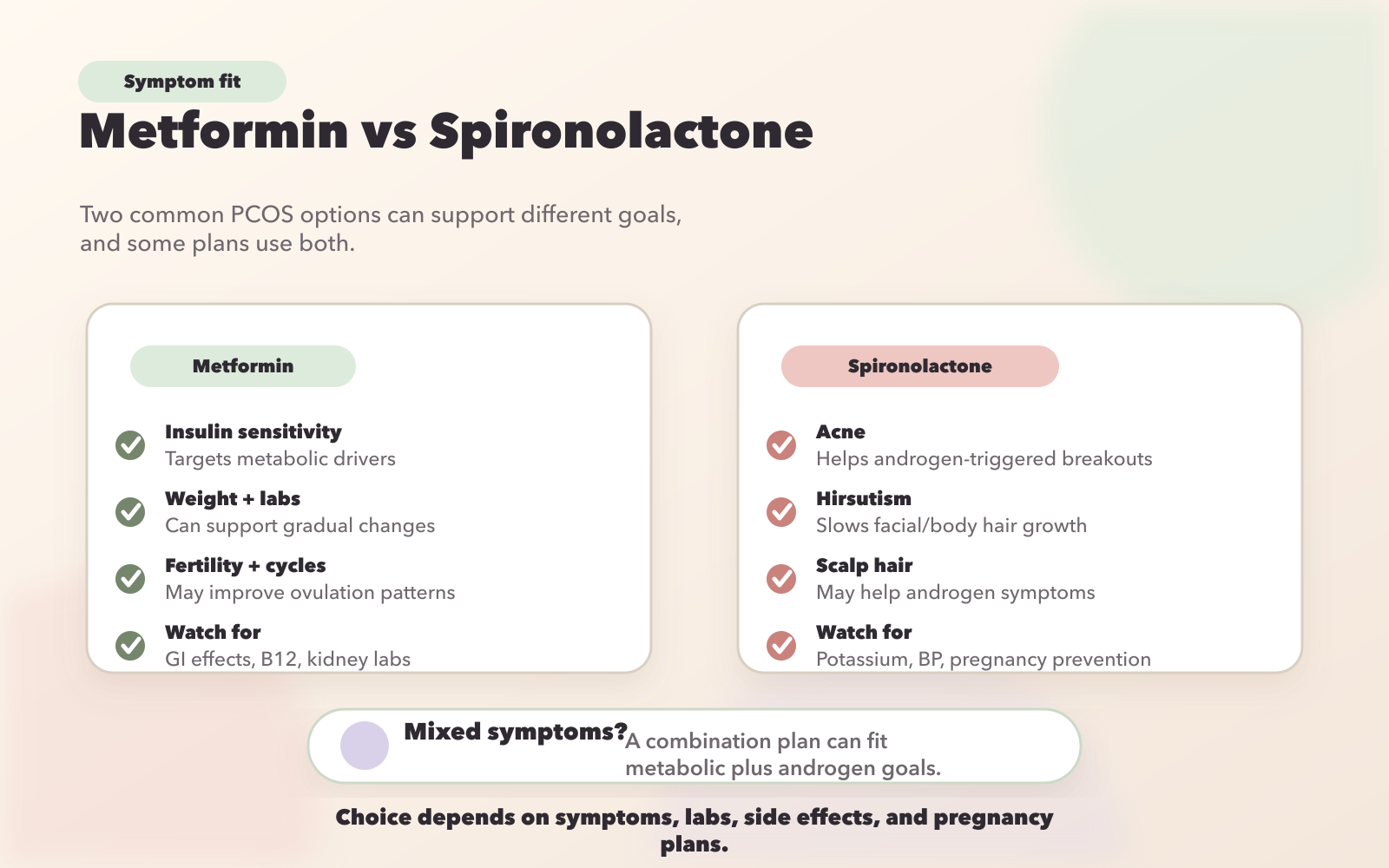
Metformin vs Spironolactone for PCOS: Side-by-Side Symptom Effectiveness Comparison
Symptoms and Health Goals to Evaluate
To choose the right treatment for PCOS, it's important to identify your main symptoms. Each medication offers specific benefits, so reviewing your symptoms can help you make an informed decision.
Insulin Resistance and Weight Control
If you show signs of insulin resistance - such as a high BMI, elevated fasting blood glucose, or a family history of type 2 diabetes - Metformin might be a helpful option. Studies suggest it can support weight loss (around 6.6–8.8 lbs over several months) and help restore regular menstrual cycles. An elevated HOMA-IR score is another indicator that Metformin could be beneficial.
For women dealing with metabolic issues, Metformin has been linked to improved fertility outcomes. In one study, 91% of women with absent periods resumed normal menstrual cycles after taking Metformin. Dr. Lee Radosh from The Reading Hospital explains, "Metformin improves insulin resistance (diagnosed by elevated fasting glucose or fasting glucose/insulin ratios) in patients with PCOS".
These factors can help determine if Metformin aligns with your health goals.
Unwanted Hair Growth and High Androgen Levels
If you're dealing with excess facial or body hair, persistent acne, or thinning scalp hair, Spironolactone may be a better fit. These symptoms often point to elevated androgen levels, which can affect skin and hair follicles. Spironolactone works by blocking androgen receptors, helping to reduce acne and slow unwanted hair growth.
Research shows Spironolactone is more effective than Metformin for managing hirsutism, based on standardized scoring systems. It also outperforms medications like finasteride in treating both hirsutism and acne. Additionally, it can address female pattern hair loss, making it a well-rounded option for managing androgen-driven symptoms.
Irregular Menstrual Cycles
Both Metformin and Spironolactone can help regulate menstrual cycles, though they work in different ways. Metformin improves cycle regularity by lowering insulin levels, which promotes normal ovulation. This is especially useful if irregular cycles are tied to metabolic issues or if you're trying to conceive.
Spironolactone, on the other hand, influences menstrual cycles through hormonal pathways. In a six-month study, women taking Spironolactone saw their annual menstrual cycles increase from 6.6 to 10.2. By comparison, women on Metformin experienced an increase from 5.7 to 9.1 cycles per year. For those dealing with both insulin resistance and high androgen symptoms - like irregular periods combined with acne or unwanted hair - a combination of both medications might offer the best results.
Understanding how your cycles respond can guide you in selecting Metformin, Spironolactone, or a combination therapy to meet your needs.
Metformin vs. Spironolactone: Side-by-Side Comparison
Metformin and Spironolactone work on different aspects of PCOS, addressing metabolic and androgen-related symptoms, respectively. Metformin improves insulin sensitivity, tackling the metabolic factors of PCOS. On the other hand, Spironolactone blocks androgen receptors, targeting the effects of male hormones on the skin and hair follicles.
The choice between the two depends largely on your primary symptoms. If weight issues and blood sugar levels are your main concerns, Metformin may be the better option. However, if you're dealing with acne, excess facial hair, or thinning hair on your scalp, Spironolactone is likely to be more effective. For those experiencing both metabolic and androgen-driven symptoms, combining these treatments can provide broader benefits.
"Spironolactone appears better than metformin in the treatment of hirsutism, menstrual cycle frequency, and hormonal derangements and is associated with fewer adverse events." - PubMed Abstract, Open-labeled study
Combination therapy has shown promising results, particularly in reducing BMI (Mean Difference of -0.62) and lowering testosterone levels over six months. It also improves fasting blood glucose (Mean Difference of -0.22) and markers of insulin resistance. Together, these treatments can effectively address both metabolic and androgen-related symptoms.
Effectiveness for Different Symptoms
Here’s a quick comparison of how Metformin and Spironolactone perform across various PCOS-related symptoms:
| Symptom/Goal | Metformin | Spironolactone |
|---|---|---|
| Insulin Sensitivity | Highly effective; primary focus | Limited impact |
| Unwanted Hair (Hirsutism) | Moderate improvement (score drop: 12.5 to 10.0) | Strong improvement (score drop: 12.9 to 8.7) |
| Acne Reduction | Minimal direct effect | Highly effective; reduces oil production |
| Menstrual Regulation | Effective (cycles increased from 5.7 to 9.1 per year) | Effective (cycles increased from 6.6 to 10.2 per year) |
| Weight Management | Modest weight loss of 6.6–8.8 lbs | No impact on BMI |
| Fertility Support | First-line option for ovulation | Not recommended for fertility |
Up next: a closer look at the side effects and safety profiles of these treatments.
Side Effects and Safety Considerations
Each medication comes with its own set of side effects - Metformin often impacts digestion, while Spironolactone can influence hormonal balance and electrolytes. Being aware of these helps in making informed decisions. It's also critical to review your medical history for any contraindications. For those planning a pregnancy, note that Metformin is classified as Category B (no proven risk in humans), while Spironolactone is Category C and poses a risk of feminizing male fetuses.
Here’s a closer look at the side effects associated with Metformin and Spironolactone.
Metformin Side Effects
Digestive troubles are the most common side effects of Metformin. Diarrhea affects about 53.2% of users, while nausea and vomiting occur in 25.5%. Other symptoms may include gas, bloating, and a metallic taste. Starting with a low dose and taking the medication with meals can help minimize these issues.
A rare but serious risk of Metformin is lactic acidosis, occurring in fewer than 1 in 10,000 cases. Symptoms to watch for include extreme fatigue, shallow or rapid breathing, and a slow heartbeat. The risk increases if you're over 65, drink heavily, have congestive heart failure, or are undergoing surgery. Additionally, Metformin should be stopped 48 hours before any radiological procedure involving contrast dye.
"Lactic acidosis is a very rare side effect. It's more likely to occur if there are super high levels of metformin in the bloodstream and someone has reduced kidney function." - Diana Isaacs, PharmD, Cleveland Clinic
Metformin is not recommended for individuals with an estimated glomerular filtration rate (eGFR) below 30 mL/min/1.73 m². Long-term use, particularly beyond four years, may lead to Vitamin B12 deficiency. Symptoms include numbness, tingling in the hands and feet, and memory problems. Regular blood tests to check kidney function and B12 levels are advised annually.
Spironolactone, on the other hand, presents a different set of concerns.
Spironolactone Side Effects
Common side effects of Spironolactone include dizziness, fatigue, nausea, cramps, and headaches. Taking the medication with food and standing up slowly can help reduce these symptoms.
Hormonal changes are another key concern. Breast tenderness or enlargement (gynecomastia) occurs in about 13% of users. Women may also experience menstrual irregularities, such as missed periods or unexpected bleeding.
One of the most serious risks with Spironolactone is hyperkalemia, or elevated potassium levels, which can lead to an irregular heartbeat, muscle weakness, or difficulty breathing. To lower this risk, avoid potassium supplements and salt substitutes containing potassium. Individuals with diabetes are particularly vulnerable to hyperkalemia due to disruptions in the renin-angiotensin-aldosterone system. Dehydration and kidney function issues, especially during severe vomiting or diarrhea, are additional concerns. Spironolactone is contraindicated in cases of severe kidney disease or anuria.
Carefully weighing these risks against the benefits is crucial when deciding on the best treatment for PCOS.
sbb-itb-6dba428
Treatment Options Through Oana Health
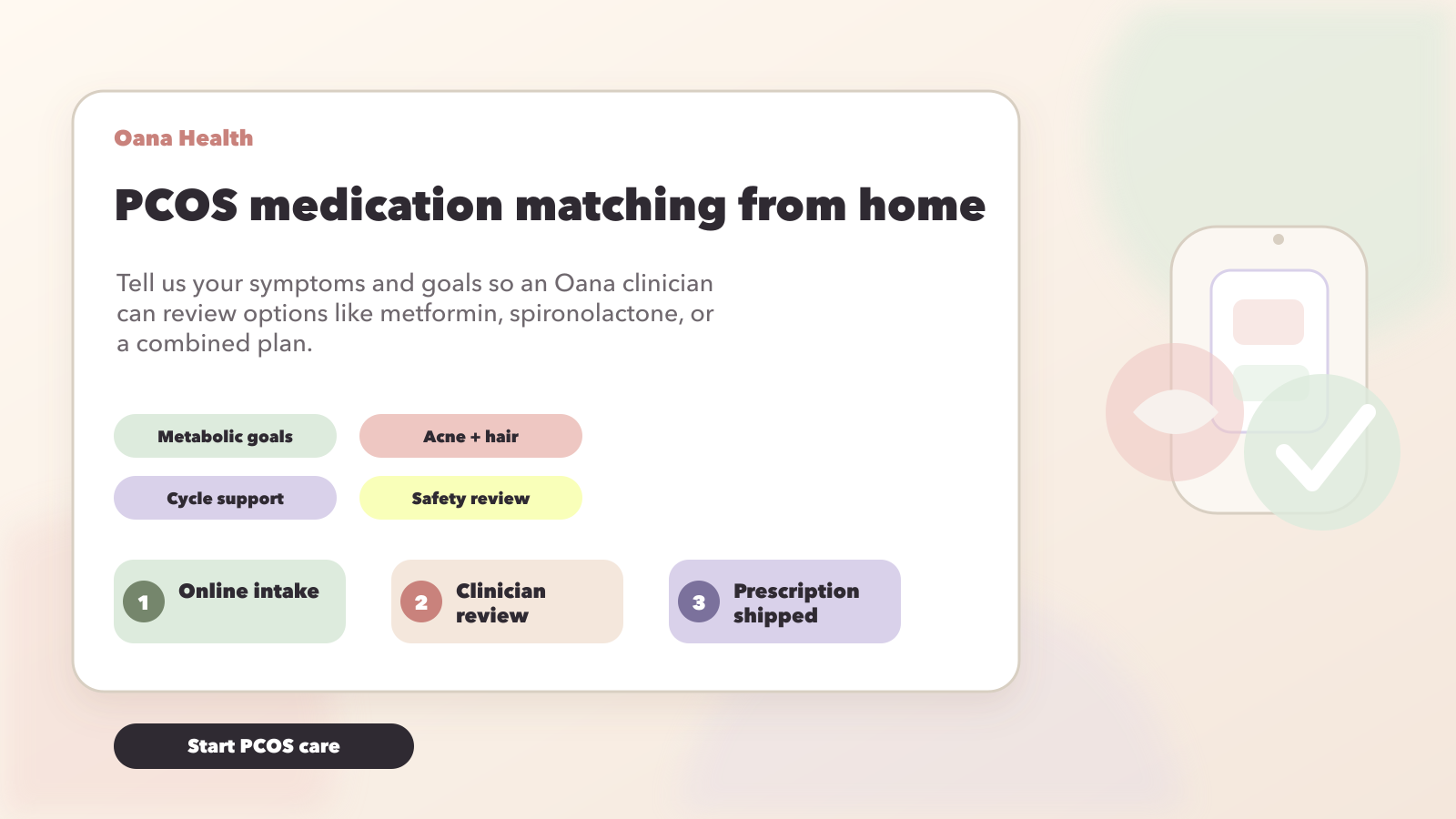
Oana Health simplifies PCOS treatment by offering a telehealth platform that connects you with licensed physicians for personalized, science-backed care. The process is straightforward: start with a quick 5-minute medical intake, receive a review within 24 hours, and have your FDA-regulated prescription delivered to your door with free shipping.
This service addresses the challenges of affordable and consistent PCOS care. Whether you're dealing with insulin resistance, irregular cycles, unwanted facial hair, or a combination of symptoms, Oana Health provides treatment options tailored to your needs. They also offer ongoing online and phone support, along with automatic prescription refills, ensuring your treatment stays on track.
Research highlights the benefits of combination therapy for PCOS. A study involving 198 women found that low-dose Spironolactone (50 mg/day) combined with Metformin (1,000 mg/day) improved menstrual regularity, decreased hirsutism, lowered testosterone levels, and enhanced glucose and insulin sensitivity more effectively than using either medication alone.
Available Plans and Costs
Oana Health keeps pricing simple and budget-friendly. Treatments are designed to target specific PCOS symptoms, offering effective solutions at an accessible price point:
- Metformin: $22 per month. Helps improve insulin sensitivity, supports weight control, and regulates menstrual cycles.
- Spironolactone: $14 per month. Reduces unwanted hair growth, lowers high androgen levels, and helps with acne.
- Combination Therapy: $32 per month. Addresses a range of PCOS symptoms, including hirsutism, insulin resistance, and hormonal imbalances. Free shipping is included.
| Treatment Option | Monthly Cost | Primary Benefits |
|---|---|---|
| Metformin | $22 | Improves insulin sensitivity, supports weight control, and regulates menstrual cycles |
| Spironolactone | $14 | Reduces unwanted hair growth, lowers high androgen levels, and reduces acne |
| Combination Therapy | $32 | Provides relief for hirsutism, insulin resistance, and hormonal balance; includes free shipping |
To learn more about specific treatments, visit spironolactone.oanahealth.com or explore the platform at oanahealth.com. This telehealth approach eliminates the need for in-person visits while ensuring expert care from licensed professionals experienced in PCOS management. With these affordable options, Oana Health empowers you to take control of your PCOS symptoms with confidence.
Summary and Key Points
Deciding between Metformin and Spironolactone for PCOS treatment largely depends on your specific symptoms. If insulin resistance, weight challenges, or irregular periods affecting fertility are your main concerns, Metformin can help by improving insulin sensitivity.
On the other hand, if you're struggling with androgen-related symptoms like persistent acne, unwanted hair growth, or hair thinning, Spironolactone works by blocking androgen receptors. Many individuals find that combining these medications provides more comprehensive relief, addressing both metabolic and cosmetic issues. Studies suggest that this dual approach significantly improves glucose sensitivity, insulin levels, and symptoms like hirsutism compared to using either medication on its own.
Getting access to these treatments has become easier with telehealth services. For example, Oana Health offers a streamlined process: you fill out a quick 5-minute online intake, receive a physician review within 24 hours, and have FDA-approved medications shipped to your doorstep with free shipping. They also provide automatic refills and ongoing support, so you can stay focused on managing your symptoms without the hassle of reordering or coordinating care.
FAQs
How long does it take to see results with Metformin or Spironolactone?
Results with Spironolactone usually become visible within 2 to 6 months, showing improvements in acne and reduced oil production. However, achieving the full effects might take around 12 weeks or longer.
For Metformin, menstrual cycles often regulate within 1 to 6 months, while improvements in blood sugar levels can begin within just a few days to weeks. Keep in mind, these timelines can differ based on individual factors.
Can I take Metformin and Spironolactone together safely?
Yes, taking Metformin and Spironolactone together is usually safe when done under a doctor’s supervision. This combination is often prescribed to help manage symptoms of PCOS (Polycystic Ovary Syndrome), such as insulin resistance and hormonal imbalances.
That said, certain groups - like individuals with kidney or liver problems, heart conditions, or older adults - should be especially cautious. These medications can increase the risk of complications like hyperkalemia (high potassium levels) or lactic acidosis, so regular monitoring may be necessary.
Always follow your healthcare provider’s guidance tailored to your specific health needs.
What lab tests or monitoring do I need on these medications?
Regular blood tests play a key role in keeping track of your health while using medications like metformin or spironolactone. These tests check important factors such as liver and kidney function, electrolyte levels (with a focus on potassium), blood glucose, and hormones like testosterone. Monitoring these helps ensure the medications are both safe and effective for your body.