
Checklist for Safe PCOS Combination Therapy Use
Managing PCOS can be complex, but a structured checklist simplifies treatment decisions and improves safety. Combination therapies often address symptoms like irregular cycles, insulin resistance, and hirsutism, but they require careful planning and monitoring. Here's what you need to know:
- Diagnosis: Confirm PCOS using the Rotterdam Criteria, ruling out conditions like thyroid disease or androgen-secreting tumors.
- Patient History: Understand reproductive goals and medical conditions (e.g., diabetes, cardiovascular risks) to guide therapy choices.
- Screening: Assess for metabolic and cardiovascular risks, regardless of BMI. Use tests like OGTT for glucose intolerance and lipid profiles for dyslipidemia.
- Contraindications: Avoid therapies like COCPs in patients with VTE, uncontrolled hypertension, or smoking history.
- Monitoring: Regularly track blood pressure, glucose levels, lipid profiles, and symptoms like hirsutism or acne.
Common therapy combinations include:
- COCP + Metformin: Balances reproductive and metabolic symptoms but requires monitoring for side effects like gastrointestinal discomfort.
- Metformin + Spironolactone: Targets insulin resistance and hirsutism but mandates reliable contraception.
- GLP-1 Agonists + Metformin: Focuses on weight loss and metabolic improvement for patients with BMI ≥25.
Long-term care includes:
- Lifestyle changes (5-10% weight loss can improve symptoms).
- Regular screenings for diabetes, hypertension, and mood disorders.
- Adjusting therapy as health needs evolve.
Key takeaway: A personalized, well-monitored approach ensures safer and more effective PCOS management. Always consult your healthcare provider to tailor treatments to your needs.
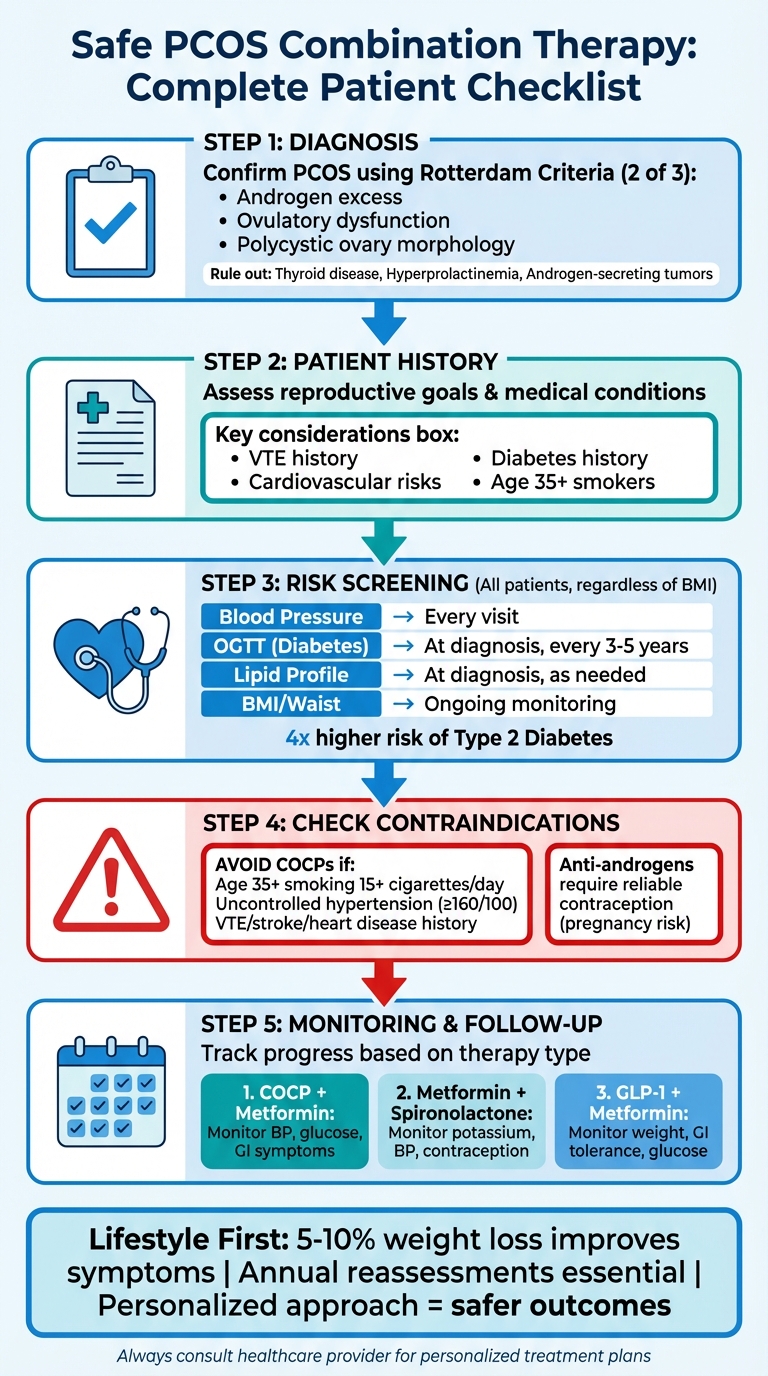
PCOS Combination Therapy Safety Checklist: 5-Step Patient Assessment Guide
Patient Assessment Before Starting Therapy
Before beginning combination therapy for PCOS, it's essential to conduct a thorough patient evaluation. This process ensures treatment is tailored to the individual's needs and minimizes potential risks. Key steps include confirming the diagnosis, reviewing the patient’s medical and reproductive history, and screening for metabolic and cardiovascular risks that may influence treatment decisions.
Confirming PCOS Diagnosis
PCOS is diagnosed using the Rotterdam Criteria, which requires meeting at least two of these three conditions: androgen excess (clinical or biochemical), ovulatory dysfunction, or polycystic ovary morphology. It's crucial to rule out other conditions that can mimic PCOS. Providers should screen for thyroid disease using TSH, hyperprolactinemia with serum prolactin levels, and nonclassic congenital adrenal hyperplasia through early morning 17-hydroxyprogesterone (17-OHP) testing. If 17-OHP levels are between 200–400 ng/dL, a cosyntropin stimulation test is necessary to confirm or exclude the diagnosis.
Biochemical testing should include total, bioavailable, or free testosterone levels, as well as sex hormone-binding globulin (SHBG), which is often low in PCOS patients. For adults, elevated anti-müllerian hormone (AMH) levels can now be used instead of ultrasound to identify polycystic ovaries. Once the diagnosis is confirmed, it’s important to evaluate the patient’s reproductive history to guide treatment decisions.
Reviewing Medical and Reproductive History
Understanding a patient’s reproductive goals and medical history helps determine the most appropriate therapy. For those trying to conceive, ovulation induction agents like letrozole are typically recommended. On the other hand, patients not planning a pregnancy are commonly prescribed combined oral contraceptives (COCPs) to manage symptoms.
Certain conditions, such as a history of venous thromboembolism (VTE), stroke, or ischemic heart disease, rule out the use of estrogen-containing therapies. For women aged 35 or older who smoke, COCPs are considered too risky due to increased cardiovascular and VTE risks. Additionally, patients with a history of gestational diabetes, impaired glucose tolerance, or a family history of Type 2 Diabetes require closer metabolic monitoring, often making metformin a key part of their treatment plan. Women experiencing prolonged amenorrhea (cycles longer than 90 days) face a higher risk of endometrial hyperplasia, which may necessitate the use of therapies like progestins to protect the endometrium. Beyond reproductive history, assessing cardiovascular and metabolic health is equally important.
Screening for Cardiovascular and Metabolic Risks
Managing PCOS effectively involves identifying and addressing underlying metabolic and cardiovascular risks. These risks should be assessed in all PCOS patients, regardless of BMI. Screening should include evaluations for type 2 diabetes, dyslipidemia, and hypertension. Research shows that women with PCOS are four times more likely to develop type 2 diabetes, making early detection essential.
A 2-hour, 75-g oral glucose tolerance test (OGTT) is the preferred method for identifying glucose intolerance, as it is more sensitive than fasting glucose or HbA1c tests. Regular assessments of BMI, waist circumference, and blood pressure are necessary, along with fasting lipid profiles. Overweight or obese patients should also be screened for obstructive sleep apnea and depression. Diabetes screening should be repeated every three to five years, or more often if additional risk factors emerge.
| Risk Factor | Screening Method | Frequency |
|---|---|---|
| Hypertension | Blood pressure measurement | Every visit |
| Dyslipidemia | Fasting lipid and lipoprotein profile | At diagnosis; as needed |
| Glucose Intolerance/T2DM | 2-hour 75-g OGTT | At diagnosis; every 3–5 years |
| Obesity | BMI and waist circumference | At diagnosis and ongoing |
| Sleep Apnea | Symptom screening (if overweight/obese) | At diagnosis |
Checking for Contraindications and Eligibility
Once your health has been assessed, the next step is determining whether combination therapy is a safe option for you. Not all PCOS treatments work for every individual, and identifying potential risks early is key to avoiding serious complications. This evaluation serves as a crucial link between confirming your diagnosis and ensuring the chosen therapy is safe for your specific needs.
Identifying Absolute Contraindications
Combined oral contraceptive pills (COCPs) are a common treatment for PCOS but aren't suitable for everyone. For instance, if you're over 35 and smoke at least 15 cigarettes a day, COCPs pose a high risk of blood clots and cardiovascular issues, making them unsafe. Similarly, estrogen-containing therapies should be avoided if you have uncontrolled high blood pressure (160/100 mm Hg or higher), a history of blood clots, stroke, or heart disease.
Additionally, if your symptoms developed suddenly or your androgen levels are unusually high, this may indicate an androgen-secreting tumor rather than PCOS. In such cases, further investigation is essential.
Screening for Anti-Androgen Therapy Risks
Anti-androgen medications like spironolactone and finasteride require extra caution. These drugs are strictly off-limits during pregnancy due to their high risk of causing birth defects, specifically affecting male fetal development. As a result, reliable contraception is absolutely necessary during treatment.
It's also worth noting that flutamide is generally avoided for treating hirsutism because of its potential to cause liver damage. For patients with kidney problems, spironolactone requires close monitoring for hyperkalemia and renal function. Anti-androgens are typically considered a second-line treatment, prescribed only after six months of COCPs and cosmetic measures have failed to manage symptoms effectively.
BMI and Therapy Suitability
BMI plays a significant role in tailoring the right combination therapy. For example, metformin is better suited for patients with obesity and metabolic risk factors rather than being a go-to treatment for every PCOS diagnosis. Research suggests that for women with a BMI between 25 and 30 kg/m², COCPs are generally more effective than metformin in managing hirsutism.
"Consider treating hirsutism and irregular cycles with a combined oral contraceptive. Limit metformin use to patients with obesity and metabolic risk factors." - AFP Editors, American Academy of Family Physicians
For those who are overweight or obese and trying to conceive, combining clomiphene citrate with metformin has shown better pregnancy outcomes compared to clomiphene alone. Even a modest weight loss of around 5% can significantly improve fertility and ovarian health in PCOS patients. For individuals with a BMI of 30 kg/m² or higher who need COCPs, healthcare providers often recommend the lowest effective dose of ethinyl estradiol (typically 20 mcg) paired with a low-risk progestin to reduce the risk of blood clots.
| Therapy Type | BMI/Weight Consideration | Clinical Recommendation |
|---|---|---|
| Metformin | Obesity and metabolic risks | Restrict use to patients with these specific factors |
| Clomiphene + Metformin | Obese women seeking pregnancy | Improves pregnancy rates compared to clomiphene alone |
| COCPs (Low-dose) | BMI ≥30 kg/m² | Use the lowest effective estrogen dose with a low-risk progestin |
| Lifestyle Modification | BMI >25 kg/m² | Aim for 5-10% weight loss before or alongside therapy |
Monitoring During Treatment
Once combination therapy begins, consistent monitoring becomes a priority. This helps track progress and catch any side effects early. Your healthcare provider will focus on specific health markers based on your treatment plan to ensure both safety and effectiveness throughout the process.
Key Monitoring Parameters by Therapy Type
Different treatments for PCOS come with unique monitoring needs. For instance, blood pressure checks are crucial at every visit since PCOS is linked to a 37% higher risk of hypertension. Diabetes screening is another important factor, with a two-hour oral glucose tolerance test (OGTT) recommended for all patients, regardless of BMI. This test is typically repeated every one to three years, depending on individual risk factors. If there are signs of significant weight gain or central fat buildup, more frequent testing may be necessary.
| Therapy Type | Key Monitoring Parameters | Frequency & Rationale |
|---|---|---|
| Metformin | OGTT (fasting & 2-hour), GI symptoms | Screen for impaired glucose tolerance/type 2 diabetes; manage common side effects |
| Spironolactone | Serum potassium, blood pressure | Monitor for hyperkalemia and hypotension |
| COCPs | Blood pressure, signs of blood clots, menstrual diary | Watch for hypertension, clotting risks, and cycle regulation |
| Anti-androgens | Liver enzymes (ALT/AST), complete blood count | Detect potential liver toxicity and blood disorders |
| GLP-1 Agonists | Weight, GI tolerance, glucose levels | Evaluate effectiveness in weight loss and metabolic improvement |
For example, spironolactone requires monitoring potassium levels and watching for symptoms like breast tenderness. Metformin users often need checks for gastrointestinal side effects, while those on COCPs should be monitored for signs of blood clots or deep vein thrombosis. Anti-androgen medications, such as flutamide, necessitate regular liver enzyme tests to catch potential toxicity early.
Beyond lab tests, keeping an eye on lifestyle changes and symptom progression is equally important.
Tracking Lifestyle Changes and Symptom Improvement
Monitoring how symptoms evolve can provide valuable insights into the effectiveness of your treatment. For conditions like hirsutism and acne, noticeable improvements may take at least six months of consistent therapy. Tools like the modified Ferriman-Gallwey score can objectively measure changes in hirsutism.
Menstrual cycle regularity is another critical marker of progress. If you have irregular periods (oligomenorrhea), your provider will aim to induce a menstrual cycle at least every three to four months to protect your endometrial health. Keeping a menstrual diary to track patterns can be a practical way to share information during appointments.
Mental health is just as important to monitor. Women with PCOS are at a higher risk for depression and anxiety, making regular mood screenings an essential part of treatment. If you're overweight or obese, your provider should also check for symptoms of obstructive sleep apnea, such as loud snoring or daytime fatigue.
Adjusting Therapy Based on Patient Response
Treatment plans are not set in stone and can be adjusted based on how you respond. For example, if you're using COCPs and don't see enough improvement in hirsutism or acne after six months, your provider might add an anti-androgen like spironolactone. However, premature changes to your medication regimen are avoided to minimize risks.
For weight and metabolic goals, assessments are typically done every 16 weeks to evaluate the effectiveness of lifestyle changes and medications. If metformin causes ongoing gastrointestinal discomfort, your provider may adjust the dosage or explore other treatment options.
sbb-itb-6dba428
Common Combination Therapies and Safety Considerations
When managing PCOS, understanding common combination therapies can make a big difference in tailoring treatments to individual needs. Here, we dive into three widely used combinations, their benefits, and the precautions needed to ensure safe and effective use. Each pairing focuses on specific PCOS symptoms, from hormonal imbalances to metabolic challenges, while emphasizing the importance of monitoring for potential side effects.
COCP + Metformin
This combination is often the first choice for addressing both reproductive and metabolic symptoms of PCOS. Combined oral contraceptives (COCPs) help regulate menstrual cycles and lower free testosterone levels, while metformin improves insulin resistance and offsets triglyceride increases sometimes associated with COCPs.
The COMET-PCOS Randomized Clinical Trial (2018–2023), conducted at the University of Pennsylvania and Penn State Health, followed 240 women aged 18–40 with hyperandrogenic PCOS. Participants were treated with low-dose COCPs (20 μg ethinyl estradiol/0.15 mg desogestrel) and extended-release metformin (2,000 mg) over 24 weeks. Researchers found that "Low‐dose COCPs manage PCOS symptoms and did not raise the risk of MetS in this group". However, the combination did lead to increased 2-hour glucose levels, highlighting the need for close monitoring.
To minimize side effects, metformin should be introduced gradually, starting at 500 mg/day and increasing to 2,000 mg/day over several weeks. Taking it with meals can also help reduce gastrointestinal discomfort. According to the trial, over 64% of participants experienced diarrhea from metformin, and 24.1% of COCP users reported uterine bleeding.
Smoking significantly heightens risks with this therapy. As Luque-Ramírez et al. noted, "Oral contraceptives and metformin may exert deleterious effects on blood clotting tests of PCOS women, yet the effects of metformin appear to be milder". Patients should avoid smoking, and healthcare providers should monitor blood pressure and lipid levels regularly. Additionally, barrier contraception is recommended if pregnancy is not desired.
| Side Effect | Prevalence | Management Tips |
|---|---|---|
| Diarrhea | >64% | Gradual dose increase; take with food |
| Uterine Bleeding | 24.1% | Provide reassurance; check adherence |
| Increased Triglycerides | Seen in COCP users | Regular lipid panel monitoring |
| Nausea/Vomiting | Common with Metformin | Use extended-release formulations |
For those needing anti-androgen benefits, consider Metformin paired with Spironolactone.
Metformin + Spironolactone
This pairing is particularly effective for tackling insulin resistance alongside hirsutism and acne. Since spironolactone is not safe during pregnancy, reliable contraception is essential. Many providers combine this therapy with COCPs to ensure pregnancy prevention.
Improvements in unwanted hair typically take about six months, with hair becoming finer rather than disappearing entirely. As Dr. Andrea Dunaif from Northwestern University explains, "A 6-month trial is needed to show effects on unwanted hair... The unwanted hair doesn't disappear but grows finer and lighter". Acne, on the other hand, often improves more quickly. Providers generally limit metformin use to patients with obesity or metabolic risks rather than prescribing it solely for hirsutism.
Before starting spironolactone, confirm the use of reliable birth control methods like COCPs, permanent sterilization, or long-acting reversible contraception. The PCOS Awareness Association highlights, "Spironolactone IS NOT SAFE to take during pregnancy, so it is commonly used in conjunction with birth control pills". Regular monitoring of potassium levels and blood pressure is also critical throughout treatment.
For added convenience, telehealth services like Oana Health offer a Metformin & Spironolactone combination pack for about $32 per month, with free home delivery.
For patients focusing on weight management, another option may be more suitable.
GLP-1 Agonists + Metformin
This combination is geared toward patients with a BMI of 25 kg/m² or higher, targeting weight loss and insulin resistance. Before starting this regimen, your provider will need to confirm normal kidney and liver function and rule out advanced congestive heart failure.
Both medications are associated with gastrointestinal side effects like nausea, vomiting, and diarrhea. Taking metformin with meals can help manage these issues. Regular monitoring of kidney and liver function, as well as gastrointestinal tolerance, is essential for long-term safety.
If this option aligns with your goals, Oana Health offers an Oral GLP-1 & Metformin pack for $199 per month, prescribed by licensed medical professionals.
Each of these therapies offers targeted benefits for managing PCOS, but they require careful oversight to ensure safety and effectiveness. Always consult with your healthcare provider to determine the best approach for your specific needs.
Long-Term Management and Follow-Up
After initial evaluations and treatment monitoring, managing PCOS over the long term is crucial for maintaining health and addressing evolving needs. Regular follow-ups help ensure treatments remain effective and safe.
Lifestyle Management and Endometrial Health
While medications can play a role, the cornerstone of managing PCOS is a combination of a calorie-conscious diet and consistent exercise. These lifestyle changes can lower insulin resistance and promote better metabolic health. Even a modest weight loss of 5%–10% can lead to significant improvements, such as enhanced ovulation, reduced hirsutism, and better insulin sensitivity.
For women not using combined oral contraceptives, protecting the endometrium becomes especially important. Chronic anovulation can increase the risk of endometrial hyperplasia and even cancer. To address this, healthcare providers may recommend progestin-containing oral contraceptives, progesterone-based treatments, or a levonorgestrel-releasing intrauterine system (LNG-IUS), such as the Mirena IUS, which costs around $815 (placement fees not included).
Mental health and sleep are also critical considerations, as PCOS is linked to higher rates of depression, anxiety, and obstructive sleep apnea. Regular lifestyle adjustments, paired with routine health assessments, are essential for maintaining long-term well-being.
Annual Risk Reassessments
Annual evaluations are an opportunity to adjust treatment plans as health and risk factors change with age, weight fluctuations, or new reproductive goals. The American College of Obstetricians and Gynecologists emphasizes the importance of these reviews:
"PCOS has the potential to cause substantial metabolic sequelae, including an increased risk of diabetes and cardiovascular disease, and these factors should be considered when determining long-term treatment".
| Parameter | Recommended Frequency | Why It Matters |
|---|---|---|
| Blood Pressure | Every visit | Helps monitor for hypertension risk |
| OGTT (Diabetes) | Every 1–3 years | Screens for elevated type 2 diabetes risk |
| Lipid Profile | Every 2–3 years | Identifies risks of metabolic syndrome |
| Depression Screening | Periodically | Addresses high rates of mood disorders |
| BMI/Waist Circumference | Periodically | Tracks obesity, affecting 50% of women with PCOS |
If pregnancy is part of your plans, a preconceptual assessment is vital. This includes checking BMI, blood pressure, and glucose tolerance, as PCOS increases the likelihood of gestational diabetes and pre-eclampsia. Combined oral contraceptives and anti-androgens should also be discontinued before conception, as anti-androgens can affect a male fetus.
Patient Education and Awareness
Empowering patients through education is key to managing PCOS effectively. Understanding the risks of specific treatments helps in identifying potential complications early. For instance, combined oral contraceptives can raise the risk of venous thromboembolism (VTE), especially if you smoke or have other risk factors. Similarly, if you're taking spironolactone, regular blood tests are necessary to monitor for hyperkalemia.
Metformin may restore regular menstrual cycles in 50%–70% of women with PCOS. For managing hirsutism, patience is essential - treatment typically requires at least six months to show results due to the slow nature of hair growth cycles. For those trying to conceive, letrozole is now the preferred first-line treatment for inducing ovulation in women with PCOS-related infertility.
Stay informed about the broader implications of PCOS. In the United States, healthcare costs related to PCOS exceed $8 billion annually, yet up to 75% of individuals with the condition remain undiagnosed. Consistent follow-ups and open communication with your healthcare provider are crucial for comprehensive care throughout your reproductive years and beyond.
Conclusion
Managing PCOS with combination therapy requires thoughtful planning, ongoing monitoring, and open communication between patients and healthcare providers. The 2023 International Evidence-based Guideline highlights the importance of this collaborative approach, stating its goal is to "support women and their healthcare providers to optimize diagnosis, assessment and management of PCOS... with an emphasis on partnership in care". This checklist simplifies decision-making while reinforcing the key principles of PCOS care, ensuring treatments are customized to address irregular cycles, insulin resistance, and hirsutism.
Lifestyle changes are a cornerstone of PCOS management. Even a modest weight loss of 5% to 10% can significantly improve ovulation and increase pregnancy success rates. When medication is necessary, starting with first-line treatments - like combined oral contraceptives for menstrual irregularities or metformin for metabolic concerns - and adding other therapies only when needed helps balance effectiveness with safety.
PCOS also poses notable metabolic risks, making regular screenings and reassessments essential, regardless of BMI. Before beginning any treatment, ensure you've been screened for potential contraindications, and keep up with follow-ups as your health needs evolve.
For added convenience, telehealth platforms like Oana Health provide personalized, science-based PCOS care. Licensed medical professionals review your health history, prescribe treatments tailored to your needs, and deliver them directly to your door with free shipping - streamlining access to evidence-based care.
FAQs
What should I consider when choosing a combination therapy for PCOS?
When deciding on a combination therapy for PCOS, it’s crucial to customize the treatment to address your specific symptoms and health priorities. Start by pinpointing your main concerns, whether it’s irregular menstrual cycles, signs of excess androgens like acne or unwanted hair, or metabolic challenges such as insulin resistance. For instance, combined oral contraceptives (COCPs) are commonly prescribed to help regulate periods and manage androgen-related issues, while medications like metformin can support better insulin sensitivity if that’s a concern.
Factors like your age, overall health, and whether you’re planning to conceive also influence the choice of treatment. Lifestyle adjustments, such as maintaining a balanced weight and staying physically active, are equally important and can enhance the effectiveness of any medications you’re taking. Collaborate closely with your healthcare provider to create a treatment plan that aligns with your goals, ensures safety, and addresses any potential side effects or risks.
What monitoring is recommended for patients using combination therapy for PCOS?
Patients undergoing combination therapy for PCOS need regular monitoring to ensure the treatment remains both safe and effective. This involves keeping an eye on symptoms like irregular menstrual cycles, acne, or excessive hair growth, while also being alert to potential side effects such as dizziness or breast tenderness. Regular blood tests are a crucial part of this process, particularly to check potassium levels, kidney function, and liver health - especially when medications like spironolactone are involved, as they can influence electrolyte balance.
Blood pressure should be monitored consistently, and menstrual patterns should be tracked to assess hormonal balance and overall reproductive health. For medications like spironolactone, it’s common practice to perform baseline tests before starting treatment, follow up within 1–2 weeks after any dose changes, and continue with periodic evaluations every 3–6 months. This thorough approach ensures side effects are managed early and the treatment plan evolves to meet the patient’s changing needs.
What lifestyle changes can help improve PCOS treatment results?
Making a few key lifestyle adjustments can greatly enhance the results of PCOS treatments. Start with a balanced diet that prioritizes weight management. Cutting back on calories and limiting carbohydrates can make a big difference. In fact, losing just 5% of your body weight can lead to better ovulation, more regular menstrual cycles, and improved insulin sensitivity.
Incorporating regular exercise into your routine is just as important. Physical activity not only aids in weight loss but can also help alleviate symptoms like acne and excess hair growth, all while boosting your overall metabolic health. Some people also notice that reducing dairy intake supports hormonal balance, though it’s important to tailor your diet to your individual needs.
These manageable changes can work alongside your treatment plan, making it easier to handle PCOS in the long run.