
Mindful Yoga for PCOS: Benefits and Poses
Managing PCOS with Yoga Made Simple
If you're dealing with PCOS, mindful yoga might be a game-changer. It’s not just about stretching - yoga can help balance hormones, reduce stress, and improve mental health. Research shows that practicing yoga three times a week can lower testosterone by 29%, ease depression by 55%, and reduce anxiety by 21%.
Key Takeaways:
- Hormonal Balance: Yoga reduces stress and improves insulin sensitivity, helping lower androgen levels.
- Better Mental Health: Combats anxiety and depression with breathing exercises and meditation.
- Simple Poses: Beginner-friendly moves like Butterfly Pose and Child's Pose improve circulation and relaxation.
No intense workouts or weight loss required - yoga is a gentle yet effective tool to manage PCOS symptoms. Pair it with medical treatments for even better results.
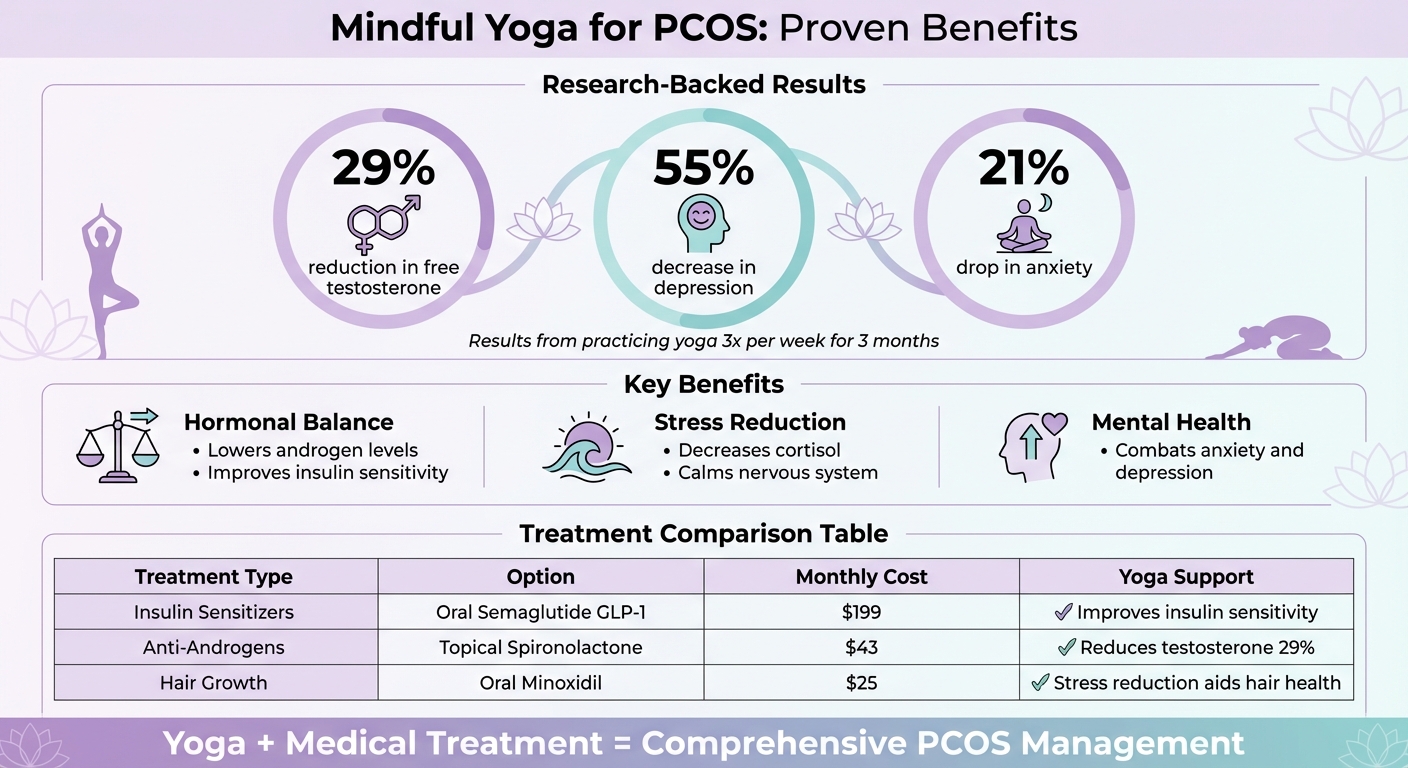
Mindful Yoga Benefits for PCOS: Key Statistics and Treatment Outcomes
Benefits of Mindful Yoga for PCOS
Improving Hormonal Balance
Mindful yoga plays a key role in addressing hormonal imbalances commonly associated with PCOS. It can help lower androgen levels, including free testosterone and DHEA, which are often tied to symptoms like excess hair growth, acne, and irregular periods. By calming the body's stress response - reducing sympathetic tone and cortisol levels - yoga also enhances insulin sensitivity. This improvement in insulin response helps disrupt the cycle of elevated insulin levels that trigger more androgen production. Studies show that these hormonal benefits can last for months, even with intermittent yoga practice. This creates a foundation for managing stress and its impact on the body.
Reducing Stress and Cortisol Levels
Mindful yoga goes beyond simple relaxation by directly influencing the body's stress response. Through practices like body awareness, pranayama (breathing techniques), and meditation, it helps reduce activity in the sympathetic nervous system, which in turn lowers cortisol levels. This is significant for managing PCOS, as lower cortisol can ease stress-related symptoms. A 2017 study highlighted the effectiveness of combining techniques like the Benson breathing exercise, slow walking meditation, guided imagery, vinyasa flow, and restorative poses. Participants experienced measurable improvements in stress markers and hormonal balance.
Improving Mental and Emotional Health
PCOS often brings emotional challenges, including higher rates of anxiety and depression, which can stem from both hormonal shifts and physical symptoms. Mindful yoga has been shown to ease these mental health struggles. Recent studies report that consistent practice leads to noticeable reductions in anxiety and depression. By combining physical poses, breathing exercises, and meditation techniques - such as positive affirmations and "I am" statements - yoga helps foster emotional resilience. These benefits extend beyond the yoga session, offering tools for better mental well-being in daily life.
15-Minute Morning Yoga for Polycystic Ovary Syndrome (PCOS)
Getting Started with Mindful Yoga for PCOS
Turning the benefits of yoga into a regular practice starts with a few simple steps to set yourself up for success.
Setting Up Your Yoga Space
All you need to begin is a basic yoga mat and a few props. Find a quiet, uncluttered corner in your home where you can move freely without distractions. As Kendra Tolbert, a Registered Dietitian and Yoga Teacher at PCOS Nutrition Center, explains:
"Yoga is for everybody and can be practiced just about anywhere."
If you're new to yoga, props can make poses easier and more supportive. Items like yoga blocks, blankets, and cushions can provide extra comfort, especially for your pelvic area and lower back [3, 11]. For instance, during Garland Pose (Malasana), placing one or two blocks under your glutes can make the pose more manageable. Similarly, a rolled-up blanket under your heels or a pillow between your bottom and heels during Child's Pose can help you relax more deeply [3, 11]. Once your space is ready, start by focusing on your breathing to center yourself.
Breathing Techniques for Mindfulness
Before diving into physical poses, begin with breathing exercises to activate your parasympathetic nervous system - this is your body's "rest and digest" mode, which can help reduce PCOS-related stress. A great starting point is Ujjayi breathing. To practice this, inhale deeply through your nose, and exhale as though you're fogging up a mirror, slightly constricting the back of your throat. Once you're comfortable, try keeping your mouth closed while maintaining the same throat constriction. Another effective technique is alternate nostril breathing, which helps balance your energy by focusing on one nostril at a time.
Building a Consistent Routine
Start small and work your way up. Begin with short sessions - just 5 minutes a day is enough to get started. Gradually increase your practice to three one-hour sessions per week as you build confidence and consistency. Even if you miss a session here and there, the benefits of regular yoga practice, including hormonal balance, can last for months [7, 4]. A steady routine not only makes it easier to stick with yoga but also strengthens your overall approach to managing PCOS.
sbb-itb-6dba428
Beginner-Friendly Yoga Poses for PCOS
These yoga poses are designed to enhance blood flow to the pelvic area and stimulate abdominal circulation, which can help alleviate PCOS symptoms. Lisa Burnett, a Certified Pranakriya Prenatal Yoga Instructor, shares her advice:
"In seeking relief from the pain and other symptoms of PCOS, I recommend the more gentle yoga poses, especially those focusing on stretching and relaxation."
Pair each movement with slow, deep breaths to amplify relaxation and ease stress. Below are five simple yoga poses to support your journey in managing PCOS.
Butterfly Pose (Baddha Konasana)
Sit comfortably on your mat with your legs extended. Bend your knees, bringing the soles of your feet together, and let your knees naturally fall to the sides. Pull your heels closer to your pelvis, but only as much as feels comfortable. Hold your feet or ankles and sit up tall, elongating your spine. If the stretch feels too intense, place yoga blocks or cushions under your knees for extra support. Sitting against a wall can also help you maintain an upright posture. Hold this pose for 1–3 minutes while taking deep breaths. This pose encourages pelvic openness and enhances circulation to reproductive organs.
Legs Up the Wall Pose (Viparita Karani)
Start by sitting sideways next to a wall with one hip touching it. Gently swing your legs up the wall as you lower your back and head to the floor, forming an L-shape with your body. Your sitting bones should be close to the wall but don’t need to press against it. For added comfort, place a folded blanket or bolster under your hips. You can also use a neck pillow or eye cloth to deepen relaxation. Rest your arms by your sides with palms facing up, and stay in this pose for 5–15 minutes. This restorative position helps improve blood flow and ease stress.
Child's Pose (Balasana)
Begin on your hands and knees, keeping your knees hip-width apart or wider if needed. Bring your big toes together behind you and sit back onto your heels. Fold forward, extending your arms in front of you or resting them alongside your body. Lower your forehead to the mat. If necessary, use a bolster or rolled blanket for additional support. Breathe deeply and remain in this pose for 1–5 minutes. This calming position helps release tension in the lower back and promotes relaxation.
Cat-Cow Pose (Marjaryasana-Bitilasana)
Start in a tabletop position with your wrists aligned under your shoulders and your knees under your hips. For Cow Pose, inhale as you drop your belly toward the mat, lift your chest and chin, and gaze slightly upward. For Cat Pose, exhale as you round your spine, tuck your chin toward your chest, and draw your belly button inward. Alternate between these two poses for 1–2 minutes, syncing your movements with your breath. This gentle flow massages internal organs like the uterus, kidneys, and pancreas, offering a soothing effect.
Supported Bridge Pose (Setu Bandhasana)
Lie on your back with your knees bent and feet flat on the floor, hip-width apart. Position your feet close to your sitting bones. Press your feet and arms into the ground as you lift your hips toward the ceiling. For a supported variation, slide a yoga block or bolster under your sacrum (the flat bone at the base of your spine) to hold the lift effortlessly. Keep your shoulders grounded and allow your chest to lift toward your chin. Hold this position for 1–3 minutes, maintaining steady breaths. This pose enhances pelvic circulation, eases back tension, and creates space between the pelvis and sternum.
Combining Mindful Yoga with PCOS Treatments
How Yoga Improves Treatment Outcomes
Mindful yoga does more than just help reduce stress - it actively supports the effectiveness of medical treatments for PCOS. While medications like Metformin and Spironolactone focus on insulin resistance and androgen levels, regular yoga practice plays a key role in balancing hormones and managing stress, anxiety, and high cortisol levels.
Experts highlight that mindful yoga can provide benefits that go beyond what medication alone can achieve. Research shows that practicing yoga consistently can lower free testosterone by 29%, improve depression symptoms by 55%, and reduce anxiety by 21%. Additionally, by decreasing cortisol levels, yoga can enhance the impact of prescribed treatments, making it easier to stick to long-term plans and improving overall well-being.
When combined with telehealth PCOS treatments, these benefits create a more effective approach to managing the condition.
Oana Health's PCOS Treatment Options

Recognizing the synergy between yoga and medical treatments, Oana Health offers tailored PCOS solutions designed to complement mindful yoga practices. Oana Health specializes in personalized, science-backed telehealth treatments prescribed by licensed professionals. Medications are conveniently delivered to your door with free shipping.
By pairing Oana Health's treatments with a yoga routine, you can take a well-rounded approach to managing PCOS.
| Treatment Category | Oana Health Option | Monthly Price | How Yoga Supports It |
|---|---|---|---|
| Insulin Sensitizers | Oral Semaglutide GLP-1 | $199 | Improves insulin sensitivity. |
| Anti-Androgens | Topical Spironolactone | $43 | Helps reduce free testosterone by 29%. |
| Hair Growth | Oral Minoxidil | $25 | Encourages hair health through stress reduction. |
Integrating these treatments with a consistent yoga practice provides a comprehensive plan for managing PCOS. This holistic approach addresses both physical symptoms - like irregular cycles, acne, and hair growth - and emotional challenges, offering a path to better overall health.
Conclusion
Managing PCOS requires tackling both the physical symptoms and the emotional challenges that come with it. Mindful yoga offers a practical way to complement medical treatments by promoting hormonal balance, easing stress, and improving mental well-being. Studies reveal that practicing yoga three times a week for three months can lead to a 29% reduction in free testosterone, a 55% decrease in depression, and a 21% drop in anxiety. These numbers highlight yoga's potential as a helpful addition to traditional medical care.
"Yoga has so many benefits. One of its best qualities is that it is accessible to such a wide array of ages and fitness levels"
- Dr. Diana Speelman, Associate Professor of Biochemistry, Lake Erie College of Osteopathic Medicine
Pairing a regular yoga practice with Oana Health's personalized care creates a well-rounded strategy for managing PCOS. This approach not only addresses symptoms that medications might overlook - like stress-related cortisol spikes and emotional strain - but also enhances the overall effectiveness of prescribed treatments.
FAQs
How can mindful yoga help manage hormone imbalances in women with PCOS?
Mindful yoga offers a natural way to help women with PCOS manage their hormones. By calming the nervous system, it reduces stress-related cortisol levels, which can play a big role in restoring hormonal balance. On top of that, yoga improves insulin sensitivity - a key factor in managing PCOS symptoms. It may also help lower elevated androgen levels, like testosterone, which are often linked to acne, hair thinning, and other common PCOS challenges.
This blend of gentle movements and mindfulness not only boosts physical health but also nurtures mental well-being, making yoga a well-rounded approach to tackling PCOS symptoms.
What are some easy yoga poses to help manage PCOS symptoms?
Gentle yoga poses offer a natural way to help manage PCOS symptoms by easing stress, enhancing circulation, and supporting hormonal balance. If you're new to yoga, here are a few beginner-friendly poses to consider:
- Cat-Cow Pose: A great way to warm up the spine and improve flexibility.
- Child’s Pose: Perfect for relaxation and calming the mind.
- Bridge Pose: Helps engage the pelvic floor and improve circulation.
- Warrior II: Builds strength and encourages better blood flow.
- Seated Forward Bend: Stretches the lower back and hamstrings, promoting relaxation.
Practicing these poses a few times a week with slow and deliberate movements can help reduce cortisol levels, improve insulin sensitivity, and support overall well-being. Adding yoga to your routine is a simple, mindful step toward managing PCOS symptoms.
How can mindful yoga complement medical treatments for PCOS?
Mindful yoga can work hand-in-hand with medical treatments for PCOS, amplifying the benefits of medications and lifestyle adjustments. Research highlights that practicing yoga for an hour, three times a week, can significantly reduce free testosterone levels, improve insulin sensitivity, and decrease stress-related hormones like cortisol. These changes can help restore hormone balance, ease symptoms, and enhance overall mental health.
Getting started with yoga doesn't have to be overwhelming. Begin with gentle poses like Cat-Cow, Bridge, and seated forward folds to encourage pelvic circulation. Pair these movements with mindful breathing techniques, such as diaphragmatic breathing, to help lower stress levels. As you grow more comfortable, you can gradually expand your practice to include routines supported by scientific studies. Combining yoga with treatments like metformin or hormonal contraceptives can provide a well-rounded approach to managing PCOS symptoms more effectively.
Oana Health offers a convenient way to incorporate yoga into your routine. Their personalized PCOS treatment plans, designed by licensed medical professionals, include a 25-minute mindful yoga sequence tailored specifically for PCOS. This makes it easy to experience the benefits of yoga from the comfort of your home.