
Minoxidil for PCOS Hair Loss: Real Patient Stories
PCOS-related hair loss is a common and challenging issue. Minoxidil, a proven treatment, helps many women regain hair density and confidence. Here's what you need to know:
- Why Hair Loss Happens: PCOS increases androgen levels, leading to hair thinning on the scalp (androgenetic alopecia) while sometimes causing excess hair growth on the face or body (hirsutism).
- How Minoxidil Works: It improves blood flow to hair follicles, extending the growth phase of hair. Available in topical and oral forms, it’s effective when used consistently.
- What to Expect: Visible improvements take 3–6 months. Early use can prevent permanent follicle damage.
- Patient Experiences: Stories highlight benefits like thicker hair and improved confidence, though side effects like shedding or mild irritation are possible.
- Combination Treatments: Minoxidil works best alongside treatments addressing PCOS hormonal imbalances, such as anti-androgens or insulin resistance therapies.
- Convenient Care: Telehealth services like Oana Health offer personalized treatment plans, virtual consultations, and home delivery of medications.
Minoxidil is a reliable option for managing PCOS hair loss, especially when paired with targeted therapies. Consistency and patience are key to achieving results.
Life Before Starting Minoxidil
The Emotional Toll of Hair Thinning
For women with PCOS, hair loss can be an overwhelming experience. Around 30% face noticeable thinning - wider part-lines, receding hair at the temples, and finer, weaker strands. This can lead to feelings of frustration, embarrassment, and a deep blow to self-confidence. The emotional weight of these changes often prompts a search for solutions.
Society’s emphasis on thick, healthy hair as a symbol of femininity and youth only adds to the pressure. To cope, many women alter their hairstyles - opting for side parts or loose ponytails - or rely on accessories like hats, scarves, or wigs to feel more at ease when stepping out.
Other Treatments Women Try First
Before turning to Minoxidil, many women explore a variety of remedies, such as biotin, rosemary oil, pumpkin seed oil, and thickening shampoos like Nioxin or Monat. However, the results from these approaches are often inconsistent. For instance, while a 2016 study highlighted zinc's potential for promoting regrowth, biotin showed little evidence of effectiveness.
Adding to the frustration, medical professionals sometimes dismiss hair loss concerns, attributing them to stress or weight issues. This lack of proper diagnosis often leaves women cycling through years of trial and error.
Why Women Choose Minoxidil
After exhausting natural remedies, many women turn to Minoxidil - the only FDA-approved topical treatment for female pattern hair loss. Backed by decades of research, Minoxidil works by increasing blood flow to the scalp and extending the hair growth phase, directly addressing the follicle miniaturization caused by androgenic alopecia in women with PCOS.
Experiencing Increased Hair Shedding With Minoxidil Treatment | Androgenic Alopecia Update
Patient Stories: Real Results with Minoxidil
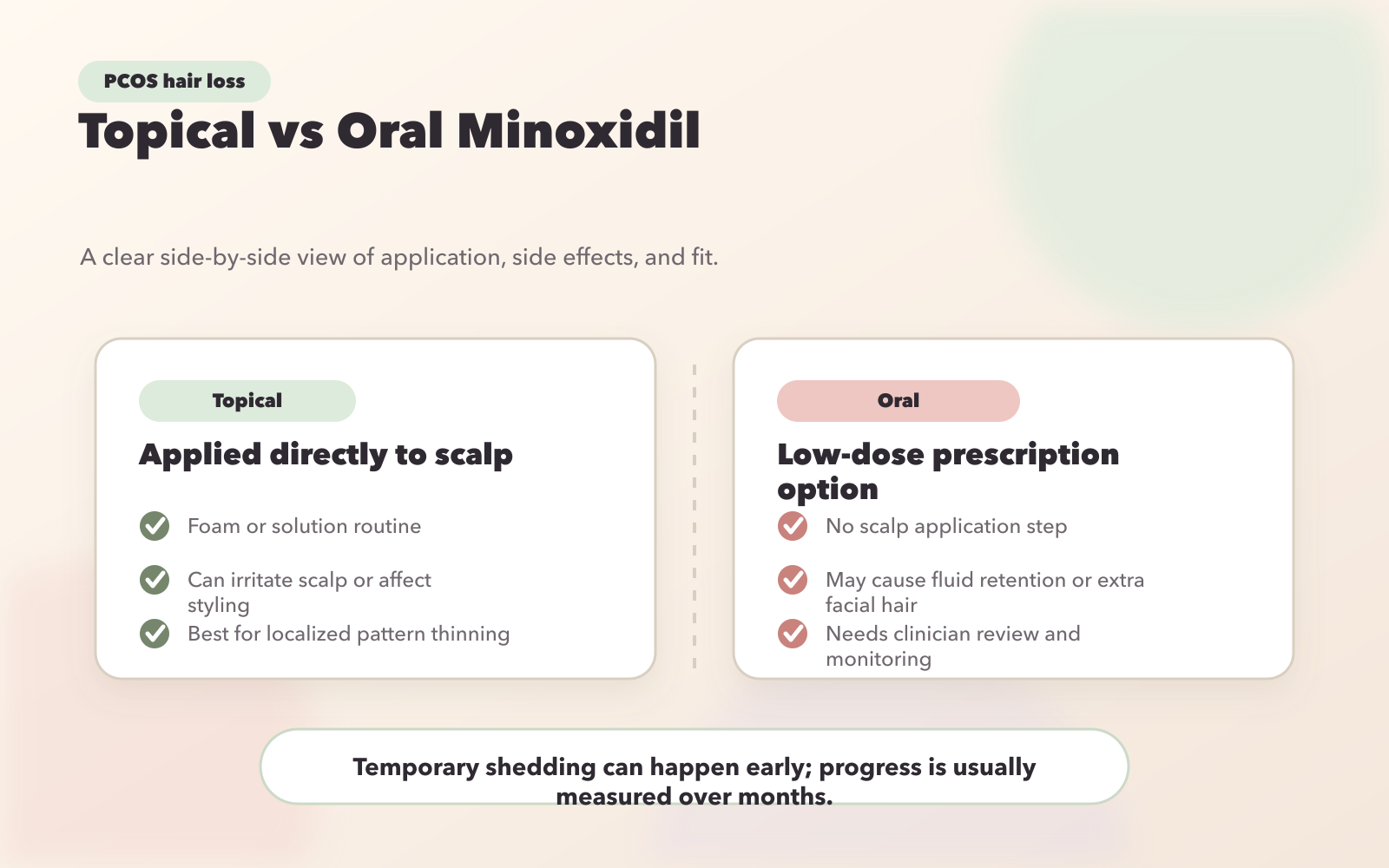
Topical vs Oral Minoxidil for PCOS Hair Loss: Side Effects and Application
Here are some real-life examples of how Minoxidil has helped patients regain hair density and confidence.
Alyssa's Journey with Topical Minoxidil
Alyssa turned to 5% topical minoxidil foam after noticing her temples thinning and her part-line widening. During the first three months, she experienced a temporary shedding phase - this is common and indicates that weaker hairs are being replaced with stronger ones.
By the six-month mark, Alyssa began seeing baby hairs along her hairline. After a year, her part-line appeared much denser, and she felt comfortable wearing her hair down again. Applying the foam twice daily, she experienced only mild itching early on. This consistent routine not only improved her hair but also restored her confidence. Encouraged by these results, Alyssa even considered trying other formulations.
Maria's Success with Oral Minoxidil
Maria faced gradual hair thinning for years before her doctor recommended low-dose oral minoxidil. Taking a small daily tablet fit seamlessly into her routine.
While Maria initially dealt with shedding and some unwanted facial hair growth - a known side effect in women using oral minoxidil - she stayed committed. After one year, she saw a noticeable increase in hair density, with thicker strands and better scalp coverage. Her fuller hair not only transformed her appearance but also gave her a significant confidence boost.
Topical vs. Oral Minoxidil: What Patients Experience
Each form of Minoxidil comes with its own set of considerations. Topical solutions, available as liquid or foam, require twice-daily application and may cause mild irritation or itching. On the other hand, oral Minoxidil offers the convenience of once-daily dosing but carries a higher risk of systemic side effects, such as unwanted hair growth on the face or body.
For women who find it difficult to stick to a topical routine, oral Minoxidil might be a more practical option. However, those wary of systemic effects often prefer applying the topical version directly to the scalp. Ultimately, the choice comes down to personal preference and how well each approach fits into an individual’s lifestyle.
sbb-itb-6dba428
Combining Treatments for Better Results
Minoxidil tends to deliver the best results when it's part of a broader plan that addresses PCOS from multiple angles. While Minoxidil directly stimulates hair follicles, tackling hormonal and metabolic imbalances can significantly amplify its effectiveness.
Pairing Minoxidil with Anti-Androgen Medications
Anti-androgen medications work by lowering the hormones responsible for speeding up follicle miniaturization. Meanwhile, Minoxidil focuses on improving blood flow to the scalp, encouraging hair regrowth. Together, they form a powerful combination, addressing both the root hormonal issues and the physical process of hair restoration.
"Normal hair growth usually resolves once the PCOS is under control. However... once PCOS is being effectively managed, the treatment most likely to provide women with the best opportunity for hair loss stabilisation and regrowth is minoxidil." - Leonora Doclis, Hair Loss Expert
Many women report better results when these treatments are combined rather than used individually. For instance, topical spironolactone offers a targeted solution for those who want to avoid the systemic side effects of oral medications by delivering the treatment directly to the scalp.
Addressing insulin resistance is another critical step in optimizing hair regrowth.
Targeting Insulin Resistance in PCOS
Insulin resistance is a key driver of many PCOS symptoms, including hair thinning. Treatments like Metformin can help stabilize insulin levels, correcting hormonal imbalances and supporting hair regrowth.
While oral Metformin is effective, it can sometimes cause side effects like nausea. Topical options provide an alternative without these drawbacks. Carrie S. shared her experience: "I'm so glad I discovered Oana's metformin lotion! I used to struggle a lot with the side effects for oral metformin... I get the same benefits but no more upset stomach and nausea".
For those using a combination of therapies, improvements may happen faster. Jenn K. noted: "I had relief from PCOS symptoms come way faster than I expected with MetSpiro than anything else I tried. It's also super convenient as one pill!".
Here’s a quick breakdown of how different treatments contribute to managing PCOS-related hair loss:
| Treatment Type | Common Medications | Primary Role in PCOS Hair Care |
|---|---|---|
| Anti-Androgens | Spironolactone | Addresses hormonal triggers (excess androgens) |
| Growth Stimulants | Minoxidil | Promotes follicle function and growth |
| Absorption Boosters | Retinoic Acid | Improves Minoxidil absorption and follicle renewal |
Hair Care Tips and Setting Realistic Goals
Beyond medication, good hair care and setting achievable goals can make a big difference. Since PCOS affects 5% to 10% of women, it’s important to remember that hair regrowth is a gradual process. Patience and commitment to your treatment plan are essential.
A healthy diet and regular exercise can also support PCOS management, though they’re rarely enough to reverse hair loss on their own. As Erin McCoy put it, "Eating healthy and exercising has helped me keep my condition under control, but lifestyle changes haven't been enough".
Advanced formulations now combine Minoxidil with ingredients like Retinoic Acid and Latanoprost, which improve absorption and extend the growth phase. These enhanced treatments can deliver better results, especially when hormonal triggers are already under control. Hair thinning often involves a mix of temporary shedding (telogen effluvium) and genetic pattern loss, so a personalized approach usually works best.
How Oana Health Treats PCOS Hair Loss
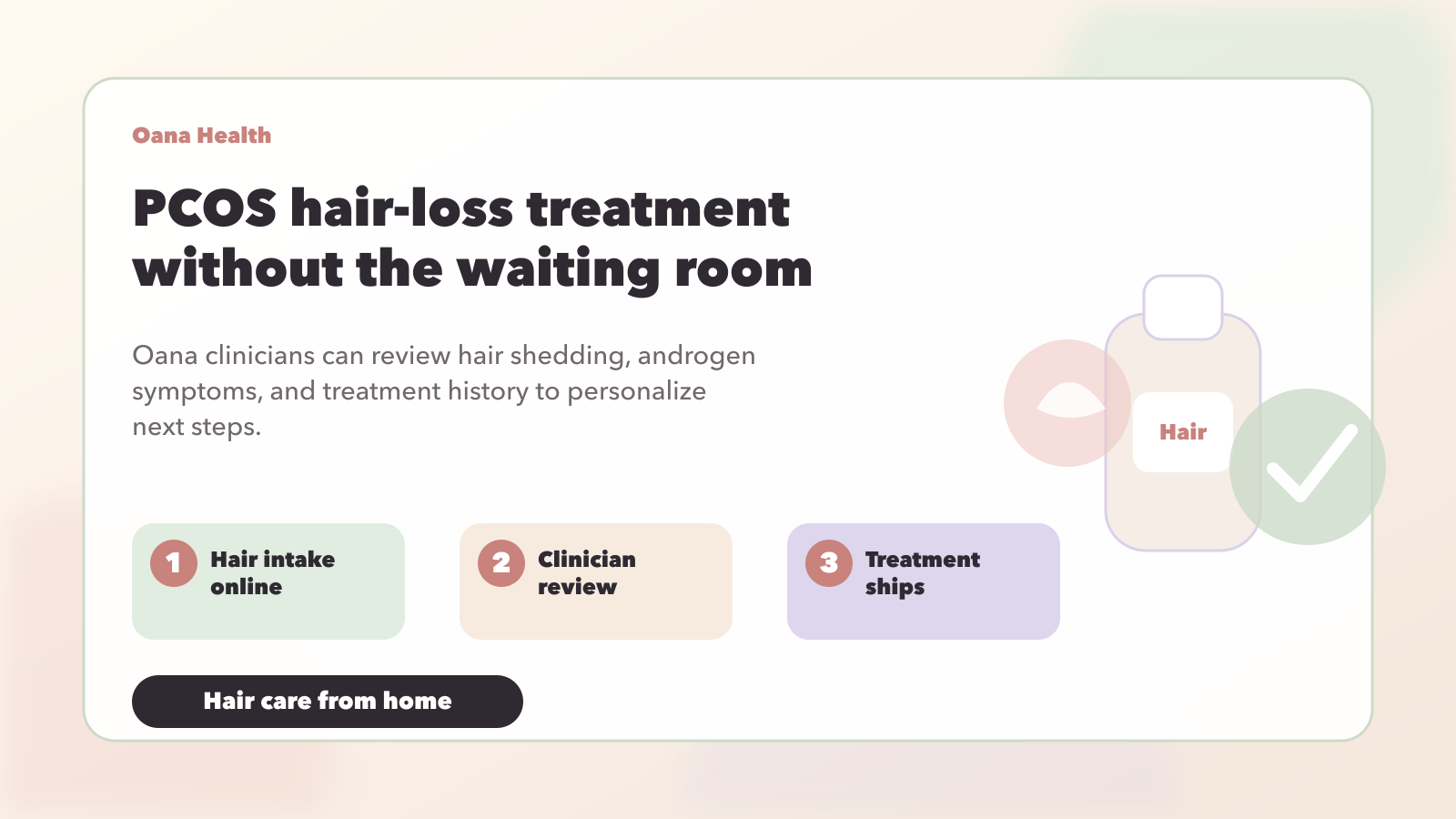
Oana Health takes a telehealth-first approach to address PCOS-related hair loss by combining prescription treatments with virtual care. It all starts with a quick, five-minute online medical intake, where patients share their health history and symptoms. From there, licensed medical professionals review each case remotely and create a personalized treatment plan that targets both hair regrowth and the hormonal imbalances driving the issue. This tailored approach ensures patients receive effective, individualized solutions through Oana's telehealth platform.
Personalized Hair Loss Treatment Plans
Every treatment plan at Oana Health is designed to meet the specific needs of each patient. For hair loss, options include Oral Minoxidil ($25/month) or Hair Plus Plus ($40/month) - a compounded topical formula featuring 5% Minoxidil, 0.001% Retinoic Acid, and 0.005% Latanoprost to boost absorption and promote thicker hair. For those dealing with elevated androgen levels alongside hair thinning, Topical Spironolactone ($43/month) can be added to the regimen. A $20 doctor consultation fee ensures patients have access to specialized care without breaking the bank.
Virtual Consultations and Convenient Delivery
Once a treatment plan is approved, FDA-regulated custom medications are shipped directly to the patient’s home at no extra cost. There’s no need for in-person visits or pharmacy trips. Patients also benefit from 24/7 virtual support through online messaging or phone consultations. To keep things seamless, prescriptions are automatically refilled, ensuring consistent treatment without interruptions.
"I also love the 24/7 accessibility and customer service that always goes the extra mile." - Margaret K.
Comprehensive PCOS Care Beyond Hair Loss
Oana Health understands that hair loss is just one of many challenges tied to PCOS. That’s why their care extends to a wide range of symptoms. For insulin resistance, options include Oral Metformin ER ($22/month) or a topical Metformin lotion starting at $89/month, which helps reduce the gastrointestinal side effects often associated with oral forms. The MetSpiro pack ($32/month) combines Metformin and Spironolactone in a single pill to address both metabolic and hormonal imbalances. For unwanted hair growth, the Hairless Hype cream - starting at $69/month - has been shown to deliver significant results, with 81% of women seeing noticeable improvement within a year.
"Oana's telehealth service is fantastic! It's helped manage my insulin levels and reduce excess hair growth I was experiencing due to PCOS." - Victoria A.
Conclusion: Effective Solutions for PCOS Hair Loss
Minoxidil stands out as a trusted and research-backed option for tackling PCOS-related hair loss. For many, it offers a path to visible regrowth, reduced shedding, and improved confidence. Real stories shared throughout this article highlight that consistent use over 3–6 months can yield noticeable results. However, achieving success requires patience and dedication - this isn’t an overnight fix.
For the best outcomes, Minoxidil often works well when combined with treatments targeting the hormonal imbalances linked to PCOS. Pairing Minoxidil (topical or oral) with anti-androgens, addressing insulin resistance, or adopting supportive hair care routines can significantly enhance results. Since PCOS affects approximately 5%–10% of women of reproductive age, finding a treatment plan tailored to your specific needs is essential.
Oana Health simplifies this process with its telehealth services, offering customized care and convenience. From virtual consultations to home-delivered treatments, they provide comprehensive support for PCOS-related concerns - including hair loss, insulin resistance, and unwanted hair growth. This ensures you’re guided every step of the way.
If you relate to the experiences shared here, know that you’re not alone, and effective solutions are within reach. With the right plan, expert guidance, and realistic expectations, you can work toward restoring thicker, healthier hair - and with it, renewed confidence. Hair loss from PCOS doesn’t have to define your journey.
FAQs
How does Minoxidil help with hair loss caused by PCOS?
Minoxidil helps improve blood flow to the scalp, delivering nutrients that support and enlarge hair follicles. It also lengthens the anagen phase - the active growth stage of the hair cycle - effectively counteracting the impact of androgens, which can cause follicles to shrink in women with PCOS. This dual action not only slows down hair thinning but also encourages new hair to grow over time.
For women managing PCOS, regularly using Minoxidil can lead to visibly thicker and denser hair, offering a boost in both appearance and self-confidence.
What’s the difference between topical and oral Minoxidil for PCOS-related hair loss?
Topical Minoxidil is applied directly to the scalp, usually twice daily, and is available in 2% or 5% liquid or foam formulations. It helps by boosting blood flow to the scalp and prolonging the hair growth cycle. While it’s effective, some users may experience mild side effects like scalp irritation or, in rare cases, unwanted facial hair growth. Foam formulations often help minimize these concerns. It’s FDA-approved and can be purchased over the counter.
Oral Minoxidil, on the other hand, is taken as a low-dose tablet (such as 1.25 mg per day) and requires a prescription. This version works throughout the body, making it effective at encouraging hair regrowth and slowing hair loss in many women. However, because it affects the entire system, it can occasionally lead to side effects like fluid retention or slight changes in blood pressure. Fortunately, these side effects are rare when taken in low doses.
Deciding between topical and oral Minoxidil depends on your preferences, lifestyle, and overall health. Topical Minoxidil offers a straightforward, non-prescription option for targeted treatment, while oral Minoxidil may deliver better results for some women but requires guidance from a healthcare provider. Always consult a licensed medical professional to determine the best treatment plan for managing PCOS-related hair loss.
Can Minoxidil be used with other treatments to improve PCOS-related hair loss?
Yes, Minoxidil can be used alongside other treatments to improve outcomes for managing PCOS-related hair loss. Many women experience better results when Minoxidil is combined with therapies like spironolactone, which helps block DHT, or metformin, which targets insulin resistance. These combinations have been shown to promote thicker, healthier hair in roughly 70% of cases.
Other approaches pair Minoxidil with microneedling, which enhances scalp absorption, or plant-based serums featuring ingredients like caffeine to encourage hair growth. Some advanced formulations even include compounds like retinoic acid or latanoprost to boost effectiveness. Most women start to see noticeable changes within 4–6 months, with significant regrowth typically occurring by the 12-month mark.
Because some treatments may influence blood pressure or other health conditions, it’s essential to consult a licensed provider. For convenience, platforms like Oana Health offer telehealth services, allowing experienced clinicians to design personalized treatment plans and deliver medications straight to your door, ensuring both safety and effectiveness.