
How to Monitor BHRT Side Effects at Home
Starting Bioidentical Hormone Replacement Therapy (BHRT)? Monitoring your side effects at home can help ensure your treatment is safe and effective. Here's a quick guide:
- Track Symptoms Daily: Log physical and emotional changes like headaches, breast tenderness, mood swings, or fatigue. Use a 0-10 scale to rate severity.
- Watch for Serious Side Effects: Seek immediate care for chest pain, vision changes, or signs of blood clots (e.g., leg swelling).
- Use Basic Tools: Record blood pressure, weight, and body temperature using home devices. Apps like Bearable can streamline tracking.
- Monitor Bleeding Patterns: Note menstrual cycle changes or spotting, especially if you're postmenopausal.
- Consult Telehealth Services: Platforms like Oana Health offer remote guidance and prescription adjustments based on your home-tracked data.
Why it matters: Consistent tracking helps identify the right hormone dosage and ensures timely adjustments. Most mild side effects improve within 3 months, but persistent or severe symptoms may require medical attention.
Read on for detailed steps and tools to simplify your monitoring routine.
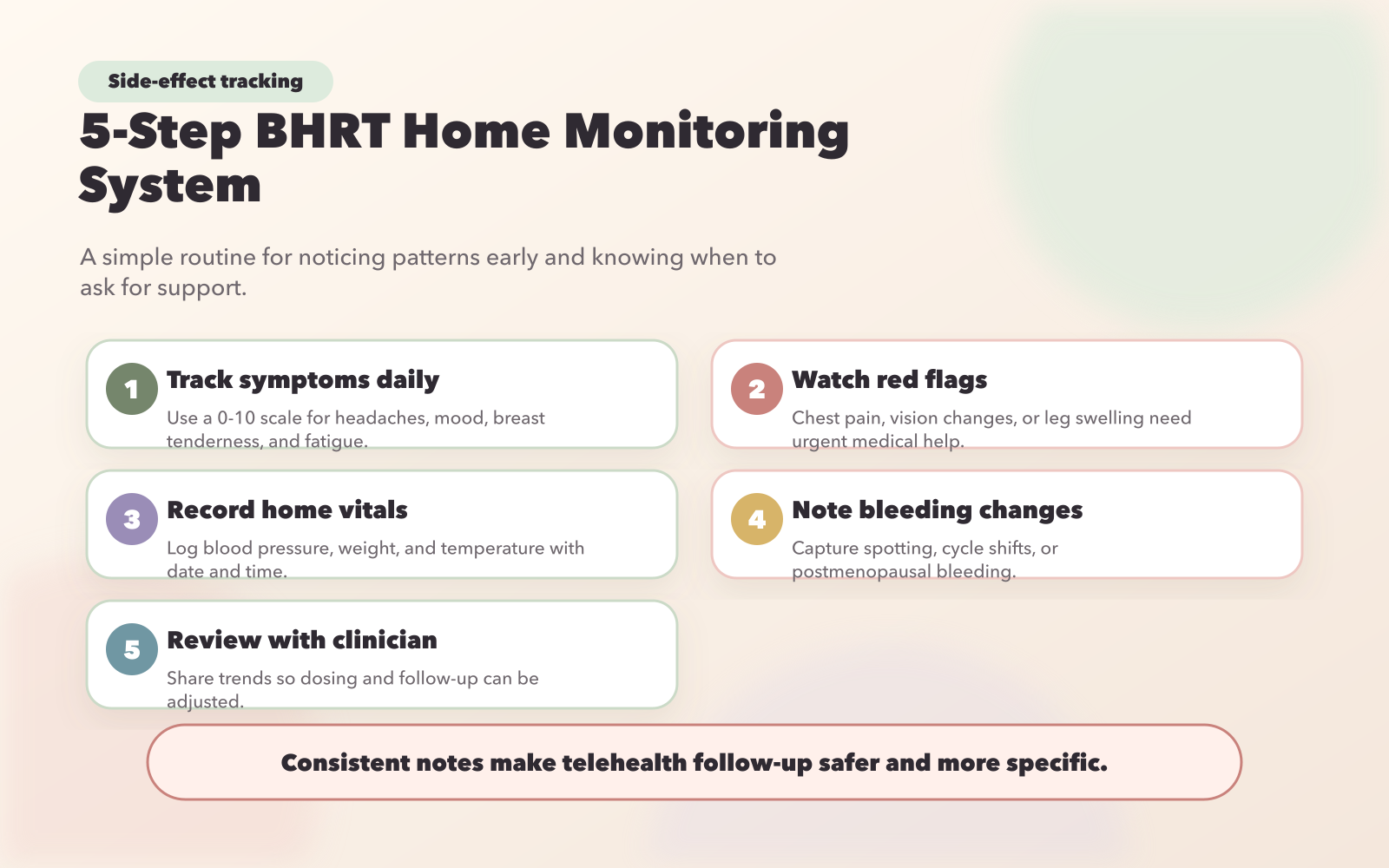
5-Step Home Monitoring System for BHRT Side Effects
Common BHRT Side Effects to Watch For
Mild Side Effects
When starting bioidentical hormone replacement therapy (BHRT), many women experience mild and temporary symptoms as their bodies adapt to the new hormone levels. These can include headaches, breast tenderness, nausea, mood swings, leg cramps, and skin rashes related to estrogen therapies. Progestogen components may lead to acne, fatigue, dizziness, or changes in menstrual patterns, such as spotting or breakthrough bleeding.
Other possible symptoms include bloating, weight gain, blurred vision, increased facial hair, and abdominal cramping. It's worth noting that breast tenderness and leg cramps affect more than 10% of individuals using combined hormone therapy.
Serious Side Effects That Need Immediate Care
Certain symptoms should never be ignored and require immediate medical attention. If you experience sudden chest pain, shortness of breath, severe throbbing headaches, leg swelling or warmth (potential signs of a blood clot), sudden vision changes, confusion, or difficulty speaking, seek emergency care right away.
Other warning signs include jaundice (yellowing of the eyes or skin), dark urine, clay-colored stools, or symptoms of a severe allergic reaction, such as facial swelling, hives, or trouble breathing.
Additionally, if you notice new breast lumps, nipple discharge (clear or bloody), or persistent crusting of the nipple, contact your healthcare provider immediately. Studies show that the relative risk of breast cancer increases by approximately 2.3% for every year of HRT use, emphasizing the importance of early detection and consistent monitoring.
Temporary Adjustment Symptoms vs. Ongoing Problems
Distinguishing between normal adjustment symptoms and more concerning reactions is essential. According to the NHS:
Any side effects usually improve over time, so it's a good idea to carry on with your treatment for at least 3 months if possible.
Mild side effects such as breast tenderness, bloating, or nausea often subside within the first three months of treatment. However, if these symptoms persist beyond three to six months, worsen, or become difficult to manage, it may indicate that your hormone dosage needs adjustment.
Irregular vaginal bleeding or spotting is also common during the initial four to six months of continuous combined therapy. If bleeding becomes heavier, lasts beyond six months, or occurs after an extended period without menstruation, schedule a follow-up with your doctor.
How to Set Up Your Home Monitoring System
Record Your Starting Point
Before beginning BHRT (Bioidentical Hormone Replacement Therapy), it's essential to document your baseline health. This gives you a clear reference to track any changes over time. If you're a menstruating woman, it's best to establish this baseline during the follicular phase of your cycle - the first half, just before ovulation - since this stage reflects your natural hormonal state.
Start by noting any current symptoms you may have, such as irregular cycles, acne, hair thinning or excess hair growth, hot flashes, night sweats, weight fluctuations, or vaginal dryness. Rate each symptom on a scale of 0 to 10, with 0 meaning no symptoms and 10 indicating the most severe. Also, record your vital signs, including blood pressure, heart rate, body temperature, and weight. If you have recent lab results, include your exact hormone levels for a more comprehensive picture.
"Monitoring hormone levels before and after starting BHRT is the only way to really be sure that the therapy is safe and effective".
With this baseline in place, you can move on to gathering the tools you'll need for consistent monitoring at home.
Tools You'll Need
To monitor your health effectively, you'll need some basic tools:
- Automated upper-arm blood pressure monitor: These cost around $50–$100 and are more reliable than wrist or finger monitors.
- Digital scale: For tracking changes in weight.
- Thermometer and pulse oximeter: To measure body temperature and oxygen saturation.
- Symptom diary: This can be as simple as a notebook, spreadsheet, or a dedicated tracking app. Apps like Bearable (free or $34.99/year) can sync with devices like Fitbit or Apple Watch (around $250) to automatically log data such as heart rate variability, sleep patterns, and activity levels.
- At-home hormone testing kits: Products like Oova can measure estrogen and progesterone metabolites with 99% accuracy compared to lab blood tests.
These tools will help you monitor your progress and make any necessary adjustments to your BHRT plan. Once equipped, the next step is to establish a routine for tracking your symptoms and vital signs.
Create a Simple Symptom Rating System
Using a consistent rating system helps you spot patterns and track progress over time. For subjective symptoms like mood, energy, sleep quality, and hot flash intensity, use a 0 to 10 scale - 0 means no symptoms, while 10 represents the most severe. In your journal, note each symptom's description, timing, intensity, and any factors that could influence it, such as stress, diet, or sleep habits.
When tracking vital signs, aim to measure them at the same time each day. Normal ranges for adults at rest include:
- Body temperature: 97.8°F to 99.1°F
- Blood pressure: Below 120/80 mm Hg
- Pulse: 60 to 100 beats per minute
- Respiratory rate: 12 to 18 breaths per minute
For accurate blood pressure readings, avoid caffeine, smoking, or exercise for at least 30 minutes beforehand. Sit quietly for five minutes with your arm supported at heart level. Take two readings, one minute apart, and record both. If you're still menstruating, always note which day of your cycle you're on, with Day 1 being the first day of bleeding. This helps identify any hormonal patterns.
"A well-kept symptom journal is an invaluable source of clinical information. It provides a rich, day-to-day context that a one-off lab test can't capture".
Daily and Weekly Tracking Steps
What to Track Each Day
Start each morning by logging the time and dosage of your BHRT (Bioidentical Hormone Replacement Therapy). This simple step can help you pinpoint any side effects and when they occur. Keep track of hot flashes - note their frequency, intensity, and duration - and log night sweats separately since they can seriously affect your sleep.
As symptoms arise, jot them down. These could include things like breast tenderness, swelling, headaches, bloating, or fatigue. For emotional and cognitive shifts, record mood swings, irritability, anxiety, depression, or difficulty focusing. Use a consistent scale to rate symptom severity and make a note of your overall sleep quality that night [5, 21, 22].
Don’t forget to log external influences like stress levels, caffeine or alcohol consumption, and even changes in weather. These factors can sometimes play a role in how you feel.
Weekly Check-Ins
Daily logs are helpful, but weekly check-ins give you a bigger picture of how things are progressing. Once a week, weigh yourself at the same time of day to differentiate between water retention and actual weight changes. Take a moment to check your blood pressure, ensuring you’re seated with your arm supported at heart level for accuracy.
Pay attention to any changes in your skin, such as new acne or increased oiliness - these may indicate high testosterone levels [9, 17]. Look at your hair too: thinning on your scalp could be tied to low estrogen, while new facial hair growth might suggest high testosterone. Also, monitor shifts in libido, as a noticeable decrease could point to excessive progesterone. Tracking consistently over several weeks or cycles can help identify trends and guide adjustments to your treatment plan.
How to Track Bleeding Patterns
Tracking your menstrual cycle adds another layer of insight into your hormonal health. Mark the first day of full-flow bleeding (not light spotting) as Day 1 of your cycle. Keep a record of when each period starts, how many days it lasts, and the number of pads, tampons, or menstrual cups you use daily to measure flow intensity.
"The date of the first day of each period is key, because that alone holds so much information. It tells us how long your cycles are and means we can predict when your period and fertile days will be each month."
– Dr. Sara Twogood, Obstetrician and Gynecologist
If you experience spotting between periods, make a separate note of it. This is especially important for postmenopausal women, as any bleeding after menopause warrants medical attention [5, 21]. By tracking several cycles, you can start to identify patterns and better understand your hormonal responses [21, 24].
sbb-itb-6dba428
When to Contact Your Doctor
Paying close attention to your symptoms is crucial in deciding when to seek immediate medical help or schedule a follow-up visit. Here's what you need to know.
Emergency Warning Signs
Call 911 or head to the emergency room immediately if you experience any of the following:
- Severe chest pain, trouble breathing, or coughing up blood.
- Pain in your calf accompanied by swelling or warmth, as hormone replacement therapy (HRT) can increase the risk of blood clots by two to five times.
- Persistent headaches that don't improve with medication.
- Slurred speech, confusion, dizziness, fainting, or sudden weakness or numbness in your arms or legs.
- Sudden changes in vision, such as severe blurring or partial or complete loss of vision, which could signal a blood clot or oxygenation issue.
- Signs of a severe allergic reaction, including hives, difficulty breathing or swallowing, and swelling of the face, throat, tongue, or lips.
These symptoms require immediate medical attention and should not be ignored.
Symptoms That Need a Follow-Up Appointment
Certain symptoms may not be emergencies but still warrant a timely check-in with your doctor:
- Persistent breast tenderness or the appearance of new lumps.
- Mood swings or emotional instability that disrupt daily life.
- Signs of potential liver problems like yellowing skin or eyes (jaundice) or dark urine.
If you're experiencing spotting, it’s typically normal during the first three to six months of bioidentical hormone replacement therapy (BHRT). However, contact your doctor if:
- Bleeding becomes unusually heavy.
- Bleeding occurs after a long gap without menstruation.
- Spotting continues beyond six months of treatment.
Most mild side effects improve within three months, but if your symptoms are severe or difficult to manage, your hormone dosage may need adjustment.
How to Prepare for Your Telehealth Visit
To make the most of your telehealth consultation, take these steps:
- Keep a detailed log of your symptoms, noting how often they occur and their severity.
- Prepare a list of all medications and supplements you’re taking - especially St. John's Wort, which can interact with estrogen and progestin.
- Record recent blood pressure readings and document any changes in weight, diet, or exercise habits since starting BHRT.
If you’re scheduled for surgery or anticipate extended bedrest, pause hormone therapy 4–6 weeks beforehand to lower the risk of blood clots. Bring any recent lab results to your appointment and be ready to discuss how they align with your current symptoms. Having this information on hand helps your provider identify trends and make adjustments to your treatment plan. By being well-prepared, you can take an active role in shaping your care.
Conclusion
Keeping a daily log of your symptoms and tracking weekly trends can provide your healthcare provider with the detailed information they need to fine-tune your hormone dosage. This kind of consistent monitoring doesn’t just enhance your personal care - it also makes telehealth consultations much more productive. Instead of saying something vague like "I don’t feel right", you’ll be able to share specific patterns: when symptoms occur, how severe they are, and how they evolve over time. Many digital tracking tools now even create HIPAA-compliant reports that integrate seamlessly into medical discussions, helping speed up treatment adjustments.
Telehealth platforms like Oana Health take the data you track at home and use it to provide personalized care through ongoing virtual consultations. With 24/7 access, these services allow for prompt adjustments without the frustrating wait times of traditional appointments. Regular follow-ups every 30 to 60 days during the initial months ensure that your treatment stays on track and adapts based on real-time feedback. By staying diligent with your tracking, you and your provider can work together to refine your BHRT plan for the best possible results.
It generally takes around three months to experience the full effects of hormone therapy. During this adjustment period, thorough tracking gives your provider the critical insights they need to determine the lowest effective dose tailored to your needs. This approach not only improves the safety of your treatment but also enhances its effectiveness. By committing to these tracking steps, you’re setting yourself up for a smoother and more successful hormone therapy experience.
FAQs
How can I tell if my BHRT side effects are normal or something serious?
When beginning bioidentical hormone replacement therapy (BHRT), it’s normal to encounter some mild, short-term symptoms as your body adapts. These might include occasional headaches, breast tenderness, mild nausea, mood swings, light spotting, leg cramps, bloating, or night sweats. Typically, these symptoms fade within a few weeks as your dosage is adjusted. However, if they persist beyond three months or seem unusually intense, it’s important to consult your healthcare provider.
On the other hand, serious side effects demand immediate medical attention. Be alert for signs like sudden chest pain, trouble breathing, severe headaches accompanied by vision changes, swelling in your legs, heavy or prolonged bleeding, breast lumps, rapid weight gain, or overwhelming anxiety or depression. These symptoms are uncommon and should be addressed without delay.
To stay on top of things, consider keeping a symptom journal to track any changes you experience. If you’re ever unsure or notice anything concerning, don’t hesitate to connect with Oana Health’s licensed telehealth team for expert guidance and personalized support.
What do I need to track BHRT side effects at home?
To keep an eye on BHRT side effects from home, you’ll need a few essential tools and a straightforward routine. Start with an at-home hormone test kit to check levels of hormones like estrogen, progesterone, and testosterone. Alongside this, maintain a daily symptom journal to note any changes in mood, sleep patterns, libido, hot flashes, or other symptoms you might experience. For added convenience, consider using a tracking app or an online portal to log your data and observe trends over time.
Before beginning BHRT, it’s crucial to get a baseline hormone panel. Repeat this testing every 4–6 weeks to track your progress effectively. Additionally, consult with a licensed provider through telehealth services, such as Oana Health, to review your results and make any necessary adjustments to your treatment plan. By following these steps, you can stay informed and manage your BHRT journey without leaving your home.
When should I reach out to a healthcare provider about BHRT side effects?
If you experience any new, severe, or worsening symptoms while undergoing BHRT, it's crucial to contact a healthcare provider immediately. This could include unexpected bleeding, noticeable mood swings, decreased libido, increased urinary incontinence, signs of insulin resistance, or any other side effects that feel concerning.
Keeping track of your symptoms on a regular basis helps ensure your treatment is delivering the desired results. When in doubt about whether a symptom is typical or needs medical attention, don’t hesitate to reach out to a licensed healthcare professional for advice.