
NAC for PCOS: How It Reduces Oxidative Stress
N-Acetylcysteine (NAC) is gaining attention as a helpful option for managing PCOS symptoms by addressing oxidative stress, a key factor in the condition. Oxidative stress occurs when harmful molecules called reactive oxygen species (ROS) overwhelm the body’s antioxidant defenses, worsening PCOS symptoms like insulin resistance, inflammation, and hormone imbalances. NAC works by increasing glutathione (a powerful antioxidant), reducing inflammation, and improving insulin sensitivity.
Key Takeaways:
- Oxidative Stress in PCOS: Women with PCOS have higher ROS levels, leading to ovarian inflammation, excess androgens, and irregular ovulation.
- How NAC Helps:
- Boosts glutathione to neutralize ROS.
- Reduces inflammatory markers like TNF-α.
- Improves insulin sensitivity, aiding glucose absorption.
- Research Highlights:
- NAC is as effective as metformin in improving insulin resistance but with fewer side effects.
- It lowers testosterone levels and supports fertility by improving ovulation and pregnancy rates.
- Dosage: Typically, 1.2–1.8 g/day, divided into 600 mg doses with meals.
NAC offers a safe, research-supported way to manage PCOS symptoms when used under medical supervision. Always consult a healthcare provider before starting NAC, especially if combining it with other treatments like metformin or fertility medications.
NAC for PCOS acne
What Is Oxidative Stress in PCOS?
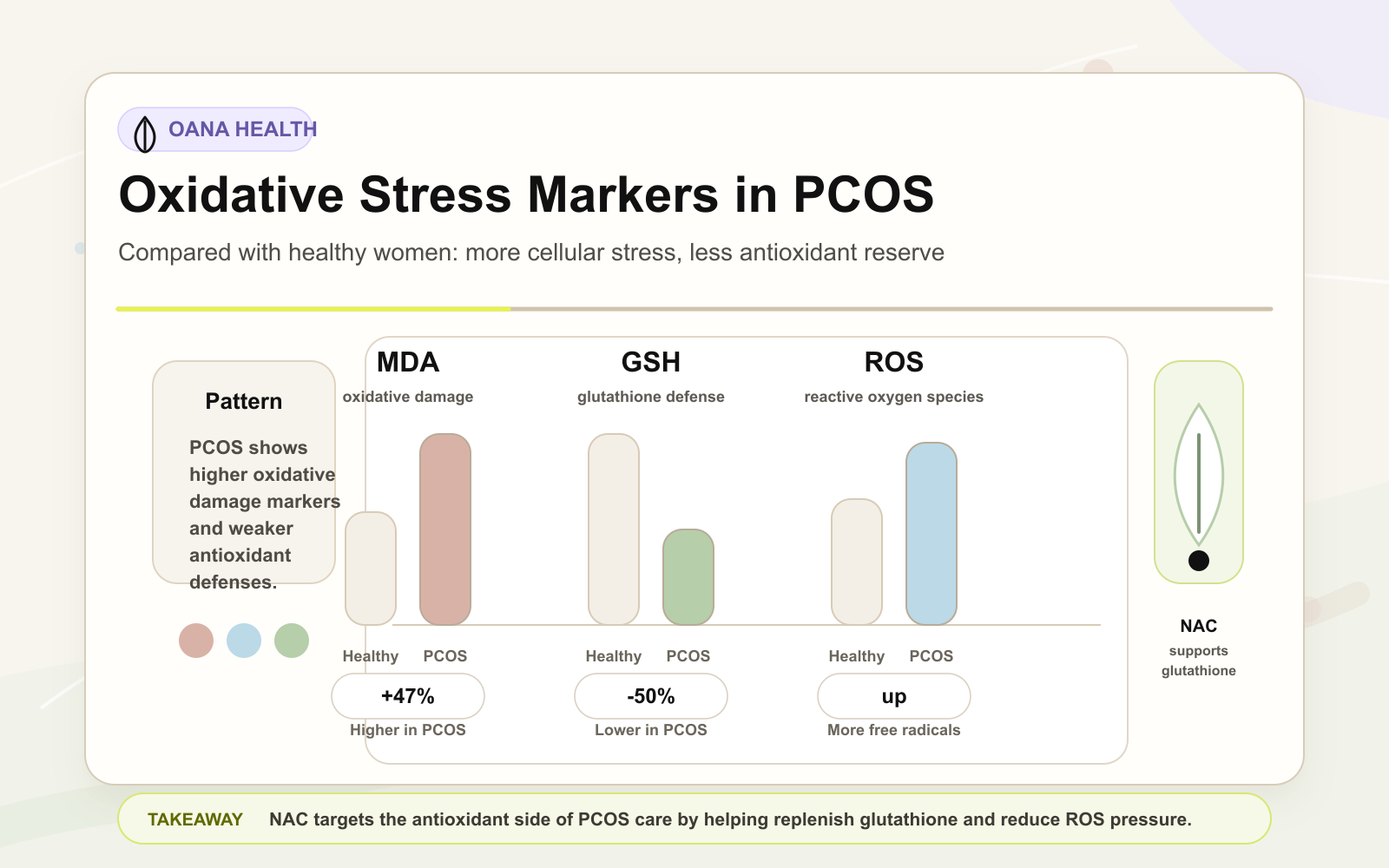
Oxidative Stress Markers in PCOS vs Healthy Women
Oxidative stress happens when your body produces too many reactive oxygen species (ROS) - unstable molecules that can damage cells - while falling short on antioxidants to neutralize them. For women with PCOS, this imbalance is much worse, contributing directly to many of the condition's challenging symptoms.
"Oxidative stress is now recognized to play a central role in the pathophysiology of many different disorders, including PCOS." - Masoumeh Mohammadi, Cellular and Molecular Endocrine Research Center
The statistics are eye-opening. Women with PCOS have 47% higher levels of malondialdehyde (MDA) - a marker of oxidative damage - compared to those without the condition. At the same time, their glutathione (GSH) levels are 50% lower. Since glutathione is one of the body's most powerful antioxidants, this reduction leaves cells vulnerable to harm.
What Causes Oxidative Stress in PCOS?
Several metabolic issues tied to PCOS ramp up ROS production. For instance, high blood sugar (hyperglycemia) triggers mononuclear cells to release ROS, which then activate inflammatory pathways like nuclear factor-kappa B (NF-κB). Similarly, hyperinsulinemia, a condition affecting 50% to 70% of women with PCOS, worsens oxidative stress. If obesity is also part of the picture - impacting 40% to 50% of PCOS patients - your body's increased fat breakdown generates even more free radicals.
This creates a "vicious cycle." Excess ROS damages mitochondrial DNA (mtDNA) - the genetic material in your cells' energy producers. Damaged mitochondria then generate even more ROS, perpetuating the issue. At the same time, antioxidant defenses are weakened. For example, enzymes like superoxide dismutase (SOD), which usually protect against oxidative damage, are significantly reduced in PCOS. These metabolic changes not only fuel oxidative stress but also aggravate PCOS symptoms, as outlined below.
How Oxidative Stress Affects PCOS Symptoms
Oxidative stress doesn’t just linger in the background - it actively worsens PCOS symptoms. Elevated ROS levels interfere with insulin signaling by damaging insulin receptor substrates, making insulin resistance worse. This is one reason why 95% of obese women with PCOS struggle with insulin resistance.
Inflammation caused by oxidative stress also releases cytokines like tumor necrosis factor-alpha (TNF-α). These cytokines stimulate ovarian thecal cells to produce excess androgens, leading to hyperandrogenism. This hormone imbalance is responsible for symptoms like acne, unwanted facial hair, and hair thinning. Additionally, oxidative stress increases apoptosis (cell death) of granulosa cells, which are critical for egg maturation, negatively impacting fertility.
| Marker Type | Status in PCOS | Impact on Your Body |
|---|---|---|
| Malondialdehyde (MDA) | 47% Higher | Indicates severe lipid damage |
| Glutathione (GSH) | 50% Lower | Reduced ability to neutralize harmful free radicals |
| Superoxide Dismutase (SOD) | Significantly Lower | Weakened first-line defense against oxidative damage |
| TNF-α (Inflammatory Marker) | Elevated | Drives insulin resistance and excess androgen production |
This deeper understanding of oxidative stress highlights why managing it is so important. Next, we’ll explore how NAC (N-acetylcysteine) can help counteract these damaging effects in women with PCOS.
How NAC Reduces Oxidative Stress
N-Acetylcysteine (NAC) tackles oxidative stress in PCOS by strengthening the body’s antioxidant defenses, easing inflammation, and improving insulin sensitivity. Instead of just addressing the symptoms, NAC works on the root causes of cellular damage through three key mechanisms: boosting glutathione levels, reducing inflammation to balance hormones, and enhancing how the body responds to insulin.
NAC Boosts Glutathione Production
NAC is a modified form of L-cysteine, a crucial building block for glutathione, one of the body’s most powerful antioxidants. By increasing cysteine availability, NAC speeds up glutathione production and directly neutralizes harmful free radicals like hydrogen peroxide and superoxide. This boost in glutathione protects insulin receptors, aiding in better glucose absorption. Additionally, NAC’s antioxidant properties help suppress nuclear factor-kappa B (NF-κB), a protein complex involved in inflammation, reducing the release of inflammatory molecules such as TNF-α. This dual action - antioxidant and anti-inflammatory - supports hormonal balance and overall cellular health.
NAC Reduces Inflammation and Balances Hormones
One of NAC’s standout benefits is its ability to reduce inflammation, which plays a big role in hormonal imbalances. By inhibiting NF-κB activity and lowering the production of inflammatory cytokines like TNF-α, NAC helps regulate androgen levels.
"NAC acts as an anti-inflammatory molecule by scavenging free radicals such as hydrogen peroxide and superoxide and inhibiting the release of TNF-α and other interleukins from phagocytic cells by down-regulating the activity of NF-κB."
– Jasmine K. Sandhu, Obstetrics and Gynecology
Research backs this up. A meta-analysis of 18 studies with 2,185 participants found that NAC reduced total testosterone levels by a standardized mean difference of –0.25 ng/ml and increased FSH levels by 0.39 mg/ml. In fact, a study comparing NAC (1,800 mg/day) to metformin (1,500 mg/day) over 24 weeks showed NAC was more effective at lowering testosterone levels. By improving insulin sensitivity, NAC also helps lower insulin levels, which indirectly reduces ovarian androgen production and supports the synthesis of sex hormone–binding globulin (SHBG). These improvements address both the hormonal and metabolic challenges of PCOS.
NAC Improves Insulin Sensitivity
Insulin resistance affects 50% to 70% of women with PCOS, and NAC directly targets this issue by protecting insulin receptors and enhancing their function. By preserving receptor integrity and improving insulin binding, NAC promotes better glucose absorption. In one clinical study, women with PCOS who took 1.8 g/day of NAC for 5–6 weeks saw significant improvements in insulin sensitivity and reduced insulin levels during an oral glucose tolerance test. Another meta-analysis confirmed that NAC lowered fasting blood glucose levels more effectively than metformin or placebo, with long-term use (24 weeks) showing additional benefits in body mass index, fasting insulin, and blood sugar levels.
"NAC may be a new treatment for the improvement of insulin circulating levels and insulin sensitivity in hyperinsulinemic patients with polycystic ovary syndrome."
– Fulghesu et al., Fertility and Sterility
How to Use NAC for PCOS
Talk to Your Healthcare Provider First
Before starting NAC, it's essential to consult with a licensed medical professional, especially if you're taking medications like blood thinners, nitroglycerin, or immunosuppressants. Professionals at Oana Health specialize in managing PCOS and can help determine if NAC is a good fit for you. They'll also guide you on the right dosage based on factors like your BMI and insulin resistance levels. This initial step ensures safe and effective integration of NAC into your overall PCOS treatment plan.
NAC Dosage and Forms
For managing PCOS, the typical NAC dosage ranges from 1.2 g to 1.8 g per day, often divided into three 600 mg doses taken with meals. If your BMI is over 30, you might require up to 3 g per day. To ensure safety and accuracy, opt for high-quality NAC supplements in capsule or tablet form. Research indicates that taking 1,800 mg of NAC daily (600 mg three times a day) can significantly improve BMI, waist circumference, and fasting insulin levels.
Combining NAC with Other PCOS Treatments
After establishing the right NAC dosage, it’s worth exploring how it can complement other PCOS treatments. NAC works well alongside standard therapies. For instance, studies reveal that adding 1.2 g of NAC daily can boost ovulation rates in women resistant to Clomiphene and enhance pregnancy rates when used with Letrozole. At Oana Health, treatments like Metformin and Spironolactone are often customized to work alongside NAC, with noticeable benefits typically appearing within 6–24 weeks.
sbb-itb-6dba428
Research on NAC for PCOS
Recent research continues to highlight the potential of NAC (N-acetylcysteine) in managing PCOS, particularly through its role in reducing oxidative stress and improving metabolic health.
Clinical Studies on NAC and PCOS
A study conducted in October 2024 at Tongji Medical College examined the effects of NAC on 230 women with PCOS. Participants who took 1.8 grams of NAC daily experienced significant benefits, including lower doses of uFSH (urinary follicle-stimulating hormone) needed for treatment and higher cumulative clinical pregnancy rates (p < 0.005).
Another study, carried out between May 2015 and May 2016 at Kamala Nehru Memorial Hospital in India, compared the effects of 1,800 mg/day of NAC with 1,500 mg/day of metformin in 100 PCOS patients. After 24 weeks, the NAC group showed greater improvements in BMI (dropping from 24.21 to 22.81), waist-to-hip ratio, and total testosterone levels compared to the metformin group. According to researcher Nidhi Chandil, NAC’s reduced side effects make it a promising alternative as an insulin-sensitizing agent.
These findings underscore NAC’s potential in addressing both hormonal and metabolic challenges in PCOS.
Meta-Analyses on NAC's Metabolic Benefits
A meta-analysis of 11 randomized controlled trials, involving 869 women, revealed that NAC significantly reduced fasting blood glucose levels compared to both metformin (SMD: -0.23) and placebo (SMD: -0.54). Another analysis found that NAC tripled the odds of live births when compared to placebo. These results further highlight NAC’s ability to improve key metabolic factors, such as insulin resistance and blood glucose regulation, in women with PCOS.
NAC Safety and Side Effects
NAC is generally safe for most women managing PCOS, with its side effects being comparable to those of a placebo. Research highlights that the rate of side effects from NAC aligns closely with placebo outcomes, making it an appealing option for individuals who may struggle with the harsher side effects of other medications. This safety profile makes NAC a valuable addition to the therapies mentioned earlier.
Common Side Effects of NAC
The most frequent side effects of NAC are related to the digestive system. These include nausea, abdominal discomfort, vomiting, constipation, and diarrhea. Fortunately, these side effects are usually mild and occur less often than with metformin. For instance, one study found side-effect rates of 10% for NAC compared to 15% for metformin.
To minimize mild stomach upset, it’s recommended to divide the 1,800 mg daily dose into three 600 mg doses, taken with meals.
"Due to the lack of adverse effects, NAC can be regarded as an appropriate substitute for insulin-reducing medications in the treatment of PCOS patients."
- Nidhi Chandil, DNB post graduate student, Kamala Nehru Memorial Hospital
Using NAC with Oana Health Treatments
Thanks to its established safety, NAC can be seamlessly incorporated into existing PCOS treatment plans. It also works well alongside prescription medications offered by Oana Health, such as Metformin and Spironolactone. Research suggests that NAC can safely complement these drugs and may even allow for lower dosages while maintaining effectiveness.
If you’re currently taking metformin and experiencing digestive side effects, it’s worth discussing with your healthcare provider whether NAC could serve as an alternative or addition to your treatment. However, always consult your doctor before introducing NAC, particularly if you have active peptic ulcers, asthma, or significant liver or kidney conditions.
Conclusion
NAC offers a research-supported approach to managing PCOS by addressing oxidative stress, enhancing glutathione levels, neutralizing free radicals, and mitigating inflammation, insulin resistance, and hormonal imbalances.
Clinical studies highlight its effectiveness, with one study noting that NAC nearly triples live birth rates - 18.7% compared to 8% with a placebo.
Beyond fertility support, NAC contributes to improved insulin sensitivity, reduced testosterone levels, and a balanced LH/FSH ratio. It’s also well-tolerated, often outperforming metformin in terms of side effects.
"NAC is equally efficacious as metformin in improving parameters of insulin resistance and metabolic syndrome with minimal occasional side effects ensuring better compliance for a long-term therapy."
- Hina Ali, Department of Obstetrics and Gynecology, University College of Medical Sciences
For the best results, NAC should be part of a personalized treatment plan. Licensed professionals - like those at Oana Health - can customize dosing and ensure safe integration with other therapies, such as Metformin or Spironolactone.
Whether the goal is improving fertility, addressing metabolic concerns, or managing hormonal imbalances, NAC tackles the root causes of PCOS rather than just masking symptoms. With proper medical guidance, it can play a pivotal role in transforming how PCOS is managed.
FAQs
How does NAC compare to other PCOS treatments?
N-Acetylcysteine (NAC) has emerged as a promising option for managing PCOS, often delivering results that rival or even surpass those of metformin, a widely-used treatment. Research indicates that taking 1,800 mg of NAC daily can significantly improve key metabolic and hormonal markers, such as BMI, fasting insulin levels, glucose-to-insulin ratio, and testosterone levels. In many cases, these improvements are comparable to or better than those achieved with 1,500 mg of metformin daily. Beyond that, NAC contributes to healthier lipid profiles and boosts insulin sensitivity.
What makes NAC particularly appealing is its ability to address oxidative stress, a major factor in PCOS, while being generally easier on the body. Unlike metformin, which often causes gastrointestinal discomfort, NAC is usually well-tolerated. It may also support ovulation and improve pregnancy outcomes, making it a versatile tool in PCOS care.
For patients in the U.S., telehealth services like Oana Health provide personalized PCOS treatments, including NAC, delivered straight to your door. This approach makes managing PCOS simpler and more convenient than ever.
Is it safe to take NAC with other PCOS medications like Metformin?
Yes, N-acetylcysteine (NAC) can be taken with Metformin to help manage PCOS, but it’s crucial to do so under the guidance of a healthcare provider. Studies have looked at the effects of NAC and Metformin, often comparing the two, and no major safety issues have been identified when they’re used together.
If combining these treatments is something you're considering, a medical professional can create a plan that suits your individual health needs and goals. Always consult your doctor before making any changes to your treatment approach.
What are the possible side effects of using NAC for PCOS?
While N-Acetylcysteine (NAC) is typically safe for most people, some women with PCOS might encounter mild side effects. These can involve digestive issues like nausea, vomiting, diarrhea, abdominal pain, or even constipation. Other possible effects include dry mouth, fatigue, or slight skin reactions, such as itching or redness.
If you're thinking about trying NAC for PCOS, it's important to check in with a healthcare provider first to make sure it's the right choice for your specific situation.