
Are Natural DHT Blockers Safe for Women?
Natural DHT blockers, like saw palmetto, pumpkin seed oil, and green tea extract, are generally considered safe for women, especially when used topically. These plant-based options can help manage hair thinning, acne, and unwanted hair growth caused by elevated DHT levels, often linked to conditions like PCOS. However, their effects are milder compared to prescription treatments like spironolactone. Side effects, while rare, may include digestive discomfort, hormonal changes, or skin irritation.
Key Points to Consider:
- How They Work: Natural blockers inhibit DHT production or prevent it from binding to hair follicles.
- Safety: Topical use minimizes systemic effects; oral supplements may cause mild side effects.
- Effectiveness: Useful for mild cases but less effective than prescription options.
- Precautions: Not recommended during pregnancy or breastfeeding.
If your symptoms are severe, consulting a healthcare provider is essential to explore all treatment options, including prescription solutions.
Can Natural DHT Blockers Stop Hair Loss?
What Is DHT and How Does It Affect Women?
DHT, or dihydrotestosterone, is a powerful androgen formed when the enzyme 5-alpha reductase converts testosterone into a more potent form. In women, most DHT is produced in the skin and liver. What sets DHT apart is that, unlike testosterone, it cannot be converted into estrogen because it resists the action of the enzyme aromatase. This makes DHT's effects purely androgenic, with no counteracting estrogenic influence.
Although DHT plays a minor role in normal female physiology, it contributes to sebum (skin oil) production and the growth of body and pubic hair. However, it’s much stronger than testosterone. DHT binds to androgen receptors with twice the strength and stays attached longer, amplifying its effects on targeted tissues.
For adult women, normal DHT levels typically fall between 4 and 22 ng/dL, compared to 30 to 85 ng/dL in men. Elevated DHT levels in women, though, are often linked to hormonal conditions like Polycystic Ovary Syndrome (PCOS). PCOS, which affects about 5% to 15% of women of reproductive age worldwide, leads to an overproduction of androgens that are converted into excess DHT. These heightened levels can significantly impact hair and skin health, as explained below.
DHT's Effects on Hair and Skin
DHT has a direct impact on hair follicles, especially on the scalp. It causes follicles to shrink, resulting in thinner, weaker hairs over time until growth eventually stops. This process shortens the anagen (growth) phase of the hair cycle, leading to diffuse thinning. In women, this often appears as a widening part line and a "Christmas tree" pattern of hair loss across the scalp, rather than the receding hairlines or bald spots commonly seen in men.
High levels of DHT also stimulate the sebaceous glands, increasing sebum production. This can lead to oily skin and persistent acne. At the same time, DHT promotes unwanted hair growth on the face and body - a condition known as hirsutism - creating a frustrating situation where women lose hair on their scalp but gain it in less desirable areas. Female pattern hair loss affects around 21 million women in the U.S., with 40% experiencing some degree of thinning by age 50. Postmenopausal women are particularly vulnerable, with rates of hair loss jumping to 40% compared to 12% in premenopausal women. This increased susceptibility is linked to declining estrogen levels, which normally provide some protection against DHT's damaging effects on hair follicles.
Why Women Use DHT Blockers
Because DHT plays such a disruptive role in hair and skin health, many women turn to DHT blockers, especially those managing hormonal imbalances like PCOS. Studies indicate that androgenic alopecia affects 40% to 70% of women with PCOS, making DHT regulation a priority for this group. DHT blockers work by either inhibiting the 5-alpha reductase enzyme responsible for DHT production or by preventing DHT from binding to androgen receptors.
Topical DHT blockers are particularly appealing because they target scalp DHT without significantly altering systemic hormone levels. The first two to three years of hair thinning caused by DHT are considered critical for intervention, as this is when follicle function can often be restored before permanent damage sets in. This urgency, combined with a growing interest in "natural" solutions, has led many women to explore plant-based or holistic DHT blockers as alternatives to prescription medications, which can sometimes cause potential side effects.
Common Natural DHT Blockers and How They Work
Certain plant-based compounds can reduce DHT levels by either inhibiting the enzyme 5-alpha reductase or preventing DHT from binding to its receptors. These natural alternatives are often preferred by women seeking gentler options compared to oral treatment options, though their effects are generally milder. Here's a closer look at how some of these natural compounds work.
Saw Palmetto
Saw palmetto is one of the most researched natural DHT blockers. It inhibits both Type I and Type II 5-alpha reductase, the enzymes responsible for converting testosterone into DHT. According to a 2020 meta-analysis of 10 clinical trials, a daily dose of 320 mg of lipid-standardized saw palmetto extract reduced blood DHT levels by 30% over six months. In another study involving 26 women, the same dosage improved hair density by 35% within six months. Common dosages range from 160 to 320 mg daily, typically taken for 3 to 6 months.
Pumpkin Seed Oil
Pumpkin seed oil (PSO) also inhibits 5-alpha reductase activity, with its beta-sitosterol and linolenic acid offering additional anti-inflammatory benefits. Clinical trials have shown a 40% increase in hair count after 24 weeks of taking 400 mg daily. A 2021 study even found that topical pumpkin seed oil was as effective as 5% minoxidil foam in promoting hair growth for women experiencing female pattern hair loss.
Other Natural Options: Green Tea, Nettle Root, and Pygeum
Green tea extract, particularly its active compound EGCG, has demonstrated the ability to inhibit 5-alpha reductase by up to 70% in lab studies. Beyond this, it offers antioxidant and anti-inflammatory properties that protect hair follicles. For therapeutic benefits, you can consume 200–400 mg of EGCG daily or drink 4–6 cups of high-quality green tea. Using a concentrated tea rinse (3–4 tea bags per cup) can enhance follicular absorption by 40%.
Nettle root prevents DHT from binding to androgen receptors on hair follicles, offering another pathway to help reduce hair loss. Pygeum, derived from the African cherry tree, has anti-androgenic effects, though its clinical evidence for addressing female pattern hair loss is limited. Combining two or three of these natural blockers may improve results by 25–30%.
sbb-itb-6dba428
Safety and Risks of Natural DHT Blockers for Women
General Safety Profile
Natural DHT blockers are widely regarded as safe and tend to be well-tolerated by most women. They often appeal to those seeking alternatives to prescription treatments like minoxidil and finasteride. As Dr. Christina Han, Medical Director, puts it:
Natural DHT-blockers can be a valid option for those who are more risk adverse and wish to avoid the use of prescription agents to treat their hair loss. As a whole, they're generally safe and well-tolerated.
Topical options are particularly gentle, working directly on the scalp with minimal absorption into the bloodstream. Side effects, like dryness or irritation, are rare, occurring in fewer than 3% of users. On the other hand, oral supplements work throughout the body and can influence hormonal balance, which may lead to some side effects requiring attention.
Possible Side Effects and Warnings
While natural DHT blockers are considered safer than prescription drugs, they aren’t entirely free of side effects. Since they operate on similar biological pathways, some users may experience mild reactions. Oral supplements, such as saw palmetto or pumpkin seed oil, can lead to digestive issues like nausea, abdominal cramps, or stomach discomfort in roughly 3% to 5% of users. Hormonal-related effects, including irregular menstrual cycles, breast tenderness, or changes in libido, are reported in about 5% to 8% of users. Less frequently, some women report mood changes, headaches, or dizziness.
Certain natural DHT blockers also carry specific risks. For instance, green tea extract at doses exceeding 800 mg per day has been associated with elevated liver enzymes. Saw palmetto may interfere with anticoagulants like warfarin and should generally be avoided for at least two weeks before surgery due to its potential impact on blood clotting.
Pregnancy and breastfeeding precautions are especially crucial. All DHT blockers, whether natural or synthetic, are not recommended for women who are pregnant, nursing, or trying to conceive, as they can interfere with fetal development. It’s always wise to consult a healthcare provider before starting any DHT blocker, particularly if you have a history of hormonal conditions or are taking other medications.
Natural vs. Prescription DHT Blockers: What's the Difference?
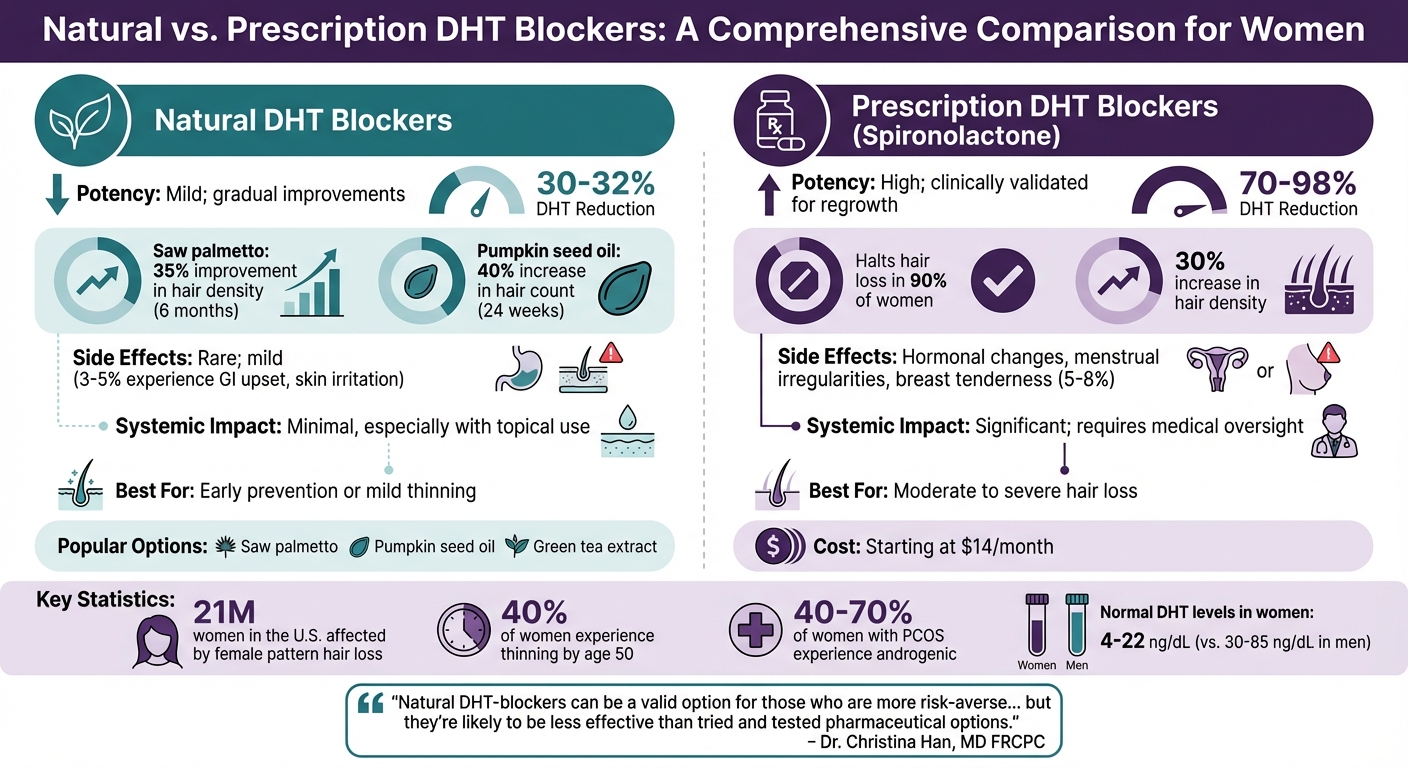
Natural vs Prescription DHT Blockers for Women: Safety and Effectiveness Comparison
How Natural and Prescription Options Compare
Natural and prescription DHT blockers tackle the same problem - reducing DHT levels - but they work differently and offer varying results. Natural blockers typically target the 5-alpha reductase enzyme, while prescription options like Spironolactone go further by lowering testosterone levels and blocking androgen receptors.
When it comes to effectiveness, prescription blockers take the lead. For example, Spironolactone halts hair loss in 90% of women and increases hair density by 30%. On the other hand, natural options like pumpkin seed oil can boost hair count by 40%, but only over a 24-week period. Natural blockers are often gentler, especially in topical forms, with minimal systemic absorption. Prescription treatments, however, are more potent and deliver consistent results, making them ideal for severe cases.
| Feature | Natural DHT Blockers | Prescription (e.g., Spironolactone) |
|---|---|---|
| Potency | Mild; gradual improvements | High; clinically validated for regrowth |
| Side Effects | Rare; mild (e.g., GI upset, skin irritation) | Hormonal changes, menstrual irregularities, breast tenderness |
| Systemic Impact | Minimal, especially with topical use | Significant; requires medical oversight |
| Best For | Early prevention or mild thinning | Moderate to severe hair loss |
The choice between these options often depends on the severity of symptoms and individual goals. Dr. Christina Han, MD FRCPC, explains:
Natural DHT-blockers can be a valid option for those who are more risk-averse and wish to avoid the use of prescription agents to treat their hair loss, but they're likely to be less effective than tried and tested pharmaceutical options.
For women dealing with severe or rapidly progressing hair loss, consulting a healthcare provider about prescription treatments is highly recommended.
How Oana Health Can Help

Understanding the differences between natural and prescription treatments is the first step. Oana Health offers tailored solutions for women facing hair loss or unwanted hair growth. Through telehealth consultations, licensed medical professionals evaluate your symptoms and recommend treatments, including prescription options like Spironolactone ($14/month) or Topical Spironolactone ($43/month).
These prescription-strength treatments are delivered straight to your door with free shipping. Whether you're dealing with mild thinning or advanced hair loss, Oana Health's platform connects you with experts who can determine if prescription DHT blockers suit your needs - or if natural alternatives might work as a preventative approach.
Conclusion: Should You Try Natural DHT Blockers?
Natural DHT blockers can be a gentle starting point for addressing early hair thinning or for prevention. Options like saw palmetto, pumpkin seed oil, and green tea extract are generally well-tolerated, making them appealing for those seeking a milder approach. However, it’s important to note that natural remedies are typically less effective compared to pharmaceutical treatments. For example, while saw palmetto may lower DHT levels by up to 32%, prescription options can suppress DHT levels by as much as 70%–98%.
Natural blockers are best suited for mild hair thinning or for individuals looking to avoid potential systemic side effects. On the other hand, if hair loss is more advanced - such as in moderate to severe cases, particularly after menopause - prescription treatments often deliver more dependable results.
Before starting any DHT-blocking regimen, consulting a healthcare provider is crucial. A professional can help pinpoint the root cause of your hair loss, whether it’s linked to hormonal shifts, PCOS, stress, or vitamin deficiencies. This ensures you receive guidance tailored to your specific health needs, life stage, and treatment goals. Additionally, if you’re pregnant, breastfeeding, or planning to conceive, professional advice is especially important to ensure safety.
For personalized care, platforms like Oana Health connect you with licensed medical professionals who can assess your symptoms and recommend appropriate treatments. Whether you’re considering prescription options like Spironolactone (starting at $14/month) or Topical Spironolactone (starting at $43/month), expert guidance ensures you make informed choices. This way, you can confidently decide whether natural remedies or prescription treatments are the right fit for your hormonal health and hair care goals.
FAQs
Can women safely use natural DHT blockers with prescription treatments?
Yes, natural DHT blockers are usually safe to use alongside prescription treatments. However, their impact can differ, as they tend to be less powerful than pharmaceutical options. To get the best results and avoid any possible interactions, it's crucial to consult a licensed healthcare provider before combining treatments. They can help you develop a personalized plan that suits your unique needs and health objectives.
Are natural DHT blockers safe for women with PCOS? Do they have any side effects?
Natural DHT blockers are usually safe for women dealing with PCOS, though mild side effects can occasionally occur. These might include scalp irritation, digestive issues, or slight hormonal fluctuations. Compared to pharmaceutical options, these side effects are generally milder.
Before starting any natural DHT blocker, it’s important to check in with a healthcare professional to make sure it aligns with your individual health needs and goals.
Are natural DHT blockers effective compared to prescription treatments?
Natural options for blocking DHT can be a milder way to address issues like hair loss or hormonal imbalances. However, they tend to be less effective compared to prescription treatments like finasteride or dutasteride. While natural remedies may come with fewer side effects, their lower strength often means they might not deliver the same results, especially for more advanced cases.
If you're weighing the choice between natural and prescription DHT blockers, it's crucial to talk to a licensed healthcare professional. They can help you figure out the most suitable plan based on your health needs and goals.