
PCOS Cravings vs. Normal Hunger: Key Differences
PCOS cravings and normal hunger are not the same. Women with PCOS often experience sudden, intense cravings for sugary or high-carb foods, even after eating. These cravings are caused by hormonal imbalances, including insulin resistance, leptin resistance, and reduced fullness signals. Normal hunger, on the other hand, develops gradually, lasts longer, and is satisfied with a variety of foods. Here's a quick breakdown:
- PCOS Cravings: Sudden, specific, and tied to hormonal disruptions like insulin resistance. Hunger returns quickly (30–60 minutes after eating).
- Normal Hunger: Gradual, flexible, and driven by genuine energy needs. Satiety lasts 3–5 hours after a balanced meal.
Key Takeaways:
- PCOS cravings stem from biological factors, not lack of self-control.
- Managing them involves stabilizing blood sugar with balanced meals, regular exercise, stress management, and potentially medications like Metformin or GLP-1.
Understanding these differences can help you address PCOS-related cravings effectively.
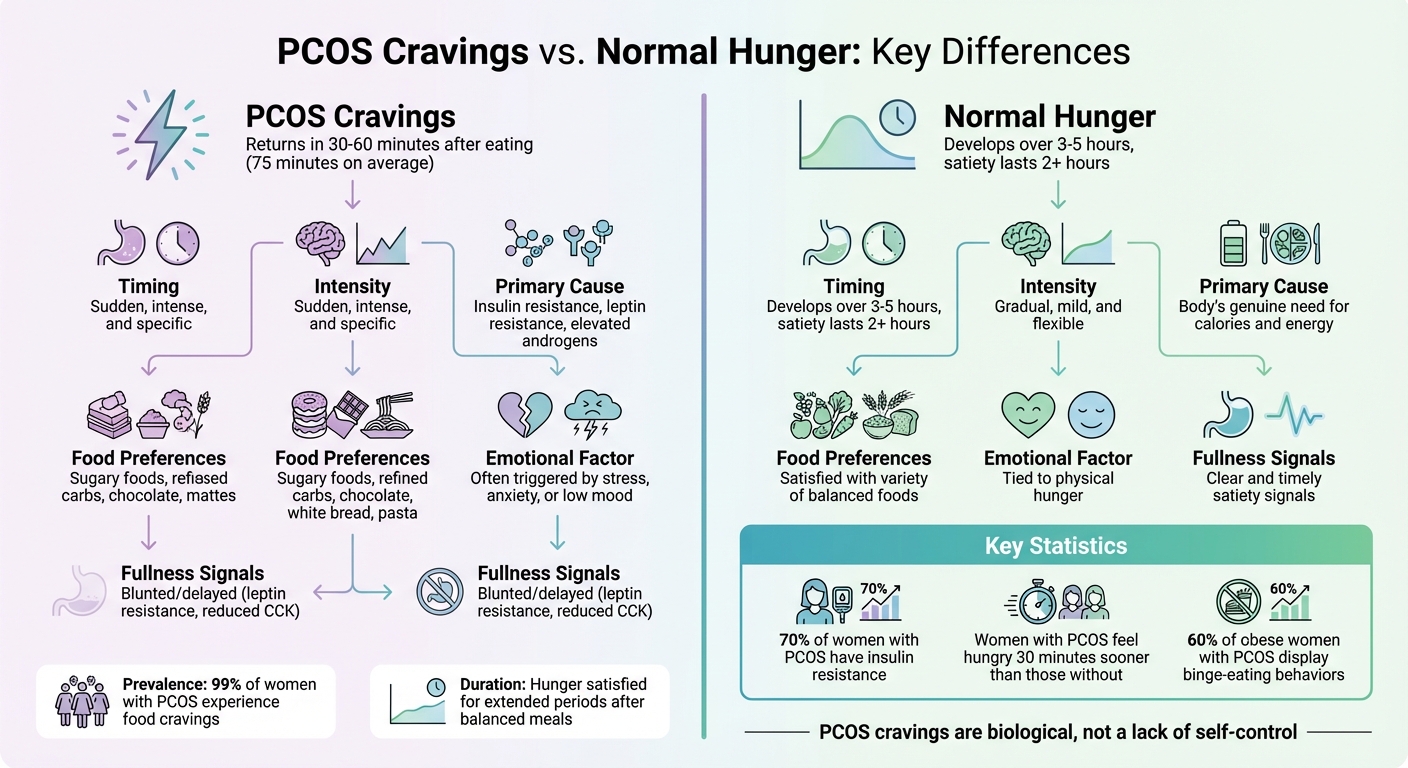
PCOS Cravings vs Normal Hunger: Key Differences Comparison Chart
What Causes PCOS Cravings vs. Normal Hunger
The difference between cravings caused by PCOS and normal hunger lies in how your body processes food and manages appetite signals. Normal hunger develops gradually and reflects a balanced hormonal response. PCOS, on the other hand, disrupts this balance, often leaving you feeling hungry even after eating. A major culprit behind this is insulin resistance, which plays a significant role in intensifying these cravings.
How Insulin Resistance Drives PCOS Cravings
Insulin resistance affects up to 70% of women with PCOS, regardless of their weight. This condition makes your cells less responsive to insulin, forcing your body to produce more of it. The excess insulin not only promotes fat storage but also causes rapid drops in blood sugar, triggering cravings for quick-energy foods like sugary snacks and refined carbs. When blood sugar levels plummet quickly, your brain interprets this as an urgent need for energy, pushing you to seek out those high-carb options.
"Extra insulin can lead to fat storage and weight gain."
– Rekha Kumar, MS, MD, Found
Another layer of complexity comes from brain insulin resistance. Normally, insulin acts as a signal to suppress appetite, telling your brain when to stop eating. But with insulin resistance, this communication breaks down. Your brain doesn't properly register that you've had enough to eat, leaving you feeling unsatisfied.
While insulin plays a big role, other hormones also influence hunger. Let’s look at how this system functions in a healthy body.
How Hormones Regulate Normal Hunger
In a balanced system, your body relies on a network of hormones to regulate hunger and fullness. Here’s how it works:
- Ghrelin: Known as the "hunger hormone", it rises before meals to signal hunger and drops after eating.
- Leptin: Produced by fat cells, leptin tells your brain when your energy stores are sufficient.
- Cholecystokinin (CCK): Released after eating protein or fat, CCK provides an immediate signal of fullness.
In women with PCOS, this system doesn’t work as it should. Ghrelin levels don’t drop effectively after meals, so hunger returns much faster - about 30 minutes sooner than in women without PCOS. Even though your body produces plenty of leptin, your brain becomes resistant to its signal, similar to ignoring a persistent smoke alarm. Additionally, CCK release is often reduced, especially when testosterone levels are high, weakening the fullness signal even further.
When Hunger and Cravings Occur
The timing of hunger is one of the most noticeable differences between PCOS and typical appetite patterns. Hormonal imbalances, particularly insulin resistance, play a key role in altering how and when hunger strikes. If you've ever found yourself reaching for snacks not long after finishing a meal, the explanation lies in how your body processes food and communicates feelings of fullness. This shift in hunger timing is directly tied to the hormonal disruptions associated with PCOS.
PCOS Cravings: Hunger Returns Quickly After Eating
For those with PCOS, hunger doesn’t follow the usual schedule. Instead of feeling full for several hours, you might notice hunger creeping back in as soon as 30 to 60 minutes after eating. Research shows that women with PCOS often report significant hunger as early as 75 minutes after a meal, compared to over 2 hours for those without PCOS.
This early return of hunger is largely due to insulin resistance. Blood sugar levels spike and crash within 1 to 2 hours of eating, which triggers your body to send out urgent hunger signals. These signals often drive cravings for quick-energy foods like sugary snacks or refined carbs. The result? You feel genuinely hungry again, even though you’ve consumed enough calories.
"If you've ever finished a meal only to find yourself raiding the kitchen an hour later, you're not imagining things. Women with polycystic ovary syndrome experience a unique form of hunger that persists despite eating adequate calories."
– Rhea Karir, Dietetic Researcher
Normal Hunger: Develops Slowly and Lasts Longer
In contrast, typical hunger builds up gradually over 3 to 5 hours, giving you plenty of time to plan your next meal. After a well-balanced meal, hormones work as they should, leaving you feeling full and satisfied for several hours.
The difference is striking: while someone without PCOS might not think about food for hours, those with PCOS often feel hunger returning about 30 minutes sooner. This isn’t about willpower or self-control - it’s a physiological response caused by insulin resistance and disrupted hunger signals. Recognizing this difference can help you approach meal planning with more understanding and compassion. Frequent hunger is not a personal failing; it’s a symptom of the underlying hormonal challenges tied to PCOS.
How Strong Cravings Feel vs. Normal Hunger
For those with PCOS, cravings can feel overpowering, pushing you to eat immediately. These urges are intense and persistent, unlike normal hunger, which develops gradually and is easier to manage. With regular hunger, you have the flexibility to delay eating or choose from a variety of foods.
This stark difference is rooted in the hormonal imbalances associated with PCOS. Insulin resistance often causes rapid blood sugar drops, sparking urgent signals for energy. At the same time, elevated testosterone levels and leptin resistance reduce impulse control and disrupt fullness cues. Together, these factors explain why cravings tied to PCOS are much stronger and more focused than the typical sensations of hunger.
PCOS Cravings: Intense and Specific
Cravings linked to PCOS are often laser-focused on particular foods - think sweets, chocolate, white bread, or pasta. These foods are rich in refined carbohydrates, which the body craves for their quick energy boost. But there’s more to it than just energy. Eating sugary foods can temporarily elevate mood by releasing dopamine and serotonin, a response that’s especially common in women dealing with heightened anxiety or depression. Unfortunately, this emotional relief can create a cycle where negative feelings drive cravings, and giving in reinforces the habit.
"In emotional eating, individuals seek palatable foods in general, whereas in craving-related eating, individuals focus on specifically craved foods."
– Sara J. Sagui-Henson, PhD, University of California San Francisco
The numbers paint a clear picture: 99% of women with PCOS report experiencing food cravings. Among those who are obese, 60% display binge-eating behaviors, and 39% show clinically significant symptoms.
Normal Hunger: Broader and Manageable
Normal hunger, on the other hand, unfolds at a slower pace, giving you time to decide what to eat. It doesn’t demand a specific food but instead allows for a variety of options - maybe a sandwich, a salad, some fruit, or leftovers. Because it stems from genuine energy needs rather than emotional triggers, normal hunger is easier to satisfy. A balanced meal typically leaves you feeling full and content for hours, without the urgency or intensity seen in PCOS-related cravings.
Feeling Full: Why PCOS Makes It Harder to Stop Eating
Normally, when you sit down for a meal, your body sends clear signals to let you know when to stop eating. For people with PCOS, though, that signal often shows up late - so late, in fact, that it leads to eating more than intended. This isn't about a lack of willpower; it's the result of a miscommunication between your gut and brain.
At the center of this problem is leptin resistance. Leptin, a hormone produced by fat cells, plays a key role in telling your brain, "We’ve got enough energy stored - you can stop eating now." But in women with PCOS, even with high leptin levels, the brain doesn’t respond as it should. JM Nutrition explains it well:
"Think of it like a smoke alarm that keeps going off while everyone in the house has learned to ignore it. Your body signals fullness, but your brain misinterprets it."
This miscommunication leaves you feeling hungry, even after finishing a meal.
Adding to the challenge is cholecystokinin (CCK), a hormone released by the small intestine to signal satisfaction. In women with PCOS - especially those with higher androgen levels - CCK responses are weaker. This means the "I’m full" message either takes longer to reach the brain or isn’t strong enough when it does. Clinical studies show that women with PCOS often feel hungry again just 60 minutes after eating, compared to 120 minutes for those without the condition.
Then there’s ghrelin, the hormone responsible for triggering hunger. Normally, ghrelin levels drop sharply after a meal, signaling that it’s time to stop eating. But in PCOS, this drop is less pronounced, leaving hunger signals active even after eating. Research shows that women with PCOS feel hungry about 30 minutes sooner than those without the condition, making it harder to stay satisfied.
Insulin resistance further complicates things. After a meal, blood sugar levels can drop quickly, triggering "emergency" hunger signals. These signals often drive cravings for quick fixes like sugary snacks or refined carbs, even if you’ve just eaten a full meal. Combined with leptin resistance, weaker CCK signals, and persistent ghrelin activity, this breakdown in fullness cues can lead to irregular eating patterns for many with PCOS.
sbb-itb-6dba428
PCOS Cravings vs. Normal Hunger: Side-by-Side Comparison
Let’s break down the differences between PCOS-related cravings and normal hunger. These differences go beyond just what you feel - they’re tied to hormonal changes, emotional triggers, and how your body signals fullness. The table below provides a clear comparison of these two types of hunger.
| Feature | Normal Hunger | PCOS Cravings |
|---|---|---|
| Primary Cause | Driven by the body’s need for calories and energy | Linked to insulin resistance, leptin resistance, and elevated androgens |
| Timing | Develops gradually and satiety usually lasts over 2 hours | Returns much faster, often within just 1 hour |
| Intensity | Mild and flexible - any balanced meal can satisfy it | Intense and specific, often craving sugary, high-carb, or fatty foods |
| Emotional Factor | Typically tied to physical hunger | Often triggered by stress, anxiety, or low mood |
| Fullness Signals | Clear signals of satiety occur quickly | Blunted due to reduced CCK response and leptin resistance |
| Food Preferences | Satisfied with a variety of foods | Drawn to energy-dense foods, especially those high in sugar and refined carbs |
These differences explain why standard hunger cues don’t always work for women with PCOS. Hormonal imbalances significantly alter how hunger and cravings are experienced, making tailored strategies essential for effective management.
For instance, research shows that women with both obesity and PCOS often feel hungry again just 60 minutes after eating, while those without PCOS typically report hunger closer to 135 minutes later. This highlights how hormonal disruptions in PCOS can dramatically affect hunger patterns, emphasizing the importance of targeted approaches to manage these challenges effectively.
How to Manage PCOS Cravings
Managing cravings tied to PCOS starts with addressing their hormonal origins. These cravings often stem from hormonal imbalances, particularly insulin resistance, which means they require more than just willpower to manage. The encouraging news? Specific lifestyle changes and, in some cases, medications can help restore hormonal balance and ease those persistent cravings.
Diet, Exercise, and Stress Management
Keeping blood sugar stable is key to managing PCOS-related cravings. Since insulin resistance affects between 50% and 75% of individuals with PCOS, a balanced diet plays a crucial role in reducing blood sugar swings and their impact. A simple strategy: pair carbohydrates with protein, fiber, or healthy fats to slow the release of glucose into your bloodstream.
"We advise people to aim for 30 grams of protein in the morning. Eat your protein first, then your carbs in that meal." - Yolanda Thigpen, MD, Ob/Gyn, Cleveland Clinic
Start your day with 30 grams of protein, and replace refined carbs with more complex options like oats, quinoa, or brown rice. Incorporate healthy fats from sources like avocados, nuts, and olive oil, which can help reduce inflammation and support hormone balance. Eating balanced meals every four hours can also help prevent blood sugar dips and cortisol spikes.
Exercise is another powerful tool for reducing cravings. Regular physical activity improves insulin sensitivity and stabilizes blood sugar levels, making it easier to resist quick sugar fixes. Aim for at least 150 minutes of moderate aerobic exercise weekly, along with two resistance training sessions to maintain muscle mass. The benefits of a workout can last for more than 16 hours, particularly after intense exercise.
Managing stress is equally important since chronic stress elevates cortisol levels, which can increase cravings for sugary or fatty foods while worsening insulin resistance. Practices like mindfulness, meditation, or journaling can help lower cortisol. Additionally, getting 7 to 9 hours of sleep each night is vital - poor sleep increases ghrelin (the hunger hormone) and reduces leptin (the fullness hormone), making cravings harder to resist.
These foundational strategies are essential for managing PCOS cravings, even before considering medication.
Oana Health Treatments for PCOS Cravings

When lifestyle changes aren’t enough, medical treatments can provide targeted relief. Oana Health offers prescription solutions designed to address the root causes of PCOS-related cravings.
- Oral Metformin ER ($22/month): This medication improves how cells respond to insulin and reduces glucose production in the liver, helping to stabilize blood sugar levels. By addressing insulin resistance, Metformin helps prevent the blood sugar crashes that often lead to intense sugar and carb cravings. Results typically appear within 8 to 12 weeks.
- Metformin & Spironolactone ($32/month): This combination therapy tackles both insulin resistance and elevated testosterone levels. While Metformin improves insulin sensitivity, Spironolactone works to lower testosterone, which has been linked to increased appetite and difficulty controlling impulses. Research suggests that higher testosterone levels may even contribute to food cravings and certain disordered eating behaviors.
- Oral GLP-1 & Metformin ($199/month): This option provides a more comprehensive approach by combining insulin management with appetite suppression. GLP-1 agonists mimic natural satiety hormones, slowing down how quickly food leaves the stomach and signaling the brain to reduce hunger and "food noise". This treatment offers faster appetite suppression compared to using Metformin alone.
All treatments are prescribed by licensed healthcare providers following an online consultation. Medications are then shipped directly to your home with free delivery. For the best results, pair these treatments with the lifestyle strategies mentioned above to create a well-rounded plan for managing PCOS cravings.
Conclusion
Grasping the distinction between PCOS-related cravings and regular hunger can be a game-changer for your health. Regular hunger builds gradually, leaving you satisfied for hours, while PCOS cravings hit like a freight train - sudden, intense, and often fixated on sugary or carb-heavy foods. These cravings aren’t about willpower; they’re rooted in hormonal imbalances.
The numbers paint a clear picture: 99% of women with PCOS report experiencing food cravings, and about 33% show unusual eating patterns. Among overweight or obese women with PCOS, 93% have attempted dieting, yet only 13% achieved their goals. Over half (57%) abandoned their efforts, often due to overwhelming hunger and frustration. This highlights the need for a more tailored approach to managing PCOS.
"If you are diagnosed with polycystic ovary syndrome, it doesn't mean that you are destined to have poor health. There is a lot you can do to take charge, minimize symptoms and keep yourself healthy."
- Amanda Stathos, M.S., R.D., L.D.N., Clinical Dietitian, Johns Hopkins' Sibley Memorial Hospital
Understanding that these cravings stem from biology - not personal shortcomings - can help shift your mindset. As noted earlier, strategies like balanced meals, regular exercise, stress management, and quality sleep can help stabilize blood sugar levels. For some women, combining these lifestyle adjustments with medical treatments such as Metformin or GLP-1 medications can provide the comprehensive support needed to regain control over hormone-driven hunger.
FAQs
What’s the difference between PCOS cravings and regular hunger?
PCOS cravings and regular hunger aren’t quite the same. PCOS cravings often hit hard and fast, usually zeroing in on sugary or carb-heavy foods. What makes them tricky is that they can stick around even after you’ve had a balanced meal. These cravings are often tied to hormonal imbalances, like insulin resistance or disruptions in hunger-regulating signals. On top of that, emotional triggers like stress or mood swings can make these cravings even more persistent, making it tough to recognize when you’re actually full.
On the other hand, regular hunger tends to build up more gradually. It’s usually satisfied once you eat a balanced meal or snack, aligning with your body’s actual energy needs. Regular hunger doesn’t typically come with the same intense cravings and is often influenced by external factors like your environment or cultural habits. Knowing how these differ can make it easier to manage PCOS symptoms and respond to your body in a way that feels more balanced.
How can I manage cravings caused by PCOS?
Managing cravings linked to PCOS often begins with making small, manageable lifestyle adjustments that support hormonal balance and steady blood sugar levels. A good starting point is focusing on a balanced diet that includes plenty of fiber-rich foods, lean proteins, and healthy fats. These not only help keep cravings in check but also prevent sudden blood sugar spikes. Adding regular physical activity, like walking or strength training, can further enhance insulin sensitivity and promote overall hormonal health.
Cravings can also be tied to stress or emotional triggers, making stress management an important part of the equation. Techniques like mindfulness practices or deep breathing exercises can make a noticeable difference. Sticking to consistent meal times and cutting back on highly processed foods or added sugars can also help reduce cravings. For those seeking personalized support, telehealth platforms like Oana Health offer tailored, science-based treatments designed to address the hormonal imbalances and insulin resistance often associated with PCOS, giving you tools to take charge of your cravings.
Why do women with PCOS feel hungry again so quickly after eating?
Women with PCOS often experience hunger soon after eating, and hormonal imbalances are largely to blame. One major factor is insulin resistance, a common characteristic of PCOS. This condition leads to blood sugar spikes and elevated insulin levels, which can spark cravings for carbs and sugary treats. These rapid fluctuations make it tough for the body to feel truly satisfied after meals.
On top of that, hormonal imbalances - like increased androgens - and disruptions in the brain-gut connection can interfere with the body's ability to recognize when it's full. This can create a frustrating cycle where, even after eating a well-rounded meal, you still feel cravings and a sense of dissatisfaction. Gaining insight into these underlying factors is key to managing hunger and cravings more effectively.