
PCOS and Hormonal Acne: Natural Treatment Options
Struggling with hormonal acne caused by PCOS? Here’s the bottom line: managing acne linked to PCOS requires addressing hormonal imbalances, particularly elevated androgens and insulin resistance. Natural treatments like dietary changes, herbal supplements, and lifestyle adjustments can make a noticeable difference.
Key Takeaways:
- Hormonal Triggers: High androgens and insulin resistance drive acne by increasing oil production and inflammation.
- Diet Adjustments: Focus on low glycemic index foods (oatmeal, whole grains, leafy greens) and anti-inflammatory options (fatty fish, berries, probiotics).
- Herbal Remedies: Supplements like inositol (for insulin sensitivity), spearmint tea (to reduce androgens), and Vitex (to balance hormones) can help.
- Topical Solutions: Tea tree oil and turmeric masks may soothe inflammation and bacteria but work best alongside other treatments.
- Lifestyle Shifts: Regular exercise, stress management, and a consistent skincare routine are essential for long-term results.
For persistent acne, combining these natural methods with targeted prescriptions like spironolactone or metformin, as offered by telehealth services, may provide more effective relief. Start by focusing on diet, supplements, and skincare while consulting a professional for personalized care.
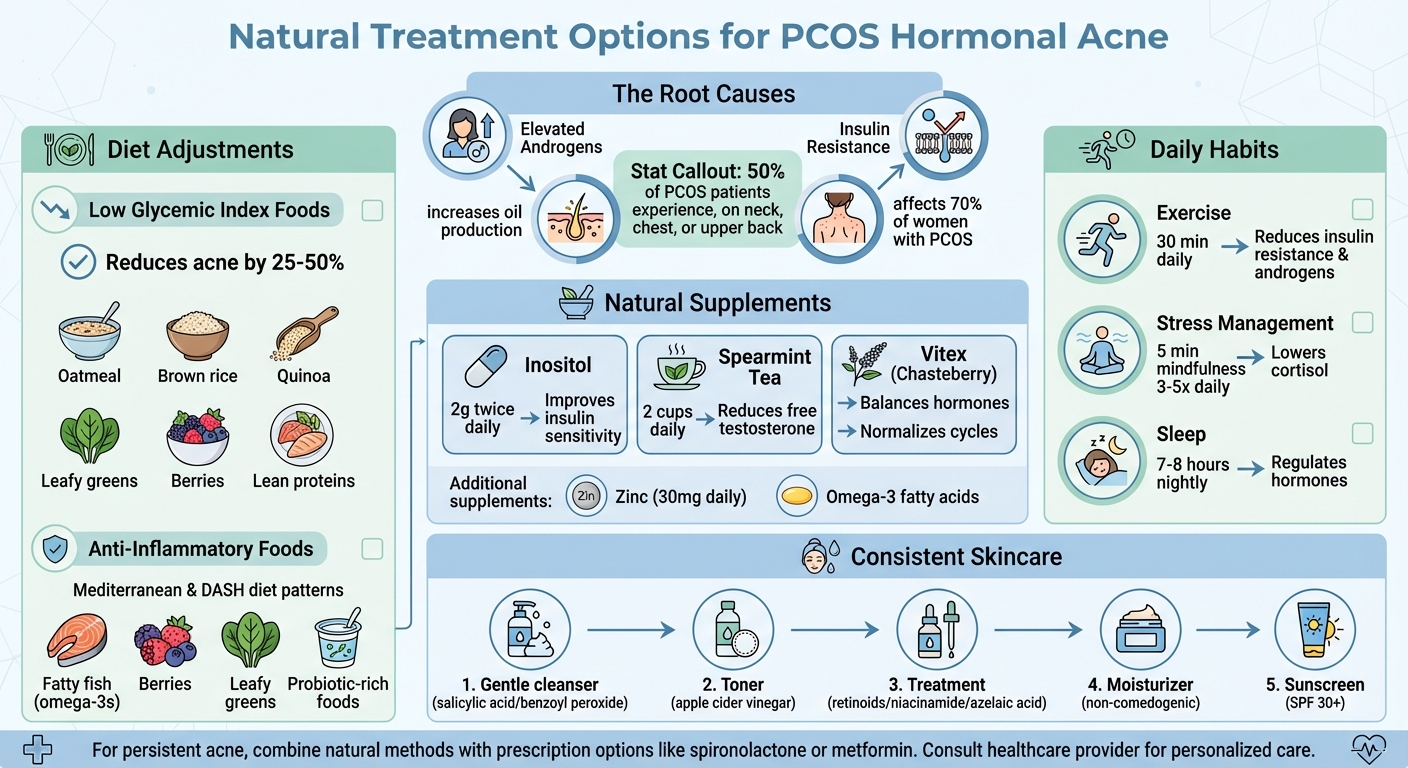
Natural Treatment Guide for PCOS Hormonal Acne: Diet, Supplements, and Lifestyle Changes
PCOS Acne: The Diet & Lifestyle Fix That Actually Works | Evidence-Based
How Hormones Cause Acne in PCOS
To tackle PCOS-related acne effectively, it's essential to understand the hormonal dynamics at play. The two main culprits? Elevated androgens and insulin resistance. These hormonal imbalances create the perfect storm for acne development, going beyond surface-level symptoms to disrupt processes deep within the body.
Androgens and Sebum Production
Elevated androgens in PCOS do more than just increase oil production - they also speed up skin cell turnover and amplify hormone sensitivity. This combination leads to clogged pores and inflamed, painful nodules, especially in areas like the jawline, chin, and neck. In fact, nearly half of women with PCOS experience acne on the neck, chest, or upper back. These hormonal changes trigger a cycle where excess oil, dead skin cells, and inflammation feed into each other, making acne more persistent and harder to treat. But androgens are only part of the story - insulin resistance plays a significant role, too.
Insulin Resistance and Acne
Insulin resistance is a common issue in PCOS, affecting about 70% of women with the condition. It not only disrupts blood sugar levels but also throws hormonal balance into chaos. According to Mira Fertility Shop:
"When insulin levels are high, this causes the body to ramp up the production of certain male hormones." – Mira Fertility Shop
High insulin levels stimulate the ovaries and adrenal glands to produce more androgens, while also lowering sex-hormone-binding globulin (SHBG). This leads to an increase in free testosterone, which interacts with IGF-1 receptors to fuel inflammation and acne. This vicious cycle highlights why addressing insulin resistance is crucial for managing PCOS-related acne. By targeting these hormonal imbalances, you can explore natural remedies and lifestyle changes that go beyond treating symptoms to address the root causes.
Dietary Changes to Reduce Hormonal Acne
What you eat plays a big role in hormone balance and skin health. By adjusting your diet to address insulin resistance and androgen spikes, you can tackle acne at its source. These changes are part of a broader approach to managing PCOS-related symptoms. Here are two dietary strategies that can help balance hormones and promote clearer skin.
Low Glycemic Index Foods
Low glycemic index (LGI) foods are digested more slowly, helping to avoid sharp increases in blood sugar and insulin levels. These spikes can trigger androgen production, which often worsens acne. LGI foods are typically high in fiber and protein and less processed than high-GI options. Research suggests that adopting a low-GI diet can reduce acne by 25% to 50%. Beyond improving skin clarity, this diet supports hormone balance by lowering testosterone and insulin levels, reducing IGF-1, boosting sex hormone binding globulin (SHBG), and cutting down on sebum production.
To incorporate LGI foods into your meals, focus on whole grains like oatmeal, brown rice, quinoa, and whole-grain pasta. Opt for non-starchy vegetables such as broccoli, spinach, kale, peppers, and zucchini. Choose low-GI fruits like berries, citrus fruits, and peaches. Include lean proteins like chicken, turkey, fish rich in omega-3s, beans, and lentils. Don’t forget healthy fats from sources such as avocados, olive oil, nuts, and seeds. Pairing these with anti-inflammatory foods can further address hormonal imbalances.
Anti-Inflammatory Foods
Chronic inflammation, commonly linked to PCOS, contributes to androgen production and acne. Anti-inflammatory foods, especially those high in omega-3 fatty acids, can help by reducing insulin-like growth factor-1 (IGF-1), which drives excess sebum and clogged pores. These foods also inhibit the production of inflammatory compounds that lead to acne lesions. In one study, participants with mild-to-moderate acne who took omega-3 supplements for 10 weeks saw a notable decrease in both inflammatory and non-inflammatory acne lesions.
Diets like the Mediterranean diet and the DASH (Dietary Approaches to Stop Hypertension) diet are excellent blueprints to follow. For example, a 2017 study in the Journal of Human Nutrition and Dietetics found that overweight women with PCOS who followed the DASH diet for three months had higher antioxidant levels and lower androgen levels. To get started, focus on foods like fatty fish, vibrant berries, leafy greens, and whole grains. Adding probiotic-rich options like yogurt, kefir, and kimchi can also support gut health and hormonal balance. As Julia Zumpano, RD, LD, from the Cleveland Clinic points out:
"The food we eat - and don't eat - can soothe and even prevent inflammation by quashing your body's inflammatory responses".
Herbal Supplements for PCOS and Acne
Herbal supplements provide a natural way to address PCOS symptoms and hormonal acne by focusing on the underlying issues like insulin resistance and elevated androgen levels. While they may take longer to show effects compared to prescription medications, they often come with fewer side effects. Below are three well-researched options that can help regulate hormones and improve skin health. These supplements work best when paired with healthy dietary and lifestyle habits to tackle hormonal imbalances at their root.
Inositol for Insulin Sensitivity
Inositol, available in two forms - myo-inositol and D-chiro-inositol - has been shown to improve insulin sensitivity, which helps reduce hyperandrogenism and acne flare-ups. Myo-inositol, in particular, plays a key role in aiding glucose uptake by cells. By addressing insulin resistance, this supplement can effectively target the hormonal imbalances that contribute to both metabolic and skin-related PCOS symptoms.
Spearmint Tea for Androgen Reduction
Spearmint tea is well-known for its anti-androgenic effects, which can help lower free testosterone levels in the body. This caffeine-free option is also popular for reducing hirsutism (excess hair growth). Research suggests that drinking at least two cups of spearmint tea daily can significantly decrease free testosterone levels. However, a 2017 meta-analysis noted only minor changes in overall hormone levels. Since it’s free of caffeine, you can enjoy it at any time of day.
Vitex (Chasteberry) for Hormone Balance
Vitex agnus-castus, commonly called chasteberry, has been used for centuries to support reproductive health and regulate hormone levels. This herb contains compounds like flavonoids and iridoids that influence hormonal pathways. Vitex is thought to work by adjusting the estrone-to-progesterone ratio, promoting the conversion of estrogen to progesterone, which can help correct estrogen-dominant imbalances. Studies have shown that Vitex can help normalize menstrual cycles and improve hormone ratios, with animal research indicating increased progesterone and reduced testosterone levels. Before adding Vitex to your routine, consult your doctor to discuss dosage, potential side effects, and interactions, as herbal supplements are not regulated by the FDA.
sbb-itb-6dba428
Natural Topical Treatments for Acne
Natural topical treatments can provide soothing, anti-inflammatory, and antibacterial benefits. However, they may not be as strong as prescription medications when it comes to managing acne effectively.
Tea Tree Oil for Acne
Tea tree oil is often praised for its ability to combat inflammation and bacteria, making it a popular choice for reducing acne. Its gentle nature can be appealing for those with sensitive skin, though its effectiveness for hormonal acne, such as that caused by PCOS, is still not well-documented.
Since essential oils are highly concentrated, tea tree oil may sometimes irritate the skin. To avoid this, dilute it by mixing 1–2 drops of tea tree oil with 12 drops of a carrier oil like coconut, jojoba, or olive oil. Always perform a 24-hour patch test on the inside of your wrist before applying it to your face. If irritation occurs, stop using it immediately and seek advice from a dermatologist.
Other natural remedies, like turmeric, can also be helpful in addressing inflammation and promoting skin recovery.
Turmeric Masks for Inflammation
Turmeric, thanks to its active compound curcumin, offers anti-inflammatory, antibacterial, and antioxidant properties that may support acne-prone skin. It can help reduce redness, swelling, and irritation while also targeting bacteria responsible for acne. Additionally, turmeric may assist in balancing sebum production, speeding up the healing of acne scars, and lightening hyperpigmentation caused by breakouts.
If your acne is severe or doesn’t respond to these natural treatments, it’s a good idea to consult a dermatologist to explore other treatment options.
Lifestyle Changes for Better Skin
Combining natural remedies with regular exercise, stress management, and a consistent skincare routine can help address the root causes of hormonal acne associated with PCOS.
Exercise and Hormone Balance
Staying active plays a crucial role in managing PCOS symptoms. Regular exercise helps combat insulin resistance and reduces high androgen levels, both of which are linked to hormonal acne. Something as simple as a 30-minute brisk walk every day can improve how your body uses insulin and lower testosterone levels, which, in turn, decreases sebum production. The focus should be on consistency, not intensity - it's about making exercise a regular part of your routine. When paired with dietary adjustments and herbal remedies, physical activity becomes a powerful tool in managing PCOS-related acne.
Stress Management Techniques
Chronic stress can wreak havoc on your skin by elevating cortisol levels, which influence androgen production and inflammation. High cortisol over time can lead to weight gain, poor sleep, and increased inflammation - all of which aggravate acne.
Simple stress-reduction practices can make a big difference. Spend 5 minutes, 3–5 times a day, doing mindfulness exercises or deep breathing to help lower cortisol. Aim for 7–8 hours of quality sleep each night - poor sleep is closely tied to elevated cortisol levels. Create a bedtime routine by avoiding caffeine in the evening, limiting exposure to bright screens, and sticking to a consistent sleep schedule. Engaging in activities you enjoy and nurturing supportive relationships can also help keep stress in check. These techniques complement other acne treatments, like skincare and herbal remedies.
Building a Consistent Skincare Routine
A well-rounded skincare routine, combined with lifestyle changes, is essential for managing hormonal acne.
"Treating PCOS acne in patients can take a multi-faceted approach, including lifestyle changes, a good skincare routine, and supportive supplements." - Dr. Jolene Brighten
Start with a gentle cleanser. Use products containing salicylic acid or benzoyl peroxide to help unclog pores and reduce breakouts. After cleansing, consider using apple cider vinegar as a toner. It can help balance your skin's pH while providing anti-microbial and anti-inflammatory benefits.
Hydrate your skin. A lightweight, non-comedogenic moisturizer keeps your skin hydrated without clogging pores. If dryness is an issue, look for a moisturizer that includes benzoyl peroxide.
Incorporate targeted treatments. Add products like retinoids, niacinamide, or azelaic acid to your routine. These ingredients can improve skin texture, reduce inflammation, and regulate oil production. Over-the-counter retinol products are gentle, while prescription-strength options are more potent for acne treatment.
Protect your skin from the sun. Daily sunscreen use is a must, especially if you're using retinoids, which can make your skin more sensitive to sunlight. Opt for a sunscreen with SPF 30 or higher to prevent hyperpigmentation and acne scars from worsening.
Practice good hygiene. Always remove makeup before bed to avoid clogged pores. Choose oil-free and fragrance-free skincare products to minimize irritation and breakouts.
How Oana Health Treats PCOS-Related Acne
For many, addressing PCOS-related acne with natural remedies alone isn’t enough. That’s where Oana Health steps in, offering specialized telehealth care tailored to tackle hormonal acne, insulin resistance, and even unwanted hair growth.
Personalized Treatment Plans
Oana Health creates customized treatment plans based on your unique health history and symptoms. Their licensed medical professionals prescribe treatments designed to meet your specific needs. For PCOS-related acne, they may suggest Spironolactone to lower androgen levels and control sebum production, or Topical Spironolactone for more targeted care. If insulin resistance plays a role in your acne, they offer Oral Metformin ER starting at $22/month or a Metformin & Spironolactone combination for $32/month. This personalized care pairs perfectly with the convenience of telehealth.
Telehealth Convenience
Everything is handled online. After completing a simple online consultation, a licensed medical provider reviews your health history and prescribes the most suitable treatments. Medications are shipped directly to your doorstep with free delivery. Through Oana Health’s platform, you can manage hormonal acne, hair loss, and even unwanted facial hair - all in one place.
These prescription-based solutions work hand-in-hand with natural and lifestyle treatments, giving you a comprehensive approach to managing PCOS symptoms.
Conclusion
Managing PCOS-related hormonal acne often involves combining several focused strategies. Research highlights that taking inositol (2 grams twice daily) and drinking spearmint tea (two cups daily) can help lower free testosterone levels and reduce acne symptoms. These findings point to the benefits of integrating natural remedies with more targeted approaches.
A low-glycemic, anti-inflammatory diet paired with regular exercise, stress management, and quality sleep plays a crucial role in addressing hormonal imbalances. Additionally, natural supplements like zinc (30 mg daily) and omega-3 fatty acids can help balance hormones and reduce excess sebum production.
"Treating upstream causes gives lasting results and reduces long term prescriptions of medicines, either natural or allopathic."
- Norelle Hentschel, Naturopath, Your Remedy
While natural treatments are beneficial, they may not always be enough on their own. When paired with targeted prescriptions, such as spironolactone to manage androgen levels or metformin to improve insulin sensitivity, these approaches can work together to enhance hormone balance and skin health.
Since PCOS is a chronic condition without a permanent cure, consistent management is key. For many, combining natural strategies with personalized treatment plans - like those offered by telehealth providers such as Oana Health - provides a practical path to clearer skin. Whether you start with dietary changes and supplements or incorporate prescription options, the most effective approach is one that’s tailored to your unique symptoms and lifestyle.
FAQs
How do I know if my acne is caused by PCOS?
Acne linked to PCOS tends to stick around and often shows up in specific areas like the chin, jawline, chest, back, inner thighs, or underarms. It may also flare up in a cycle, often worsening just before or during your period. This type of acne is usually paired with other PCOS symptoms, such as irregular periods, excess hair growth on the face or body, weight gain, or dark patches of skin.
If your acne follows this pattern and comes with other PCOS-related signs, it’s likely tied to hormone imbalances. Reaching out to a healthcare provider can help you confirm the cause and explore treatments that work for you.
What dietary changes can help reduce hormonal acne caused by PCOS?
Managing hormonal acne tied to PCOS often begins with specific dietary changes aimed at balancing hormones, lowering inflammation, and stabilizing insulin levels. Here are some helpful adjustments:
- Limit refined carbs and added sugars: Foods like white bread, sugary snacks, and sodas can cause blood sugar spikes, increasing insulin and androgen levels, which may worsen acne. Opt for whole grains such as quinoa, oats, or brown rice instead.
- Cut back on dairy: Many women with PCOS notice improvements in their skin when they reduce milk, cheese, and sweetened yogurt. These can trigger insulin-like growth factor (IGF-1) and boost androgen activity.
- Add anti-inflammatory foods: Include omega-3-rich options like salmon, walnuts, and flaxseeds in your meals. These can help reduce skin inflammation and control oil production.
Staying well-hydrated, eating balanced meals, and focusing on fiber-rich vegetables, fruits, and legumes can further support hormone regulation and healthier skin. For tailored advice, Oana Health provides telehealth services with licensed professionals who can design personalized nutrition plans to help manage PCOS-related acne.
Can herbal supplements for hormonal balance cause side effects?
Herbal supplements are often viewed as a safe option for promoting hormonal balance. However, it's important to note that individual responses can differ. Some people might encounter mild side effects, such as digestive upset or allergic reactions, which can depend on the type of herb used and the dosage.
Before adding any new supplement to your routine, it's wise to consult a healthcare professional. This is especially crucial if you have existing health conditions, are taking medications, or are pregnant or breastfeeding. A professional can provide tailored advice to help ensure the supplement is both safe and effective for your specific situation.