
How PCOS Affects Hormone Therapy Monitoring
PCOS (Polycystic Ovary Syndrome) complicates hormone therapy monitoring due to its impact on hormonal balance, insulin resistance, and ovulation patterns. Key challenges include:
- Hormonal Imbalances: Elevated androgens and inaccurate testing methods make it difficult to assess treatment effectiveness. Reliable tests like LC-MS are preferred over standard immunoassays.
- Insulin Resistance: Present in 70% of PCOS patients, it worsens hormonal issues and requires targeted treatments like Metformin, which can be slow to show results.
- Irregular Ovulation: Unpredictable cycles make it hard to time tests, and even women with regular periods may experience ovulatory dysfunction.
Effective management requires detailed monitoring, including hormone panels, glucose tests (like OGTT), and ultrasounds. Telehealth solutions and combined medication plans (e.g., Metformin with Spironolactone) are easing access to care. Paired with lifestyle changes like weight loss and exercise, these strategies help address PCOS symptoms more effectively.
For accurate results and better outcomes, a personalized approach focusing on regular testing, tailored treatments, and consistent follow-ups is essential.
6 Specific Hormonal Profiling for PCOS - Antai Hospitals
Main Challenges in Monitoring Hormone Therapy for PCOS Patients
3 Main Challenges in PCOS Hormone Therapy Monitoring
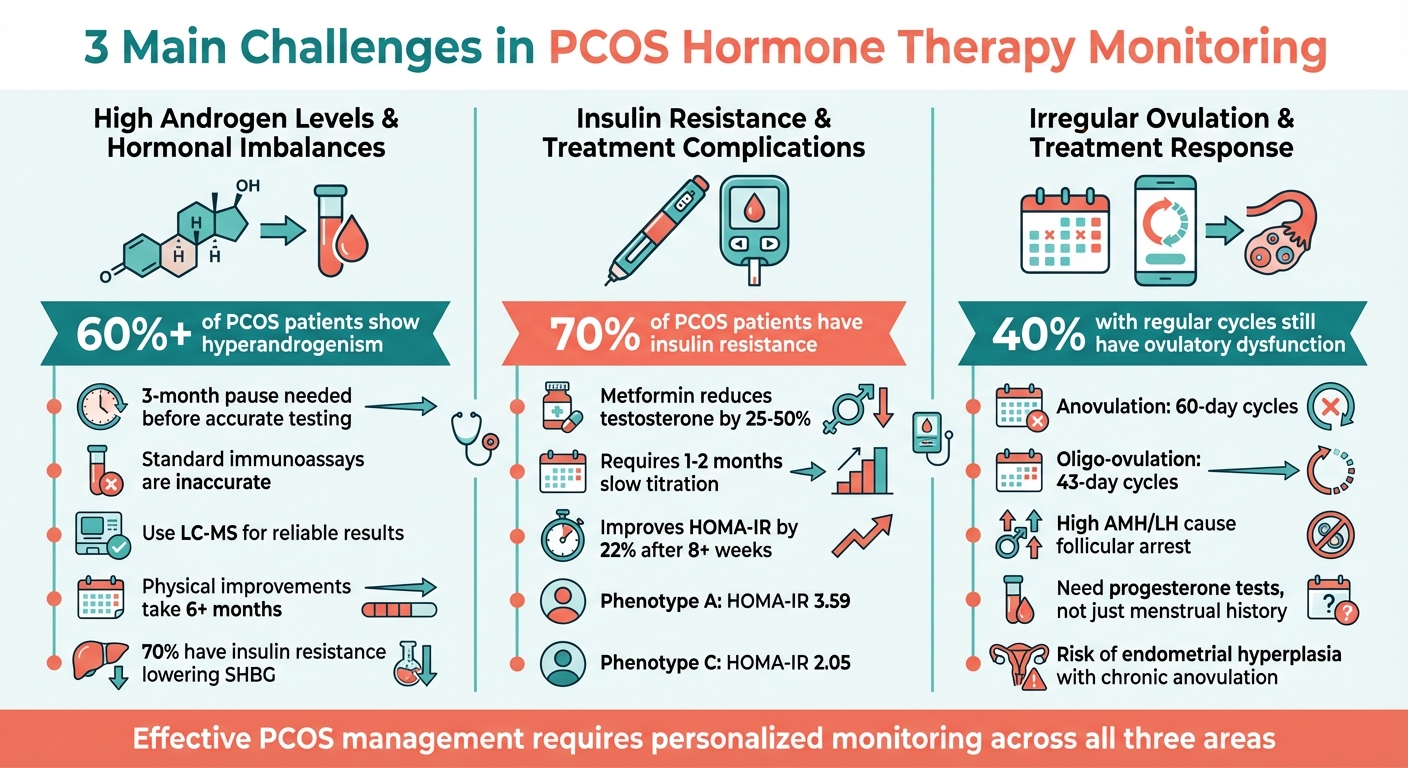
Polycystic Ovary Syndrome (PCOS) disrupts the body's hormonal balance, making it tough for healthcare providers to gauge the effectiveness of hormone therapy. Three major challenges stand out, each requiring precise diagnostic tools and customized treatment adjustments.
1. High Androgen Levels and Hormonal Imbalances
One of the biggest hurdles is elevated androgen levels, which complicate baseline assessments. Hormonal contraceptives can mask true androgen levels, forcing a three-month treatment pause to establish an accurate baseline. This creates a frustrating dilemma: you can't pinpoint the problem while actively treating it.
Compounding the issue, standard direct immunoassays lack the precision needed for measuring female androgen levels. The International PCOS Network advises against using direct free testosterone assays, labeling them as inaccurate and insensitive. Instead, more reliable methods like liquid chromatography–mass spectrometry (LC-MS) or extraction chromatography immunoassays are recommended.
Physical signs of improvement, like reduced acne or hirsutism, often take up to six months to appear. Meanwhile, insulin resistance - present in 70% of PCOS patients - further complicates matters. It lowers Sex Hormone-Binding Globulin (SHBG), which increases free testosterone levels even when total testosterone appears normal.
At least 60% of women with PCOS show signs of hyperandrogenism, either clinically or through lab tests. This creates a vicious cycle: high androgen levels boost Luteinizing Hormone (LH), which in turn stimulates even more androgen production. Breaking this loop requires careful monitoring of calculated free testosterone or the free androgen index, rather than relying on total testosterone alone.
2. Insulin Resistance and Treatment Complications
Insulin resistance adds another layer of complexity. Standard markers like fasting insulin or HOMA-IR often fall short when used on individual patients, compared to the more accurate but less accessible euglycemic clamp method. Without a reliable baseline, tracking progress becomes guesswork.
"The hyperinsulinemia appears to be an important factor in maintaining hyperandrogenemia, acting directly to induce excess androgen production by theca cells and also as a co-gonadotropin." - John C Marshall, MD, PhD
High insulin levels suppress SHBG, leading to elevated free testosterone and undermining hormone therapy. This, in turn, worsens insulin sensitivity, creating a cycle that’s hard to break even with treatment.
Metformin, commonly prescribed to address insulin resistance, presents its own challenges. It requires slow titration over one to two months to minimize gastrointestinal side effects, delaying results and often reducing patient adherence. While Metformin can lower testosterone levels by 25% to 50% and improve HOMA-IR by 22% after at least eight weeks, its side effects often make sticking to the treatment difficult.
Insulin resistance also varies across PCOS phenotypes. For example, women with Phenotype A (hyperandrogenism, ovulatory dysfunction, and polycystic ovaries) show higher HOMA-IR levels (3.59) compared to those with Phenotype C (hyperandrogenism and polycystic ovaries), who average 2.05. This variability underscores the need for individualized monitoring and treatment plans tailored to each patient's specific phenotype and metabolic profile.
3. Irregular Ovulation and Treatment Response
Irregular ovulation adds yet another challenge, making it hard to time diagnostic tests and evaluate cycle normalization. Women with anovulation typically experience 60-day cycles, while those with oligo-ovulation average 43 days. This unpredictability makes it difficult for providers to establish consistent testing windows.
Interestingly, up to 40% of PCOS patients who report having regular menstrual cycles may still experience underlying ovulatory dysfunction. Research from Monash University highlights this issue, noting that "Apparent regularity of menstrual cycles (ie, self-reported eumenorrhea) in the presence of hyperandrogenism is associated with ovulatory dysfunction in up to 40% of presenting patients". A patient who seems to have improved based on cycle frequency may still not be ovulating effectively.
High levels of Anti-Müllerian Hormone (AMH) and LH contribute to follicular arrest, where follicles stop developing prematurely. This makes it hard to distinguish between treatment failure and the natural disruptions caused by PCOS. Experts describe this as a "self-perpetuating, noncyclic hormonal pattern", where elevated androgens convert to estrogens in peripheral tissues without the normal hormonal fluctuations of a healthy cycle.
Single-point blood tests are often insufficient in this context. Elevated insulin levels further amplify LH stimulation and disrupt the body's ability to regulate GnRH pulses, creating complex feedback loops that obscure the effects of hormone therapy. To confirm ovulation, providers must rely on serum progesterone levels instead of just menstrual history. Chronic anovulation also increases the risk of endometrial hyperplasia, requiring ultrasound or biopsy monitoring for patients who haven’t menstruated in a year or longer. This unpredictability calls for ongoing evaluation and highly personalized treatment strategies.
Required Tests and Monitoring Protocols for PCOS Hormone Therapy
Accurate testing plays a vital role in managing PCOS hormone therapy. Without proper monitoring, it’s tough to tell if treatment is working or if there are underlying metabolic issues. Here’s a detailed look at the key protocols for effective PCOS management.
1. Hormone Panels and Blood Work
Monitoring androgen levels is central to managing PCOS, but not all testosterone tests give the full picture. The Free Androgen Index (FAI) - calculated as (Total Testosterone / SHBG) × 100 - offers a clearer view of active testosterone levels since SHBG levels can shift with insulin resistance, altering testosterone activity in the body.
For accurate results, hormonal contraceptives should be discontinued for at least three months before testing. This ensures that medications have cleared from the system.
Additional tests are also necessary. Checking TSH, prolactin, and 17-hydroxyprogesterase helps rule out conditions that mimic PCOS, such as thyroid disorders or nonclassic congenital adrenal hyperplasia. An LH-to-FSH ratio greater than 3 is commonly observed in PCOS cases, while AMH levels can be a substitute for ultrasound to identify polycystic ovaries in adults. These tests, combined with androgen assessments, guide personalized treatment plans. Blood pressure should be checked during every visit or at least annually, and a fasting lipid profile is necessary at diagnosis, with follow-ups based on cardiovascular risk.
2. Glucose and Insulin Monitoring
Women with PCOS face a two- to three-fold higher risk of developing prediabetes and type 2 diabetes compared to those without PCOS. To monitor this risk, the 75-g Oral Glucose Tolerance Test (OGTT) is the preferred screening tool, especially for patients with a BMI over 25 kg/m² (or over 23 kg/m² for Asian patients).
The OGTT is more effective than A1C alone for identifying glucose intolerance in PCOS patients. It should be repeated every one to three years, or more often if additional risk factors like a family history of diabetes are present. For women planning to conceive, an OGTT is a key part of preconception care. Another test should be done before 20 weeks of pregnancy, and again at 24 to 28 weeks if earlier results were normal.
| Test Result (2-hour OGTT) | Glycemic Status |
|---|---|
| < 140 mg/dL | Normal glucose tolerance |
| 140–199 mg/dL | Impaired glucose tolerance |
| ≥ 200 mg/dL | Diabetes mellitus |
3. Transvaginal Ultrasound and Physical Assessments
Transvaginal ultrasound (TVUS) is critical for identifying polycystic ovarian morphology and ensuring endometrial health. A polycystic ovary is defined by the presence of 20 or more follicles per ovary or an ovarian volume of 10 mL or greater. These follicles, measuring 2–9 mm in diameter, often form a characteristic "string of pearls" pattern around the ovary.
However, ultrasounds are not recommended for diagnosing adolescents within eight years of their first period, as multi-follicular ovaries are normal during puberty. For adults with prolonged amenorrhea (no period for over 90 days) or abnormal bleeding, ultrasound is essential.
"The risk of endometrial cancer is 2–6 times higher among people with PCOS than the general population and often presents before menopause." - Ebernella Shirin Dason, MD
When ordering an ultrasound, it’s important to request an antral follicle count to ensure accurate results. For menstruating patients, the best time for imaging is during the early follicular phase, typically days 2–4 of the cycle. Additionally, monitoring endometrial thickness during hormone therapy is crucial to prevent excessive growth of the uterine lining.
sbb-itb-6dba428
Adjusting Hormone Therapy for PCOS Patients: Risks and Modifications
Effective treatment for PCOS requires more than just diligent monitoring - it demands adjustments that address the unique risks associated with the condition. By tailoring therapies to these risks, healthcare providers can ensure treatments remain both safe and effective.
Women with PCOS face a heightened risk of venous thromboembolism (VTE) and metabolic complications. Standard hormone therapy often needs to be adapted to account for these challenges, as well as any medication-specific side effects.
Modifying Therapy for Elevated Risks
To lower the risk of VTE, low-dose oral contraceptives containing 20–30 mcg of ethinyl estradiol are typically recommended. Additionally, formulations with progestins like levonorgestrel, norethindrone, or norgestimate may further reduce this risk.
When using antiandrogens like spironolactone, regular blood tests are essential to monitor for hyperkalemia, particularly in patients with kidney concerns or those taking other potassium-sparing medications. It's also critical to use effective contraception while on spironolactone, as the drug can lead to undervirilization in male fetuses.
"Antiandrogens such as spironolactone are second-line drug therapy for hirsutism and acne but should not be used without contraception because it can cause undervirilization in a male fetus." - International PCOS Network
For patients trying to conceive, letrozole is often preferred over clomiphene. Letrozole not only improves live birth rates but also reduces the likelihood of multiple pregnancies, making it a safer option.
Combining Hormone Therapy with Lifestyle Changes
Adapting hormone therapy is only part of the equation - lifestyle modifications play a key role in achieving better outcomes. Even a modest weight loss of 5% can significantly enhance fertility and improve metabolic health, making it an essential complement to medical therapy. For patients aiming to conceive, ovulation-inducing treatments are often delayed until they achieve a 6% weight loss, typically over a 16-week period.
Physical activity is another cornerstone of treatment. Adults should aim for 150 minutes of moderate-intensity exercise or 75 minutes of vigorous activity weekly, along with strength training on two or more days. Adolescents, on the other hand, should engage in 60 minutes of moderate-to-vigorous activity daily, including strength training three times a week. As for diet, a calorie-restricted plan tailored to individual preferences is generally more effective than following a rigid "PCOS diet."
For metabolic improvements, metformin can be gradually increased to a daily dose of at least 1,500 mg. However, lifestyle changes often outperform metformin alone in preventing type 2 diabetes. If metformin causes gastrointestinal discomfort, adjusting the dosage or combining it with other treatments may help. For those unable to tolerate metformin, myoinositol is a readily available alternative that may enhance insulin sensitivity.
Practical Solutions for Managing Hormone Therapy in PCOS
Managing hormone therapy for PCOS has become more accessible and effective thanks to advancements in technology and personalized treatment options. These modern approaches aim to simplify care while addressing the condition's complex symptoms.
PCOS hormone therapy is shifting away from the need for frequent in-person visits. Instead, digital tools and tailored treatments are making it easier for patients to stick to their therapy plans from the comfort of their homes.
1. Telehealth for Personalized Monitoring
Telehealth has transformed how PCOS is managed by offering convenient, personalized care. Platforms like Oana Health provide science-based, individualized treatment plans designed specifically for hormonal health and PCOS. Licensed medical professionals review your health history online, prescribe appropriate medications, and ensure treatments are delivered directly to your door with free shipping - eliminating unnecessary delays and logistical hassles.
With regular digital check-ins, healthcare providers can monitor your progress and adjust your treatment based on how your body responds. This approach is particularly effective for managing symptoms like insulin resistance, irregular ovulation, and elevated androgen levels. By combining remote care with tailored medication management, telehealth creates a more seamless and patient-centered experience.
2. Advanced Medication Options
Addressing the hormonal and metabolic challenges of PCOS often requires a dual-targeted medication approach. Oana Health offers bundled medication plans that tackle both metabolic and hormonal imbalances. For example, the Metformin & Spironolactone pack costs $32/month and combines an insulin sensitizer with an anti-androgen to help manage insulin resistance and reduce symptoms such as acne and excess hair growth. For those needing enhanced metabolic support, the Oral GLP-1 & Metformin pack is available at $199/month, addressing insulin resistance while aiding in weight management.
These bundled options simplify the treatment process and are rooted in evidence-based practices, offering a practical solution for managing PCOS symptoms effectively.
3. Technology for Sustained Success
Digital tools play a key role in ensuring long-term success with PCOS treatments. Telehealth platforms enable you to track symptoms, report side effects, and receive timely guidance without interrupting your daily routine. Since medications like spironolactone take time to show results, ongoing monitoring is essential for adjusting therapies as needed.
Additionally, technology helps integrate lifestyle changes with medical treatments. For instance, even a modest 5% weight loss can reduce insulin resistance by about 50%. Regular digital check-ins help you stay on track with diet and exercise goals, while your healthcare provider monitors how these changes enhance your treatment plan. This holistic approach addresses PCOS from multiple angles, improving both metabolic health and reproductive outcomes over time.
Conclusion
Managing PCOS effectively requires a personalized approach, especially when it comes to hormone therapy. Since PCOS manifests in a variety of ways - impacting both reproductive and metabolic health - treatment must be customized to address specific concerns like insulin resistance, hirsutism, acne, or fertility planning. The diversity in symptoms and how individuals metabolize treatments makes a one-size-fits-all approach ineffective. Instead, care plans need to evolve alongside each patient’s changing needs.
Regular monitoring is crucial as PCOS symptoms can shift over time. Women with PCOS are at a significantly higher risk - four times greater - of developing Type 2 Diabetes compared to individuals with similar BMI. This underscores the importance of consistently tracking hormone levels, glucose, and insulin to safeguard long-term health.
Emerging tools like telehealth are helping to address these challenges. For instance, Oana Health offers science-based care delivered right to your home, with digital check-ins that allow treatments to adapt as your body changes. This approach minimizes the need for frequent in-person appointments, making ongoing care more accessible and convenient.
Lifestyle changes play a powerful role when paired with hormone therapy. Adjustments in diet and exercise not only support ovulation but also enhance insulin sensitivity. By working with healthcare providers who truly understand the complex nature of PCOS and can tailor care to your unique goals, you’re setting the stage for better, long-lasting results. The combination of individualized treatment, regular monitoring, and lifestyle adjustments offers a clear path to managing PCOS more effectively.
FAQs
How does PCOS impact hormone therapy monitoring and test results?
PCOS can make tracking hormone therapy trickier because of its impact on hormone levels. Women with PCOS often experience elevated androgens and changes in sex-hormone-binding-globulin (SHBG) levels, which can produce inconsistent or confusing test results. Irregular menstrual cycles add another layer of difficulty, as hormone levels fluctuate depending on the day of the cycle. For better accuracy, blood tests are usually recommended between days 5 and 9 of a natural cycle or on a consistent, predetermined day for those with irregular periods.
The choice of lab test also plays a big role. Standard immunoassays often miss the subtle hormonal shifts seen in PCOS. Advanced techniques like liquid chromatography-tandem mass spectrometry (LC-MS/MS) offer more accurate readings. If LC-MS/MS isn’t an option, healthcare providers may need to interpret results with extra care and plan for follow-up testing when necessary.
Managing these challenges requires a personalized approach. Oana Health provides tailored hormone therapy plans and access to dependable lab testing, ensuring accurate tracking and data-driven adjustments to treatment.
Why is addressing insulin resistance crucial in managing PCOS?
Insulin resistance is a major factor in PCOS, heavily influencing both its symptoms and long-term health risks. Elevated insulin levels caused by this resistance can throw hormone levels off balance, making problems like irregular menstrual cycles, acne, and excess hair growth more pronounced.
Beyond these symptoms, insulin resistance also raises the chances of developing prediabetes and type 2 diabetes. Research suggests that individuals with PCOS are two to three times more likely to face these conditions. Addressing insulin resistance is key to managing symptoms and promoting better long-term health.
How can lifestyle changes help manage PCOS symptoms?
Lifestyle adjustments are a powerful way to manage PCOS by addressing its root metabolic issues. Focusing on a diet rich in whole foods, low-glycemic carbohydrates, lean proteins, and healthy fats can help alleviate symptoms such as acne, unwanted hair growth, and mood swings. Adding regular exercise - whether it's aerobic activities or resistance training - can further improve insulin sensitivity, lower androgen levels, and support more regular menstrual cycles.
The key to success lies in personalizing these changes. Platforms like Oana Health offer tailored, science-based programs that integrate weight-loss guidance, hormone management, and mental health support - all accessible from the comfort of your home. When lifestyle changes are combined with proper medical care, individuals often see more balanced hormone levels, reduced reliance on medications, and an overall boost in their quality of life.