
How PCOS Impacts Hormonal Acne and Skin Health
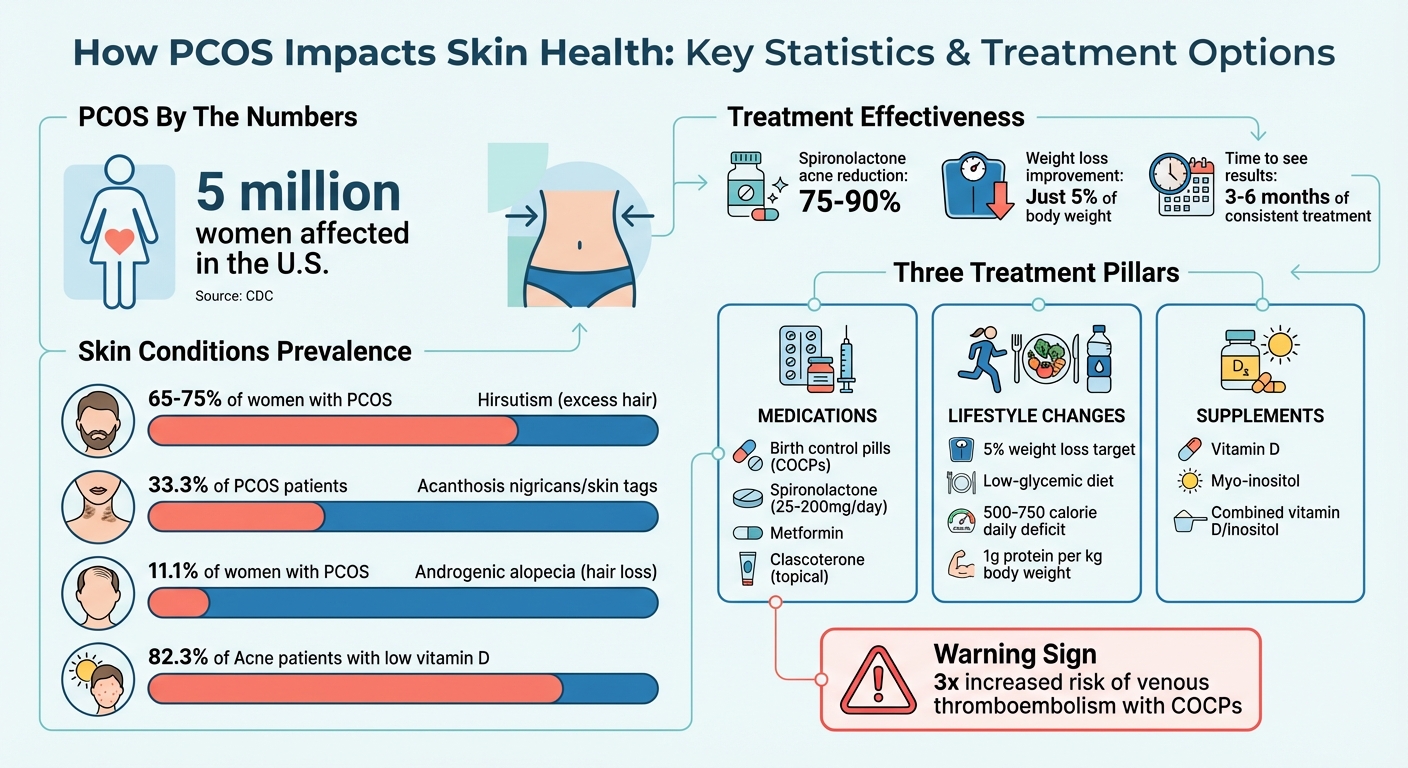
Polycystic Ovary Syndrome (PCOS) is a hormonal disorder affecting around 5 million women in the U.S. It disrupts hormone levels, leading to excess androgens like testosterone, which cause acne, oily skin, and other skin issues. Insulin resistance, common in PCOS, worsens these problems by increasing inflammation and hormone imbalances.
Key points:
- Hormonal acne in PCOS often appears as deep, cystic breakouts on the jawline, chin, and neck.
- Insulin resistance fuels acne by raising androgen levels and skin inflammation.
- Other skin issues include hirsutism (excess hair growth), alopecia (hair thinning), and acanthosis nigricans (dark skin patches).
Treatments:
- Medications: Birth control, spironolactone, metformin, and topical anti-androgens like clascoterone.
- Lifestyle changes: Weight loss (as little as 5%), low-glycemic diets, and supplements like vitamin D and myo-inositol.
- Emerging options: GLP-1 receptor analogues, SGLT2 inhibitors, and combined vitamin D/inositol therapies.
For effective results, treatments often combine hormonal therapies with lifestyle adjustments. Persistent acne might signal underlying PCOS, so consulting a healthcare provider is crucial.
PCOS Skin Conditions and Treatment Statistics
How PCOS Causes Hormonal Acne
High Androgen Levels and Excess Oil Production
PCOS often disrupts hormone levels, leading to elevated testosterone and DHEA, which can cause an overproduction of sebum (oil) and slow down the natural shedding of skin cells. This combination creates a perfect storm for clogged pores and acne outbreaks. Inside the skin's pilosebaceous unit, the enzyme 5α-reductase converts testosterone into DHT, a more potent androgen that further ramps up oil production. Interestingly, only about 1% of testosterone in the body is active, but PCOS-related low levels of SHBG (sex hormone-binding globulin) allow more free testosterone to circulate, amplifying its effects. Additionally, irregular ovulation in PCOS often leads to low progesterone levels, which normally help balance sebum production, making the skin even oilier. On top of all this, insulin resistance adds another layer of complexity by increasing skin inflammation.
Insulin Resistance and Skin Inflammation
Insulin resistance, a common feature of PCOS, exacerbates acne by triggering a hormonal chain reaction. High insulin levels (known as hyperinsulinemia) stimulate the ovaries to produce more androgens while reducing SHBG, which increases free testosterone levels. Elevated insulin also boosts IGF-1 (insulin-like growth factor 1) and activates mTORC1, processes that promote the growth of keratinocytes and sebaceous glands. The result? More clogged pores and inflamed skin. Dermatologist Dr. Sujata Mehta-Ambalal explains:
"Insulin resistance has been recognized as an inflammatory disease, and there is a close relation between inflammatory acne and insulin resistance."
This cascade of events often leads to stubborn cystic acne, a hallmark of PCOS. Encouragingly, research shows that losing just 5% of body weight can significantly improve insulin resistance and reduce acne symptoms.
Other Skin Issues Linked to PCOS
The hormonal imbalances in PCOS don't just cause acne - they can lead to a variety of skin conditions. Many of these fall under the acronym SAHA: Seborrhea, Acne, Hirsutism, and Alopecia.
- Hirsutism, or excessive hair growth in areas like the chin, chest, and back, affects 65–75% of women with PCOS.
- On the flip side, the same androgens that fuel hirsutism can also cause androgenic alopecia (female pattern hair loss), which impacts about 11.1% of women with PCOS.
Another common skin condition is acanthosis nigricans, which appears as dark, velvety patches in areas like the neck, underarms, and groin. High insulin levels stimulate skin cells like keratinocytes and fibroblasts, leading to thickened skin. One study found that 33.3% of PCOS patients showed signs of acanthosis nigricans or skin tags (acrochordons). As Dr. Jacqueline Zuponcic notes:
"Acanthosis nigricans isn't harmful, but it may be a sign that you have insulin resistance."
Women with PCOS may also experience seborrheic dermatitis, a condition that causes an itchy, flaky scalp. This is another result of elevated androgen levels increasing oil production. Dr. Zuponcic explains:
"Higher androgen levels trigger dandruff, which is why you may have this condition if you have PCOS."
These skin conditions are more than just surface-level concerns - they reflect the deeper hormonal and metabolic imbalances associated with PCOS. Addressing these root causes is key to managing the symptoms effectively.
Research-Backed Treatments for PCOS Acne
Medications to Balance Hormones
Doctors often prescribe medications to address the hormonal imbalances that cause PCOS-related acne. Combined oral contraceptives (COCPs) are a common first choice. These pills work by suppressing luteinizing hormone (LH), increasing sex hormone-binding globulin (SHBG), and reducing androgen production in the ovaries. Among the available options, only Ortho Tri-Cyclen, Estrostep, and Yaz are FDA-approved specifically for acne treatment. However, it’s worth noting that COCPs are associated with a threefold increase in the risk of venous thromboembolism.
For more severe cases, spironolactone is often added to the mix. This medication blocks androgen receptors and reduces the activity of 5α-reductase, which helps control acne. It’s typically prescribed in doses ranging from 25–200 mg per day and is often used alongside COCPs. Women taking spironolactone must use reliable contraception, as the drug carries a risk of fetal feminization.
Metformin, another option, targets the insulin resistance frequently seen in PCOS, especially in individuals with impaired glucose tolerance or type 2 diabetes. A newer alternative is clascoterone, which is the first FDA-approved topical anti-androgen. This treatment targets acne directly on the skin while minimizing systemic side effects. Regardless of the approach, hormonal treatments generally take three to six months of consistent use before noticeable improvements occur.
Diet, Exercise, and Supplements
Lifestyle adjustments are key to managing PCOS-related acne. Losing just 5% of body weight can improve insulin sensitivity and lower testosterone levels, which can lead to healthier skin. As researchers Shalini Gainder and Bharti Sharma emphasize:
"Unless metabolic and underlying endocrinal disturbances are corrected and simultaneous life-style modification is adopted, cosmetic treatment would give only temporary relief".
Dietary changes can also play a major role. Avoiding foods with a high glycemic index helps reduce insulin spikes and androgen production. A Western diet high in glycemic load and dairy protein has been linked to overstimulation of the mTORC1 signaling pathway, which promotes oil production in the sebaceous glands. Instead, focusing on fiber-rich and protein-dense foods (around 1 gram of protein per kilogram of body weight) while maintaining a daily caloric deficit of 500–750 calories can help balance hormones.
Vitamin D supplementation is another promising option. Research shows that 82.3% of acne patients have low vitamin D levels. Dr. Sujata Mehta-Ambalal explains:
"The identification of vitamin D receptors in human sebocytes and the modulation of lipid and cytokine production by vitamin D suggests a possible association between vitamin D and acne pathophysiology".
Myo-inositol supplements, which enhance insulin sensitivity, can complement dietary changes to further support hormonal balance. Together, these lifestyle adjustments form a solid foundation for managing PCOS acne.
New Treatment Options from Recent Studies
Recent advancements have introduced additional strategies for tackling PCOS acne. Topical clascoterone, for instance, has emerged as an effective androgen receptor antagonist. This localized treatment minimizes systemic side effects while directly targeting acne.
Other new approaches include insulin-sensitizing medications like GLP-1 receptor analogues and SGLT2 inhibitors, which have shown better results than metformin in promoting weight loss and reducing cardiovascular risks in PCOS patients. Statins, such as atorvastatin, have also demonstrated potential in lowering levels of androstenedione and dehydroepiandrosterone sulfate (DHEAS) in obese women with PCOS. Additionally, combining vitamin D with inositol supplements has been shown to improve insulin signaling, ovulation rates, and overall metabolic health.
Interestingly, recent research suggests that routine potassium monitoring for healthy young women taking spironolactone may not be necessary unless they have specific risk factors for hyperkalemia. This simplifies treatment protocols while maintaining safety.
PCOS Acne Treatment That Actually Works: Hormonal Acne Solutions for Women! | Clear Skin Clinic
sbb-itb-6dba428
How Oana Health Helps Women Manage PCOS and Acne
Oana Health takes the science behind PCOS treatments and transforms it into personalized, accessible care tailored to women’s needs.
Customized Treatments for Hormonal Acne
Oana Health focuses on addressing hormonal imbalances that cause acne with targeted treatments. Licensed providers prescribe spironolactone (starting at $14/month) to reduce oil production and metformin ($22/month for Metformin ER) to tackle insulin resistance. For those needing both, a Metformin & Spironolactone pack is available for $32/month. To see meaningful improvements, consistent use over 3 to 6 months is often recommended.
Research shows that spironolactone, when used as part of a hormonal therapy plan, can result in a 75% to 90% reduction in acne.
Easy Access and Affordable Pricing
Through its telehealth platform, Oana Health offers online consultations and delivers prescriptions straight to your door with free shipping. Treatment plans range from $14 to $199 per month, making science-backed PCOS care both accessible and budget-friendly.
Science-Based Care from Licensed Professionals
Oana Health’s treatment plans are grounded in the latest PCOS research and crafted by licensed clinicians. They evaluate symptoms like seborrhea, acne, hirsutism, and hair loss - key aspects of what’s often referred to as SAHA syndrome. These plans are then tailored to each person’s specific PCOS profile, whether it involves hyperandrogenism, ovulatory dysfunction, or polycystic ovarian morphology.
Recognizing that lifestyle changes can complement medical therapies, Oana Health emphasizes the importance of weight management. For instance, losing just 5% of body weight can significantly lower insulin resistance and testosterone levels. Providers often suggest combining hormonal treatments with topical options like benzoyl peroxide or retinoids for better results, rather than relying solely on medication. This comprehensive, research-driven approach underscores the importance of targeted hormonal therapy in effectively managing PCOS and acne, offering a well-rounded path to care.
Conclusion: Treating PCOS for Clearer Skin
Key Takeaways
PCOS-related acne is deeply rooted in hormonal imbalances. These imbalances lead to increased sebum production and a cycle of hormonal disruptions. This explains why typical acne treatments often fail - they only address surface-level symptoms, not the hormonal causes at play.
Targeted treatments like combined oral contraceptives and anti-androgen medications tackle these imbalances directly. For instance, oral contraceptives increase sex hormone–binding globulin (SHBG), which binds free testosterone, while anti-androgen medications such as spironolactone block androgen receptors. Addressing insulin resistance is another critical step. Medications like metformin or even modest weight loss (as little as 5% of your body weight) can help lower insulin and testosterone levels. Combining hormonal treatments with topical therapies often delivers the best results.
"Effective therapies are available to help you look and feel your best." – Dr. Jacqueline Zuponcic, DO, Ob/Gyn
These insights emphasize the importance of a well-rounded, tailored approach to treatment.
Steps to Take If You Have PCOS Acne
If standard acne treatments aren’t working, it might be time to dig deeper. Persistent breakouts can be a sign of underlying PCOS, especially in cases of severe or treatment-resistant acne. A hormonal evaluation can provide clarity - testing for markers like total/free testosterone and DHEAS can reveal if hormonal imbalances are driving your acne.
Seek out healthcare providers who understand the complexity of PCOS and offer comprehensive care. Personalized treatment plans, like those provided by Oana Health, are based on thorough hormonal evaluations. Starting at just $14/month, Oana Health connects you with licensed clinicians who develop science-backed, tailored treatment plans to address your unique needs. Keep in mind, hormonal treatments typically take 3–6 months to show noticeable improvements.
FAQs
What role does insulin resistance play in causing hormonal acne with PCOS?
Insulin resistance plays a major role in hormonal acne, especially for individuals with PCOS. When the body doesn’t respond effectively to insulin, it can lead to an overproduction of androgens - hormones typically associated with male characteristics. These elevated androgen levels rev up the sebaceous glands, resulting in excess oil that clogs pores and sets the stage for acne flare-ups.
Addressing insulin resistance through lifestyle adjustments, medications, or specific treatments can help manage acne and promote healthier skin. For those dealing with PCOS-related acne, seeking personalized advice from healthcare professionals can make a real difference.
What are some effective lifestyle changes to manage hormonal acne caused by PCOS?
Managing hormonal acne tied to PCOS often begins with a few lifestyle changes aimed at supporting hormonal balance. A diet rich in whole foods, with limited processed items and refined sugars, can play a big role in improving insulin sensitivity and reducing oil production that triggers acne. Adding regular physical activity into your routine can also help with weight management and promote steadier hormone levels.
Stress management is another key piece of the puzzle. Practices like mindfulness, meditation, or simply prioritizing quality sleep can have a positive impact on hormone regulation. When it comes to skincare, stick to gentle, non-comedogenic products to avoid irritating your skin or clogging pores. For those looking for more targeted solutions, consulting a healthcare provider - such as the experts at Oana Health - can provide guidance tailored to hormonal imbalances and PCOS-related skin concerns.
By focusing on balanced nutrition, staying active, managing stress, and using the right skincare products, you can take practical steps to address PCOS-related acne and improve your skin health.
What are the latest treatments for managing PCOS-related acne?
Recent progress in treating PCOS has shed light on the role of hormonal therapies in managing acne linked to hormonal imbalances. A notable example is the use of combined oral contraceptives containing ethinyl estradiol and drospirenone, which have been effective in reducing acne symptoms. These medications help regulate hormone levels, leading to fewer breakouts over time.
However, it's crucial to work closely with a licensed healthcare provider to find the most suitable treatment for your individual needs. Tailored care ensures that the approach is both safe and effective for your specific situation.