
Top 7 Benefits of Low-Glycemic Diets for PCOS Management
A low-glycemic (low-GI) diet can be a game-changer for managing PCOS symptoms. It helps stabilize blood sugar, improve insulin sensitivity, and regulate hormones, addressing the root causes of PCOS. Studies show it can reduce androgen levels, support weight loss, improve menstrual cycles, and even tackle inflammation. Here's a quick overview of the benefits:
- Improves Insulin Sensitivity: Reduces insulin resistance, a key driver of PCOS.
- Lowers Androgen Levels: Helps decrease testosterone, reducing acne and unwanted hair growth.
- Supports Weight Loss: Encourages steady weight loss and reduces abdominal fat.
- Regulates Menstrual Cycles: Promotes ovulation and cycle regularity.
- Reduces Inflammation: Lowers markers of chronic inflammation tied to PCOS.
- Improves Skin and Hair: Reduces acne and hair thinning while boosting skin health.
- Enhances Quality of Life: Alleviates physical and emotional challenges of PCOS.
Combining a low-GI diet with medical treatments like metformin can further amplify these effects. Simple food swaps - like replacing refined carbs with whole grains and incorporating legumes, non-starchy vegetables, and low-GI fruits - can make a big difference. Start small, stay consistent, and work with a healthcare provider for the best results.
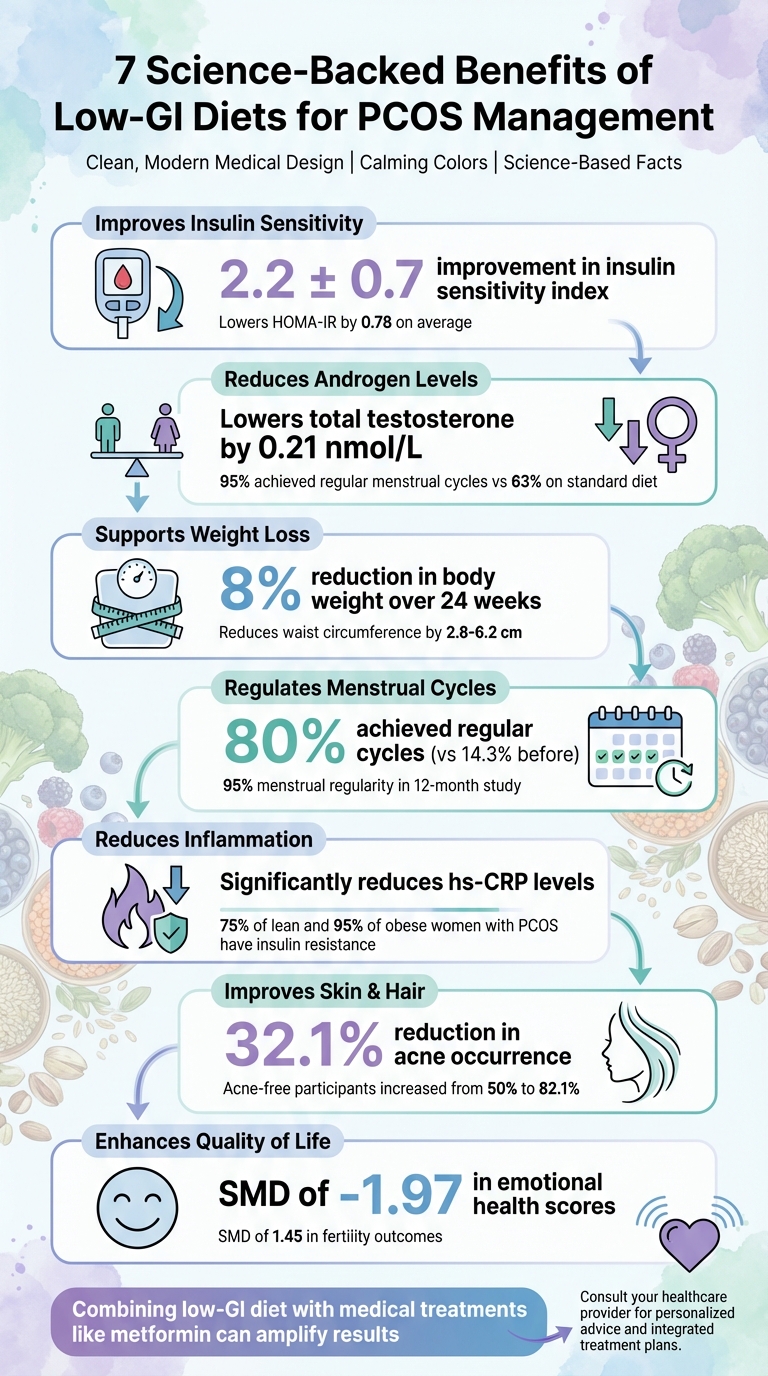
7 Science-Backed Benefits of Low-GI Diets for PCOS Management
1. Improves Insulin Sensitivity
Scientific Evidence Supporting the Benefit
A 12-month randomized trial conducted at the University of Sydney highlighted the impact of a low-GI diet on insulin sensitivity in women with PCOS. Led by researcher Kate Marsh, the study involved 96 overweight and obese women. The results were striking: the group following a low-GI diet showed a 2.2 ± 0.7 improvement in their insulin sensitivity index (ISI), compared to just 0.7 ± 0.6 in the group on a conventional healthy diet. The researchers emphasized:
"To the best of our knowledge, this study provides the first objective evidence to justify the use of low-GI diets in the management of PCOS."
Further evidence comes from meta-analyses of multiple randomized controlled trials, which reveal that low-GI diets can lower HOMA-IR (a marker of insulin resistance) by an average of 0.78 and reduce fasting insulin levels by 2.39 μIU/mL. In another study from 2013, led by S. Barr, 21 women (average age 32.1) participated in a 12-week isocaloric low-GI intervention. These women maintained their calorie intake but switched to lower-GI foods, reducing their dietary glycemic index from 54.5 to 48.6. This change significantly improved their insulin sensitivity, even without weight loss.
These findings highlight how low-GI diets can enhance insulin sensitivity, creating a foundation for better hormonal balance.
Impact on Hormonal Balance and Metabolic Health
For women with PCOS, better insulin sensitivity translates to lower androgen production. Here’s why: when cells respond effectively to insulin, the pancreas doesn’t need to overproduce it. This is crucial because elevated insulin levels drive the ovaries to produce excess androgens, such as testosterone. Additionally, lower insulin levels prompt the liver to produce more Sex Hormone-Binding Globulin (SHBG), a protein that binds to testosterone, reducing the amount of free testosterone in the bloodstream.
Low-GI diets have been shown to lower total testosterone levels by 0.21 nmol/L and reduce waist circumference by 2.81 cm, further demonstrating their role in hormonal regulation. When combined with metformin, these diets can enhance insulin sensitivity even more effectively.
2. Reduces Androgen Levels
Scientific Evidence Supporting the Benefit
Excess testosterone is a key driver behind many PCOS symptoms, and research shows that low-glycemic index (low-GI) diets can help restore hormonal balance. A 2021 meta-analysis of eight studies involving 412 participants revealed that low-GI diets significantly lowered total testosterone levels, with a standardized mean difference (SMD) of -0.52. In another 24-week study, women with PCOS who followed an energy-restricted low-GI diet saw their testosterone levels drop by 0.91 ± 0.33 nmol/L, while their free androgen index (FAI) decreased by 4.47. Additionally, their sex hormone-binding globulin (SHBG) levels increased by 38.98 nmol/L. Since higher SHBG levels reduce free testosterone, these changes collectively lower the amount of active androgens in the bloodstream, paving the way for broader hormonal improvements.
Impact on Hormonal Balance and Metabolic Health
High-glycemic foods cause insulin spikes, which prompt the ovaries to produce excess androgens, disrupting hormonal balance in PCOS. Low-GI diets help counter this by stabilizing insulin levels. With less insulin circulating, the ovaries reduce their testosterone production.
Relevance to Common PCOS Challenges
Lowering androgen levels can lead to noticeable relief from some of the most frustrating PCOS symptoms. For example, women with PCOS reported a 32.1% drop in acne occurrence, and issues like hirsutism also improved, as shown by an SMD of -0.40 compared to control groups. Even more encouraging, 95% of women on a low-GI diet achieved regular menstrual cycles, compared to just 63% following a conventional healthy diet. By reducing androgen levels, ovarian follicles can mature properly, allowing ovulation to occur as it should.
3. Supports Weight Loss and Body Composition
Scientific Evidence Supporting the Benefit
Weight management can be particularly challenging for women with PCOS. A 24-week study involving 28 women with PCOS revealed that following an energy-restricted, low-GI diet led to an 8% reduction in body weight. During the study, participants' BMI dropped from 31 kg/m² to 28.54 kg/m², showing similar progress to those without PCOS. These results highlight how such dietary adjustments can positively influence metabolic function.
Meta-analyses also show that low-GI diets reduce waist circumference by 2.8 to 6.2 cm. Additionally, a review of eight randomized controlled trials found that these diets helped participants lose an average of 2.90 kg of total body fat. For women with PCOS, these reductions in abdominal fat are crucial, as excess belly fat is often linked to insulin resistance and hormonal imbalances.
Impact on Hormonal Balance and Metabolic Health
Low-GI diets work by slowing the absorption of carbohydrates, which helps regulate insulin levels and prevents the sharp spikes that encourage fat storage. Lower insulin resistance can also lead to reduced androgen production and higher levels of sex hormone-binding globulin, which together improve metabolic health. These metabolic improvements complement the hormonal benefits already discussed.
Relevance to Common PCOS Challenges
Better body composition doesn't just improve metabolic health - it also helps ease key PCOS symptoms. Low-GI diets can enhance feelings of fullness and make it easier to manage appetite, addressing common issues like emotional eating. A diet rich in whole grains, lean proteins, low-fat dairy, and non-starchy vegetables, while cutting back on refined sugars and fast food, can be paired with a daily 500-calorie deficit to achieve a steady weight loss of about 1 lb per week.
PCOS: Low GI diet
4. Regulates Menstrual Cycles
Low-GI diets do more than improve insulin sensitivity and reduce androgen levels - they also help regulate menstrual cycles, a crucial benefit for women managing PCOS.
Scientific Evidence Supporting the Benefit
Irregular menstrual cycles are a common struggle for women with PCOS. Research suggests that low-glycemic index (low-GI) diets can significantly aid in restoring cycle regularity. For instance, a 24-week study conducted at Shahid Beheshti University of Medical Sciences revealed that 80% of women with PCOS achieved regular menstrual cycles after following an energy-restricted low-GI diet, compared to just 14.3% before starting the diet. Similarly, a 12-month study from the University of Sydney, led by researchers K.A. Marsh and J.C. Brand-Miller, found that 95% of women on a low-GI diet experienced improved menstrual regularity, compared to 63% of those on a standard healthy diet. These findings highlight how a low-GI diet can create the right conditions for consistent ovulation.
Impact on Hormonal Balance and Metabolic Health
The link between diet and menstrual regularity largely comes down to insulin's role in hormone regulation. High-GI foods cause blood sugar spikes, leading to insulin surges. For women with PCOS, this can trigger the ovaries to produce excess testosterone and other androgens while lowering levels of sex hormone-binding globulin (SHBG). On the other hand, low-GI diets keep insulin levels steady, which helps reduce androgen production and increases SHBG. This hormonal shift supports normal ovulation. Additionally, balanced insulin levels help regulate luteinizing hormone (LH) pulsatility, which is essential for proper follicular development and ovulation.
Relevance to Common PCOS Challenges
By rebalancing hormones, a low-GI diet not only improves menstrual regularity but also helps alleviate other PCOS symptoms like acne and hirsutism. To maximize these benefits, it's best to combine a low-GI diet with other treatments recommended by a healthcare provider.
5. Reduces Inflammation
Chronic low-grade inflammation plays a major role in worsening PCOS symptoms, creating a feedback loop with insulin resistance that can be tough to break. High-GI foods contribute to this problem by causing rapid blood sugar spikes, which fuel systemic inflammation. On the other hand, low-GI diets slow carbohydrate absorption, helping to manage both blood sugar levels and inflammation.
Scientific Evidence Supporting the Benefit
Research backs up the anti-inflammatory effects of low-GI diets. For instance, Asemi et al. (2014) found that following a DASH-style (low-GI) diet for three months significantly reduced hs-CRP levels while boosting antioxidant capacity in overweight and obese women with PCOS. Another study from the University of Sydney showed that over 12 months, low-GI diets were more effective in lowering serum fibrinogen levels compared to standard healthy diets.
"Low-grade inflammation, oxidative stress (OS), insulin resistance (IR), and hyperandrogenism form a vicious cycle that constitutes the basic underlying pathophysiological mechanism in PCOS." - Aspasia Manta et al., Endocrine Unit, Attikon University Hospital
By reducing inflammation, low-GI diets help address the hormonal imbalances that drive PCOS.
Impact on Hormonal Balance and Metabolic Health
Inflammation is a key driver of excess androgen production, which worsens many PCOS symptoms. Stabilizing blood sugar through a low-GI diet disrupts this cycle, limiting inflammatory responses. This is especially critical since insulin resistance affects a staggering 75% of lean women and 95% of obese women with PCOS. Lowering inflammation not only reduces androgen levels but also helps improve skin-related issues like acne.
Relevance to Common PCOS Challenges
The benefits of low-GI diets extend to tackling everyday PCOS challenges. A 24-week study conducted at the Reproductive Endocrinology Research Center in Tehran observed that women with PCOS who followed an energy-restricted low-GI diet saw acne occurrence drop by 32.1%. Pairing low-GI foods with high-protein options seems to amplify these effects, leading to a greater reduction in hs-CRP levels compared to standard calorie-restricted diets.
sbb-itb-6dba428
6. Improves PCOS Skin and Hair Symptoms
Acne, unwanted facial hair, and thinning hair are common struggles for women with PCOS, often linked to elevated androgen levels driven by insulin resistance. High-glycemic foods can spike blood sugar and insulin levels, worsening this hormonal imbalance. This, in turn, affects skin health and hair quality. Tackling insulin resistance and androgen levels through diet offers a more holistic way to manage PCOS symptoms.
Scientific Evidence Supporting the Benefit
Research highlights how a low-glycemic index (low-GI) diet can significantly improve skin and hair symptoms in women with PCOS. In a 24-week study, participants who followed an energy-restricted low-GI diet saw a 32.1% reduction in acne, with the percentage of acne-free participants climbing from 50% to 82.1%. Additionally, hirsutism, measured by the Ferriman-Gallwey scale, showed a notable improvement as scores dropped from 7.89 to 6.62. A meta-analysis further confirmed that women on low-GI diets had significantly lower body hair scores compared to those in control groups.
Impact on Hormonal Balance and Metabolic Health
Low-GI diets work by stabilizing blood sugar and reducing insulin surges, addressing the root hormonal imbalances behind PCOS-related skin and hair issues. In the same trial, levels of Sex Hormone Binding Globulin (SHBG) more than doubled, while total testosterone levels significantly decreased. These changes help reduce sebum production and unwanted hair growth by binding free testosterone and lowering Insulin-like Growth Factor 1 (IGF-1), which is known to drive oil production. These shifts not only improve physical symptoms but also contribute to better overall quality of life.
Relevance to Common PCOS Challenges
For many women, dealing with acne and unwanted facial hair can feel like a daily battle. Dietary changes can make a meaningful difference. Amanda Stathos, M.S., R.D., L.D.N., from Johns Hopkins' Sibley Memorial Hospital, emphasizes:
"Substituting whole, unprocessed options for inflammatory items can set the stage for better long-term health".
Simple swaps like replacing refined carbs (white bread, sugary cereals) with whole grains (barley, brown rice), loading up on non-starchy vegetables (leafy greens, broccoli, cauliflower), and incorporating omega-3 rich fish like salmon or plant-based proteins can help reduce inflammation.
For additional support, prescription treatments such as Spironolactone, Topical Spironolactone, and Oral Minoxidil are available to manage symptoms like unwanted hair. When paired with a low-GI diet, these strategies work together to address the insulin and androgen imbalances at the heart of PCOS symptoms.
7. Improves Overall Quality of Life
Living with PCOS often means dealing with frustrating challenges like irregular periods, fertility struggles, acne, unwanted hair growth, and emotional ups and downs. But here's some good news: a low-glycemic (low-GI) diet can play a key role in managing these symptoms, helping improve both physical health and emotional well-being. By promoting better metabolic and hormonal balance, this approach can significantly enhance overall quality of life.
Scientific Evidence That Backs It Up
Science supports the benefits of a low-GI diet for women with PCOS. For instance, a meta-analysis revealed notable improvements in emotional health scores among women following this type of diet, with a standardized mean difference (SMD) of -1.97. Beyond emotional health, physical symptoms like body hair growth also showed improvement (SMD: -0.40), and fertility outcomes improved significantly as well (SMD: 1.45).
Addressing Key PCOS Symptoms
So, how does a low-GI diet help? By stabilizing blood sugar levels and reducing insulin spikes, it helps break the cycle of insulin resistance and high androgen levels - two major culprits behind PCOS symptoms. These improvements don’t just stop at symptom relief; they also lower the risk of long-term health issues like Type 2 diabetes and heart disease. It’s a domino effect of positive changes.
Amanda Stathos, M.S., R.D., L.D.N., from Johns Hopkins' Sibley Memorial Hospital, sums it up perfectly:
"If you are diagnosed with polycystic ovary syndrome, it doesn't mean that you are destined to have poor health. There is a lot you can do to take charge, minimize symptoms and keep yourself healthy."
For those looking for a more comprehensive approach to managing PCOS, Oana Health offers personalized treatments tailored to tackle insulin resistance, hormonal imbalances, and related symptoms. Their prescription-based solutions are conveniently delivered straight to your door, complete with free shipping.
Combining Low-GI Diets with PCOS Treatments
Bringing together dietary strategies and medical treatments can significantly improve how PCOS is managed. By addressing both metabolic and hormonal imbalances, this combination offers a more comprehensive approach. Research shows that women who combine a low-GI diet with medications report better results than those relying solely on one method. This opens the door to understanding how specific treatments can amplify the benefits of a low-GI diet.
Take Metformin, for example. Pairing this medication with a low-GI diet tackles insulin resistance from two angles: improving how cells respond to insulin and reducing the body's overall insulin demand. A study published in The American Journal of Clinical Nutrition highlights this synergy:
"There was a significant diet-metformin interaction (P = 0.048), with greater improvement in ISI(OGTT) among women prescribed both metformin and the low-GI diet."
- Marsh et al.
This dual approach is particularly effective against the high levels of insulin resistance commonly seen in women with PCOS. Other medications, like Spironolactone, also complement a low-GI diet. While the diet helps reduce androgen levels, Spironolactone works to block the effects of androgens, offering relief from symptoms.
Personalized care plays a crucial role here. Services like Oana Health provide telehealth options that integrate dietary guidance with medical treatments. Licensed professionals offer prescriptions and deliver them straight to your door, making it easier to combine dietary changes with professional medical advice for a well-rounded approach to PCOS management.
The takeaway? You don’t have to choose between diet and medication. Use them together. Incorporating high-fiber, low-GI foods alongside prescribed treatments can improve both metabolic and reproductive health.
Low-GI Food Examples
Choosing low-GI foods plays an important role in managing PCOS. Here's a breakdown of some excellent options, their GI ranges, and how they help with PCOS management:
| Food Category | Specific Low-GI Foods | GI Range | How It Helps with PCOS |
|---|---|---|---|
| Legumes & Pulses | Lentils, chickpeas, black beans, kidney beans | 20–35 | Packed with fiber and protein, these improve insulin sensitivity and support weight management. |
| Whole Grains | Steel-cut oats, barley, quinoa, buckwheat | 45–55 | Help slow glucose absorption, minimizing insulin spikes that can lead to increased androgen production. |
| Non-Starchy Vegetables | Broccoli, spinach, kale, cauliflower, peppers | <15 | Loaded with antioxidants and fiber, they combat chronic inflammation and oxidative stress. |
| Fruits | Berries (strawberries, blueberries), apples, pears | 38–50 | Provide essential vitamins and fiber while helping regulate blood sugar after meals. |
| Nuts & Seeds | Walnuts, flaxseeds, chia seeds, almonds | 0–20 | Rich in healthy fats (like PUFAs), they aid in balancing hormones and improving glucose levels. |
To incorporate these foods into your routine, start by swapping refined grains for low-GI options. For instance, replace white bread and rice with steel-cut oats, barley, or quinoa to better manage blood sugar and insulin spikes. Fill half your plate with non-starchy vegetables like leafy greens, broccoli, or peppers to increase fiber intake and slow carbohydrate absorption.
Adding legumes such as lentils, chickpeas, or beans to your meals several times a week can also make a big difference. Diets rich in pulses are linked to improved cardio-metabolic health in people with PCOS.
Finally, when it comes to fruits, choose options like berries or apples instead of high-sugar tropical varieties. These choices help maintain steady blood sugar levels and support better hormonal balance.
Conclusion
A low-GI diet provides a range of benefits for managing PCOS, including improved insulin sensitivity, reduced androgen levels, better weight control, more regular menstrual cycles, decreased inflammation, and clearer skin and hair. Perhaps most importantly, it can contribute to an overall better quality of life. Clinical studies back this up: 80% of women on a 24-week energy-restricted low-GI diet reported regular menstrual cycles, and acne occurrence dropped by 32.1%. These results highlight the real potential of dietary changes.
However, diet alone isn't always enough. Research strongly supports a comprehensive approach that includes diet, lifestyle adjustments, and targeted medical treatments. According to the Fertility, Infertility, and Perinatology Research Center:
"Evidence supports a multifactorial approach, including any combination of one or more of the interventions such as diet and lifestyle management, use of pharmaceuticals (oral contraceptives and cyclic progestins, antiestrogens, gonadotropins, and insulin sensitizers), and surgery".
For example, combining a low-GI diet with medications like metformin has been shown to significantly improve insulin sensitivity compared to using either approach on its own. This underscores the importance of an integrated treatment plan tailored to individual needs.
Long-term relief from PCOS often requires pairing dietary changes with personalized medical treatments. These may include insulin sensitizers such as metformin, anti-androgens like spironolactone, or other therapies based on your specific symptoms and needs.
If you're looking for tailored PCOS care, Oana Health offers telehealth services that deliver prescription treatments directly to your door. Their licensed medical professionals can provide solutions for insulin resistance, weight management, acne, hair loss, and unwanted facial hair - all with free shipping. Whether you need metformin for insulin resistance, spironolactone for hormonal balance, or weight management support, combining these treatments with a low-GI diet can help you achieve the best possible outcomes.
FAQs
How can a low-glycemic diet help manage PCOS symptoms?
A low-glycemic diet can be a powerful tool for managing PCOS symptoms. By improving insulin sensitivity and reducing insulin resistance, it helps bring down excess androgen levels. This, in turn, can ease symptoms such as irregular periods, acne, and unwanted hair growth.
Beyond hormone regulation, keeping blood sugar levels steady can curb cravings, support gradual and healthy weight loss, and even have a positive impact on mood. Altogether, these benefits make a low-glycemic diet a natural and effective option for women looking to manage PCOS symptoms and enhance their overall well-being.
Can a low-glycemic diet be combined with other treatments to manage PCOS more effectively?
Combining a low-glycemic diet with other treatments for PCOS, including prescribed therapies, can lead to better outcomes. This combination may support improved insulin sensitivity, help regulate hormones, and ease symptoms like acne, hair thinning, and excessive facial hair.
Pairing a low-GI diet with tailored medical treatments offers a more well-rounded approach to managing PCOS and boosting overall health.
What are some easy-to-add low-glycemic foods for managing PCOS symptoms?
Incorporating low-glycemic (low-GI) foods into your meals can be a practical way to manage PCOS symptoms. Some excellent choices include non-starchy vegetables like broccoli, spinach, and kale; whole grains such as oatmeal, brown rice, and quinoa; and legumes like chickpeas and lentils. When it comes to fruits, stick with low-GI options like berries, apples, or pears.
These foods not only help keep blood sugar levels steady but also play a role in supporting hormone balance. A simple way to start is by replacing high-GI foods with these nutrient-packed alternatives, setting the stage for a healthier, PCOS-friendly diet.