
PCOS and Metformin: Who Should Avoid It?
Metformin is a common treatment for PCOS, but it's not suitable for everyone. While it helps manage insulin resistance - a key issue in PCOS - it can pose risks for individuals with specific health conditions. Here's what you need to know:
-
Avoid Metformin if you have:
- Severe kidney issues (eGFR < 30 mL/min)
- Advanced liver disease
- Congestive heart failure
- A history of lactic acidosis or metabolic acidosis
- Type 1 diabetes (not the primary treatment)
- Allergies to Metformin
-
Potential side effects:
- Common: Nausea, diarrhea, bloating (affects ~25%)
- Rare but serious: Lactic acidosis (6.3 cases per 100,000 patient years)
- Long-term use: Vitamin B12 deficiency (may cause numbness, memory issues)
-
Safe during pregnancy and breastfeeding:
- Helps with fertility and ovulation
- Minimal transfer into breast milk
If Metformin isn't an option, alternatives like Spironolactone, GLP-1 medications, and lifestyle changes can help manage symptoms. Always consult your healthcare provider for a tailored treatment plan.
Metformin for PCOS (what it does & natural treatment options)
Who Should Avoid Metformin for PCOS?
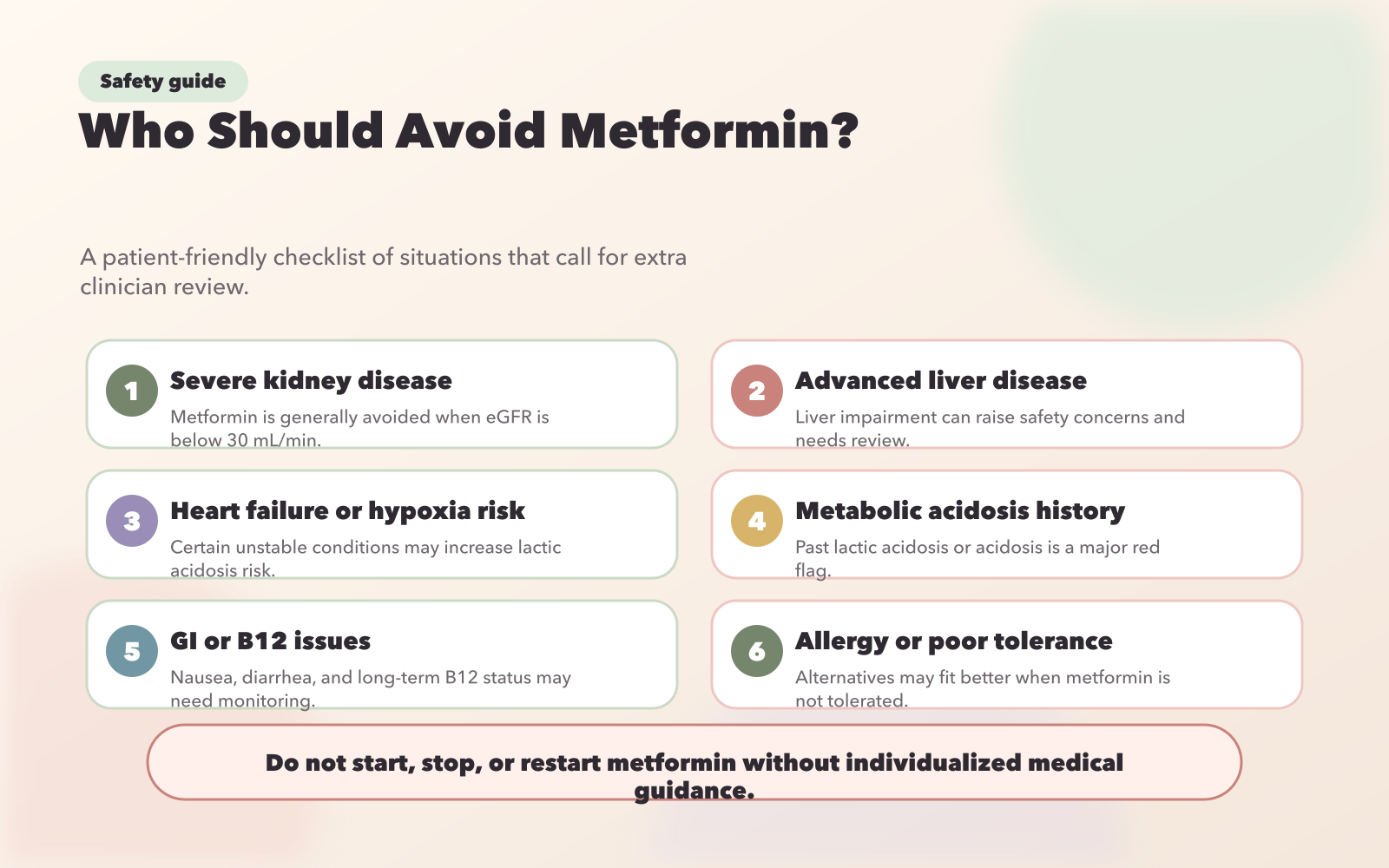
Who Should Avoid Metformin for PCOS: Contraindications and Side Effects Guide
Metformin can be a helpful treatment for many people with PCOS, but it’s not suitable for everyone. Certain medical conditions and risk factors make its use unsafe, so understanding these limitations is essential before starting therapy.
Medical Conditions That Rule Out Metformin
The most critical condition to consider is kidney disease. Since Metformin is processed and eliminated through the kidneys, severe kidney impairment can prevent proper clearance of the drug. If someone’s eGFR (estimated glomerular filtration rate) is below 30 mL/minute, indicating stage 4 kidney disease, Metformin use is not safe. Improper elimination of the drug could lead to a dangerous buildup in the body, potentially causing life-threatening lactic acidosis.
Advanced liver cirrhosis is another condition that excludes Metformin use. While the medication can benefit some liver-related issues, severe cirrhosis increases the chance of low blood oxygen levels, which may trigger lactic acidosis. Similarly, individuals with congestive heart failure (CHF) face elevated risks, as CHF often leads to kidney dysfunction.
Other absolute contraindications include:
- Metabolic acidosis, including a history of lactic acidosis
- Known allergies to Metformin, which can result in severe skin reactions or respiratory issues
- Type 1 diabetes, as Metformin is not the primary treatment for this condition and may negatively affect blood sugar control
In addition to these contraindications, potential side effects of Metformin also require careful evaluation.
Side Effects and Risk Factors
The most common side effects of Metformin are gastrointestinal in nature. Roughly 25% of women taking the drug experience issues like nausea, diarrhea, bloating, and stomach pain. According to Flo Health’s lead medical advisor, Irina Ilyich:
"Metformin is a relatively safe drug for PCOS. The main adverse effects that may occur while taking metformin for PCOS include various gastrointestinal symptoms".
A rare but serious concern is lactic acidosis, with an occurrence rate of 6.3 cases per 100,000 patient years. However, researcher Robert Misbin clarifies:
"When metformin is used as labeled, the increased risk of lactic acidosis is either zero or so close to zero that it cannot be factored into ordinary clinical decision-making".
Patients with kidney problems face a much higher risk of this condition. Warning signs include shallow or rapid breathing, muscle pain, extreme fatigue, and abdominal discomfort.
Long-term use of Metformin, especially for four years or more, can lead to Vitamin B12 deficiency. This can cause symptoms like neuropathy, numbness, tingling, and even memory problems. Diana Isaacs, PharmD, from Cleveland Clinic, explains:
"If you don't have enough vitamin B12, that can lead to neuropathy, or the numbness and tingling of your hands and feet and can even cause memory problems".
To prevent this, patients on prolonged Metformin therapy should have their B12 levels checked annually.
To reduce side effects, it’s best to start with a low dose (such as 500mg once daily) and gradually increase it. Taking the medication with meals can also help minimize stomach upset. If the standard tablets cause severe gastrointestinal problems, extended-release (XR) versions may be a better option. Additionally, if you experience severe vomiting or diarrhea lasting more than 24 hours, use backup contraception, as Metformin and birth control pills may not be fully absorbed during this time.
Metformin During Pregnancy and Breastfeeding
Although Metformin has its risks, it’s generally considered safe during pregnancy and breastfeeding. According to the NHS:
"Metformin is safe to take during pregnancy, either alone or combined with insulin".
Many individuals with PCOS take Metformin to improve fertility, as it can help induce ovulation. Studies show it induces ovulation in approximately 46% of women with PCOS who were previously unable to ovulate.
Metformin also passes into breast milk in very small amounts, but the NHS reassures:
"Metformin passes into breast milk in tiny amounts and has not been linked with side effects in any breastfed babies".
If your baby is healthy, you can generally continue Metformin while breastfeeding. However, keep an eye out for unusual symptoms in your baby, such as excessive sleepiness, poor feeding, irritability, paleness, sweating, or increased urination.
If you’re planning to conceive, are pregnant, or are breastfeeding while on Metformin, let your healthcare provider know right away. They might adjust your dosage or monitoring schedule to ensure safety. Avoid natural supplements like berberine during pregnancy, as these are not recommended during this time.
Treatment Alternatives for PCOS Patients
When Metformin isn’t a suitable option due to medical concerns, there are other ways to manage PCOS symptoms effectively. The goal is to find a treatment plan that fits your specific needs, whether that’s addressing hormonal imbalances, managing weight, or regulating your menstrual cycle.
Lifestyle Changes and Natural Methods
Managing weight and insulin resistance plays a crucial role in controlling PCOS symptoms. Aiming for a BMI between 20 and 25 kg/m² can naturally help restore regular ovulation. A diet rich in whole foods - like wholegrain cereals, brown rice, and wholemeal bread - and at least five servings of fruits and vegetables daily is highly recommended. Regular physical activity not only improves insulin sensitivity but also lowers cholesterol levels, which can reduce the risk of heart disease. When combined with medical treatments, these lifestyle changes can lower diabetes risk even more than the 31% reduction achieved with medication alone. For tailored nutrition advice, consider consulting a dietitian who specializes in PCOS management.
Other Prescription Medications
If Metformin isn’t an option, several other medications can help manage PCOS symptoms:
- Spironolactone: This anti-androgen medication reduces testosterone levels and inflammation, which can help with issues like acne and unwanted hair growth. In fact, Spironolactone may be more effective than Metformin for managing hirsutism. Oana Health offers Spironolactone starting at $14 per month.
- GLP-1 receptor agonists: Medications like Semaglutide and Liraglutide are highly effective for weight loss and improving insulin sensitivity. They mimic gut hormones, slowing stomach emptying and signaling fullness to the brain [14,15]. Though these can be costly - up to $1,500 per month without insurance - Oana Health provides oral Semaglutide GLP-1 for $199 per month, making it more accessible.
- Naltrexone: This medication can reduce insulin levels and curb sugar cravings. Studies have shown a 40% reduction in fasting insulin levels after 12 weeks at a daily dose of 75 mg.
- Bioidentical progesterone: Useful for regulating menstrual cycles.
- SGLT-2 inhibitors: Medications like Jardiance can help manage blood sugar levels [14,15].
For those looking to conceive, fertility medications such as clomifene or letrozole can stimulate ovulation.
Telehealth Options for PCOS Care
Telehealth services now make it easier than ever to access personalized treatments for PCOS. Oana Health focuses on science-backed, individualized care. Their licensed medical professionals review your health history and prescribe treatments tailored to your needs, delivered straight to your home with free shipping.
Whether you’re looking for topical treatments for hair loss, medications for unwanted facial hair, or advanced insulin sensitizers, these services simplify access to the care you need.
sbb-itb-6dba428
Why Personalized Care Matters for PCOS
Why Generic Treatments Don't Work for PCOS
PCOS manifests differently in every woman, making one-size-fits-all treatments largely ineffective. For instance, even women with a lean body type can experience insulin resistance, a hallmark of PCOS for many. Medications like Metformin work best when a clear link to metabolic issues or insulin resistance exists. However, for women with normal glucose levels, the benefits may be minimal. Beyond being less effective for some, generic treatments can pose risks - Metformin, for example, is not safe for individuals with severe kidney problems, active liver disease, or heart failure. On top of that, lifestyle factors such as chronic stress or lack of sleep can interfere with medical treatments. Elevated insulin levels can stimulate the ovaries to produce extra testosterone, which worsens symptoms like irregular periods, acne, and excessive hair growth. Breaking this cycle requires a treatment plan tailored to your unique hormonal profile, lifestyle, and personal health goals.
Custom solutions are key to managing these complexities effectively.
How Oana Health Treats PCOS
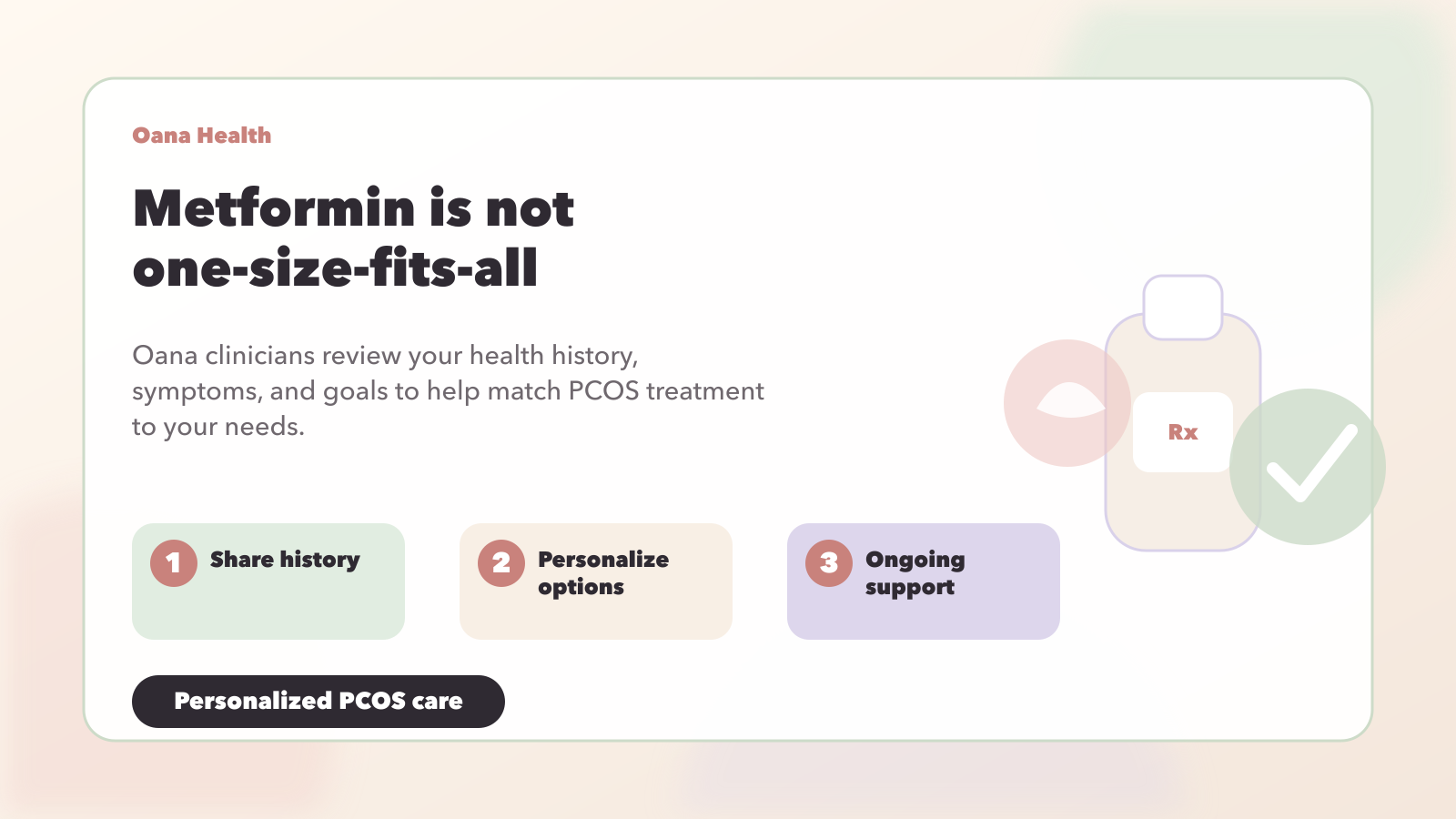
Understanding the intricate nature of PCOS, personalized care becomes essential. Oana Health provides a tailored, evidence-based approach to PCOS management through its telehealth platform. Their licensed professionals carefully review your medical history to design treatments that address specific issues such as insulin resistance, irregular cycles, hair loss, or acne.
Treatment options include:
- Oral Metformin ER: Priced at $22/month.
- Metformin & Spironolactone combination: Available for $32/month.
- Oral GLP-1 & Metformin: Designed for advanced insulin sensitization, this option costs $199/month - far more affordable than traditional GLP-1 treatments, which can reach up to $1,500 per month without insurance.
All medications are delivered directly to your doorstep with free shipping, ensuring your care is convenient and continuously optimized.
Conclusion: Finding the Right PCOS Treatment
Key Takeaways
Metformin isn't the right choice for everyone dealing with PCOS. Women with severe kidney or liver issues should avoid it altogether. Even for those who can take it, side effects can be challenging - over 50% report diarrhea, and about 5% stop using it entirely because of these issues. It's important to remember that PCOS affects each person differently.
The best treatment is one that aligns with your specific symptoms. Whether you're tackling irregular periods, fertility challenges, unwanted hair growth, or insulin resistance, your plan should reflect your personal goals. For instance, losing just 5% of your body weight can make a noticeable difference in symptoms. Metformin works best when combined with lifestyle changes.
"Metformin should be used together with active lifestyle management, not as a replacement."
Personalized care is the cornerstone of effective PCOS management. Generic solutions often fall short because they don't consider individual hormonal profiles, contraindications, or pregnancy plans. Whether it's Metformin, spironolactone for excess hair, or other targeted treatments, working with a healthcare provider who tailors a plan to your needs is essential. This personalized approach ensures that your treatment is effective and aligned with your specific health goals.
Get Started with Oana Health
Since PCOS treatment should be as unique as you are, Oana Health offers telehealth consultations with licensed medical professionals. They take the time to review your full health history and create a personalized treatment plan just for you. Plus, medications are delivered straight to your door with free shipping - no need for pharmacy trips.
Whether you're looking for insulin sensitizers, solutions for unwanted hair, or treatments for hair loss, Oana Health's approach ensures your care is tailored to your individual needs rather than a one-size-fits-all approach.
FAQs
What labs should I check before starting metformin for PCOS?
Before beginning metformin for PCOS, it’s crucial to assess your kidney function (eGFR), liver function, and vitamin B12 levels. Since these can be impacted by the medication, regular monitoring ensures it’s both safe and works well for your needs.
Can I lower metformin side effects without stopping it?
You don’t necessarily have to stop taking metformin to manage its side effects. There are practical ways to make it easier on your body:
- Adjust your dosage: Sometimes, starting with a lower dose and gradually increasing it can help your body adapt.
- Take it with food: Consuming metformin alongside a meal may reduce common issues like nausea, bloating, and diarrhea.
- Stay hydrated: Drinking plenty of water can help minimize discomfort and support your overall digestion.
However, if you notice severe symptoms like dizziness or muscle pain, it’s important to reach out to your healthcare provider immediately. These could indicate more serious concerns that need attention.
How do I know if metformin is actually helping my PCOS?
If you're wondering whether metformin is making a difference for your PCOS, pay attention to specific changes in your body. Improvements like more regular menstrual cycles, easier weight management, or better insulin sensitivity are common indicators. Many women start noticing these shifts within 3 to 6 months.
For a clearer picture, clinical evaluations and blood tests can track hormonal and metabolic changes over time. Make sure to discuss your progress with your healthcare provider to get a personalized assessment and guidance.