
Metformin and Spironolactone: What Studies Show
Metformin and spironolactone are commonly used together to manage PCOS symptoms, targeting insulin resistance and androgen excess. This combination improves weight management, hormonal balance, and reduces symptoms like irregular periods, acne, and unwanted hair growth.
- Metformin enhances insulin sensitivity, lowers blood sugar levels, and reduces androgen production.
- Spironolactone blocks androgen receptors, reducing testosterone effects like acne and hirsutism.
Studies show the combined therapy is more effective than using either medication alone, with greater reductions in BMI, testosterone levels, and improved insulin resistance. Side effects are manageable with proper guidance, but spironolactone is unsafe during pregnancy.
Key takeaway: Combining these medications provides a dual approach to PCOS management, improving both metabolic and hormonal symptoms.
How Metformin and Spironolactone Work in PCOS
To understand why metformin and spironolactone are often prescribed together for PCOS, it’s helpful to look at how they work. Each medication targets a different aspect of the condition, addressing the metabolic and hormonal imbalances that are at the root of PCOS.
Metformin: Improving Insulin Sensitivity
Metformin primarily reduces the liver's production of glucose (hepatic gluconeogenesis) and enhances the body’s ability to use glucose effectively. It activates an enzyme called adenosine monophosphate-activated protein kinase (AMPK), which acts as a metabolic regulator, while also slowing the absorption of glucose in the intestines. Together, these actions help stabilize blood sugar levels. By lowering insulin levels, metformin also reduces androgen production, which can improve PCOS symptoms.
Vahoniya Mrunal from the Sigma Institute of Pharmacy explains:
"Metformin acts mainly as an insulin sensitizer by reducing hepatic glucose production, enhancing insulin sensitivity, and lowering circulating insulin levels. This reduction in hyperinsulinemia indirectly decreases ovarian androgen production, improving menstrual regularity and metabolic function."
Beyond managing glucose, metformin influences other biochemical markers. It increases levels of adiponectin and ghrelin - proteins that help regulate insulin sensitivity and appetite. These changes can lead to better menstrual cycles, improved weight control, enhanced ovulation, and even better conditions for embryo implantation in women trying to conceive.
Spironolactone: Blocking Androgens
While metformin focuses on insulin resistance, spironolactone tackles androgen excess directly. It works by binding to androgen receptors in tissues, preventing testosterone and dihydrotestosterone (DHT) from exerting their effects.
Medical writer Lily Cai describes this action:
"As an anti-androgen, spironolactone can help block the hormonal effects of androgens (male sex steroid hormones) on tissues that are sensitive to these hormones. It does this by attaching to androgen receptors located on cells and preventing hormones from binding and taking effect."
Spironolactone also reduces androgen production by inhibiting key enzymes, such as 17α-hydroxylase and 17,20-lyase, which are involved in androgen biosynthesis. Additionally, it may block 5α-reductase, the enzyme that converts testosterone into the more potent DHT. Research has shown that taking 100 mg/day of spironolactone can reduce hair shaft diameter by 19%, while a 200 mg/day dose reduces it by 30%. These effects result in less sebum production (helping with acne), slower unwanted hair growth (reducing hirsutism), and prevention of scalp hair thinning (addressing hair loss).
Together, these targeted actions explain the clinical improvements seen in PCOS management when spironolactone is used alongside metformin.
What Clinical Studies Show
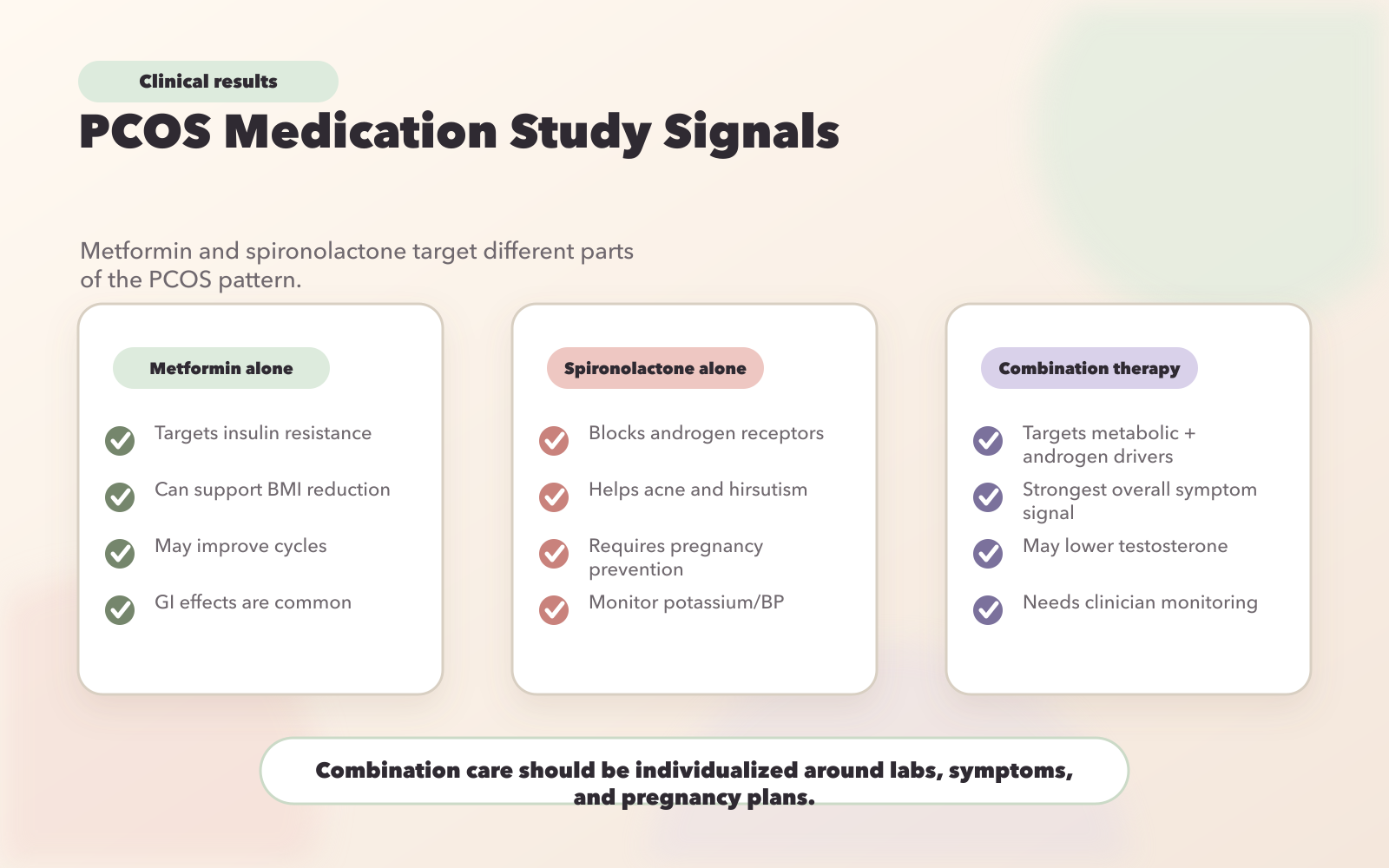
Metformin vs Spironolactone vs Combination Therapy for PCOS: Clinical Results Comparison
The Ganie et al. (2013) Study
In October 2013, a six-month open-label trial conducted in India focused on 198 patients with PCOS. Participants were divided into three groups, receiving either metformin, spironolactone, or a combination of the two. Researchers tracked changes in menstrual frequency, hirsutism, and metabolic markers throughout the study.
Dr. Robert W. Rebar, MD, highlighted the significance of the findings:
"Study suggests combination therapy had better efficacy for management of polycystic ovary syndrome."
This study laid the groundwork for comparing the effectiveness of combination therapy against single-drug treatments.
Combination Therapy vs. Single Medications: Results
The trial results showed that a combination of metformin and spironolactone was more effective than either medication alone in managing PCOS symptoms. Women on the combined treatment experienced greater reductions in BMI and total testosterone levels. Over time, the extended therapy also led to notable improvements in fasting glucose levels and HOMA-IR scores.
| Treatment Approach | Daily Dosage | BMI Reduction | Testosterone Lowering | Insulin Resistance |
|---|---|---|---|---|
| Metformin Alone | 1,000 mg | Moderate | Effective | Improved |
| Spironolactone Alone | 50 mg | Moderate | Effective | Limited impact |
| Combination Therapy | 1,000 mg + 50 mg | Highest | Most effective | Significant improvement (>6 months) |
Researchers from Frontiers in Endocrinology summarized the findings:
"Compared with metformin alone, metformin combined with spironolactone therapy may be more effective in reducing BMI and serum androgen levels."
These results emphasize the value of addressing both insulin resistance and androgen excess to support better weight management and hormonal balance in women with PCOS.
Effects on Weight Management and Hormonal Health
The combination of metformin and spironolactone offers a powerful approach to managing weight and improving hormonal health in women with PCOS. By tackling two major challenges - insulin resistance and androgen excess - this therapy delivers results that surpass what either medication can achieve on its own.
Spironolactone contributes to weight management by blocking androgen receptors and acting as a diuretic. Meanwhile, metformin enhances insulin sensitivity, which reduces hyperinsulinemia and indirectly lowers ovarian androgen production.
A study conducted between September 2024 and March 2025 at the Maternity and Pediatrics Teaching Hospital in Adiwaniyah Province, Iraq, examined 150 women with PCOS aged 18 to 40. Participants were divided into three groups: one receiving metformin alone (up to 2.5 g daily), another taking spironolactone alone (25 mg twice daily), and a third group combining both treatments. The combination group saw the most significant drops in BMI and total testosterone levels, along with the highest increases in serum ghrelin and adiponectin - two hormones that boost fat metabolism and insulin sensitivity. Huda Ali Mohammed highlighted the results, stating:
"The combination of spironolactone and metformin will therefore have an additive effect on weight loss in females with PCOS".
These findings underscore the therapy's dual benefits for weight management and hormonal balance.
In addition to aiding weight loss, this combination therapy improves menstrual regularity and reduces testosterone levels. While metformin alone can decrease testosterone by about 20% to 25%, the combination achieves even greater reductions. These hormonal changes help alleviate common PCOS symptoms, including irregular periods, excessive hair growth, and acne.
sbb-itb-6dba428
Safety, Side Effects, and Practical Considerations
Side Effects and Tolerability
Using metformin and spironolactone together doesn't increase the risk of adverse reactions compared to metformin on its own. Most side effects are manageable with proper guidance.
Metformin often causes gastrointestinal issues like nausea, stomach pain, gas, bloating, and diarrhea. To reduce these symptoms, it's best to start with a low dose - 500 mg once daily with a meal - for one to two weeks before gradually increasing the dosage. Extended-release versions can also ease digestive discomfort. Over time, metformin use may lead to Vitamin B-12 deficiency, so adding a B-12 supplement or multivitamin to your routine is worth considering.
Spironolactone, being a diuretic, can lead to side effects like frequent urination, dizziness, lightheadedness, breast tenderness, irregular menstrual cycles, headaches, and fatigue. Taking it in the morning can help minimize nighttime bathroom trips. The most serious concern with spironolactone is hyperkalemia, a condition where potassium levels become dangerously high, potentially affecting heart rhythm. To avoid this, patients should steer clear of potassium supplements and salt substitutes that contain potassium.
Spironolactone is not safe for use during pregnancy or breastfeeding. Mira Fertility highlights this risk:
"It can cause birth defects in a developing male fetus by interfering with normal sexual development".
Women using spironolactone should discuss reliable birth control options with their healthcare provider and ensure effective contraception. Regular blood tests to monitor potassium levels and kidney function are crucial for safe treatment. For added convenience and safety, specialized telehealth services can help manage these concerns.
Accessing Treatment Through Telehealth
Since ongoing monitoring is essential for safe treatment, having access to reliable care is critical. Telehealth services have stepped in to make this process more convenient. Oana Health offers telehealth solutions tailored to PCOS management, providing personalized, evidence-based treatments shipped directly to your door - shipping is free.
Through Oana Health's platform, licensed healthcare professionals review your medical history and prescribe treatments like Metformin & Spironolactone combination therapy starting at $32 per month or Spironolactone alone for $14 per month. This approach eliminates many of the usual barriers to treatment while ensuring patients receive the necessary medical supervision for safe and effective PCOS care. By combining convenience with expert oversight, such services enhance both treatment outcomes and patient safety.
Conclusion
Recent studies have strengthened the case for using metformin and spironolactone together to tackle PCOS symptoms. Metformin works by improving insulin resistance, while spironolactone reduces the effects of androgens, helping to manage issues like hirsutism, acne, and hair thinning. This dual approach addresses both the metabolic and hormonal challenges associated with PCOS, making it a powerful option for many patients.
A 2023 meta-analysis further supports this combination therapy, showing it significantly lowers BMI and testosterone levels compared to metformin on its own. Dr. Shravani Dali highlighted its effectiveness, stating:
"Compared with metformin alone, metformin combined with spironolactone therapy may be more effective in reducing BMI and serum androgen levels".
The most noticeable improvements in insulin resistance and blood sugar levels typically occur after at least six months of treatment. Considering PCOS affects around 10% of women before menopause, it's clear that treatment must be tailored to each individual. No single approach suits everyone.
It's crucial to consult a healthcare provider for proper guidance. Professionals can monitor potassium levels, adjust dosages, and ensure the treatment plan fits your unique needs. Telehealth options, such as those provided by Oana Health, make it easier to access personalized care. Their combination therapy for metformin and spironolactone starts at $32 per month, including free shipping and continuous support from licensed medical professionals. This service simplifies access to effective PCOS management while ensuring safety and oversight.
FAQs
How long does it take to see results on metformin plus spironolactone?
Results from using metformin and spironolactone often become evident within about six months. Research indicates noticeable changes in BMI, serum androgen levels, and hormonal symptoms during this period. However, individual results can differ based on personal health factors.
What lab tests do I need while taking spironolactone with metformin?
Blood tests are often advised when taking spironolactone alongside metformin. These tests monitor hormone levels and can help detect any underlying conditions that could resemble PCOS symptoms.
Can I take spironolactone for PCOS if I’m trying to get pregnant?
Spironolactone is not advised if you're trying to conceive. This medication can affect androgen levels, making it unsuitable during pregnancy or when you're planning to become pregnant in the near future. Always discuss safe treatment alternatives with your healthcare provider if you're planning for a baby.