
PCOS Sleep Routine: Aligning Circadian Rhythms
For women with PCOS, sleep issues are a common struggle, often linked to hormonal imbalances that disrupt natural rhythms. Poor sleep can worsen insulin resistance, weight gain, and mood swings, creating a cycle that's hard to break. Here's how you can improve your sleep and manage PCOS more effectively:
- Consistent Sleep Schedule: Wake up and go to bed at the same time daily, even on weekends, to stabilize your internal clock.
- Morning Sunlight: Get sunlight within 30 minutes of waking to regulate melatonin and cortisol levels.
- Relaxing Evening Routine: Avoid screens, reduce blue light exposure, and try calming activities like journaling or meditation.
- Bedroom Setup: Keep your room cool (65–68°F), dark, and quiet. Use blackout curtains and white noise if needed.
- Manage PCOS Symptoms: Address hormonal imbalances and insulin resistance with medical options like Metformin or Spironolactone.
Improving sleep isn’t just about feeling rested - it helps regulate hormones, reduce inflammation, and enhance overall health. Pair these habits with personalized PCOS treatments for better results.
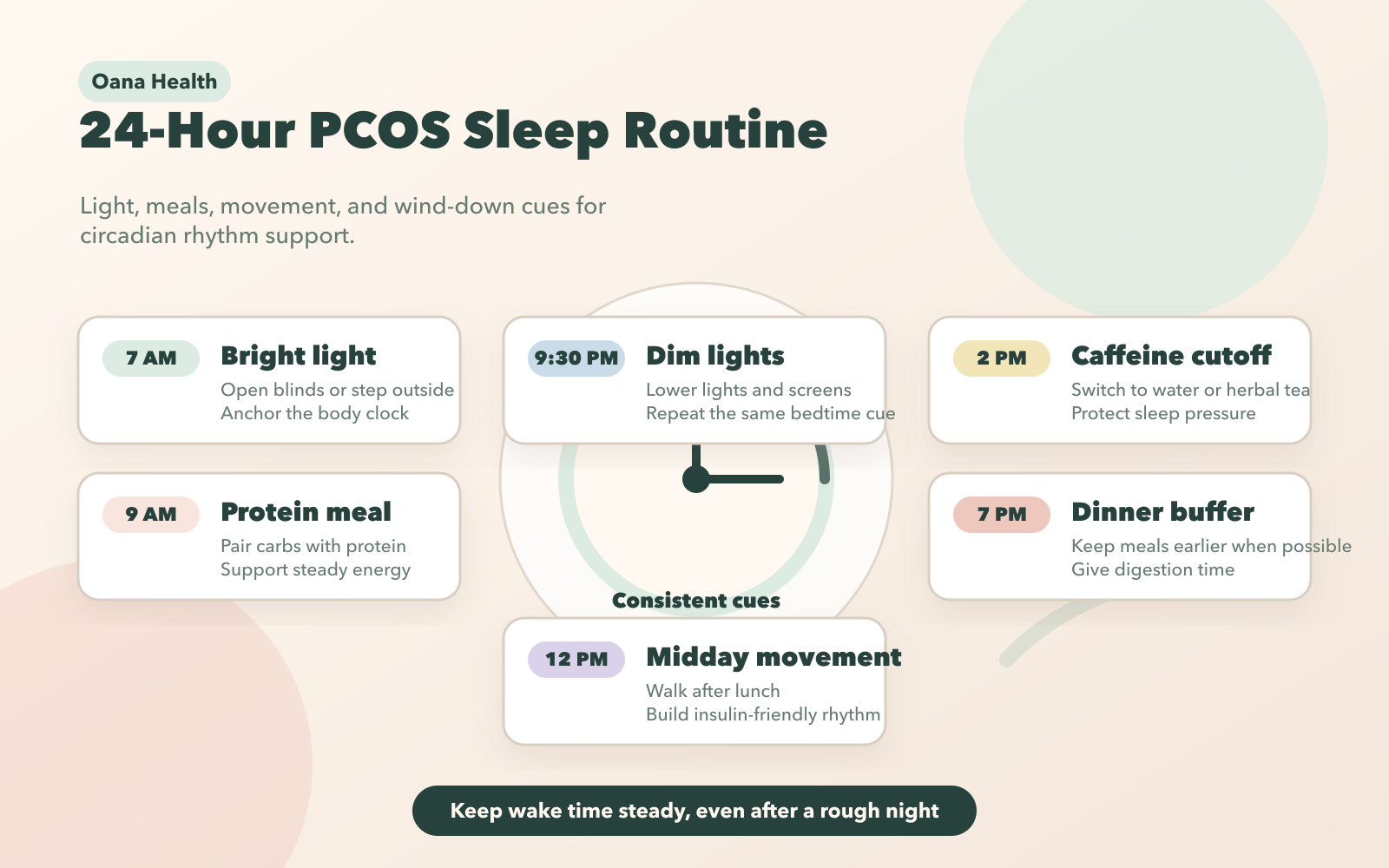
24-Hour PCOS Sleep Routine: Circadian Rhythm Optimization Guide
Daylight Savings or PCOS: Who is stealing our sleep?
How to Create a Consistent Sleep Schedule
Building a steady sleep routine is key to improving sleep quality, especially when managing PCOS. Your body thrives on regularity, and a predictable schedule helps train your brain to know when it’s time to rest and when to be alert. This consistency can help counteract the circadian rhythm disruptions often linked to PCOS, laying the groundwork for tackling specific sleep challenges.
Set Fixed Bedtime and Wake-Up Times
The best place to start is with your wake-up time, not your bedtime. Choose a consistent wake-up time and stick to it every day - yes, even on weekends. This regularity helps stabilize your internal clock and minimizes the hormonal imbalances that can come with PCOS. If you currently wake up at 9:00 AM but want to shift to 7:00 AM, don’t make the leap all at once. Instead, adjust gradually by setting your alarm 15 to 30 minutes earlier each day until you reach your goal. The same gradual approach works for moving your bedtime earlier.
Aim for 7 to 9 hours of sleep each night to give your body the time it needs for hormonal recovery. Once you’ve established your schedule, stick to it. Sleeping in on weekends might feel like a treat, but it can disrupt your progress by causing “social jet lag,” which throws off your internal clock. Dr. Dustin Cotliar, a sleep specialist, emphasizes:
"Most of the time when people can't sleep, they look towards an over-the-counter supplement or medication to fix the problem. However, for most people small changes to one's sleep routine and habits will be the most effective way to get a better night's rest."
To support your new routine, start your day with consistent habits. Within 30 minutes of waking, get some sunlight exposure and eat breakfast to regulate both your circadian rhythm and blood sugar levels. Avoid late-night meals or high-starch snacks, as these can lead to blood sugar crashes that wake you up in the middle of the night - often between 2:00 and 4:00 AM.
How to Handle PCOS-Related Sleep Problems
Even with a well-planned routine, occasional sleep issues tied to PCOS can still crop up. If you find yourself tossing and turning for more than 20 minutes, get out of bed. Move to a different room and engage in a quiet, calming activity - something away from screens, like reading a book or listening to soft music - until you feel sleepy again. This helps prevent your brain from associating your bed with frustration and wakefulness.
Incorporate relaxing bedtime rituals to signal your body that it’s time to wind down. For instance, combine soothing activities like applying your nighttime skincare, sipping chamomile tea, and jotting down tomorrow’s tasks in a journal. This "brain-dumping" method can help clear the racing thoughts that often keep women with PCOS awake. Magnesium citrate, taken about an hour before bed, may help relax tense muscles and lower cortisol levels, which are often elevated in PCOS.
Finally, set boundaries around screen time - turn off devices 60 to 90 minutes before bed to help your brain transition into sleep mode. If you work out, make sure to finish any high-intensity exercise at least 2 to 3 hours before bedtime to avoid spiking adrenaline and cortisol levels when your body should be winding down.
Building an Evening Routine for Better Sleep
Your evening routine plays a crucial role in helping your body shift gears from the hustle of the day to a restful night. For women managing PCOS, this transition is even more important since cortisol rhythms can often work in reverse - lower in the morning and higher at night. Intentional wind-down rituals can help calm the body and prepare it for sleep. A key part of this process involves creating an environment that supports relaxation.
Limit Artificial Light Before Bed
Artificial blue light can confuse your brain into thinking it’s still daytime, suppressing melatonin - the hormone that regulates sleep. For women with PCOS, this suppression can last up to twice as long as it does for others, potentially delaying your natural sleep-wake cycle by hours.
To counteract this, turn off all electronic devices - like phones, laptops, and tablets - at least 90 minutes before bed. If you need to use a device, activate night mode or a blue light filter. In addition, swap out overhead lighting for dim, warm-toned lamps, such as those with orange or red bulbs, during the evening. Since your body requires complete darkness to produce melatonin effectively, consider blackout curtains or a sleep mask to block out any lingering light.
Add Relaxation Activities to Your Evening
Once you’ve minimized disruptive light, focus on calming activities to ease into sleep. A warm bath or shower about an hour before bed can help lower your body temperature, signaling your internal clock that it’s time to wind down. Pair this with gentle yoga or stretches targeting areas like your neck, shoulders, and hips to further relax your body.
Mindfulness practices, such as meditation or deep breathing exercises, can be especially helpful for women with PCOS. These activities help regulate the nervous system, slow your heart rate, and reduce cortisol levels. Natalie Capano, LMHC, recommends journaling as another effective way to prepare for sleep:
"Journaling before bed is a great way to process and release your thoughts from the day".
When journaling, focus on organizing your thoughts - like jotting down tomorrow’s to-do list - or reflecting on things you’re grateful for. Avoid venting or writing about anger, as this can stir up negative emotions. If you prefer reading, choose physical books or e-readers with blue light filters, and stick to lighthearted genres like contemporary fiction or romance. Avoid stimulating topics, such as true crime, which might keep your mind too active.
Soft, ambient, or classical music can also help set the mood for sleep. Use a sleep timer so the music turns off automatically once you’ve drifted off.
Setting Up Your Bedroom for Better Sleep
Creating the right environment in your bedroom can make a big difference in how well you sleep. By encouraging melatonin production and keeping stress hormones like cortisol in check, a few thoughtful changes can help you fall asleep faster and stay asleep longer.
Keep Your Bedroom Cool
Temperature is a major factor in signaling your body that it’s time to sleep. During the night, your core body temperature naturally drops by about 2°F, which helps your brain recognize it’s time to rest. For women with PCOS, maintaining a cool room can also encourage melatonin production and ease that restless, "wired" feeling caused by elevated cortisol levels. Aim to keep your bedroom between 65°F and 68°F - temperatures outside this range can disrupt sleep.
If you deal with night sweats due to blood sugar fluctuations or insulin resistance, a cooler environment can help you avoid waking up in the middle of the night. Opt for breathable materials like organic cotton or bamboo for your bedding to stay comfortable without overheating. Once you’ve set the right temperature, you can focus on reducing other distractions for even better rest.
Block Out Noise and Light
Even small amounts of light or noise can interfere with your ability to reach deep, restful sleep. This is especially important for individuals with PCOS, as they may already struggle with lower melatonin levels. Simple tools like blackout curtains or a sleep mask can effectively block out light, while white noise machines or earplugs can help mask disruptive sounds. A basic white noise machine costs around $40 and can make a noticeable difference in your sleep environment.
If you’re particularly sensitive to sound, consider investing in high-quality foam or silicone earplugs, or try sleep headphones designed for side sleepers. You can also take some DIY steps to reduce noise: seal gaps in windows and doors with acoustic sealant, add door sweeps, or place heavy furniture like bookshelves against shared walls to dampen sound. Adding rugs, carpets, or extra pillows can further absorb noise and reduce echoes, creating a quieter, more peaceful space.
sbb-itb-6dba428
Daytime Habits That Improve Your Sleep
Your daytime choices play a key role in determining how well you sleep at night. For women managing PCOS, starting the day with sunlight and scheduling workouts strategically can help reset your internal clock, improve insulin sensitivity, and combat fatigue. Combining light exposure with well-timed physical activity strengthens your daily rhythm.
Get Morning Sunlight
Exposing yourself to bright morning light within an hour of waking can help reset your internal clock by shifting your sleep phase forward.
"In women with PCOS, the dim light melatonin offset (DLMOff) - the time when melatonin levels return to baseline - extends into the morning. This misalignment is associated with increased free testosterone levels and insulin resistance." - Tara Heydari, MS, and Prakash VAK Ramdass, MD, MPH
PCOS can disrupt melatonin levels, extending their presence into the morning. By using natural light to signal your body to stop producing melatonin, you can better manage insulin resistance and stabilize cortisol levels, which are often unbalanced in PCOS.
Morning sunlight also boosts serotonin and Vitamin D - two essentials for women with PCOS. Pairing sunlight exposure with a short walk can amplify the benefits. This simple habit helps lower cortisol, stabilize blood sugar, and reinforce your circadian rhythm.
Exercise Earlier in the Day
Timing your exercise is just as important as getting sunlight. Morning or early afternoon workouts are ideal - they energize you, raise beta-endorphin levels to calm your nervous system, and support your natural sleep-wake cycle. On the flip side, exercising late in the evening can elevate adrenaline and cortisol, making it harder to wind down and fall asleep.
"If at all possible, we should avoid exercise after dinner time, and no later than 3 hours before bed." - Amber Fischer, Functional Nutritionist
To avoid disrupting your sleep, finish any vigorous exercise at least three hours before bedtime. If you want to stay active later in the day, opt for calming activities like yoga or stretching, which can help reduce cortisol levels and release tension.
How Oana Health's Treatments Support Better Sleep
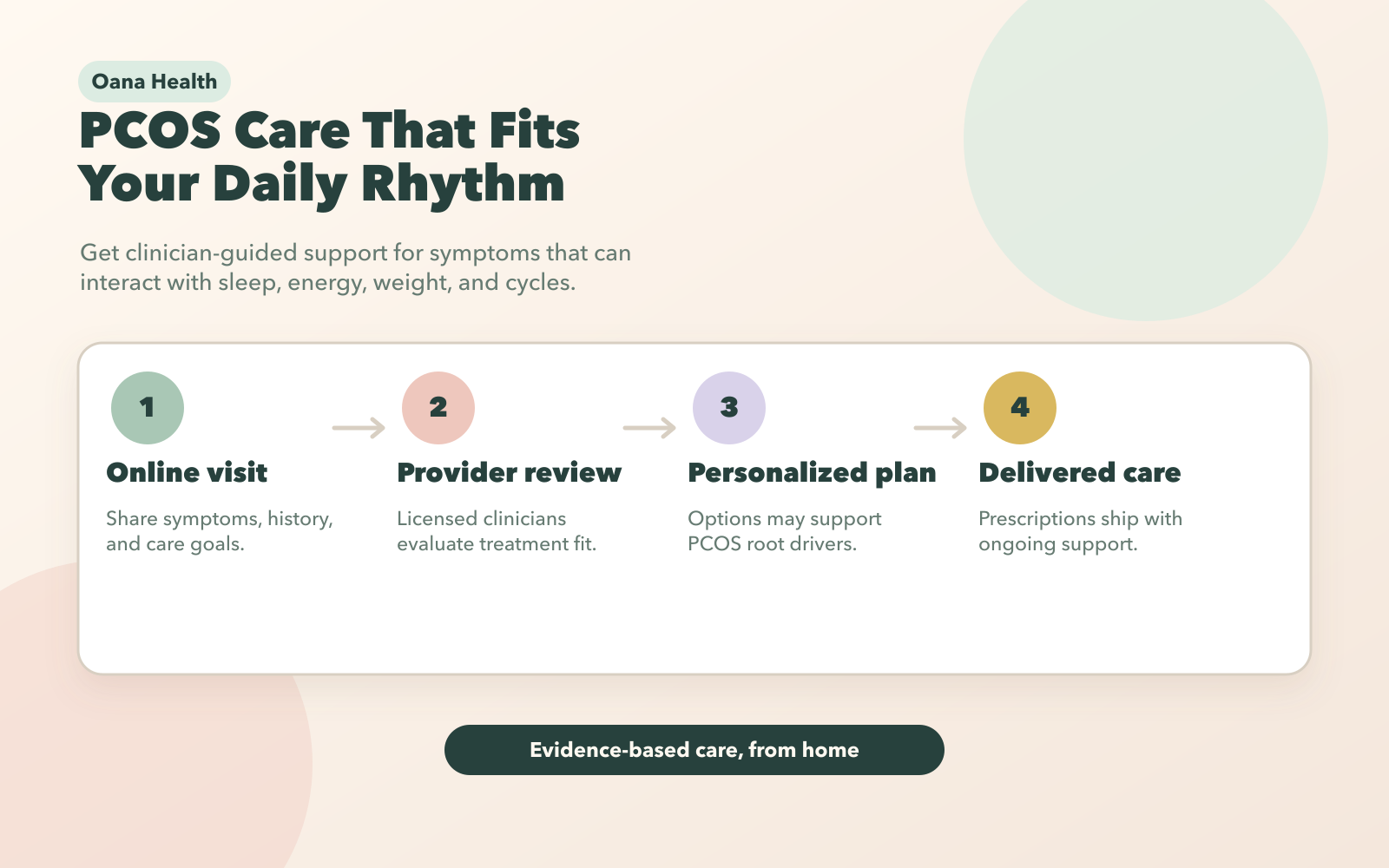
Building a strong sleep routine is essential, but addressing hormonal and metabolic imbalances is just as critical. Oana Health provides telehealth services with treatments grounded in science to tackle PCOS-related sleep challenges. These treatments work hand-in-hand with the sleep habits mentioned earlier - like getting morning sunlight and maintaining consistent sleep schedules - to create a well-rounded approach to managing PCOS and improving sleep quality.
Combining Sleep Habits with Insulin Resistance Treatment
Insulin resistance can throw off your sleep-wake cycle by interfering with melatonin production and raising nighttime cortisol levels. Studies reveal that women with PCOS often experience delayed dim light melatonin offset (DLMOff) times, meaning melatonin levels remain elevated into the morning. This misalignment is linked to higher free testosterone levels and poorer insulin sensitivity.
Metformin plays a key role in improving how your cells respond to insulin, helping to calm the hormonal disruptions that disturb your sleep. Oana Health offers two options: oral Metformin ER (starting at $22/month) and topical Metformin (starting at $89/month), which is applied nightly for gradual absorption. The topical version is a great alternative for those who experience side effects like nausea or upset stomach with the oral form.
"I used to struggle a lot with the side effects for oral metformin and this is a great alternative for me. I get the same benefits but no more upset stomach and nausea, and this helps me stick with it a lot more consistently." - Carrie S., Oana Health Patient
Pairing Metformin with sleep-friendly habits - like consistent bedtimes and morning sunlight exposure - creates a two-pronged approach to tackling insulin resistance. Improved sleep boosts insulin sensitivity, while Metformin helps stabilize glucose levels throughout the day and night. Together, they address both the root causes and symptoms of PCOS, including mood and hormonal imbalances.
Tackling Mood and Hormonal Challenges
Hormonal imbalances tied to PCOS - such as elevated androgens and disrupted progesterone levels - can lead to anxiety, restlessness, and mood swings, all of which make falling and staying asleep a struggle.
Spironolactone helps by blocking the effects of androgens, reducing symptoms like acne, unwanted facial hair, and hair loss, which can contribute to stress and impact mental well-being. For mood-related issues like anxiety or depression caused by hormonal fluctuations, Bupropion provides support. Oana Health offers the MetSpiro pack (a combination of Metformin and Spironolactone) for $32/month, while Bupropion XL starts at $25/month.
"Thanks to Oana, my menstrual cycles are more regular, and my skin has never looked better! I also love the 24/7 accessibility and customer service that always goes the extra mile." - Margaret K., Oana Health Patient
Conclusion: Building a Sleep Routine That Works for PCOS
Managing PCOS effectively means addressing the root causes, not just the symptoms. By sticking to consistent sleep schedules, getting morning sunlight, and creating a cool, dark bedroom environment, you can help regulate hormones, improve insulin sensitivity, and lower cortisol levels. These small changes do more than improve your sleep - they also reduce the risk of serious health issues like Type 2 Diabetes and cardiometabolic problems.
These physiological improvements create a strong foundation for other lifestyle adjustments. When combined with medical treatments, these habits not only enhance sleep quality but also tackle the underlying biological challenges that disrupt your rest.
Oana Health’s personalized treatments are designed to address key PCOS-related issues like insulin resistance, hyperandrogenism, and mood disturbances that can make it harder to fall and stay asleep. Whether it’s using insulin sensitizers to stabilize blood sugar or mood stabilizers to ease anxiety, these science-based solutions complement your sleep routine to drive meaningful change. This holistic approach aligns with the guide's emphasis on syncing circadian rhythms and addressing the core aspects of PCOS.
Creating a sleep routine that works for PCOS starts with consistent habits and targeting the underlying imbalances. Start small - try setting a fixed wake-up time or cutting back on blue light exposure - and build from there. Pairing these habits with tailored medical support can lead to better sleep, more energy, and improved overall health.
Explore how Oana Health can provide personalized treatment options to support your sleep and overall PCOS management: https://oanahealth.com
FAQs
How can morning sunlight help with managing PCOS symptoms?
Getting outside for some morning sunlight can make a big difference in managing PCOS symptoms. Morning light helps reset your circadian rhythm - your body’s natural internal clock. This reset can lead to better hormonal balance, properly timed cortisol levels, and improved insulin sensitivity, all of which are often out of sync in people with PCOS.
By syncing your circadian rhythm, morning sunlight may also help address common PCOS challenges like irregular periods, weight fluctuations, and mood swings. Try to spend 10–15 minutes in natural sunlight early in the day to give your hormonal health a helpful boost.
How can Metformin help with PCOS-related sleep problems?
Metformin, a medication often prescribed for managing PCOS, may play a helpful role in addressing sleep problems associated with the condition. By enhancing insulin sensitivity, Metformin helps balance hormones that can interfere with the natural sleep-wake cycle. This adjustment can promote steadier sleep patterns and improve overall rest.
Studies indicate that Metformin may boost sleep quality by encouraging deeper, more refreshing sleep and cutting down on nighttime disruptions. It may also reduce the likelihood of sleep-related breathing problems, such as obstructive sleep apnea, which is more prevalent in individuals dealing with insulin resistance.
For those navigating PCOS, Metformin can be an effective option to support better sleep and regulate circadian rhythms. With Oana Health, you can access personalized, prescription-based treatments, including Metformin, conveniently delivered to your doorstep to help manage PCOS with ease.
Why is a consistent sleep schedule important for managing PCOS?
Maintaining a regular sleep schedule is a crucial part of managing PCOS. It helps keep your circadian rhythm in check, which is vital for hormone regulation. When your hormones are balanced, it can ease symptoms like irregular periods, acne, and excess hair growth.
Sticking to a consistent sleep routine also boosts insulin sensitivity, helping to lower the risk of insulin resistance - a common challenge for people with PCOS. On top of that, good-quality sleep reduces stress and fatigue, both of which can make PCOS symptoms worse. Making sleep a priority is a straightforward yet impactful way to support your health and manage symptoms more effectively.