
Personalized HRT: Role of Bioidentical Hormones
Personalized hormone replacement therapy (HRT) offers a tailored approach to managing menopause symptoms like hot flashes, mood swings, and sleep disruption. Unlike standard treatments, it customizes hormone types, doses, and delivery methods to meet individual needs. A key component is bioidentical hormones, which are chemically identical to those naturally produced by the body. These can be FDA-approved or compounded, with FDA-approved options offering greater safety and consistency.
Key Points:
- Bioidentical Hormones: Made from plant sources, they mimic natural hormones like estrogen, progesterone, and testosterone.
- Delivery Methods: Options include pills, creams, gels, patches, and pellets. Each has pros and cons, such as ease of use versus potential side effects.
- Benefits: Relief from symptoms like hot flashes, vaginal dryness, and mood swings, along with improved sleep and bone health.
- Risks: Compounded bioidenticals lack FDA oversight, leading to inconsistent quality and potential safety issues.
- Guidelines: Major medical organizations recommend FDA-approved bioidentical hormones over compounded versions due to better regulation and safety.
For best results, work with a healthcare provider to create a personalized treatment plan, starting with FDA-approved options and focusing on symptom relief rather than lab results.
Is FDA-Approved Bioidentical Hormone Replacement Therapy Safe?

Menopause Symptoms Treated with Bioidentical HRT
Bioidentical HRT helps restore hormonal balance by supplementing estrogen, progesterone, and testosterone levels that naturally decline during menopause. This treatment addresses a variety of symptoms, improving both physical and emotional well-being.
Physical Symptoms
Vasomotor symptoms - like hot flashes and night sweats - are among the most common issues treated with bioidentical hormones. These symptoms affect about 75% of women during perimenopause, menopause, and postmenopause. Hormone replacement therapy has been shown to reduce these symptoms by 85%, with many women noticing relief within just a few weeks of starting treatment.
Genitourinary symptoms, such as vaginal dryness, also respond to BHRT, though improvement typically takes several months of consistent use. Over half of women between ages 51 and 60 report experiencing vaginal dryness. As Dr. Trent Fogleman of Oklahoma Surgical Arts explains:
"Through BHRT, we can reestablish lubrication to get you back to a more enjoyable sex life."
While vasomotor symptoms improve relatively quickly, restoring vaginal health requires more time and patience.
Musculoskeletal issues are another area where bioidentical hormones make an impact. Women can lose up to 10% of their bone mass within the first five years of menopause. BHRT helps slow this bone loss and can also reduce joint pain. Other physical benefits include better sleep, reduced fatigue, and improvements in hair and skin health.
Emotional and Mental Health Symptoms
Beyond physical relief, bioidentical HRT supports emotional balance by replenishing estrogen and progesterone, which play key roles in regulating mood and sleep. Hormonal fluctuations during menopause often lead to mood swings, irritability, and brain fog. By stabilizing these hormone levels, BHRT can help alleviate these emotional challenges.
Micronized progesterone, in particular, is effective for improving sleep and mood. This form of progesterone has a calming effect, making it especially helpful for addressing sleep disturbances that often contribute to anxiety and mood instability. Doctors commonly recommend taking it before bed to maximize its benefits. Dr. Victoria Finn, a board-certified endocrinologist, highlights the importance of patience during treatment:
"Hormonal treatment always requires an adjustment period. It takes time to restart hormonal receptors, correct imbalances with other hormones, and achieve a steady blood hormone concentration."
While some relief can be felt within days, full benefits usually emerge after 4 to 6 weeks of treatment. According to the Penn Ovarian Aging Study, moderate-to-severe menopausal symptoms can last a median of 10.2 years, underscoring the importance of effective treatment for long-term quality of life.
Benefits of Bioidentical Hormones
Better Symptom Relief
Bioidentical hormones are designed to replicate the exact molecular structure of the hormones your body naturally produces. This precise match allows them to interact seamlessly with your body's hormone receptors. Dr. G. Thomas Ruiz, Lead OB/GYN at MemorialCare Orange Coast Medical Center, explains:
"In the absence of working estrogen, a bioidentical hormone maintains as close to normal body function as possible."
One major advantage of bioidentical hormone therapy is its flexibility. Compounded bioidentical hormone therapy (cBHT) can be customized to suit your specific hormonal needs. This means dosages and delivery methods can be tailored to address your unique symptoms, enhancing both effectiveness and tolerability. This personalized approach not only improves symptom management but also reduces the likelihood of unwanted side effects.
Fewer Side Effects
Bioidentical hormones often use transdermal delivery methods like patches, gels, and creams. These methods allow hormones to be absorbed directly into the bloodstream, bypassing the liver and minimizing associated risks.
Micronized progesterone, a bioidentical form of progesterone, has shown encouraging safety results. For instance, a large observational study found that women using micronized progesterone had a relative breast cancer risk of 1.0, compared to 1.69 for those on synthetic progestins. Additionally, FDA-approved bioidentical patches have been linked to a lower risk of venous thromboembolism (VTE) compared to oral synthetic hormones.
Patient-Reported Outcomes
Women using bioidentical hormone replacement therapy (HRT) frequently report noticeable improvements in their daily lives. Many experience better cognitive function, including sharper memory, improved concentration, and reduced brain fog. Others find their moods more stable, with less anxiety. Increased energy and vitality are also common, making day-to-day activities feel more manageable and enjoyable.
In a survey of 184 patients, 78% of bioidentical HRT users reported relief from sexual symptoms, compared to just 33% of those on conventional therapy. Women also noted better sleep, renewed libido, and even "beauty benefits" like firmer skin and reduced hair thinning, thanks to increased collagen and elastin support. While some relief can be felt within a few weeks, most patients experience the full benefits after about three months.
Plano Women's Healthcare highlights the transformative potential of bioidentical HRT:
"Bioidentical hormone replacement therapy can make a huge difference, making menopause a positive, life-affirming transition rather than an unwanted change to be endured."
Risks and Limitations of Bioidentical Hormones
Lack of Standardized Regulation
Compounded bioidentical hormone therapy (cBHT) exists in a regulatory gray area. Unlike medications approved by the FDA, these custom-mixed treatments are exempt from federal standards for manufacturing practices and labeling requirements. In other words, no one ensures their safety, effectiveness, or quality before they reach patients.
Testing of prescriptions from 13 compounding pharmacies revealed hormone levels that varied significantly - up to 26% below the labeled amount for estradiol and 31% above for progesterone. These inconsistencies can lead to unpredictable results, such as inadequate symptom relief or accidental overdosing.
Additionally, compounding pharmacies are not obligated to report adverse events to the FDA. This lack of reporting makes it challenging to assess the long-term safety of these treatments. As the American College of Obstetricians and Gynecologists has stated:
"Compounded bioidentical menopausal hormone therapy should not be prescribed routinely when FDA-approved formulations exist."
These regulatory gaps make it harder to evaluate the reliability and safety of bioidentical hormone therapies.
No Proven Advantage Over Traditional HRT
Beyond regulatory concerns, there’s no strong evidence that bioidentical hormones outperform traditional hormone replacement therapies (HRT). Research reviewed by the National Academies of Sciences, Engineering, and Medicine concluded:
"There is insufficient evidence to support the overall clinical utility of cBHT as treatment for menopause and male hypogonadism symptoms."
The term "bioidentical" has been heavily marketed, leading many patients to believe these hormones are inherently safer. However, FDA-approved options like micronized progesterone and certain estradiol patches are also bioidentical - and they come with the added assurance of rigorous regulatory oversight.
Dosing Challenges
The lack of regulation also complicates dosing. With cBHT, tailoring precise doses can be tricky. Hormone levels measured in saliva don’t necessarily match blood hormone levels or correlate with symptoms. This makes it hard to determine the right amount for each patient.
Without standardized pharmacokinetic data, predicting how a dose will affect someone becomes a guessing game. Delivery methods like testosterone pellets add even more complexity. Once inserted, these pellets can’t be removed if the dosage is too high, leaving no room for adjustments.
In the U.S., an estimated 26 to 33 million compounded hormone prescriptions are filled annually, costing over $2 billion. Yet, without proper quality control and monitoring, patients may be paying high prices for therapies that deliver inconsistent results and carry unknown risks. While personalized hormone therapy aims to offer more precision, the risks highlight the need for ongoing monitoring and careful adjustments.
sbb-itb-6dba428
How Bioidentical HRT Is Personalized
Personalized bioidentical hormone replacement therapy (HRT) is all about creating a treatment plan that fits your specific hormonal needs. This involves a thorough assessment, a tailored treatment plan, and ongoing adjustments to ensure the best results.
Initial Hormonal Assessment
The journey starts with a detailed review of your medical history and current symptoms. Factors like your age, overall health, and any potential risks are carefully considered to weigh the benefits and possible concerns.
Blood tests, or serum testing, are commonly used to measure hormone levels. For example, estradiol levels between 40–100 pg/mL are often targeted to ease menopausal symptoms. Women exploring testosterone therapy typically aim for levels in the premenopausal range of 20–80 ng/dL.
But here’s the thing: hormone levels alone don’t tell the full story. The FDA and major medical organizations emphasize that symptom relief should guide dosing decisions, as hormone levels naturally fluctuate throughout the day. According to the American College of Obstetricians and Gynecologists, "Dosing should be titrated to patient-reported menopausal symptom relief".
Saliva testing, sometimes promoted by certain compounding pharmacies, is more controversial. Experts argue that saliva hormone levels don’t reliably reflect blood levels or symptom severity. Plus, everyday activities can cause significant fluctuations in saliva results, making it less dependable.
With these insights, your provider crafts a treatment plan designed to meet your unique hormonal requirements.
Customized Treatment Plans
Once the assessment is complete, your provider develops a plan tailored just for you. This includes choosing the right combination of hormones - like adding progestogen if you still have your uterus - and selecting a delivery method that suits your lifestyle. These decisions play a big role in managing symptoms effectively.
For example, if you have a history of blood clots, transdermal options like patches or gels might be recommended since they may carry a lower risk compared to oral medications. The way hormones are absorbed can also vary depending on how and where they’re applied, which influences blood levels.
A key principle here is to use the lowest effective dose for the shortest time needed. As Cleveland Clinic explains, "The goal is to relieve symptoms with the lowest dose possible for the shortest amount of time". This approach helps reduce risks while still addressing symptoms.
Ongoing Monitoring and Adjustments
After starting your personalized plan, regular monitoring ensures everything stays on track. The Menopause Society highlights that "Often a period of trial and error is required to arrive at the best dose and regimen for you". It usually takes about three months of consistent therapy to feel the full effects.
During this time, tracking your symptoms and any side effects helps your provider fine-tune the dosage. The focus remains on symptom relief rather than lab results, as how you feel is the most important indicator of success.
Follow-up appointments are crucial to check for side effects, evaluate your progress, and make adjustments as needed. If side effects occur, let your provider know right away - they might suggest lowering your dose or making other changes.
When it’s time to stop therapy, your provider may gradually taper your estrogen dose over several months or even years. This slow reduction helps minimize the return of symptoms like hot flashes, giving your body time to adapt to the change.
Bioidentical Hormone Delivery Methods
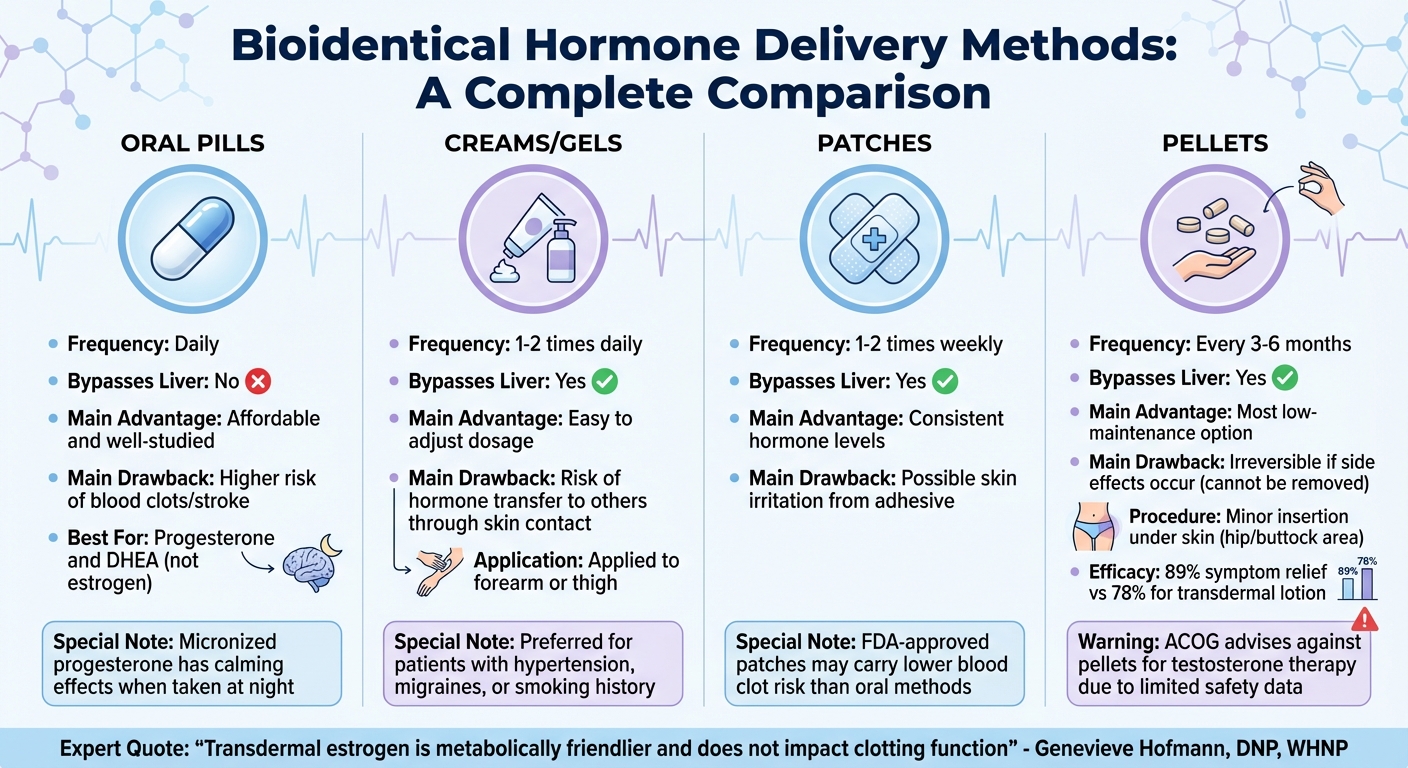
Bioidentical Hormone Delivery Methods Comparison Chart
Choosing the right delivery method is just as important as selecting the right hormone. The method you use affects how hormones enter your system, how stable your levels remain, and the potential risks involved. Factors like your lifestyle, medical history, and personal preferences all play a role in finding the best option. Here’s a breakdown of the most common delivery methods, along with their pros and cons.
Oral Medications
Pills and capsules are a popular choice because they’re easy to use. However, oral hormones go through the stomach and liver - a process called the "first-pass effect." This can lead to hormone level fluctuations and a higher risk of blood clots. For this reason, oral bioidentical hormones are usually recommended for progesterone and DHEA rather than estrogen.
One unique advantage of oral micronized progesterone is its calming effects. Taken at night, it can help reduce anxiety and improve sleep due to its metabolites.
Topical Creams and Gels
Creams and gels are applied directly to the skin, often on the forearm or thigh, once or twice a day. This method allows hormones to enter the bloodstream without passing through the liver, avoiding the first-pass effect and providing more consistent dosing.
However, daily application is needed, and there’s a chance of unintentionally transferring hormones to others through contact. For individuals with conditions like hypertension, migraines, or a history of smoking, transdermal options are often preferred because they have less impact on clotting factors.
"There's definitely evidence that supports transdermal estrogen as being metabolically friendlier. They do avoid the first-pass liver effect... so they do not impact clotting function." - Genevieve Hofmann, DNP, WHNP, University of Colorado School of Medicine
Patches and Pellets
Patches are a convenient and effective option. They’re applied to the skin and usually need to be changed once or twice a week. Patches provide a steady release of hormones and bypass liver metabolism. The American College of Obstetricians and Gynecologists (ACOG) notes that FDA-approved patches deliver consistent estradiol levels and may carry a lower risk of blood clots compared to oral methods. The downside? Some people experience skin irritation from the adhesive.
Pellets, on the other hand, are tiny implants placed under the skin (usually in the hip or buttock) during a minor procedure. They release hormones gradually over three to six months, making them the most low-maintenance option. A 2025 study found that 89% of women using pellets reported symptom relief, compared to 78% using transdermal lotion. However, pellets come with a big drawback: once inserted, they can’t be easily removed if side effects occur. Due to this and limited long-term safety data, ACOG advises against using pellets for testosterone therapy.
| Delivery Method | How Often | Bypasses Liver? | Main Advantage | Main Drawback |
|---|---|---|---|---|
| Oral Pills | Daily | No | Affordable and well-studied | Higher risk of blood clots/stroke |
| Creams/Gels | 1–2 times daily | Yes | Easy to adjust dosage | Risk of hormone transfer to others |
| Patches | 1–2 times weekly | Yes | Consistent hormone levels | Possible skin irritation |
| Pellets | Every 3–6 months | Yes | Low-maintenance | Irreversible if side effects occur |
Scientific Evidence and Guidelines on Bioidentical HRT
Clinical Studies on Bioidentical Hormones
When it comes to bioidentical hormones, research draws a clear distinction between FDA-approved options and custom-compounded formulations. FDA-approved bioidentical hormones, like 17β-estradiol and micronized progesterone, have been thoroughly studied in clinical trials such as the KEEPS (Kronos Early Estrogen Prevention Study) and ELITE (Early Versus Late Intervention Trial with Estradiol). These trials confirm their effectiveness in managing symptoms like hot flashes and reducing risks of bone loss.
On the other hand, the evidence for compounded bioidentical hormones remains limited. Systematic reviews of randomized controlled trials suggest they don't cause immediate issues with cholesterol or blood sugar levels. However, there's a lack of comprehensive data on their long-term safety, particularly regarding risks like breast cancer or heart disease. Compounding this uncertainty, independent tests reveal significant variability in the composition of compounded formulations.
The "timing hypothesis" offers additional insight. It suggests that starting hormone therapy before age 60 or within 10 years of menopause provides the safest outcomes. This idea aligns with findings from the Women's Health Initiative, which reported no difference in all-cause mortality over an 18-year follow-up between women who used hormone therapy and those who did not.
Expert Recommendations
Building on this research, leading medical organizations have issued clear guidelines about the use of bioidentical hormones. A key distinction is made between FDA-approved and compounded options. The American College of Obstetricians and Gynecologists (ACOG), in their Clinical Consensus No. 6 (reaffirmed in 2026), states:
"Compounded bioidentical menopausal hormone therapy should not be prescribed routinely when FDA-approved formulations exist".
The North American Menopause Society (NAMS) echoes this sentiment, recommending compounded hormones only in rare cases, such as when a patient has a documented allergy to an ingredient in an FDA-approved product.
Both ACOG and NAMS also advise against using salivary or urine hormone tests to guide dosing. As NAMS explains:
"Salivary and urine hormone testing to determine dosing are unreliable and not recommended".
The FDA supports this view, pointing out that hormone levels naturally fluctuate daily, making these tests an unreliable basis for treatment. Instead, they emphasize that dosing should be guided by symptom relief rather than lab results. Additionally, the National Academies of Sciences has concluded that there is insufficient evidence to support the clinical value of compounded bioidentical hormone therapy for menopause. This reinforces the preference for FDA-approved formulations, which undergo rigorous testing to ensure consistency, safety, and effectiveness.
These guidelines highlight the importance of tailoring hormone therapy to individual needs while relying on treatments backed by solid evidence.
Conclusion
Key Takeaways
Personalized hormone replacement therapy (HRT) using bioidentical hormones can provide targeted relief for menopausal symptoms and enhance overall quality of life. These hormones mimic the ones your body naturally produces, addressing issues like hot flashes, night sweats, mood changes, and vaginal dryness. When tailored to individual needs, they can also support bone health.
It's important to note that not all bioidentical hormones are the same. FDA-approved options, such as micronized progesterone and estradiol patches, are rigorously tested for safety and consistency. On the other hand, compounded bioidentical hormones lack standardized oversight, which raises concerns about their reliability. Leading organizations like the American College of Obstetricians and Gynecologists (ACOG) and the North American Menopause Society (NAMS) recommend FDA-approved formulations and advise against using salivary or urine hormone tests for determining dosages.
Successful treatment depends on personalized dosing, selecting the right delivery method, and regular monitoring. Starting therapy soon after menopause begins and using the lowest effective dose for the shortest time necessary can help reduce potential risks.
Next Steps for Interested Patients
If you're considering this treatment, here’s how to proceed. Begin with a consultation with a licensed healthcare provider to review your hormonal health and medical history. This discussion should cover both the advantages and potential risks, empowering you to make an informed decision together.
Oana Health offers telehealth services focused on female hormone therapy. They provide customized, prescription-based treatments that are delivered to your doorstep. Their licensed professionals help you navigate FDA-approved bioidentical hormone options and offer ongoing support to fine-tune your treatment for the best results.
FAQs
What are the advantages of FDA-approved bioidentical hormones compared to compounded ones?
FDA-approved bioidentical hormones stand out for their safety, reliability, and consistent performance. These treatments are subjected to thorough testing and strict quality controls, ensuring they meet high standards for safety and effectiveness.
On the other hand, compounded bioidentical hormones are custom-prepared and don’t undergo the same rigorous oversight. This can result in inconsistencies in quality and dosage, making them less predictable. For those looking for dependable, science-backed options, FDA-approved hormones offer a more trustworthy choice with consistent outcomes.
How can personalized bioidentical HRT help with menopause symptoms?
Bioidentical hormone replacement therapy (HRT) offers a way to manage menopause symptoms by addressing your specific hormonal needs. These hormones are formulated to closely resemble the ones your body naturally produces, making them a more natural option for alleviating symptoms like hot flashes, night sweats, mood swings, and vaginal dryness.
Since the treatment is customized, healthcare providers can fine-tune the dosage and combination of hormones based on your symptoms and medical history. This personalized approach not only helps provide better relief but also reduces the likelihood of side effects. Bioidentical HRT comes in several forms, including creams, gels, and pills, giving you the flexibility to choose what works best for your lifestyle. This tailored therapy is designed to enhance your comfort and overall well-being during menopause.
What are the potential risks of using compounded bioidentical hormones in HRT?
Compounded bioidentical hormone therapy (cBHT) comes with some risks that you should be aware of. One key concern is that many cBHT formulations are not approved by the FDA. This means they haven’t gone through the strict testing required to confirm their safety, quality, or effectiveness. As a result, hormone levels in these therapies can be inconsistent, leading to outcomes that may be hard to predict.
Another issue lies in the preparation process. Since compounded hormones are custom-made, the quality can vary depending on how they’re prepared. This variability raises potential safety concerns that shouldn’t be overlooked.
To ensure your treatment is both safe and effective, it’s crucial to have a thorough discussion with a licensed medical professional. They can help you weigh the risks and benefits and guide you toward the best options for your specific needs.