
Pharmacological Options for PCOS Obesity
Polycystic Ovary Syndrome (PCOS) affects millions of women worldwide, with up to 80% of those diagnosed also struggling with obesity. This combination creates a cycle of hormonal imbalances, insulin resistance, and weight gain, making it harder to manage symptoms and increasing risks for diabetes, heart disease, and certain cancers. While diet and exercise are vital, medications can play an essential role in addressing PCOS-related obesity.
Here’s a quick breakdown of the most common pharmacological options:
- Metformin: Improves insulin sensitivity and regulates menstrual cycles but offers modest weight loss (2–5%).
- GLP-1 Agonists (Semaglutide, Tirzepatide): Highly effective for weight loss (up to 22%), with added benefits for hormonal balance and menstrual regularity.
- Combination Therapies (GLP-1 + Metformin): Delivers better weight loss and symptom management than either treatment alone.
- Phentermine/Topiramate ER: Promotes moderate weight loss (7–11%) but requires careful monitoring due to side effects.
- Naltrexone/Bupropion: Offers modest weight loss (5–6%) but is less effective for PCOS-specific symptoms.
Each medication has unique benefits, side effects, and costs. Choosing the right treatment depends on individual goals, symptom severity, and tolerance for side effects. Even a small weight loss of 5–10% can improve metabolic health and reproductive function.
For those seeking advanced options, GLP-1 agonists are gaining popularity despite their higher cost, while combination therapies are proving effective for more resistant cases. Meanwhile, Metformin remains a trusted, affordable first-line treatment. Always consult a healthcare provider to determine the best plan for your needs.
EFL060 - Topiramate and Metformin for Weight Loss in PCOS
1. Metformin
Metformin is a go-to treatment for managing PCOS, primarily because it helps improve insulin sensitivity, though its impact on weight loss is modest. In a 12-week study where participants took 1,000 mg twice daily, the average weight loss was 5.5 lbs, with a BMI reduction of 0.98 kg/m². Interestingly, none of the patients on metformin alone achieved a weight loss of 5% or more during this period.
Efficacy in Weight Loss
When it comes to weight loss for PCOS, metformin ranks behind other medications. A network meta-analysis placed liraglutide at the top, followed by orlistat, with metformin in third place. On average, metformin leads to a weight loss of 5.5 to 8.8 lbs and a BMI reduction of 1 to 2 kg/m². For women who don't see at least a 5% weight reduction with metformin, switching to or combining it with a GLP-1 receptor agonist often yields better results. This limitation has made GLP-1 receptor agonists an increasingly popular option for more effective weight management.
Impact on PCOS-Specific Outcomes
Metformin shines in addressing insulin resistance and helping restore ovulation, particularly in women with a BMI under 30–32. By lowering androgen levels and regulating menstrual cycles, the drug can also help reduce the risk of endometrial cancer by promoting regular ovulation. However, its effectiveness diminishes as BMI increases, meaning women with higher obesity levels may see less benefit from this treatment.
"Use of metformin should be restricted to those patients with glucose intolerance." – Thessaloniki ESHRE/ASRM-Sponsored PCOS Consensus Workshop Group
Side Effects and Safety Profile
One major drawback of metformin is its gastrointestinal side effects, such as nausea, diarrhea, and abdominal pain. Severe gastrointestinal issues occur in 1%–4.5% of cases, compared to just 0.3% for oral contraceptives. To ease these side effects, doctors often recommend starting with a low dose and gradually increasing it, or switching to a sustained-release version. Metformin is also considered safe during pregnancy (FDA Category B) and doesn’t increase the likelihood of multiple pregnancies. Its safety profile, combined with its affordability, makes it a practical choice despite its limited weight-loss benefits.
Cost and Accessibility
Metformin is one of the most cost-effective treatments for PCOS. Generic metformin (850 mg taken twice daily) costs about $73 per month, while the brand-name version, Glucophage, is approximately $107 per month. This affordability, coupled with its metabolic benefits, keeps metformin a key first-line treatment for PCOS, even if its weight-loss effects are modest.
2. GLP-1 Agonists (Semaglutide and Tirzepatide)
GLP-1 receptor agonists, such as semaglutide and tirzepatide, have shown impressive results in managing PCOS-related obesity, far surpassing the modest weight loss associated with metformin. These medications mimic a natural hormone that helps regulate appetite and blood sugar, making them especially effective for women who haven’t seen success with lifestyle changes alone.
Efficacy in Weight Loss
Semaglutide has delivered significant weight loss in obese women with PCOS. For instance, low-dose semaglutide led to about 5% weight reduction in 80% of patients, with average weight losses ranging from 16.8 lbs at three months to 25.4 lbs at six months. When combined with metformin, the results were nearly three times more effective than metformin alone.
In one study conducted by the University of Palermo, 27 obese PCOS patients who hadn’t responded to lifestyle interventions were treated with 0.5 mg of semaglutide weekly. After three months, around 80% of participants achieved at least a 5% reduction in body weight. Similarly, a 2025 randomized trial in China involving overweight and obese women with PCOS showed that those treated with 1 mg of semaglutide weekly, alongside 1,000 mg of metformin twice daily, lost an average of 13.4 lbs over 16 weeks. This was compared to just 5.0 lbs in the group taking metformin alone. A 2024 meta-analysis further highlighted the effectiveness of GLP-1 agonists, reporting reductions in BMI by 2.42 kg/m² and waist circumference by 5.16 cm compared to placebo.
Tirzepatide, a newer dual GLP-1/GIP agonist, has demonstrated even greater weight loss potential. In the SURMOUNT-5 trial for general obesity, participants experienced a 20.2% reduction in body weight with tirzepatide, compared to 13.7% with semaglutide over 72 weeks. While large-scale studies focusing specifically on PCOS are still underway, early findings suggest tirzepatide could be highly effective for this group as well. These substantial weight losses also contribute to improvements in hormonal balance and menstrual regularity.
Impact on PCOS-Specific Outcomes
Beyond weight loss, GLP-1 agonists offer additional benefits for PCOS-related symptoms. They have been shown to reduce total testosterone levels by about 33%, which can help manage symptoms like excess hair growth and acne. Furthermore, combination therapy with GLP-1 agonists and metformin has normalized menstrual cycles in 72.5% of patients, compared to just 42.3% with metformin alone. Natural pregnancy rates also improved, rising to 35% with combination therapy versus 15% with metformin monotherapy. Additionally, 80% of patients with impaired fasting glucose saw their blood sugar levels return to normal within three months of treatment.
"Treatment with semaglutide, at low doses, significantly reduces body weight in almost 80% of obese PCOS patients who were unresponsive to a previous lifestyle plan." – Enrico Carmina, Endocrinology Unit, University of Palermo
Side Effects and Safety Profile
The most common side effects of GLP-1 agonists are gastrointestinal issues, particularly nausea and vomiting, which are more pronounced during dose escalation. In the University of Palermo study, 33% of participants experienced morning nausea and occasional vomiting, though no one discontinued treatment due to these side effects. A meta-analysis also found higher rates of nausea, vomiting, and dizziness compared to placebo or metformin. Fortunately, these side effects are generally mild to moderate and tend to subside over time.
For individuals with severe obesity (BMI over 40), higher doses of GLP-1 agonists may be required, but these come with a greater risk of side effects. It’s also important to note that GLP-1 agonists are not recommended during pregnancy, and effective contraception is necessary during treatment. Despite the potential for side effects, the benefits - both in weight loss and PCOS-specific outcomes - make these medications a promising choice.
Cost and Accessibility
GLP-1 agonists are more expensive than metformin. For example, brand-name semaglutide (Ozempic) costs around $1,299 per month without insurance. However, many healthcare providers consider the cost justified due to the superior results these medications deliver. Affordable options are also emerging: platforms like Oana Health provide telehealth access to GLP-1 medications, including semaglutide and tirzepatide, with oral versions and GLP-1/metformin combinations available for $199 per month.
3. Combination Therapies (GLP-1 with Metformin)
For women with PCOS who don’t see enough improvement with metformin alone, adding a GLP-1 agonist can be a game-changer. This combination targets insulin resistance through metformin while the GLP-1 agent helps regulate appetite and blood sugar. Together, they deliver better results than either treatment on its own.
Efficacy in Weight Loss
Studies consistently show that combining these therapies leads to greater weight loss compared to metformin alone. For instance, a 12-week trial at Chengdu University reported an average weight loss of 10.0 lbs with the combination, compared to 5.4 lbs with metformin by itself. Similarly, a 16-week study at Chongqing Medical University found weight losses of 13.4 lbs versus 5.0 lbs for the two groups, respectively. Meta-analyses back these findings, showing an additional 3.0 lbs of weight loss, a 0.88 kg/m² drop in BMI, and a 0.97-inch reduction in waist size with the combined approach. Notably, 22% of patients on the combination therapy achieved at least 5% weight loss within 12 weeks, compared to none in the metformin-only group. These results highlight the added benefits of the dual treatment strategy.
Impact on PCOS-Specific Outcomes
Beyond shedding pounds, this therapy delivers meaningful improvements in reproductive and metabolic health for women with PCOS. In the 2025 Chongqing study, 72.5% of participants experienced normalized menstrual cycles with the combination therapy, compared to 42.3% in the metformin-only group. Natural pregnancy rates also improved, with 35% of women conceiving on the combined treatment versus 15% with metformin alone.
"Combination therapy delivers superior improvements in weight loss, insulin sensitivity, and hormonal balance." – Reproductive Sciences
The benefits don’t stop there. The combination improves insulin sensitivity, reducing HOMA-IR scores by 1.58 points, and increases Sex Hormone-Binding Globulin (SHBG) levels by 10.04 nmol/L. These changes help lower free testosterone levels, alleviating symptoms like unwanted hair growth and acne.
Side Effects and Safety Profile
While effective, this therapy does come with a higher risk of side effects. Gastrointestinal issues are more common compared to metformin alone. In the Chengdu study, 46% of participants reported injection site reactions, including localized itching and subcutaneous nodules. Additionally, GLP-1 agonists are not recommended during pregnancy, so women are advised to use reliable contraception during treatment and discontinue the medication before trying to conceive. Although short-term safety data appear reassuring, long-term studies in women with PCOS are still limited, with most trials lasting only 6–12 months.
Cost and Accessibility
Combination therapy is more expensive than metformin alone, but its superior outcomes may justify the added cost. For instance, brand-name semaglutide (Ozempic) can run about $1,299 per month without insurance. However, options like Oana Health provide telehealth access to oral GLP-1 and metformin combination therapy for $199 per month, making this advanced PCOS treatment more affordable for many.
sbb-itb-6dba428
4. Other Options (Phentermine/Topiramate ER, Naltrexone/Bupropion)
For women with PCOS who don't respond well to metformin or GLP-1 therapies, there are other FDA-approved weight loss medications to consider. Two such options are Phentermine/Topiramate ER and Naltrexone/Bupropion, both of which work by reducing appetite and curbing cravings. Let's take a closer look at how effective they are for weight loss.
Efficacy in Weight Loss
Phentermine/Topiramate ER has shown impressive results in promoting weight loss for women with PCOS. In a 24-week clinical trial, a 7.5/46 mg dose led to an average loss of 9.0 kg (19.8 lbs). This medication also had the highest odds ratio - 9.22 - for achieving at least a 5% weight reduction compared to placebo. Around 75% of patients met that 5% weight loss benchmark. Over a year, users typically lost an additional 8.8 kg (19.4 lbs) compared to those on placebo.
Naltrexone/Bupropion offers more modest weight loss results. About 55% of users manage to achieve at least a 5% weight reduction, with an odds ratio of 3.95 compared to placebo. However, nearly 52% of users may not see significant results from this treatment. By targeting dopamine pathways to reduce cravings, this medication may be particularly helpful for women who struggle with emotional eating.
Impact on PCOS-Specific Outcomes
Phentermine/Topiramate ER offers more than just weight loss - it also supports metabolic improvements. It has been shown to enhance insulin sensitivity and improve results from oral glucose tolerance tests in women with PCOS. On the other hand, research on how Naltrexone/Bupropion affects PCOS-specific markers like testosterone levels or menstrual regularity is still limited.
Side Effects and Safety Profile
Phentermine/Topiramate ER's side effects commonly include tingling sensations (paresthesia), changes in taste, dizziness, insomnia, and dry mouth. Importantly, topiramate can decrease the effectiveness of hormonal birth control, so additional contraception is recommended. This medication is strictly prohibited during pregnancy due to the risk of oral clefts.
"Exposure to topiramate in the first trimester of pregnancy increases the risk of oral clefts (cleft lip with or without cleft palate)." – Harold E. Bays, MD
Naltrexone/Bupropion often causes nausea, constipation, headache, and vomiting. It comes with psychiatric warnings, is not suitable for patients with seizure disorders, and should not be combined with opioid pain medications. If a patient doesn’t achieve at least a 5% weight loss after 12 weeks on the maximum dose, doctors usually recommend discontinuing the treatment gradually due to the low likelihood of long-term benefits.
Cost and Accessibility
Phentermine/Topiramate ER typically costs between $140 and $195 per month, while Naltrexone/Bupropion runs around $240 per month. For those seeking more affordable options, generic phentermine may be available for as little as $10. In contrast, newer GLP-1 treatments can exceed $1,000 per month. These alternatives provide additional options for managing PCOS-related obesity, broadening the range of treatments beyond metformin and GLP-1 therapies.
Pros and Cons
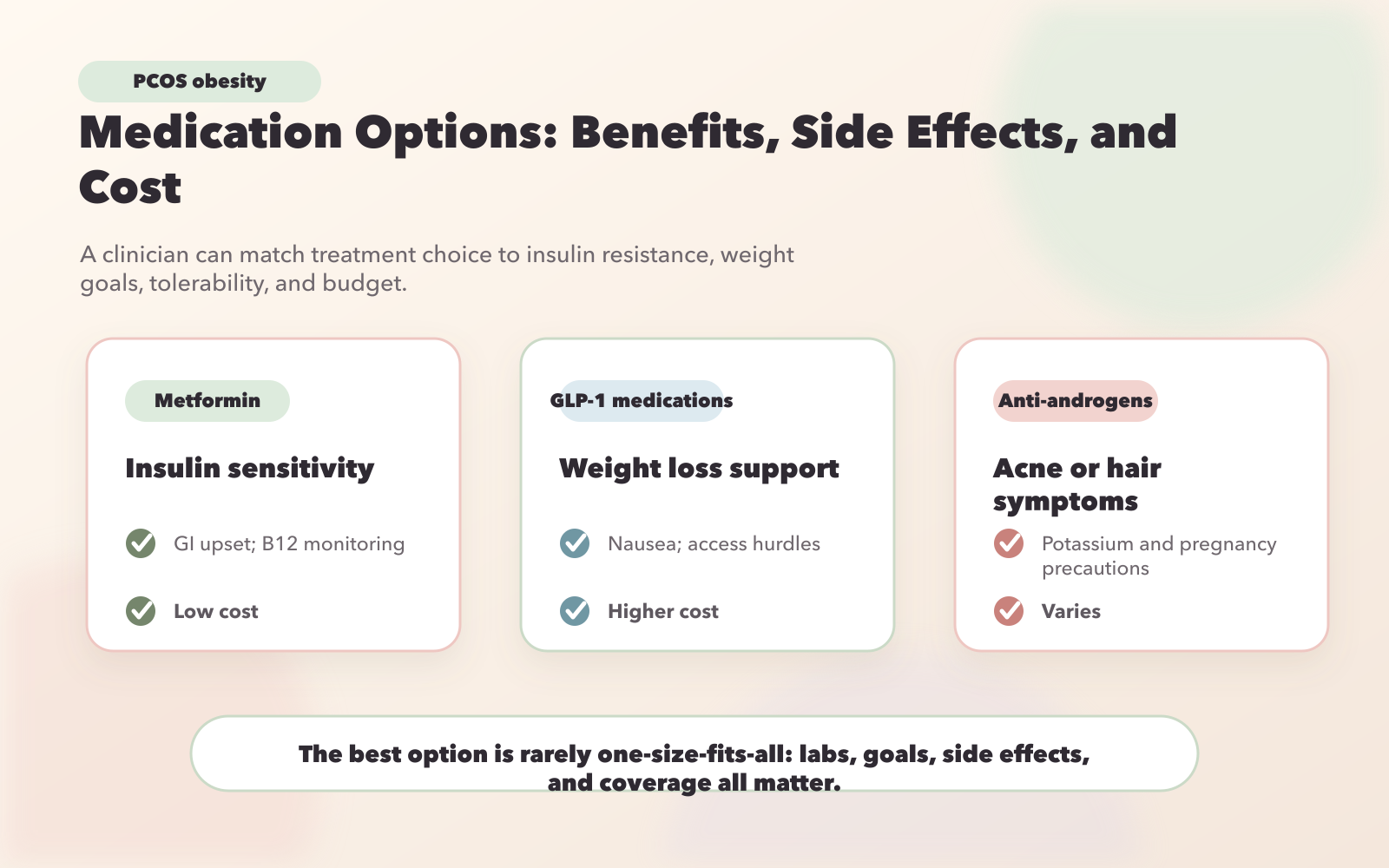
PCOS Obesity Medications: Efficacy, Side Effects, and Cost Comparison
When it comes to managing weight and addressing PCOS symptoms, each medication comes with its own set of benefits and challenges. Factors like effectiveness, side effects, and cost all play a role in determining the right choice for each individual.
Metformin is widely known for improving insulin sensitivity and regulating menstrual cycles. However, its weight loss effects are modest, typically around 2%–5%. Many patients experience gastrointestinal discomfort, such as diarrhea and nausea, especially during the initial weeks of treatment.
GLP-1 receptor agonists, including Semaglutide and Liraglutide, have shown impressive results in weight loss, with Semaglutide averaging around 15% and Liraglutide around 8%. These medications also reduce testosterone levels by roughly 33%. However, gastrointestinal side effects like nausea and diarrhea are common. For those considering these advanced treatments, Oana Health offers telehealth consultations, making it easier to access GLP-1 medications delivered directly to your home.
Combination therapies that pair GLP-1 agonists with Metformin can improve both weight loss and metabolic outcomes. However, this approach may also increase the risk of gastrointestinal side effects.
Phentermine/Topiramate ER offers a middle-ground option, with weight loss ranging from 7% to 11%. However, this medication carries a risk of birth defects, so effective contraception is strongly recommended during its use.
To simplify the comparison, here’s a table summarizing key metrics for these medications:
| Medication | Avg. Weight Loss | Insulin Improvement | Androgen Reduction | Common Side Effects | Monthly Cost |
|---|---|---|---|---|---|
| Metformin | 2–5% | High | Modest | Diarrhea, nausea, GI upset | $10–$73 |
| Liraglutide | ~8% | Moderate to High | Significant | Nausea, constipation, vomiting | $1,100+ |
| Semaglutide | ~15% | High | Significant | Nausea, diarrhea, fatigue | $1,133 |
| Tirzepatide | 21–22.5% | Very High | Significant | Nausea, diarrhea, decreased appetite | High (varies) |
| Phentermine/Topiramate | 7–11% | Moderate | Limited data | Insomnia, dry mouth, dizziness | $140–$195 |
| Naltrexone/Bupropion | 5–6% | Minimal | Limited data | Nausea, constipation, headache | $240 |
It's worth noting that weight regain is a common challenge, making long-term therapy a key consideration. If a patient does not achieve at least 5% weight loss within 12 to 16 weeks at the maximum tolerated dose, healthcare providers may recommend exploring alternative options.
Conclusion
Addressing PCOS-related obesity calls for a tailored approach, as the condition involves a range of challenges like insulin resistance, metabolic concerns, and weight management. Among available treatments, GLP-1 receptor agonists, such as liraglutide, have emerged as the top choice for PCOS patients with obesity due to their effectiveness in promoting weight loss. Meanwhile, metformin remains a cornerstone therapy, particularly for improving insulin sensitivity and regulating menstrual cycles.
Even a small weight loss - around 5% to 10% of initial body weight - can lead to noticeable improvements in metabolic, hormonal, and reproductive health for those with PCOS. As Dr. Lee Radosh explains:
"PCOS is not a simple pathophysiologic process for which one treatment addresses all manifestations... therefore, physicians must individualize treatment goals and target treatment to specific manifestations".
For individuals who don't achieve desired results with a single medication, combination therapies may provide additional benefits. However, such strategies require close monitoring to manage potential side effects. It's also crucial to note that most weight-loss medications are not safe during pregnancy, making effective contraception a key consideration during treatment.
Accessing personalized care has become more convenient than ever. Platforms like Oana Health connect patients with licensed medical professionals who can prescribe treatments tailored to their needs. Whether it's metformin starting at $22 per month or advanced GLP-1 therapies, Oana Health delivers these medications directly to your doorstep with free shipping, making evidence-based care both affordable and accessible.
Ultimately, managing PCOS-related obesity involves a collaborative effort with healthcare providers to find the right treatment plan that aligns with your specific goals and needs.
FAQs
What are the best medications for managing weight in women with PCOS?
For women managing PCOS, GLP-1 receptor agonists - such as liraglutide and semaglutide - have proven to be highly effective for weight management. These medications not only aid in weight loss but also enhance insulin sensitivity, addressing a common challenge faced by those with PCOS.
There’s also emerging interest in SGLT-2 inhibitors and phosphodiesterase-4 inhibitors. While early studies hint at potential benefits, their effectiveness isn't as well-established and requires more research. It’s essential to discuss these options with a healthcare provider to find the best approach for your individual needs.
What are the differences between GLP-1 agonists and metformin for managing PCOS symptoms?
GLP-1 receptor agonists have proven to be more effective than metformin alone in helping individuals with PCOS manage their health. They not only aid in reducing body weight but also improve insulin resistance and lower circulating androgen levels. When combined with metformin, these medications can offer added metabolic and hormonal advantages, surpassing what metformin achieves on its own.
These treatments are especially useful for tackling weight-related issues and enhancing insulin sensitivity - two common challenges in managing PCOS. If you're exploring medication options for PCOS, it's important to consult a healthcare provider to find the treatment plan that's right for you.
What are the potential long-term side effects of combination therapies for managing PCOS-related obesity?
The long-term effects of using combination therapies, like metformin alongside GLP-1 receptor agonists, remain an area of ongoing study. So far, research indicates these treatments are generally well-tolerated, though the available safety data is still somewhat limited. No major evidence has surfaced linking them to serious long-term adverse effects.
Staying in close communication with a healthcare provider is crucial when undergoing these therapies. Regular monitoring can help address any concerns and ensure the treatment is working effectively. Services like those provided by Oana Health focus on offering personalized care, tailoring treatment plans to fit individual needs for safer and more effective outcomes.