
Proper Minoxidil Use for PCOS Hair Loss
Hair loss from PCOS can feel overwhelming, but Minoxidil offers a proven way to promote hair regrowth. It works by stimulating hair follicles, extending the growth phase, and improving scalp blood flow. Available in topical and oral forms, consistent use for 2–4 months can show visible results, with maximum improvement often seen after a year.
Key Points:
- Topical Minoxidil: Comes in 2% and 5% strengths. The 2% is FDA-approved for women, while the 5% delivers stronger results but may cause side effects like scalp irritation or unwanted facial hair.
- Oral Minoxidil: A low-dose, once-daily pill that’s convenient but used off-label for hair loss. It may cause mild systemic effects like hypertrichosis.
- Combination Treatments: Pairing Minoxidil with hormonal therapies like Spironolactone can address both symptoms and underlying causes of PCOS-related hair thinning.
Consistency is critical. Stopping treatment can reverse progress within 3–6 months. For best results, consult a doctor to create a customized plan that aligns with your needs.
How Minoxidil Works for PCOS Hair Loss
PCOS and Hair Loss: The Connection
Polycystic Ovary Syndrome (PCOS) often leads to elevated levels of androgens - hormones that have a direct impact on hair follicles. When androgens bind to these follicles, they gradually shrink, resulting in androgenetic alopecia. Unlike the abrupt hair loss caused by stress or illness (known as telogen effluvium), this type of hair thinning progresses slowly, as hormonal imbalances continuously disrupt the normal function of hair follicles. This ongoing process creates the ideal conditions for Minoxidil to target and support affected follicles.
How Minoxidil Promotes Hair Regrowth
Minoxidil works by enlarging follicles that have been reduced in size and extending the anagen (growth) phase of the hair cycle. This allows hair to grow thicker and longer. Additionally, it may improve blood flow to the scalp, ensuring better delivery of nutrients to hair follicles. Visible results typically start to appear within 2 to 4 months of consistent use. However, some users may notice an initial increase in shedding for about two weeks as older hairs make way for new growth.
"Minoxidil applied to the scalp is used to stimulate hair growth in adult men and women with a certain type of baldness. The exact way that this medicine works is not known." - Mayo Clinic
Why Minoxidil Is Recommended for Women
Topical Minoxidil is often the first treatment choice for women experiencing hair loss, particularly in cases of female pattern baldness, due to its established safety and effectiveness - even with long-term use. It’s considered a low-risk option for women who are breastfeeding and tends to work best for younger individuals or those with more recent hair loss. However, stopping treatment can result in the loss of regrowth within about three months.
"Studies in women suggest that this medication poses minimal risk to the infant when used during breastfeeding." - Mayo Clinic
To maintain results and achieve the best possible outcome, consistent application is crucial. Regular use is the key to keeping hair regrowth steady and preventing further loss.
Experiencing Increased Hair Shedding With Minoxidil Treatment | Androgenic Alopecia Update
Choosing the Right Minoxidil Product
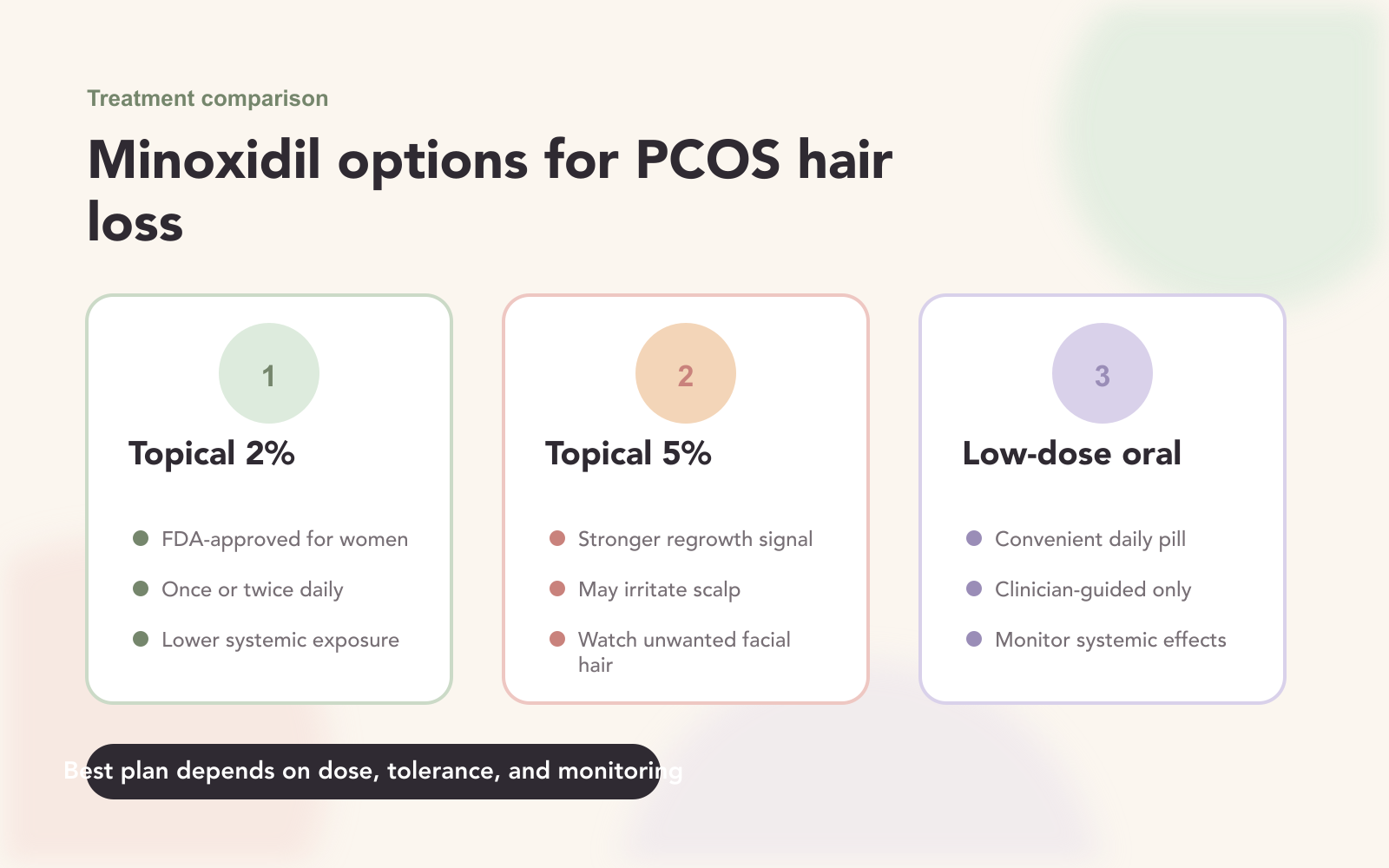
Minoxidil Treatment Options Comparison for PCOS Hair Loss
2% vs 5% Minoxidil: Which Strength to Use
The 2% Minoxidil formula is FDA-approved for women and is often the recommended starting point. It's applied twice daily, with about 1 mL per application, and works well for addressing early-stage thinning. Plus, it minimizes the risk of side effects like unwanted facial hair growth, which is particularly important for women dealing with PCOS.
The 5% Minoxidil option can deliver more noticeable hair regrowth. Research suggests that using the 5% formulation once daily may yield better results. However, the stronger concentration comes with a higher chance of side effects, such as facial hair growth and scalp irritation. If the 2% solution doesn’t provide the desired results after several months, your doctor might suggest switching to the 5% version for more effective follicle stimulation.
To reduce irritation, consider foam formulations, as they don't contain propylene glycol - a common culprit behind scalp discomfort in liquid solutions.
Topical vs Oral Minoxidil: Key Differences
Topical Minoxidil is applied directly to the scalp, typically twice a day. While the 2% version is FDA-approved for female pattern hair loss, some users experience challenges like initial shedding, scalp irritation, or difficulty maintaining a consistent routine.
Low-dose Oral Minoxidil (0.25–1.25 mg daily) offers a simpler alternative. Taken as a once-daily pill, studies show that 61–86% of women with female pattern hair loss have seen improvements. This option eliminates the mess and irritation of topical applications, making it easier to stick with. However, since oral minoxidil was originally developed to treat high blood pressure, its use for hair loss is considered off-label. It also carries a slightly higher risk of hypertrichosis (unwanted hair growth in other areas). At low doses, side effects like headaches or low blood pressure are rare, and it’s often paired with spironolactone to manage fluid retention and further support hair regrowth, especially in women with PCOS.
| Aspect | 2% Topical | 5% Topical | Oral (0.25–1.25 mg) |
|---|---|---|---|
| Effectiveness | Moderate regrowth | Higher regrowth | Comparable to 5% topical |
| Application | Twice daily; can be messy | Once or twice daily; foam helps | Daily pill; very convenient |
| Side Effects | Scalp irritation and shedding | Higher risk of irritation and facial hair growth | Hypertrichosis; rare headaches |
| Best For | First-line treatment for women with PCOS | Cases resistant to 2% treatment | Those intolerant to topical applications |
| FDA Status | FDA-approved for women | Often used off-label for women | Off-label for hair loss |
Selecting the right option depends on your lifestyle and how well you tolerate each method.
Oana Health Minoxidil Treatment Options
Oana Health offers specialized treatments tailored for women dealing with PCOS-related hair loss, making it easier to choose the right option for your needs.
- Oral Minoxidil is available for $25 per month. This once-daily pill is a great choice if you experience scalp irritation or have trouble sticking to a twice-daily topical routine.
- Hair Plus Plus, priced at $40 per month, combines 5% Minoxidil with 0.001% Retinoic Acid for better absorption and 0.005% Latanoprost to enhance hair density and prolong the growth phase. Apply 1 mL to your scalp once nightly.
- Topical Spironolactone is offered at $43 per month and can be used alongside Minoxidil to address the hormonal causes of PCOS-related hair loss.
Each treatment includes a brief online medical consultation for $20, conducted by licensed physicians. Medications are custom-prepared in FDA-regulated pharmacies and shipped to your door for free.
"Discovering spironolactone changed everything for me... since starting on my treatment, I've noticed a huge improvement. It's helped my skin and my hair is continually growing in thicker."
- Susanne H., Oana Health Patient
In the next section, we’ll dive into how to apply these treatments effectively to achieve the best results.
How to Apply Minoxidil: Step-by-Step Instructions
Preparing Your Scalp
Before applying minoxidil, make sure your scalp and hair are completely dry. If your scalp is damp from sweat or humidity, the absorption of the product might be less effective.
Take a moment to examine your scalp for any redness, irritation, cuts, or signs of sunburn. If your scalp feels painful, irritated, or shows signs of infection, avoid using minoxidil until it has healed. In such cases, it’s best to consult your doctor.
To ensure the product reaches your scalp, part your hair into rows, focusing on areas where thinning is most noticeable, like the crown or midline. This helps the solution or foam penetrate the skin instead of just coating your hair strands. Additionally, avoid applying other hair or skin products to the same area when using minoxidil.
Applying Minoxidil: Correct Dosage and Method
Use the correct dosage: measure 1 mL of the 2% solution or half a capful of the 5% foam. A dropper works well for the solution, while the foam can be dispensed onto a cool, dry surface to prevent it from melting too quickly. If you’re using foam, rinse and dry your fingers before handling it.
Apply the product directly to the center of the thinning area on your scalp, avoiding your hair. Gently spread and massage the product into your scalp using your fingers. Foam tends to dry faster and is less likely to drip, making it a good choice for larger areas, while the solution is better for targeting smaller spots .
Once applied, follow the proper post-application steps to maximize absorption.
After Application: What to Do Next
Wash your hands immediately after applying minoxidil to avoid accidentally transferring it to other areas. If the product comes into contact with your eyes, nose, or mouth, rinse thoroughly with cool water.
Let the product air dry for about 10–15 minutes before styling your hair lightly. For full absorption, allow 2–4 hours of drying time and avoid using a hairdryer. If you must use one, ensure it’s set to a cool setting .
To get the best results, avoid washing or wetting your hair for at least 4 hours after application . If you plan to color or perm your hair, skip applying minoxidil for 24 hours before and after these treatments. Once your scalp is completely dry, you can resume using styling products.
sbb-itb-6dba428
Staying Consistent: Tracking Your Progress
Daily Use Is Key for Results
For minoxidil to work effectively, you need to apply it twice a day to keep stimulating your hair follicles. Typically, it takes about 2 to 4 months of consistent use before you start seeing noticeable changes. If you miss a dose, apply it as soon as you remember - unless it’s almost time for your next application. In that case, just skip the missed dose and stick to your regular schedule. Doubling doses is not recommended. To stay motivated, it’s a good idea to monitor your progress methodically.
How to Track Your Hair Regrowth
Tracking your progress can help you measure how well the treatment is working and keep you motivated. A simple way to do this is by taking clear, well-lit photos of your scalp every month. Use the same angles and lighting each time, focusing on the areas where hair thinning is most noticeable.
Here’s a quick guide to what you might observe at different stages:
| Tracking Milestone | What to Look For or Do |
|---|---|
| 2 Weeks | You might notice continued hair shedding. |
| 4 Months | Check for visible hair growth. If you don’t see any improvement, reach out to your doctor. |
| Ongoing | Schedule regular check-ins with your doctor to monitor progress and address any side effects. |
| Post-Treatment | Be aware that stopping treatment may lead to hair loss resuming within a few months. |
If you don’t see results after 4 months of consistent use, it’s time to consult your doctor. They can help you explore other options. For better results, consider combining minoxidil with treatments that target the root cause of hair loss, especially if it’s related to PCOS.
Combining Minoxidil with Other PCOS Treatments
Using minoxidil alongside hormonal treatments can tackle both the symptom - hair loss - and its underlying cause. For example, medications like spironolactone can help block androgens, which are often responsible for hair thinning. Oana Health offers tailored PCOS treatment plans that pair minoxidil with other prescription options to address multiple symptoms, such as acne, hair loss, and insulin resistance. Partnering with a healthcare provider who specializes in PCOS ensures you’re addressing both follicle stimulation and hormonal balance at the same time.
Side Effects and Safety Guidelines
Using minoxidil effectively means not only applying it correctly but also understanding potential side effects and following safety precautions.
Common Side Effects and How to Manage Them
Most side effects of minoxidil are mild and localized. For topical minoxidil, users may experience scalp issues like itching, dryness, flaking, or contact dermatitis. Less common effects include acne at the application site or changes in hair texture . For oral minoxidil, side effects might include unwanted facial hair growth (hypertrichosis), headaches, insomnia, low blood pressure, or a rapid heartbeat.
It's also normal to notice some initial shedding between weeks 2 and 4 of treatment, which typically resolves by week 6. To minimize irritation, apply minoxidil to a dry scalp and skip using a hairdryer afterward, as heat can reduce its effectiveness. Always wash your hands after applying to avoid accidentally transferring the product to other areas, like your face. Since minoxidil can make your scalp more sensitive to sunlight, consider wearing a hat or protective clothing when spending time outdoors.
Next, let’s look at who should steer clear of minoxidil to ensure safe usage.
Who Should Avoid Minoxidil
Minoxidil isn’t for everyone. Avoid using it if you’re allergic to any of its ingredients. It should not be applied to an irritated, infected, sunburned, or damaged scalp, as these conditions can increase absorption and raise the risk of systemic side effects. If you have pre-existing conditions like heart disease, high blood pressure, kidney, or liver problems, consult your doctor before starting.
The safety of minoxidil hasn’t been confirmed for children or adults over 65. Women who are pregnant or planning to become pregnant should discuss its use with their healthcare provider. While studies suggest minimal risk during breastfeeding, it’s still a good idea to consult a doctor. Additionally, to avoid irritation, wait at least 24 hours before or after using hair treatments like coloring, relaxers, or perms.
If you fall into any of these categories or experience persistent symptoms, the next section explains when to seek medical advice.
When to Contact Your Doctor
Stop using minoxidil and contact your doctor immediately if you experience serious symptoms like chest pain, rapid heartbeat, or dizziness. Unexplained weight gain may also indicate excessive absorption and should be reported. If scalp irritation - such as redness, burning, or itching - becomes severe or doesn’t go away, seek medical advice.
If you don’t see any improvement after 4 months of use, it’s time to consult your doctor. While initial shedding is expected, ongoing hair loss for more than 2 weeks after starting treatment should also prompt a call to your healthcare provider.
Roughly 1% of patients stop taking oral minoxidil because of side effects. However, with consistent use and proper monitoring, women can achieve a 14% to 18% increase in scalp hair within a year. Addressing side effects promptly ensures you stay on track with your treatment and maximize results.
What to Expect: Results and Long-Term Use
When using minoxidil, consistency and patience are crucial. This treatment works over time, and understanding the timeline and commitment required can help set realistic expectations for its use and results.
Timeline for Seeing Results
Minoxidil doesn't provide instant results - it takes time. You’ll need to apply it daily for at least 2 to 4 months before you might notice any improvement. During the first two weeks, don’t be alarmed if you experience increased shedding. This is normal as your hair adjusts to the treatment.
If, after four months of consistent use, you don’t see any new growth, it’s a good idea to consult your healthcare provider to explore other options. For most women, the best results are achieved around the 12-month mark, so sticking to the routine is essential for success.
Maintaining Your Results Over Time
To keep the hair regrowth achieved with minoxidil, ongoing use is necessary. If you stop applying it, hair loss will likely resume within 3 to 6 months. Regrown hair typically falls out within a few months of discontinuing treatment. Studies also show that about 95% of the applied minoxidil leaves your system within four days of stopping.
In one study, 40% of men who stopped using topical minoxidil saw their hair counts drop below their original baseline levels. If you’re considering switching to a different treatment, it’s best to use the Overlap Method - start the new medication while continuing minoxidil for 2 to 3 months to prevent sudden shedding. Taking monthly photos for 6 to 12 months can also help track progress when transitioning treatments.
Minoxidil Comparison: Topical vs. Oral
Choosing between topical and oral minoxidil depends on your preferences and tolerance for side effects. Both require lifelong use to maintain results, but their application methods and potential side effects differ:
| Feature | Topical Minoxidil (Foam/Solution) | Oral Minoxidil (Tablet) |
|---|---|---|
| Efficacy | Effective for targeted scalp regrowth | Effective; systemic absorption may be more convenient for some |
| Common Side Effects | Scalp irritation, like itching, redness, or dryness | Possible systemic effects, such as dizziness or headaches |
| Maintenance | Must be applied twice daily | Taken once daily |
If the liquid solution causes scalp irritation, switching to the foam version often resolves the issue within a few days. Regardless of which form you choose, consistency is the key to both achieving and maintaining results.
Conclusion
Minoxidil has been shown to promote hair regrowth in women with PCOS when used properly. For the best results, apply 1 mL to a clean, dry scalp twice a day, and commit to the routine for at least 3–6 months. Depending on your skin's tolerance, you can choose between 2% or 5% formulations, and if irritation occurs, switching to the foam version might help.
Here’s a quick recap: consistent application can improve regrowth by 40–60%. To stay on track, consider setting reminders for your morning and evening applications, and take monthly photos to monitor your progress. Don’t be alarmed by initial shedding during the first couple of weeks - that’s often a sign that the treatment is starting to work.
For even better results, pairing minoxidil with hormone-balancing therapies can address both the hair loss itself and the hormonal imbalance driving it. This dual approach increases your chances of achieving long-term improvements.
If you’re looking to get started or need expert advice, Oana Health provides personalized, prescription-based solutions delivered right to your door. Their licensed professionals can guide you in choosing between topical and oral minoxidil, fine-tune your dosage, and integrate the treatment with other PCOS therapies for a more comprehensive plan.
Take the first step toward thicker, healthier hair and renewed confidence today.
FAQs
How does Minoxidil help with PCOS-related hair loss?
Minoxidil helps improve hair growth by boosting blood flow to the scalp. This increase in circulation delivers more oxygen and nutrients to hair follicles, which can enlarge them, extend the hair growth cycle, and encourage healthier, thicker regrowth. For women dealing with PCOS, Minoxidil also combats the effects of androgens - hormones that can shrink follicles and cause hair thinning.
The secret to seeing results with Minoxidil is consistency. Sticking to regular applications as instructed can lead to noticeable improvements over time, making it a reliable option for addressing PCOS-related hair loss.
What side effects should women with PCOS be aware of when using 5% Minoxidil?
Using 5% Minoxidil can sometimes lead to scalp irritation, which might include redness, itching, or dryness. It’s also common for some women to experience temporary hair shedding when they first begin treatment. This shedding happens because weaker hairs are being replaced by stronger ones as part of the natural hair growth cycle.
In rare instances, Minoxidil may cause unwanted facial or body hair growth, particularly if the product accidentally comes into contact with other areas of the skin. While extremely rare, systemic side effects like dizziness or changes in heart rate can occur. If you experience any severe or unexpected reactions, reaching out to a healthcare provider right away is essential.
Can I combine Minoxidil with other treatments to manage PCOS-related hair loss?
Yes, Minoxidil can be used alongside other treatments to enhance its effectiveness for PCOS-related hair loss. Combining it with medications like spironolactone (an anti-androgen) or metformin (an insulin-sensitizing agent) tackles both hormonal imbalances and follicle health, encouraging stronger and more sustained hair regrowth. Finasteride, which lowers DHT levels, may also be paired with Minoxidil, but it’s essential to avoid it if you’re pregnant or planning to become pregnant.
To maximize results, you can also incorporate lifestyle adjustments that help reduce insulin resistance and androgen production. Eating a balanced diet and staying active regularly can speed up visible improvements and support long-term benefits. For added convenience, Oana Health offers personalized telehealth plans that combine Minoxidil with complementary treatments, delivered straight to your door.