
Latest Research on Probiotics and Metformin Use
Struggling with metformin’s digestive side effects? Probiotics might be the answer.
Here’s what you need to know:
- Metformin, a common treatment for type 2 diabetes and PCOS, often causes gastrointestinal issues like diarrhea, nausea, and bloating.
- Up to 35% of users experience these side effects, and 13% may discontinue due to intolerance.
- Probiotics can help restore gut balance, reducing side effects by up to 82% and improving treatment adherence from 71.4% to 91.7%.
- Studies also show probiotics enhance metformin’s impact on blood sugar control, with greater HbA1c and fasting glucose reductions.
Probiotic strains like Bifidobacterium animalis subsp. lactis (BB-12) and multi-strain formulations have shown the best results. Combining probiotics with metformin not only improves gut health but may also support hormonal balance in women with PCOS.
If metformin’s side effects are holding you back, adding probiotics to your routine could make a big difference.
How Metformin Affects Gut Health
Changes in Gut Bacteria from Metformin
Metformin doesn’t just lower blood sugar - it also has a noticeable impact on gut bacteria. The drug increases the presence of certain short-chain fatty acid (SCFA)-producing bacteria like Akkermansia muciniphila, Phascolarctobacterium, and Intestinimonas. While these bacteria help regulate blood sugar levels, they can also contribute to common gastrointestinal issues. At the same time, metformin reduces some beneficial bacterial strains that are crucial for maintaining gut health. For example, a year-long study involving 121 overweight adults taking up to 2,000 mg of metformin daily found reductions in Intestinibacter bartlettii and Roseburia species, which are important for producing butyrate, a compound essential for gut health. On the flip side, it increased levels of Escherichia coli and Ruminococcus torques.
Another way metformin affects the gut is by altering bile acid absorption in the small intestine. This leaves more bile acids in the colon, which can lead to osmotic diarrhea. Additionally, the drug boosts lactate production in intestinal cells and acts similarly to 5-HT3 receptor agonists, which may result in a buildup of serotonin and histamine. For those with specific genetic variations in the OCT1 gene, these effects can intensify due to higher concentrations of metformin in the intestines.
"Metformin promotes the secretion of intestinal hormones such as GLP-1 by increasing the abundance of SCFA-producing bacteria, which not only plays an anti-diabetic role, but also may cause gastrointestinal adverse events."
– Yuxin Huang et al., Huadong Hospital Affiliated to Fudan University
Metformin’s influence extends to 62 metabolic pathways in the gut, including those tied to acetate production and glucose metabolism. A clinical study at Huadong Hospital observed that 50 patients newly diagnosed with type 2 diabetes, who were treated with 1,500 mg of metformin daily for 12 weeks, showed increased propanoate metabolism and higher fecal levels of acetic and propanoic acid.
These changes in gut bacteria and metabolism provide a foundation for understanding the digestive side effects associated with metformin.
Digestive Side Effects of Metformin
Digestive issues are a common complaint among metformin users. Between 20% and 35% of patients experience side effects like diarrhea, nausea, vomiting, abdominal pain, and bloating. These symptoms are even more frequent in older adults (about 54%) and those infected with Helicobacter pylori (around 62%). For patients just starting metformin, the rate of gastrointestinal symptoms can spike to as high as 80%. In fact, the risk of diarrhea is about 2.5 times higher for metformin users compared to those taking a placebo or other glucose-lowering drugs.
For some, the discomfort is so severe that 2% to 13% of patients are classified as "metformin intolerant". Research from Huadong Hospital highlights that patients who experience these side effects often have higher levels of bacteria like Clostridium sensu stricto, Streptococcus, and Akkermansia compared to those who tolerate the drug well.
"The high frequency (20-35%) of gastrointestinal adverse events was the most prevalent problem with metformin, especially in elderly patients (about 54%) and patients with Helicobacter pylori infection (about 62%)."
– Yuxin Huang et al., Huadong Hospital Affiliated to Fudan University
These findings suggest that probiotics could play a role in restoring gut balance and alleviating some of the digestive issues caused by metformin.
How The Gut Microbiota Interacts With Medications
Using Probiotics to Address Metformin-Related Gut Problems
Metformin alters gut microbiota by increasing Escherichia levels and reducing strains that produce short-chain fatty acids (SCFAs), such as Lactobacillus and Bifidobacterium. Probiotics can help restore this balance by encouraging the growth of these beneficial bacteria, which strengthens the gut barrier and supports healthy glucose metabolism. Clinical trials have provided strong evidence for these benefits.
What Clinical Trials Show
A meta-analysis of 14 clinical trials involving 1,009 participants revealed that probiotics, when added to metformin therapy, reduced gastrointestinal side effects by about 82%. Additional studies conducted in Turkey and Poland reported that probiotics not only alleviated symptoms like abdominal pain, diarrhea, and nausea but also improved treatment adherence (91.7% compared to 71.4%) and enhanced HbA1c reduction (0.9% versus 0.4%).
"The addition of probiotics to metformin therapy is associated with improvement in T2DM outcomes."
– Memon et al.
Probiotic Strains That Work
Among the effective probiotic strains, Bifidobacterium animalis subsp. lactis (BB-12) has been shown to significantly reduce bloating, diarrhea, and abdominal pain. Multi-strain formulations, like Sanprobi Barrier, have also demonstrated positive results. Other beneficial strains include Bifidobacterium bifidum G9-1, which helps lower the incidence of diarrhea and constipation, and combinations of Lactobacillus acidophilus, Bifidobacterium bifidum, and Lactobacillus casei. Starting probiotics on the first day of metformin therapy and continuing for one month can minimize side effects during dose increases.
sbb-itb-6dba428
Metformin Alone vs. Metformin with Probiotics
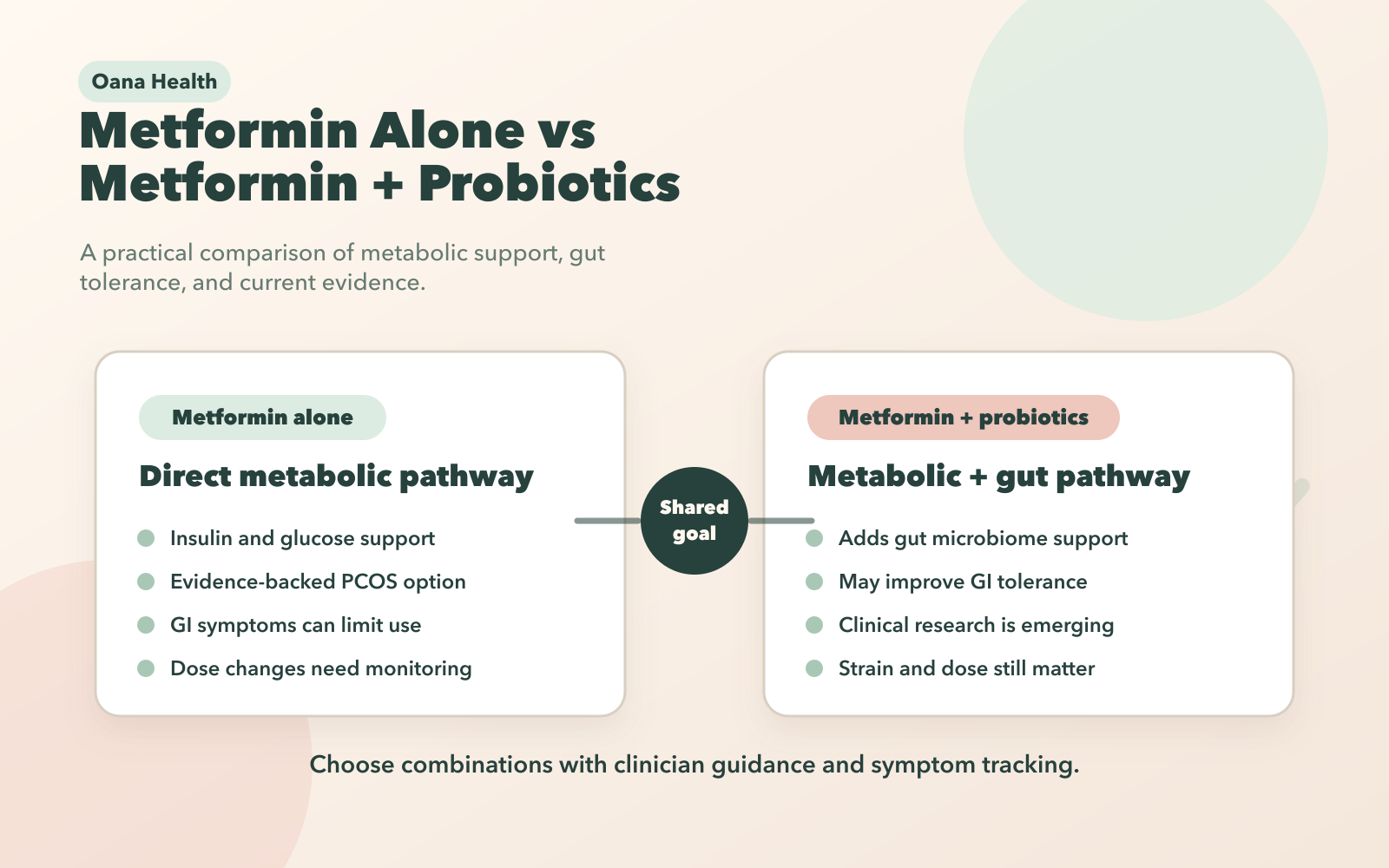
Metformin Alone vs Metformin with Probiotics: Clinical Outcomes Comparison
When comparing metformin on its own to metformin combined with probiotics, the differences in patient outcomes are striking. About 20% of patients taking metformin by itself report gastrointestinal (GI) issues, which often affect their willingness to stick with the treatment.
Research has highlighted how probiotics can make a difference. Studies show that adding probiotics to metformin therapy reduces the likelihood of experiencing GI side effects by a remarkable 82% (OR: 0.18) .
Study Results Comparison
Here’s a breakdown of how probiotics improve outcomes when paired with metformin:
| Outcome Measure | Metformin Alone | Metformin + Probiotics | Statistical Impact |
|---|---|---|---|
| Overall GI Adverse Events | ~20% incidence | Significantly reduced | OR: 0.18 |
| Diarrhea Risk | Up to 13% incidence | 63% reduction | RR: 0.37 |
| Bloating Risk | Common complaint | 74% reduction | RR: 0.26 |
| Constipation Risk | Variable occurrence | 44% reduction | RR: 0.56 |
| Treatment Compliance | 71.4% | 91.7% | P = 0.001 |
| HbA1c Reduction (3 months) | 0.4% | 0.9% | P < 0.001 |
A 2022 study involving 156 participants newly diagnosed with type 2 diabetes or prediabetes provides compelling evidence. Patients taking metformin alongside Bifidobacterium animalis subsp. lactis (BB-12) achieved a compliance rate of 91.7%, compared to just 71.4% in the metformin-only group. In addition, the combination therapy led to a 0.9% reduction in HbA1c levels - more than double the 0.4% reduction seen with metformin alone.
Another notable study, the ProGasMet trial, tracked 37 patients with metformin intolerance over 32 weeks. Results showed that multi-strain probiotics significantly decreased nausea (P = 0.016) and reduced abdominal bloating and pain (P = 0.009).
Benefits for PCOS and Hormonal Health
Probiotics, when paired with metformin, offer more than just gut health perks - they can also support hormonal health, particularly for women managing Polycystic Ovary Syndrome (PCOS). PCOS impacts up to 20% of women worldwide, and metformin is a go-to treatment for addressing insulin resistance and metabolic challenges tied to the condition. Adding probiotics to the mix enhances metformin's effectiveness, not only easing digestive discomfort but also helping to regulate hormones.
This combination targets gut imbalances often linked to insulin resistance and hormonal disruptions in PCOS. Research shows that reduced gut microbial diversity is associated with higher testosterone levels and more pronounced symptoms like hirsutism in women with PCOS. Probiotics help restore this microbial balance, while metformin improves insulin sensitivity, making them a powerful duo. These findings are backed by clinical evidence showcasing their combined benefits.
Clinical trials provide promising results. For example, a 12-week probiotic regimen for women with PCOS led to an increase in Sex Hormone-Binding Globulin (SHBG) levels by 3.95 nmol/ml, whereas the placebo group experienced a drop of 6.49 nmol/ml. Additionally, combining probiotics with metformin resulted in a notable reduction in fasting glucose levels (-0.64 mmol/L) and HbA1c (-0.29%) compared to metformin alone.
"Probiotics may act as an adjunctive to metformin by increasing the production of butyrate, which may consequently enhance glucose management." - Talia Palacios, Charles Perkins Centre, University of Sydney
Treatment Options from Oana Health
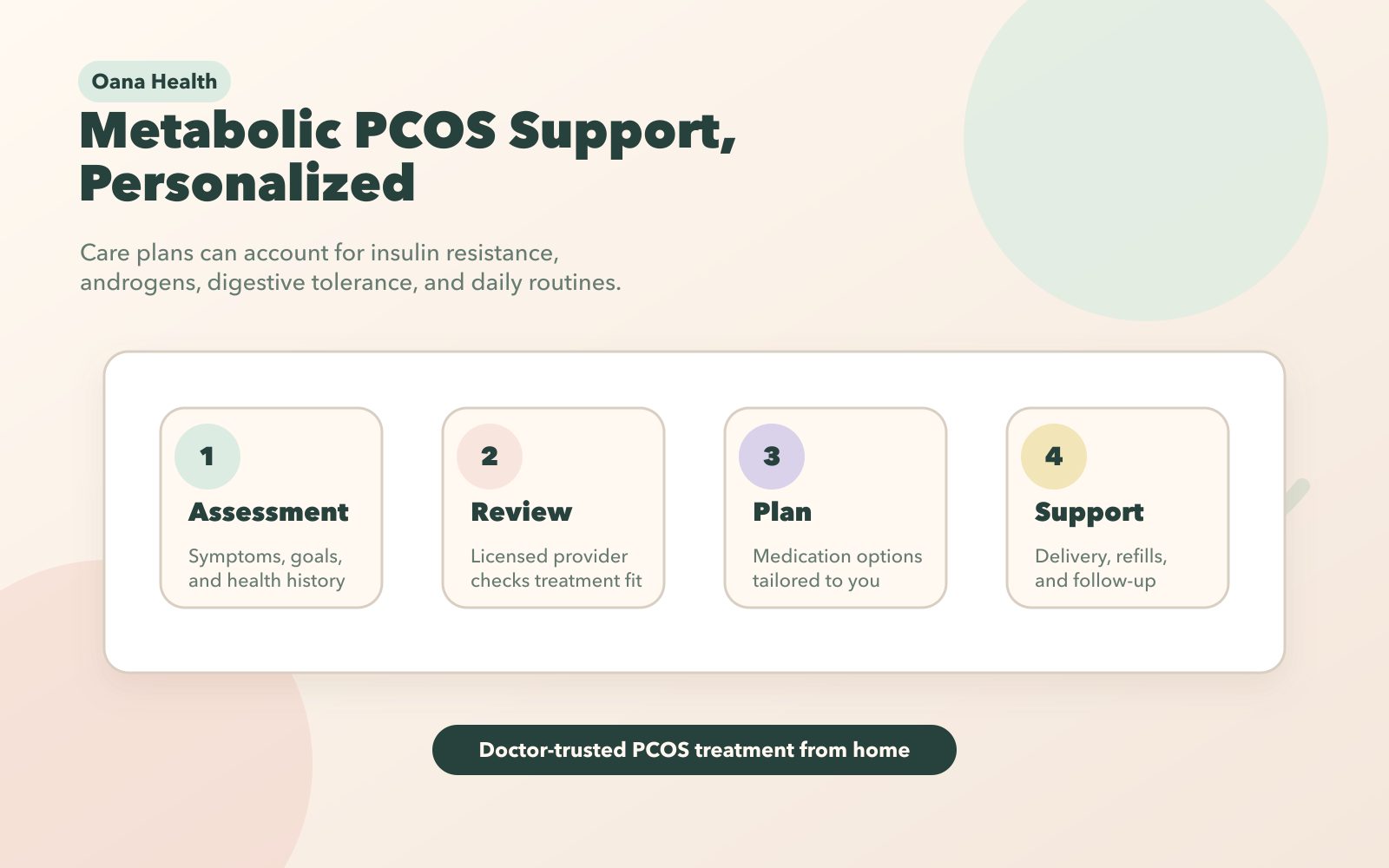
Oana Health has turned these scientific insights into actionable treatment plans. They offer metformin-based therapies tailored for women with PCOS, integrating probiotic support for enhanced results. Their Oral Metformin ER, priced at $22/month, features an extended-release formula designed to improve insulin sensitivity while reducing digestive side effects. For women experiencing both metabolic and hormonal symptoms, such as acne or excess facial hair, the Metformin & Spironolactone pack is available for $32/month, combining the benefits of both medications.
The extended-release formulation is easier on the stomach compared to immediate-release versions. When paired with multi-strain probiotics containing Lactobacillus and Bifidobacterium species, patients report fewer side effects and better metabolic improvements. All treatments are prescribed by licensed healthcare providers after a thorough review of your medical history and come with the convenience of free home delivery.
Conclusion
Studies indicate that pairing probiotics with metformin can significantly ease gastrointestinal discomfort while enhancing metabolic results. Around 20% of people taking metformin report side effects such as diarrhea, nausea, and bloating. Adding a multi-strain probiotic can reduce the likelihood of these issues, with the odds dropping to an impressive ratio of 0.18. This improvement in tolerability leads to better adherence, with compliance rates climbing from 71.4% to 91.7% when probiotics are included.
The benefits extend beyond digestive relief. This combination also delivers more substantial reductions in HbA1c levels (–0.29%) and fasting glucose (–0.64 mmol/L, approximately –11.5 mg/dL) compared to metformin alone. For women managing PCOS, this dual approach not only tackles insulin resistance but may also help regulate hormonal imbalances, potentially lowering testosterone levels and alleviating symptoms like hirsutism.
"The addition of probiotics to metformin therapy is associated with improvement in T2DM outcomes." - Ambuj Kumar, Professor, University of South Florida
For those experiencing these side effects or seeking better PCOS management, personalized telehealth services can provide solutions. Oana Health offers metformin-based treatments tailored to women facing hormonal and metabolic challenges. Their licensed healthcare providers can create a customized plan that may include extended-release formulations and probiotic suggestions - all conveniently delivered to your door with free shipping.
FAQs
Can probiotics help with the gastrointestinal side effects of metformin?
Yes, probiotics may help alleviate the gastrointestinal (GI) side effects often linked to metformin. This medication can disrupt the natural balance of gut bacteria, leading to issues like nausea, diarrhea, and abdominal discomfort. Probiotics can help by promoting a healthier gut microbiome, which may ease these symptoms and support better digestive health.
By maintaining a balanced gut environment, probiotics might not only reduce GI discomfort but also make metformin easier to tolerate over the long term. If you're dealing with ongoing side effects, it’s worth talking to your healthcare provider about whether probiotics could be a helpful addition to your routine.
What probiotics work best to reduce metformin side effects?
The probiotic strain Bifidobacterium bifidum G9-1 (BBG9-1) has demonstrated promising results in minimizing the gastrointestinal issues commonly linked to metformin use. Studies suggest that this strain can enhance gut health and improve how well the body tolerates the medication.
Adding probiotics like BBG9-1 to your daily routine could help alleviate symptoms such as bloating, diarrhea, and stomach discomfort, while also encouraging a healthier digestive system overall.
Can probiotics help reduce metformin’s side effects and support PCOS management?
Yes, studies indicate that pairing probiotics with metformin can lead to better results for women managing PCOS. Probiotics can ease some of the common digestive side effects of metformin, like bloating and discomfort, while also supporting overall gut health. On top of that, research shows this combination may improve menstrual regularity and boost metabolic markers, including insulin sensitivity and inflammation levels.
Probiotics help by balancing the gut microbiome, which is closely tied to hormone regulation and metabolic health - two crucial aspects of effectively managing PCOS.