
Restorative Yoga for PCOS and Adrenal Fatigue
Restorative yoga can help manage PCOS and adrenal fatigue by reducing stress, balancing hormones, and improving mental health. These conditions often share symptoms like fatigue, irregular periods, weight gain, and anxiety, which are linked to hormonal imbalances and chronic stress. Restorative yoga focuses on relaxation through supported poses and mindful breathing, helping regulate cortisol, testosterone, and other stress-related hormones.
Key findings:
- A 2020 study showed a 29% drop in testosterone levels and a 55% improvement in depression scores after 3 months of yoga.
- Poses like Legs-Up-the-Wall and Reclined Bound Angle improve blood flow, calm the nervous system, and support hormonal balance.
- Yoga complements medical treatments like Metformin or Spironolactone for PCOS, enhancing overall results.
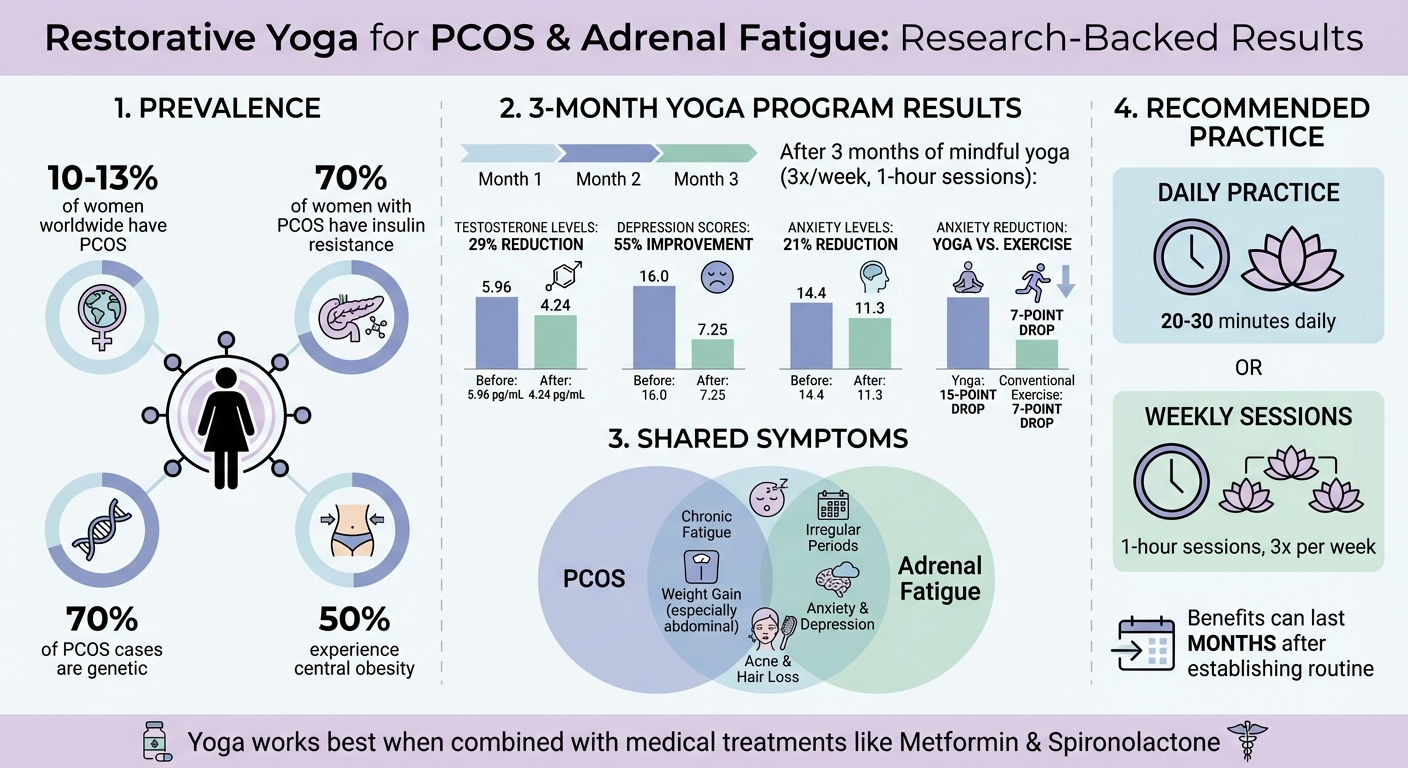
Restorative Yoga Benefits for PCOS and Adrenal Fatigue: Key Statistics
What Are PCOS and Adrenal Fatigue?
PCOS Explained
Polycystic Ovary Syndrome (PCOS) is a hormonal condition that affects women of reproductive age, with 10% to 13% of women worldwide experiencing it. At its core, PCOS is linked to insulin resistance and an overproduction of androgens, which interfere with normal egg development. Insulin resistance makes the ovaries overly sensitive to Luteinizing Hormone (LH), leading to increased testosterone levels and disrupted egg maturation.
"Insulin and androgens are reported to have a reciprocal relationship in PCOS, with an elevation in either hormone stimulating an increase in the other, further perpetuating the pathogenesis of the disorder." – Journal of Osteopathic Medicine
The symptoms of PCOS are diverse and include irregular or absent menstrual cycles, acne, excessive facial and body hair (hirsutism), thinning hair on the scalp, and weight gain, particularly around the midsection. Around 70% of women with PCOS experience insulin resistance, and nearly 50% deal with central obesity. While genetics account for about 70% of PCOS cases, lifestyle factors like obesity and chronic stress can trigger or worsen the condition.
Adrenal Fatigue Explained
Adrenal fatigue, more accurately referred to as HPA axis dysregulation, occurs when the body's stress-response system becomes overwhelmed by chronic stress. Normally, the hypothalamus, pituitary gland, and adrenal glands work in harmony to regulate cortisol and other stress hormones. However, prolonged stress - whether from work, lack of sleep, or emotional strain - pushes the adrenal glands to overproduce cortisol and DHEA (an androgen hormone).
This can lead to a range of symptoms, including extreme fatigue that doesn’t improve with rest, brain fog, irritability, cravings for salty and sugary foods, and difficulty waking up in the morning. In women, elevated DHEA can convert into testosterone, resulting in hormonal imbalances that mimic PCOS symptoms like irregular periods and hair loss.
Common Symptoms Between Both Conditions
PCOS and adrenal dysfunction share a number of overlapping symptoms, many of which are stress-related. Both conditions are associated with chronic fatigue, anxiety, depression, weight gain (especially around the abdomen), acne, and irregular menstrual cycles.
| Symptom | PCOS Connection | Adrenal Connection |
|---|---|---|
| Weight Gain | Insulin resistance | Elevated cortisol leading to abdominal fat |
| Fatigue | Metabolic dysfunction | Chronic stress disrupting the HPA axis |
| Acne and Hair Loss | High levels of ovarian androgens | DHEA converting into testosterone |
| Anxiety/Mood | Hormonal imbalances | Persistent "fight or flight" cortisol states |
This overlap in symptoms highlights the importance of addressing both hormonal imbalances and stress management to tackle these conditions effectively.
15-Minute Yoga for PCOS | Bedtime PCOS Yoga for Sleep
How Restorative Yoga Helps Recovery
Restorative yoga takes a gentler approach compared to high-intensity workouts, focusing on activating your body’s natural relaxation response. This practice helps counter the stress response often tied to conditions like PCOS and adrenal dysfunction. By using props to support poses, restorative yoga encourages your nervous system to shift from "fight-or-flight" mode to "rest-and-digest." Certain positions, like lying down or inverted poses, stimulate baroreceptors - special sensors in your body that signal the brain to reduce stress hormones like epinephrine and norepinephrine. This calming effect sets the stage for improved hormonal balance and better mental health.
Lowering Stress and Cortisol
Chronic stress can overwork the HPA axis, leading to an overflow of cortisol, which worsens PCOS symptoms and adrenal fatigue. Restorative yoga helps interrupt this cycle by activating the parasympathetic nervous system. For example, reclining poses with elevated legs can lower blood pressure, slow heart rate, and calm the mind by engaging specific neural pathways.
"Supine and inverted body positions stimulate baroreceptor activity, inducing reflexes that produce a wide range of relaxing effects, including shifting sympathetic/parasympathetic balance toward predominant parasympathetic nervous system activity." – Sarah M. Corey, PhD, University of California, San Francisco
A 2017 study from Lake Erie College of Osteopathic Medicine revealed that practicing mindful yoga three times a week for three months significantly reduced free testosterone levels - from 5.96 to 4.24 pg/mL - and nearly halved depression scores. These sessions included guided body scans, breathing techniques like ujjayi and alternate nostril breathing, and restorative poses. Even six months after the program ended, participants maintained these hormonal benefits.
Balancing Hormones
Beyond stress relief, restorative yoga also plays a role in regulating hormones. By calming the HPA axis and reducing sympathetic nerve activity, it can help lower androgen levels and improve insulin sensitivity.
Between December 2009 and January 2011, researchers at SVYASA University in India conducted a randomized controlled trial involving 90 adolescent girls with PCOS. The yoga group followed a one-hour daily program for 12 weeks, incorporating poses, breathing exercises, and yogic counseling. Results showed a significant drop in anxiety scores - 14.97 points in the yoga group compared to 7.42 points in a conventional exercise group (P = 0.002). Interestingly, 82.2% of the participants were of normal weight, highlighting that yoga’s hormonal benefits are not solely tied to weight loss.
Improving Mental Health
Women with PCOS face anxiety rates of around 11.6%, and the fatigue linked to adrenal dysfunction can further strain mental health. Restorative yoga tackles these challenges by combining physical relaxation with mindfulness techniques. Practices like meditation and controlled breathing promote a state of "mental silence", helping individuals reframe and manage stress.
"Twelve weeks of a holistic yoga program in adolescents with PCOS is significantly better than physical exercise program in reducing anxiety symptoms." – Ram Nidhi, Division of Yoga and Life Science, SVYASA University
The blend of supportive poses, mindful breathing, and meditation works on multiple levels to enhance mental well-being. By easing anxiety and depression, restorative yoga not only supports emotional health but also contributes to hormonal balance, addressing key symptoms of PCOS and adrenal fatigue. This layered approach likely explains the dramatic improvement in depression scores observed in the Lake Erie study.
Best Restorative Yoga Poses for PCOS and Adrenal Fatigue
Here are three restorative yoga poses designed to help manage symptoms of PCOS and adrenal fatigue. These poses are simple to practice and most effective when held for a longer duration in a calm, cozy environment. They build on the stress-relieving benefits mentioned earlier by addressing specific physical and hormonal imbalances.
Supported Child's Pose
The Supported Child's Pose is a great way to counteract stress-related cortisol spikes. Begin by placing a bolster or pillow on your mat and resting your torso over it, letting your arms relax at your sides. This position not only helps release tension in the lower back - a common area where stress accumulates - but also soothes the adrenal glands, promoting a sense of deep relaxation. By fully letting go in this pose, your nervous system shifts away from a fight-or-flight response, encouraging calmness and balance.
Legs-Up-the-Wall Pose
This gentle inversion is particularly helpful for adrenal recovery. Lie on your back and elevate your pelvis with a folded blanket or bolster while resting your legs vertically against a wall. This position activates baroreceptors, which are blood pressure sensors located in your neck and chest. These sensors help reduce nerve input to the adrenal glands, slow your heart rate, and decrease the levels of norepinephrine in your bloodstream.
"This pose stimulates baroreceptors in the neck and upper chest, triggering reflexes that reduce nerve input into the adrenal glands, slow the heart rate, slow the brain waves, relax blood vessels, and reduce the amount of norepinephrine circulating in the bloodstream." – Roger Cole, Ph.D., Certified Iyengar Yoga Teacher and Research Scientist
If you start to feel fatigued in this pose, try bending your knees while keeping your pelvis supported.
Reclined Bound Angle Pose
To practice the Reclined Bound Angle Pose, lie on your back with the soles of your feet together and let your knees gently fall open to the sides. Use pillows or blankets under your knees for added support. This pose encourages blood flow to the pelvic area, which can support ovarian health and aid hormonal balance. Hold this position for three to five minutes to maximize its benefits.
"In seeking relief from the pain and other symptoms of PCOS, I recommend the more gentle yoga poses, especially those focusing on stretching and relaxation." – Lisa Burnett, Certified Pranakriya Prenatal Yoga Instructor
Incorporating these poses into your daily routine can complement medical treatments and contribute to overall hormonal well-being.
sbb-itb-6dba428
What Research Shows About Restorative Yoga
Research on Yoga for PCOS
Studies show that mindful yoga can have a noticeable impact on managing PCOS symptoms. For instance, a trial conducted in Erie County revealed significant hormonal and emotional improvements after three months of practicing mindful yoga. Participants saw their free testosterone levels drop from 5.96 pg/mL to 4.24 pg/mL. At the same time, depression scores decreased from 16.0 to 7.25, and anxiety levels reduced from 14.4 to 11.3.
"Regular mindful yoga practice can be a useful complementary therapeutic option for women with PCOS, particularly for improving serum androgen levels, a hallmark feature of PCOS." – Vishesha Patel, Journal of Osteopathic Medicine
Another study from Andhra Pradesh, India, compared the effects of holistic yoga with conventional exercise in 90 adolescent girls with PCOS. The yoga group participated in one-hour daily sessions for 12 weeks, which included breathing exercises and meditation. The results were notable: yoga reduced trait anxiety by 14.97 points, while the exercise group saw a smaller reduction of 7.42 points. Even more impressive, the benefits of yoga persisted for several months after the intervention ended.
Further research highlights yoga's ability to address stress-related hormonal imbalances, particularly by influencing adrenal function.
Research on Yoga for Adrenal Fatigue
Yoga also shows promise in regulating cortisol levels, a key factor in stress and adrenal fatigue. In the PRYSMS trial, restorative yoga was compared to low-impact stretching among 171 participants with metabolic syndrome - a condition linked to elevated cortisol and chronic stress. Both groups experienced benefits, but the stretching group showed greater reductions in waking and bedtime salivary cortisol levels. Interestingly, adherence rates were higher for restorative yoga, with 62% of participants sticking to the practice compared to 46% in the stretching group.
"Supine and inverted body positions stimulate baroreceptor activity, inducing reflexes that produce a wide range of relaxing effects... thus reducing blood pressure, lowering plasma epinephrine and norepinephrine levels." – Sarah M. Corey, PhD, UCSF Osher Center for Integrative Medicine
These findings suggest that yoga can help calm the nervous system, shifting it from a state of stress to one of relaxation. This shift supports adrenal recovery and helps balance stress-related hormones.
Combining Restorative Yoga with PCOS Treatments
Using Yoga with Medical Treatments
Restorative yoga, known for its stress-relieving and hormone-balancing benefits, can work hand-in-hand with medical treatments for PCOS. This combination tackles two major culprits behind PCOS symptoms: hormonal imbalances and stress. Together, they target issues like insulin resistance and stress management, offering a well-rounded approach.
Take, for instance, prescription treatments like Metformin & Spironolactone ($32/month) offered by Oana Health. These medications address insulin sensitivity and block androgen receptors, helping manage androgen excess. When paired with restorative yoga, which lowers stress and supports hormonal regulation, the results can be even more effective.
For hair loss - a common PCOS symptom - using Oral Minoxidil ($25/month) alongside yoga poses that improve scalp circulation can help manage stress-related thinning and encourage regrowth. Similarly, for unwanted facial hair, combining Spironolactone with yoga helps address both the hormonal causes and the stress that can worsen hirsutism.
"Yoga regulates the endocrine glands in the body thereby beneficial in balancing of hormones." – Ashwini R. Metangale, Associate Professor, Dept of Prasuti Tantra Evam Stri Roga
Incorporating yoga into your lifestyle not only complements medical treatments but also supports long-term hormonal balance.
Adding Yoga to Your Daily Routine
To get the most out of this combined approach, try making restorative yoga a part of your daily life. A commitment of 20–30 minutes a day, or one-hour sessions three times a week, can lead to noticeable improvements in both hormonal health and mental well-being.
Focus on poses like Reclined Bound Angle Pose (Supta Baddhakonasana) with pillow support, paired with alternate nostril breathing. These practices are known to stimulate ovarian function and help regulate your body’s stress response system.
Clinical research highlights that combining yoga with PCOS treatments can improve menstrual regularity and reduce acne. The key is consistency - many find that the benefits of a regular yoga routine continue to last for months after establishing the habit.
Conclusion
Restorative yoga offers a powerful way to help manage PCOS and adrenal fatigue by addressing hormonal imbalances and chronic stress. Committing to just three one-hour sessions a week for three months can lead to impressive results, including a 29% drop in testosterone levels, a 55% reduction in depression, and a 21% decrease in anxiety.
This practice works beautifully alongside medical treatments. For example, combining yoga with therapies like Metformin & Spironolactone (around $32/month) or Oral Minoxidil (about $25/month) from Oana Health can tackle both the physical and emotional aspects of these conditions.
Experts strongly back this combined approach.
"Yoga as a self-corrective therapy is potentially more cost-effective and enduring. Hence we recommend yoga as both a primary intervention and/or as adjunct to standard medical care." – Ram Nidhi, Division of Yoga and Life Science, SVYASA University
One of the most encouraging aspects of restorative yoga is its lasting impact. Hormonal improvements from consistent practice can continue for months, even if you take a break. Whether you're dealing with insulin resistance, fatigue, or symptoms like unwanted facial hair, pairing yoga with personalized medical care can set the stage for long-term hormonal balance.
To start reaping these benefits, try simple poses like Legs-Up-the-Wall or Reclined Bound Angle, paired with mindful breathing exercises. For additional support, consider exploring Oana Health's telehealth services for tailored prescription treatments.
FAQs
How can restorative yoga help balance hormones in women with PCOS?
Restorative yoga can play a key role in helping women with PCOS manage their hormones by easing stress and soothing the nervous system. Elevated stress levels often lead to increased cortisol, which can further disrupt hormonal balance. Through gentle poses, deep breathing exercises, and meditation, restorative yoga encourages relaxation, helping regulate hormones like insulin, testosterone, and androgens.
With consistent practice, restorative yoga may also help lower androgen levels, boost emotional well-being, and reduce symptoms like anxiety and depression. By addressing both the physical and emotional effects of stress, it provides a well-rounded approach to improving hormonal health and managing PCOS symptoms.
Can restorative yoga help with PCOS and adrenal fatigue, and is it a substitute for medical treatment?
Restorative yoga offers a gentle yet impactful way to help manage symptoms of PCOS and adrenal fatigue. By promoting relaxation and reducing stress, it can play a role in balancing cortisol levels and supporting emotional health - two areas often affected by these conditions.
That said, restorative yoga is not a substitute for medical care. Conditions like insulin resistance, acne, or hair loss require professional medical treatment. Pairing yoga with a tailored treatment plan designed by a healthcare provider can provide a more well-rounded approach to managing these symptoms effectively.
What restorative yoga poses help with stress and hormonal imbalances in PCOS and adrenal fatigue?
Restorative yoga offers an effective way to manage stress and address hormonal imbalances, particularly for conditions like PCOS and adrenal fatigue. Gentle poses such as Child’s Pose (Balasana) encourage deep relaxation and help lower cortisol levels, which can naturally ease stress and promote hormonal balance. Another great option is the Supported Bridge Pose (Setu Bandhasana), known for stimulating the thyroid and supporting overall hormonal health. Seated Spinal Twists are also helpful, as they assist with digestion and blood sugar regulation - two important factors in maintaining hormonal stability.
Research also highlights that mindful yoga practices may reduce elevated testosterone levels in women with PCOS, while easing symptoms like anxiety and depression. By integrating these soothing poses into your routine, you can cultivate a calming practice that nurtures both your mental and physical health.