
5 Key Differences Between Semaglutide and Tirzepatide
Semaglutide and Tirzepatide are two medications often used to address weight gain and insulin resistance in PCOS. Both are weekly injections but differ in how they work, their weight loss results, side effects, and dosing. Here’s a quick breakdown:
- Mechanism: Semaglutide targets GLP-1 receptors, while Tirzepatide activates GLP-1 and GIP receptors for a dual effect.
- Weight Loss: Tirzepatide shows greater weight loss (up to 20.2%) compared to Semaglutide (13.7%).
- Side Effects: Both cause gastrointestinal symptoms, but rates and severity vary slightly.
- Dosing: Tirzepatide has a slower titration schedule, reaching higher doses (15 mg vs. Semaglutide’s 2.4 mg).
- PCOS Benefits: Tirzepatide may provide stronger metabolic improvements, especially for severe insulin resistance.
Quick Comparison
| Feature | Semaglutide | Tirzepatide |
|---|---|---|
| Mechanism | GLP-1 agonist | GLP-1 + GIP agonist |
| Weight Loss (72 wks) | ~13.7% | ~20.2% |
| Side Effects | Mild GI issues | Slightly higher GI rates |
| Max Dose | 2.4 mg | 15 mg |
| PCOS Suitability | Approved in guidelines | Stronger for severe insulin resistance |
Both options can help manage PCOS-related weight and hormonal issues. Choosing the right one depends on your health profile and goals.
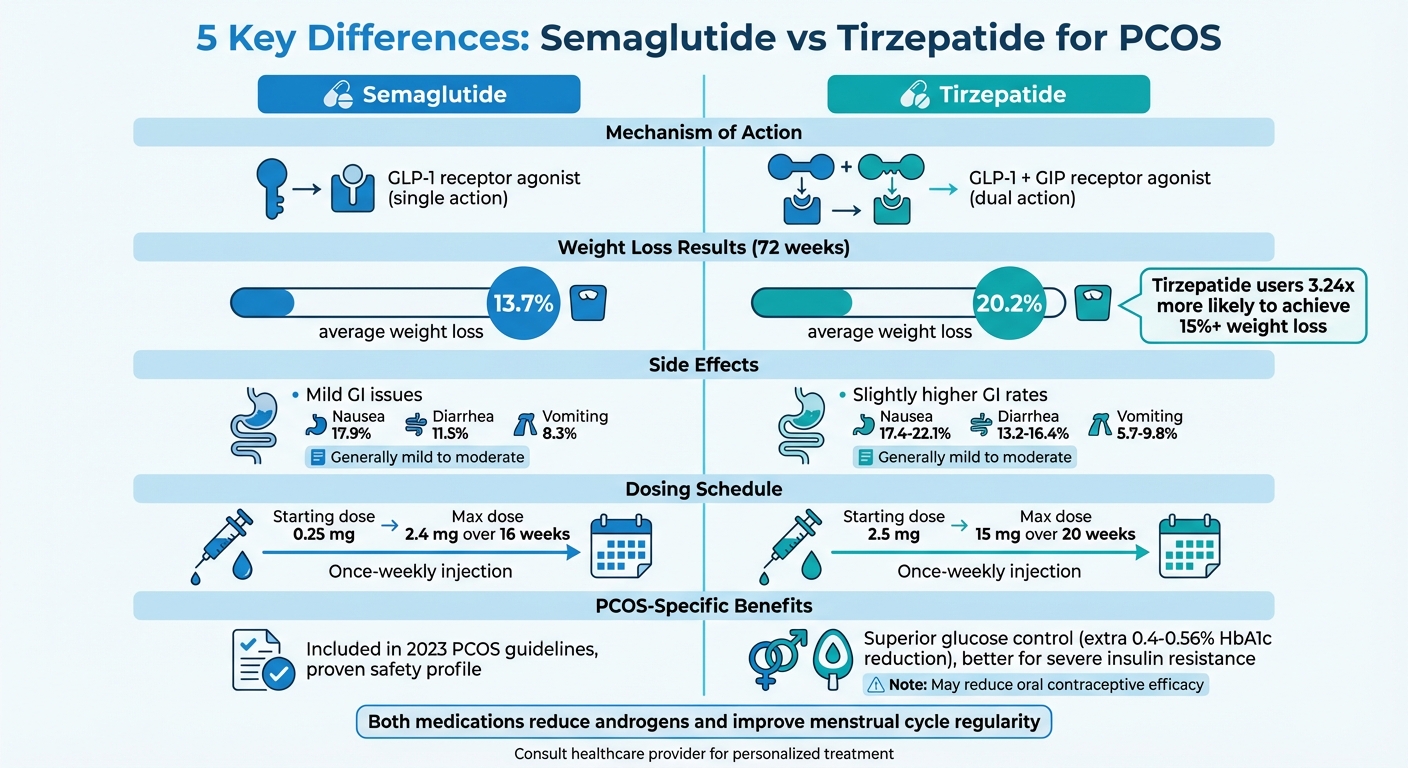
Semaglutide vs Tirzepatide for PCOS: Side-by-Side Comparison
Semaglutide vs Tirzepatide | Which is better?
1. Mechanism of Action
Semaglutide works as a selective GLP-1 receptor agonist, mimicking the natural hormone GLP-1. It plays a key role in regulating blood sugar and appetite through four main processes: it stimulates insulin release when blood sugar levels rise, suppresses glucagon to limit sugar production in the liver, slows down gastric emptying, and influences the brain to reduce cravings.
Tirzepatide, on the other hand, operates as a dual agonist, targeting both GLP-1 and GIP (glucose-dependent insulinotropic polypeptide) receptors. This dual action not only replicates the effects of GLP-1 but also enhances insulin sensitivity in fat tissue, improves lipid metabolism, and boosts levels of adiponectin - a hormone that helps regulate glucose and break down fatty acids. These combined effects make it especially beneficial for improving metabolic health in individuals with PCOS.
"The glucose-dependent insulinotropic polypeptide component of dual glucose-dependent insulinotropic polypeptide–GLP-1 agonism is hypothesized to act centrally to potentiate a GLP-1–induced reduction in food intake." - New England Journal of Medicine
For PCOS patients, who often struggle with insulin resistance, this dual mechanism is particularly impactful. Clinical studies reveal Tirzepatide significantly enhances insulin sensitivity and beta-cell function compared to GLP-1-only therapies. In direct comparisons, a 15 mg dose of Tirzepatide resulted in a 2.30% reduction in HbA1c, outperforming the 1.86% reduction seen with a 1 mg dose of Semaglutide. Additionally, Tirzepatide achieved triglyceride reductions ranging from 18.5% to 24.8%, exceeding the improvements observed with Semaglutide.
The trend in pharmaceuticals is shifting from single-hormone treatments to multi-receptor therapies like Tirzepatide, aiming for stronger metabolic benefits, particularly for conditions like PCOS that involve insulin resistance. Up next, let's delve into weight loss outcomes.
2. Weight Loss Results
Tirzepatide has consistently shown better weight loss outcomes compared to Semaglutide in both clinical trials and real-world studies. This difference is especially relevant for women with PCOS-related obesity, as significant weight reduction can play a key role in improving metabolic health. Let’s dive into the data to see how these two medications compare.
In the SURMOUNT-5 trial, participants taking Tirzepatide experienced an average weight loss of 20.2% over 72 weeks, whereas those on Semaglutide achieved 13.7% weight loss during the same period. Extending treatment to 12–18 months has been shown to further improve weight loss outcomes.
Real-world evidence backs up these trial results. A study led by Dr. Nicholas L. Stucky, published in JAMA Internal Medicine, analyzed electronic health records from 18,386 adults with obesity. It found that Tirzepatide users were 3.24 times more likely to achieve at least 15% weight loss. At the 12-month mark, these participants had lost an additional 6.9% of body weight compared to those taking Semaglutide.
Higher doses of Tirzepatide also make a noticeable difference. For instance, doses above 10 mg can lead to up to 6.5% more weight loss, with the 15 mg dose achieving a 20.9% reduction over 72 weeks. On the other hand, Semaglutide’s best results were seen in the STEP-1 trial, where participants achieved an average weight loss of 14.9% over 68 weeks.
These findings are particularly important for PCOS patients, as they often require substantial weight loss to address metabolic health challenges effectively.
The table below highlights key outcomes from these trials and studies:
| Trial/Study | Duration | Tirzepatide Weight Loss | Semaglutide Weight Loss | Population |
|---|---|---|---|---|
| SURMOUNT-5 | 72 weeks | -20.2% | -13.7% | Obesity without diabetes |
| Real-world cohort | 12 months | -19.2% | -12.3% | General obesity |
| STEP-1 vs. SURMOUNT-1 | 68–72 weeks | -20.9% (15 mg) | -14.9% (2.4 mg) | Obesity without diabetes |
3. Side Effects
Both medications share a similar range of side effects, with gastrointestinal issues being the most frequently reported. These symptoms, such as nausea, diarrhea, and vomiting, are usually mild to moderate and often occur during dose adjustments.
The SURPASS-2 trial offers a detailed comparison over a 40-week period. For Tirzepatide users, nausea was reported in 17.4%-22.1% of cases, compared to 17.9% for those taking 1 mg of Semaglutide. Diarrhea rates ranged from 13.2%-16.4% for Tirzepatide, while Semaglutide users experienced it at a rate of 11.5%. Vomiting occurred in 5.7%-9.8% of Tirzepatide users versus 8.3% on Semaglutide. These side effects also include constipation, abdominal pain, and other digestive discomforts. Notably, treatment discontinuation due to adverse effects was higher with Tirzepatide (6.0%-8.5%) compared to 4.1% for Semaglutide.
When comparing Tirzepatide to the higher 2.4 mg dose of Semaglutide (marketed as Wegovy), the data shifts slightly. Systematic reviews of Phase 3 trials indicate that Tirzepatide at 10 mg and 15 mg doses led to fewer gastrointestinal side effects than Semaglutide 2.4 mg. Additionally, a large-scale real-world study involving over 41,000 adults found that gastrointestinal side effects were comparable between the two medications in everyday clinical use.
These gastrointestinal side effects are particularly important when considering treatment tolerability for PCOS patients. Women with PCOS often experience bloating and digestive discomfort due to insulin resistance, making it essential to manage side effects for better adherence. Starting with a low dose and gradually increasing it can help reduce initial symptoms, which is critical for long-term treatment success. While Tirzepatide’s dual mechanism may heighten gastrointestinal signaling, real-world evidence suggests the difference in tolerability between the two drugs is smaller than expected.
Both medications also carry rare but serious risks, such as pancreatitis and thyroid disorders. Interestingly, Tirzepatide has shown potential benefits in bone formation and kidney protection, which could provide additional long-term advantages for PCOS management.
sbb-itb-6dba428
4. Dosing and Administration
Semaglutide and Tirzepatide are both administered as once-weekly subcutaneous injections, typically in the abdomen, thigh, or upper arm. While their dosing schedules share the same frequency, they differ significantly in starting doses, titration timelines, and maximum doses. These differences can influence how quickly the treatment takes effect and how well it is tolerated.
Semaglutide starts at 0.25 mg and gradually increases to a maximum dose of 2.4 mg over 16 weeks. On the other hand, Tirzepatide begins at 2.5 mg and titrates up to 15 mg over a longer period of 20 weeks. This gradual increase in dosage helps minimize common side effects, particularly gastrointestinal discomfort.
For women with PCOS who are also using oral contraceptives, there’s an additional factor to consider. Tirzepatide slows gastric emptying, which can reduce the effectiveness of oral contraceptives. To address this, patients are advised to either use a non-oral contraceptive method or add a barrier method for four weeks when starting treatment and after each dose adjustment. This highlights the need for careful adherence to titration protocols.
Tirzepatide’s longer titration period means it takes an extra four weeks compared to Semaglutide to reach the maximum therapeutic dose. However, studies have shown that at its highest dose, Tirzepatide delivers better weight loss results than Semaglutide. Despite these promising outcomes, adherence can be a challenge. Real-world data shows that approximately 55.9% of Tirzepatide users and 52.5% of Semaglutide users discontinue treatment within the first year.
If a dose is missed, Tirzepatide can be administered within 96 hours (four days). If this window is missed, the dose should be skipped, and the regular schedule resumed. For PCOS patients, who may already be prone to gastrointestinal side effects, following this structured titration plan is crucial for improving long-term treatment adherence.
5. Which Works Better for PCOS
Deciding between Semaglutide and Tirzepatide for managing PCOS-related obesity depends largely on the severity of your metabolic dysfunction. According to 2023 guidelines, Semaglutide is a trusted first-line treatment with extensive safety data, while Tirzepatide's dual-action mechanism may offer additional advantages for those dealing with severe insulin resistance.
Insulin resistance plays a significant role in PCOS, affecting around 30%–40% of cases. It’s a major factor behind many reproductive and metabolic issues. Among obese women with PCOS, 64% experience insulin resistance compared to only 20% of non-obese women. This makes Tirzepatide's dual agonist mechanism especially appealing for individuals with more pronounced metabolic challenges.
Clinical studies have consistently demonstrated that Tirzepatide leads to greater weight loss compared to Semaglutide. In fact, Tirzepatide increases the likelihood of achieving at least 10% and 15% weight loss by 2.54 and 3.24 times, respectively.
Both medications are effective at reducing testosterone and other androgen levels, which can alleviate symptoms like acne and hirsutism. Additionally, they promote more regular menstrual cycles through metabolic improvements. However, Tirzepatide’s superior glucose control - resulting in an extra 0.4% to 0.56% reduction in HbA1c - might lead to more noticeable hormonal improvements, especially for women with severe insulin-driven androgen excess.
| Feature | Semaglutide | Tirzepatide |
|---|---|---|
| PCOS Guidelines | Included in 2023 guidelines | Not specifically mentioned |
| Weight Loss (72 weeks) | ~13.7% | ~20.2% |
| Waist Reduction | -13.0 cm | -18.4 cm |
| Glucose Control | Significant HbA1c reduction | Superior (-0.4% to -0.56% more) |
| Hormonal Balance | Reduces androgens; improves cycles | Potentially better for insulin-driven androgen excess |
| Contraceptive Interaction | No major interaction | May reduce oral contraceptive efficacy |
For women using oral contraceptives, it’s recommended to use backup barrier methods while on Tirzepatide. Additionally, if you’re planning fertility treatments, both medications should be stopped at least two months before trying to conceive.
These factors emphasize the importance of tailoring treatment to individual needs. For expert guidance, Oana Health provides personalized consultations with licensed medical professionals to help you determine the best option for your PCOS management and overall health goals.
Oana Health Treatments

Oana Health provides telehealth services specifically designed for women dealing with PCOS-related weight and metabolic challenges. With 70% of women with PCOS remaining undiagnosed, telehealth bridges the gap by offering accessible and effective treatment options. This approach not only removes traditional barriers to care but also provides a more budget-friendly alternative compared to conventional medical services.
One standout offering is the Oral Semaglutide GLP-1, priced at $199 per month, a needle-free solution for those who prefer to avoid injections. Considering that branded GLP-1 medications can cost around $1,000 per month without insurance, this option is both practical and affordable. For women requiring more advanced metabolic support, Tirzepatide is available, prescribed after a thorough evaluation of each patient's insulin resistance and PCOS symptoms by licensed medical professionals.
Each treatment plan includes personalized dosing protocols managed by licensed providers. This level of care is essential, especially since 48.6% of patients on Semaglutide and up to 81% on Tirzepatide experience gastrointestinal side effects. Providers carefully adjust dosages over time to minimize discomfort and maximize results.
Adding to the convenience, all medications include free shipping with direct-to-home delivery, eliminating the need for pharmacy trips. This is a significant advantage for PCOS patients, who may face challenges like anxiety or depression that make traditional intervention programs harder to follow.
In addition to aiding weight loss, these treatments offer broader benefits for PCOS management, such as improving insulin resistance, balancing hormones, and regulating menstrual cycles. For more details on personalized treatment options tailored to your needs, visit Oana Health's weight loss platform.
Conclusion
Understanding the differences between Semaglutide and Tirzepatide is essential for managing PCOS-related obesity effectively. Semaglutide acts as a single GLP-1 receptor agonist, while Tirzepatide targets both GLP-1 and GIP receptors, offering a dual-action approach. This mechanism allows Tirzepatide to achieve around 21% weight reduction compared to Semaglutide's 15%. Both medications are associated with gastrointestinal side effects, which are generally manageable. These factors highlight the importance of personalized dosing strategies.
Both treatments involve weekly injections with gradual dose increases to reduce gastrointestinal discomfort. Semaglutide is typically dosed up to 2.4 mg, while Tirzepatide can reach 15 mg. In the context of PCOS, Semaglutide has been included in the 2023 International Evidence-Based Guidelines, and both medications play a role in improving insulin resistance and addressing hormonal imbalances.
"By improving insulin sensitivity and supporting weight management, GLP-1 medications may help address some of the underlying metabolic dysfunction associated with PCOS." – OrderlyMeds
This comparison highlights critical considerations for PCOS treatment. Both medications offer effective tools for addressing obesity and improving metabolic health. The best choice depends on individual factors like your health profile, weight loss goals, and treatment response. Collaborating with healthcare providers who specialize in PCOS ensures you receive a personalized plan that minimizes side effects while optimizing results.
If you're exploring treatment options, Oana Health's weight loss platform provides customized plans featuring Oral Semaglutide GLP-1 and Tirzepatide. With licensed professionals, expert guidance, free shipping, and home delivery, managing PCOS-related metabolic challenges becomes more accessible and effective.
FAQs
What are the key differences in how Semaglutide and Tirzepatide work for managing PCOS-related obesity?
Semaglutide and Tirzepatide take different approaches to tackle obesity linked to PCOS, thanks to their distinct mechanisms of action.
- Semaglutide works as a GLP-1 receptor agonist, mimicking a hormone that plays a role in controlling appetite and blood sugar. It slows digestion, promotes a sense of fullness, and reduces the liver's glucose production. These effects can help manage weight and improve metabolic health.
- Tirzepatide, however, goes a step further. It’s a dual agonist, targeting both GLP-1 and GIP receptors. This dual action enhances hormonal regulation, potentially leading to greater weight loss and better insulin sensitivity. For individuals with PCOS, this broader mechanism may address multiple factors influencing appetite, metabolism, and hormonal imbalances.
Both medications offer promising options, but their unique mechanisms cater to different aspects of PCOS-related challenges.
What should I consider when choosing between Semaglutide and Tirzepatide for weight loss?
When weighing Semaglutide against Tirzepatide for weight loss, it’s important to consider how they function, their results, and possible side effects. Tirzepatide works by activating both GLP-1 and GIP receptors, which often leads to greater weight loss - up to 21%. On the other hand, Semaglutide targets only GLP-1 receptors, resulting in an average weight loss of around 15%. Despite their differences in effectiveness, both medications can cause similar gastrointestinal side effects, such as nausea or constipation, so individual tolerance plays a big role.
Cost and insurance coverage also come into play. Semaglutide tends to be more widely covered by insurance, making it a more affordable choice for many. Tirzepatide, while potentially offering greater results for some, might be harder to access depending on your insurance plan. Ultimately, the best option depends on your health priorities, how well you handle side effects, and your budget. A healthcare provider can guide you in making the right decision based on your specific needs.
Does Tirzepatide have side effects that make it harder to tolerate compared to Semaglutide?
Tirzepatide might lead to gastrointestinal issues like nausea, vomiting, and constipation, which could make it more challenging for some people to tolerate compared to Semaglutide. These side effects often depend on the dosage and may ease over time as your body adapts to the medication.
When weighing your options, it's crucial to talk with a healthcare provider about these potential side effects. They can help you decide which treatment aligns better with your health needs and personal circumstances.