
Spironolactone and Endocrine Disruptions: What to Know
Spironolactone, a medication originally developed as a diuretic, is now widely used off-label to manage hormone-related conditions in women, such as acne, PCOS, and unwanted hair growth. It works by blocking certain hormones like testosterone and aldosterone, leading to both therapeutic effects and potential side effects.
Here’s what you need to know:
- How it works: Reduces testosterone’s effects on skin and hair follicles while conserving potassium and regulating water balance.
- Common uses: Treats hormonal acne, hirsutism, and PCOS symptoms.
- Possible side effects: Menstrual irregularities, breast tenderness, libido changes, and, in men, gynecomastia.
- Safety: Requires regular monitoring of potassium levels and kidney function to avoid risks like hyperkalemia. Unsafe during pregnancy.
- Reversibility: Side effects like menstrual changes and libido issues typically resolve after stopping the drug.
With proper oversight, spironolactone can be an effective option for managing hormonal health. Telehealth platforms like Oana Health make access to treatment and monitoring more convenient, offering affordable and remote care options.
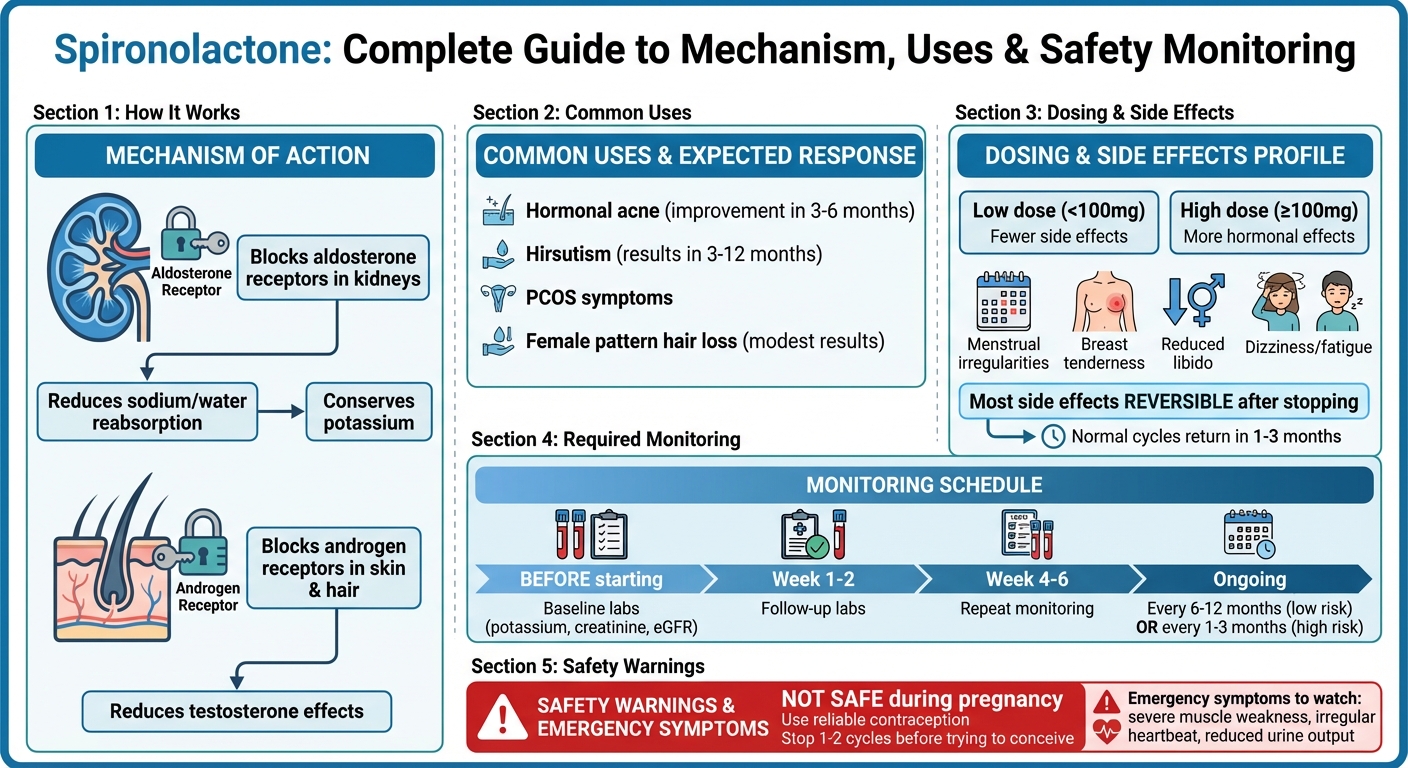
How Spironolactone Works: Mechanism, Uses, and Monitoring Guide
Spironolactone Side Effects - Should I take it?
What is Spironolactone and How Does It Work?
Spironolactone, sold under the brand name Aldactone, is a potassium-sparing diuretic and aldosterone antagonist. It’s approved by the FDA for treating heart failure with reduced ejection fraction, managing high blood pressure (often alongside other medications), and addressing edema caused by liver cirrhosis or kidney disease. It’s also used for primary hyperaldosteronism. Beyond these uses, spironolactone’s ability to block androgens makes it a go-to for managing conditions like acne and excessive hair growth (hirsutism). Doctors in the U.S. frequently prescribe it off-label for hormone-related issues in women, including acne, unwanted facial and body hair, and symptoms linked to polycystic ovary syndrome (PCOS).
How Spironolactone Works in the Body
Spironolactone works by targeting aldosterone receptors in the kidney tubules. This action reduces the reabsorption of sodium and water while decreasing potassium excretion, which leads to increased urine output, lower blood volume, and reduced blood pressure - all while conserving potassium. But its effects go beyond the kidneys. Spironolactone also influences the endocrine system, altering the production and metabolism of gonadal and adrenal steroids. Additionally, it competes with androgens at their receptors, partially blocking testosterone’s effects on tissues like skin and hair follicles. These hormonal effects explain some of its side effects, such as breast tenderness, reduced libido, and menstrual changes, and are key to its role in treating hormone-driven conditions in women.
Uses for Female Hormonal Health
In women’s health and dermatology, spironolactone is widely prescribed off-label to address androgen-driven symptoms of PCOS, including acne, hirsutism, and female pattern hair loss. By blocking androgen activity at hair follicles and sebaceous glands, it helps reduce unwanted hair and improve acne. Results typically become noticeable after several months of consistent use. For hormonal acne, improvements are usually seen within three to six months. Hirsutism may take a similar timeframe, with further progress continuing up to a year. However, for female pattern hair loss, the benefits can vary and are often modest.
Because spironolactone can harm male fetuses, it’s usually prescribed alongside reliable contraception for women of childbearing age. As part of a comprehensive approach to hormonal health, Oana Health offers a Metformin & Spironolactone pack for $32 per month. This treatment option is designed to help manage PCOS symptoms, such as irregular periods, acne, and excess hair growth [1].
Hormonal Effects and Potential Endocrine Disruptions
Expected Hormonal Changes
Spironolactone works by blocking the receptors in the skin and hair follicles that respond to androgens like DHT. This reduces oil production, acne, and unwanted hair growth over time. Additionally, it affects hormone production in the ovaries and adrenal glands, promoting the breakdown of androgens and their conversion into estrogens. These shifts explain why it takes several months to see improvements in symptoms like oily skin and acne. However, while these changes can be beneficial, they may also lead to noticeable hormonal side effects.
Possible Endocrine Side Effects
The hormonal adjustments caused by spironolactone can sometimes result in side effects. Common issues include menstrual irregularities, such as spotting, changes in cycle length, or even skipped periods. Some users also report breast tenderness or swelling, which is tied to the drug’s estrogen-like effects and its influence on the androgen-estrogen balance.
Other potential side effects include changes in libido, often presenting as a reduced sex drive, though individual experiences differ. For men, spironolactone’s antiandrogen properties can lead to symptoms like breast enlargement (gynecomastia), tenderness, lower libido, and erectile dysfunction. In one study involving nine men taking 400 mg daily for up to 24 weeks, six developed gynecomastia, and two experienced decreased libido.
Dose-Related and Reversible Effects
The likelihood and intensity of these side effects often depend on the dosage. Higher doses - typically 100 mg or more per day - are more likely to cause these hormonal disruptions. To manage these effects, clinicians may reduce the dose, divide it into smaller, twice-daily amounts, or recommend a combined oral contraceptive to help regulate menstrual cycles while maintaining the benefits of the medication.
The good news is that most of these hormonal side effects are reversible. After stopping or reducing the dose, menstrual cycles generally return to normal within one to three cycles, breast tenderness subsides, and libido changes often improve. In men, gynecomastia and sperm-related changes also resolve after discontinuing the medication, though recovery may take weeks or even months, depending on how long the treatment lasted. This reversibility highlights that these effects stem from temporary receptor blockade rather than permanent changes to the body.
sbb-itb-6dba428
Long-Term Safety and Considerations
Fertility and Pregnancy Concerns
Spironolactone is not safe for use during pregnancy because its anti-androgenic effects can interfere with normal male fetal development. Women of childbearing age are advised to use reliable contraception, often a combined oral contraceptive pill, to prevent pregnancy and help stabilize irregular menstrual cycles. If you're planning to conceive, it's important to consult your healthcare provider. Typically, spironolactone is discontinued one to two menstrual cycles before trying to get pregnant.
The good news is that spironolactone does not cause permanent infertility. Menstrual cycles and ovulation usually return to normal within weeks or months after stopping the medication. If you miss a period while on spironolactone, take a home pregnancy test and reach out to your healthcare provider for guidance.
Beyond its reproductive effects, there are other long-term safety considerations to keep in mind.
Cancer and Other Long-Term Risks
Although the hormonal effects of spironolactone are reversible, there are broader safety concerns to consider, particularly regarding electrolyte imbalances. Early animal studies suggested a possible link between high doses of spironolactone and tumor formation, but large-scale human studies have not found an increased cancer risk when used at therapeutic doses.
The primary long-term risks associated with spironolactone revolve around electrolyte balance and kidney health rather than cancer. Hyperkalemia, or elevated potassium levels, is a significant concern, especially for individuals with pre-existing kidney issues or those taking potassium-sparing medications like ACE inhibitors or ARBs. Chronic use may also lead to side effects such as breast tenderness or enlargement, fatigue, dizziness, and headaches. Fortunately, these effects are usually reversible and can often be managed with dose adjustments.
When taken at appropriate doses by women with normal kidney function and no major drug interactions, the risks remain minimal. Regular monitoring, including blood tests to check potassium levels and kidney function, is essential for ensuring safety during long-term use. With proper oversight, spironolactone can be a safe and effective treatment for many individuals over extended periods.
How to Use Spironolactone Safely
Required Monitoring and Lab Tests
Before starting spironolactone, it’s important to check baseline lab values, including serum potassium, creatinine, and eGFR, to evaluate kidney function and lower the risk of hyperkalemia. This is especially crucial if you have kidney issues or are taking medications like ACE inhibitors, ARBs, or NSAIDs. After beginning treatment or increasing the dosage, follow-up labs are typically recommended within the first 1–2 weeks and again at 4–6 weeks. For ongoing care, the frequency of monitoring depends on your risk level: lower-risk individuals may only need checks every 6–12 months, while higher-risk patients might require evaluations every 1–3 months.
Your provider may also monitor sodium and other electrolytes to ensure they remain balanced. Additionally, tracking changes in blood pressure, menstrual cycles, breast tenderness, and mood can provide valuable insights. Routine monitoring not only helps catch side effects early but also ensures the treatment remains effective and safe.
Managing Side Effects
Addressing side effects is key to using spironolactone safely over the long term. Many side effects are related to dosage and can often be reversed. For example, if you experience menstrual irregularities - like spotting, longer cycles, or missed periods - your clinician might recommend lowering the dose or adding a combined oral contraceptive to stabilize your cycle. This is especially relevant since spironolactone is generally avoided during pregnancy. Keeping a record of your menstrual cycles can help you and your provider identify patterns and adjust treatment as needed.
Breast tenderness or enlargement is another common side effect due to spironolactone’s anti-androgen properties. Simple measures like wearing a supportive bra or using over-the-counter pain relievers, such as acetaminophen or ibuprofen, can help ease discomfort. If these symptoms persist, your provider may suggest reducing the dose or modifying your treatment plan. Fatigue, dizziness, or decreased libido can sometimes be managed by adjusting when you take the medication - taking it at night, for example, may help.
To avoid electrolyte imbalances, it’s best to limit foods high in potassium, like bananas, avocados, or coconut water, unless advised otherwise by your provider. Staying well-hydrated, especially during hot weather or illness, and rising slowly from sitting or lying down can help prevent dizziness. However, be alert for serious symptoms like severe muscle weakness, irregular heartbeat, chest pain, confusion, significant dizziness or fainting, reduced urine output, or swelling in the face, lips, or throat. If these occur, seek immediate medical attention.
For patients requiring consistent oversight, remote care can be a convenient solution.
Telehealth Options for Hormonal Care
Oana Health provides a structured telehealth service for managing acne, unwanted hair, and PCOS. Their licensed clinicians review your medical history, medications, blood pressure, and pregnancy plans before prescribing spironolactone. They also handle lab test coordination and adjust doses as needed - all remotely. Medications, including spironolactone, are shipped directly to your door with free shipping, starting at $14 per month. Oana Health also offers 24/7 support through secure messaging and virtual visits, ensuring any lab concerns or side effects are addressed promptly.
"Thanks to Oana, my menstrual cycles are more regular, and my skin has never looked better! I also love the 24/7 accessibility and customer service that always goes the extra mile."
- Margaret K., Oana Health patient
This telehealth approach makes spironolactone treatment more accessible and manageable, providing personalized care and consistent monitoring without the need for frequent in-person visits. It’s a practical option for long-term treatment that prioritizes both convenience and safety.
Conclusion
Understanding how spironolactone works and the importance of regular monitoring is essential for using it safely and effectively. This medication serves as an aldosterone antagonist, a potassium-sparing diuretic, and an androgen blocker. While it's primarily prescribed for specific conditions, it's also widely used off-label to address acne, unwanted facial hair, and symptoms of PCOS.
Spironolactone can cause dose-dependent, reversible hormonal side effects, such as menstrual irregularities, breast tenderness, and lowered libido. However, these are often outweighed by its positive impact on skin, hair, and hormonal balance when used under a doctor’s guidance.
Long-term safety hinges on consistent monitoring. Since spironolactone is not safe during pregnancy due to its potential effects on fetal development, effective contraception is essential. While early rodent studies raised concerns about cancer risk, human studies at typical doses have not shown an increased risk. Healthcare providers will routinely check kidney function, potassium levels, menstrual cycles, and overall symptom progression to ensure the treatment remains both safe and effective.
Rather than suppressing your endocrine system entirely, spironolactone helps to regulate it. Serious complications are rare when prescribed and monitored correctly. Telehealth services, like Oana Health, make it easier to access U.S.-licensed specialists who can coordinate lab tests and offer remote support.
To achieve the best results, focus on proper dosing, regular check-ins, and open communication with your healthcare provider. Keeping track of changes in your cycle, skin, hair, mood, or any side effects can help guide follow-up care. Always consult your doctor about new symptoms, pregnancy plans, or adding other medications before adjusting your dose. With personalized care and ongoing monitoring, spironolactone can be an effective tool for managing hormonal health over the long term.
FAQs
How does spironolactone affect hormones in women?
Spironolactone is known for its ability to lower androgen levels in women, which can help tackle various hormone-related problems. By reducing androgens, it often aids in minimizing excessive facial and body hair growth, improving acne, and promoting more consistent menstrual cycles.
Because it blocks certain hormonal effects, spironolactone is frequently used to manage conditions such as PCOS and other concerns tied to elevated androgens. It's important to consult a healthcare provider to see if spironolactone aligns with your specific health needs and goals.
Can spironolactone affect fertility or pregnancy plans?
Spironolactone may affect fertility and is typically not advised during pregnancy or when trying to conceive. This medication can disrupt hormonal balance, potentially lowering the chances of conception. Moreover, it poses certain risks to a developing fetus, so it should be stopped if pregnancy is planned or confirmed.
If you’re planning to get pregnant, it’s essential to discuss your options with a healthcare provider. They can guide you toward safer alternatives or modify your treatment plan to prioritize the well-being of both you and your baby.
What health checks are needed for long-term spironolactone use?
If you're using spironolactone over an extended period, regular health check-ups are crucial to keep potential side effects in check. This often involves monitoring your kidney function through tests like serum creatinine and blood urea nitrogen, keeping an eye on electrolyte levels (with a focus on potassium), and tracking your blood pressure. These evaluations ensure your body is handling the medication well and help identify any problems early on.
Your doctor might also suggest additional tests based on your individual health needs, so it's important to stick to their recommendations and attend all scheduled follow-ups.