
Checklist: Is Spironolactone Right for Your Hair Loss?
Spironolactone is an off-label treatment for women dealing with hormonal hair loss like androgenic alopecia. It works by blocking androgens, reducing DHT levels, and protecting hair follicles. While 43% of users see improvement with spironolactone alone, combining it with minoxidil increases success rates to 66%. Results typically take 6–12 months of consistent use.
Before starting, ensure:
- Your hair loss aligns with androgenic alopecia (e.g., thinning at the crown or widening part line).
- You have no contraindications like kidney/liver issues, high potassium, or pregnancy.
- Lab tests (potassium, kidney function, pregnancy screening) are completed.
Consult a healthcare provider to assess your symptoms, review medications, and monitor side effects like dizziness or menstrual changes. Platforms like Oana Health offer telehealth consultations and personalized treatment plans, including oral or topical spironolactone, starting at $17/month.
Key Takeaways:
- Best for women with hormonal hair loss, especially PCOS-related.
- Requires lab tests and monitoring for safety.
- Avoid if pregnant or with certain health conditions.
- Patience is critical - results take time.
For more details, consult a provider to confirm if spironolactone suits your needs.
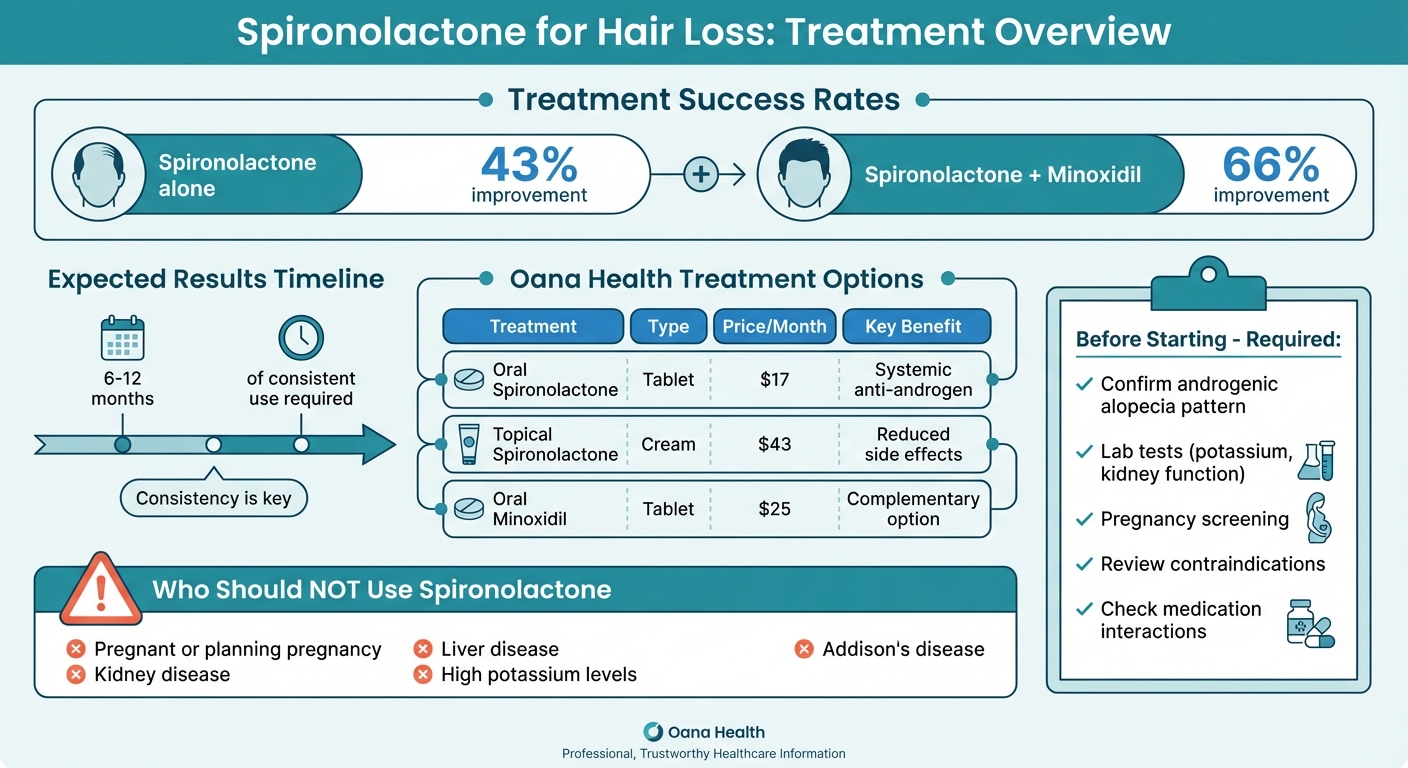
Spironolactone Treatment Options and Success Rates for Hair Loss
Is it Worth Taking Spironolactone for Hair Loss?
Checklist: Is Spironolactone Right for You?
Use this checklist to assess whether spironolactone could be a suitable option for your hair loss treatment. It covers factors like hair loss patterns, hormonal issues, necessary lab tests, health conditions, current medications, and monitoring requirements.
Confirm Your Hair Loss Pattern Matches Androgenic Alopecia
Spironolactone is most effective for treating androgenic alopecia, also known as Female Pattern Hair Loss (FPHL). This type of hair loss, common in women over 50, is influenced by genetic and hormonal factors. It typically presents as diffuse thinning across the scalp, a widening part line, and reduced hair density at the crown. These changes are caused by the miniaturization of hair follicles due to androgen activity.
Clinical tools like the Sinclair or Ludwig scale can help confirm the diagnosis. However, spironolactone is only effective for hormonally driven hair loss. It won’t address hair loss caused by stress, chemotherapy, or nutritional deficiencies.
If your hair loss aligns with androgenic alopecia, the next step is to explore any underlying hormonal imbalances.
Check for Hormonal Imbalance or PCOS
Spironolactone is particularly effective for hair loss linked to hormonal imbalances, such as those found in polycystic ovary syndrome (PCOS). Signs of hyperandrogenism - like excessive facial or body hair (hirsutism), persistent acne, irregular periods, or fertility challenges - could indicate a hormonal issue. Discuss these symptoms and the possibility of ovarian or adrenal disorders with your healthcare provider.
"Spironolactone's anti-androgenic properties have made it effective in treating hormonal conditions like acne, hirsutism (excessive hair growth), and female pattern hair loss (FPHL)." - American Hair Loss Association
Clinical studies suggest that around 43% of patients with FPHL see improvement with spironolactone alone, with even better results when combined with topical treatments.
Get Required Lab Tests and Pregnancy Screening
Before starting spironolactone, you’ll need baseline tests for potassium levels, kidney function, and a pregnancy screening. Regular monitoring ensures the treatment remains safe.
Pregnancy screening is critical because spironolactone can affect the development of a male fetus’s genitalia. Women of childbearing age must use reliable contraception throughout the course of treatment.
"Spironolactone should not be used by pregnant women or women who are trying to get pregnant." - American Osteopathic College of Dermatology
Review Health Conditions That May Prevent Use
Certain medical conditions make spironolactone unsafe. It’s not recommended for individuals with kidney disease, liver disease, Addison’s disease, or pre-existing high potassium levels (hyperkalemia). Additionally, because spironolactone can lower blood pressure, it should be used cautiously if you already experience low blood pressure or dizziness upon standing.
Here’s what you and your healthcare provider should evaluate:
| Category | Items to Review |
|---|---|
| Contraindicated Conditions | Kidney disease, liver disease, Addison’s disease, high potassium, electrolyte imbalance, low blood pressure |
| Pregnancy Status | Currently pregnant, nursing, or planning to become pregnant |
| Blood Pressure | History of low blood pressure or dizziness upon standing |
While the overall rate of adverse events for spironolactone is low (about 3.69%), serious side effects like hyperkalemia occur in approximately 2.7% of cases. Dehydration from vomiting or diarrhea can also cause dangerously low blood pressure.
Once you’ve reviewed any contraindications, it’s important to check for potential interactions with other medications.
Review Your Current Medications and Supplements
Spironolactone can interact with medications or supplements that affect potassium or blood pressure. Make sure to inform your healthcare provider about everything you’re taking, including over-the-counter supplements and dietary habits.
Avoid potassium supplements and salt substitutes (like Lo-Salt), which are high in potassium. Be cautious with potassium-rich foods such as bananas, avocados, beans, nuts, and salmon. Also, discuss with your provider any use of diuretics, blood pressure medications, or hormonal contraceptives.
Understand the Treatment Timeline and Monitoring Needs
Spironolactone works gradually, so consistent use is key. Regular check-ups are essential to monitor for side effects, such as dizziness (16.5%), menstrual changes (11.85%), or scalp irritation (18.92%). Your provider may adjust your dosage or recommend taking the medication at night to minimize side effects. If you notice any adverse reactions, report them right away to ensure your treatment remains safe and effective.
Oana Health Spironolactone Treatment Options

Oana Health takes the next step after diagnosis by offering tailored, prescription-based spironolactone treatments for hormonal hair loss - all through a seamless telehealth experience. After completing a quick 5-minute online health intake, U.S.-licensed providers review your information. If appropriate, they prescribe a personalized treatment plan. Medications are sourced from FDA-regulated pharmacies and shipped directly to your door with free shipping, ensuring a smooth and hassle-free process.
You can choose between oral or topical spironolactone. Oral spironolactone starts at $17 per month, while the topical version is priced at $43 per month. To access these prescriptions, there’s a one-time $20 consultation fee. The topical formulation is designed for direct application to the scalp, reducing systemic effects.
"We leverage telemedicine and compounding pharmacy services to offer you affordable pricing. Access our prescriptions with just a $20 doctor fee."
– Oana Health
For added support, oral minoxidil is available at $25 per month and can complement spironolactone treatment. Dr. Jeff Donovan, a dermatologist specializing in hair loss, notes: “1.25 mg of oral minoxidil is more effective than 25 mg spironolactone, but 100 mg spironolactone is more effective than 0.25 mg oral minoxidil.” He also advises against starting multiple new treatments at once, as it can make it harder to identify which medication works best for you.
Treatment Comparison Table
Here’s a quick breakdown of the available options:
| Treatment Option | Formulation | Monthly Price | Key Benefits | Considerations |
|---|---|---|---|---|
| Oral Spironolactone | Tablet | From $17 | Addresses PCOS-related hair thinning; systemic anti-androgen | May cause frequent urination, dizziness, breast tenderness |
| Topical Spironolactone | Cream/Solution | $43 | Direct scalp application; reduced systemic side effects | Limited to localized treatment |
| Oral Minoxidil | Tablet | $25 | Improves blood flow to hair follicles; works well as a complementary option | Possible side effects include headaches, heart palpitations, and facial hair growth |
All plans come with automatic refills, free shipping, and unlimited access to licensed providers for ongoing support via phone or online consultations. Plus, you can save $20 on your first treatment when you subscribe.
sbb-itb-6dba428
When to Consult an Oana Health Provider
If you're dealing with symptoms of androgenic alopecia, it's a good idea to connect with an Oana Health provider. This is especially crucial if you suspect hormonal imbalances or have been diagnosed with PCOS. Spironolactone, the treatment often recommended, works by blocking androgens that play a role in hair loss. Recognizing these typical hair loss patterns is a sign that professional evaluation might be necessary.
The process begins with a quick online intake. From there, U.S.-licensed providers review your symptoms, medical history, and lab results to create a personalized spironolactone treatment plan. Once prescribed, the medication is shipped directly to your doorstep with free shipping.
This approach can be especially helpful if previous treatments like minoxidil haven't worked or if you're experiencing both scalp hair thinning and unwanted hair growth on the face or body (hirsutism). Women with confirmed hormonal imbalances, such as elevated testosterone levels shown in lab tests, are often ideal candidates for this kind of guided treatment. Research even shows that spironolactone can increase terminal hair counts by 9.48 hairs/cm² compared to a placebo in suitable cases.
By assessing your hair loss and hormonal symptoms, a professional can help ensure your treatment plan is tailored to your needs. For example, low-dose spironolactone has been shown to significantly improve Sinclair scores. Success rates vary, though, with studies showing 65.80% success when spironolactone is combined with other therapies versus 43.21% with monotherapy.
Keep in mind that spironolactone requires consistent use for 6–12 months to achieve optimal results. During this time, Oana Health providers offer ongoing support through follow-up telehealth visits. These check-ins allow for progress monitoring, dosage adjustments, and discussions about potential combination therapy options to enhance outcomes.
Conclusion: Deciding If Spironolactone Is Right for You
Determining if spironolactone is the right choice involves a few key steps. First, confirm that your hair loss aligns with androgenic alopecia rather than other causes like stress, nutritional deficiencies, or chemotherapy - spironolactone specifically addresses hormonal hair loss. It’s also essential to check for any hormonal imbalances, complete necessary lab tests, and ensure no health conditions or medications could interfere with the treatment.
Statistics show that about 43% of individuals see improvement using spironolactone alone, with that number increasing to 66% when combined with minoxidil. However, patience is key - results typically take 6 to 12 months of consistent use. Before starting, make sure you meet all health criteria.
A consultation with a healthcare provider is critical, especially if you have conditions involving the kidneys or liver, or if you're pregnant . Your provider will also monitor your blood pressure and potassium levels during treatment to ensure safety.
If spironolactone seems like a good fit, platforms like Oana Health offer a convenient way to connect with U.S.-licensed providers. They can design a personalized treatment plan, ship the medication directly to your home with free shipping, and provide ongoing follow-up visits to track your progress.
Take the time to carefully review each step. Choosing the right treatment starts with understanding your specific type of hair loss and working closely with a medical professional to ensure a safe and effective approach.
FAQs
How does spironolactone help with hormonal hair loss?
Spironolactone works to address hormonal hair loss by blocking androgens - male hormones that can disrupt the natural hair growth cycle. By limiting these hormones' impact on hair follicles, it helps slow down thinning and encourages healthier hair growth over time.
This medication is particularly beneficial for women dealing with hair loss linked to hormonal imbalances, such as those associated with PCOS. It's essential to consult a healthcare provider to see if spironolactone is the right choice for your situation.
What tests do I need before starting spironolactone for hair loss?
Before beginning spironolactone, it's crucial to undergo baseline blood tests to check key health markers like hormone levels, kidney function, and electrolytes. These tests often include potassium, sodium, creatinine, BUN (blood urea nitrogen), and eGFR (estimated glomerular filtration rate).
Regular follow-up tests are just as important. Potassium levels and kidney function are typically reassessed 1–2 weeks after starting the medication, then every 3–6 months to ensure everything stays on track. Be sure to work with a licensed healthcare provider to establish the testing schedule that best suits your needs.
Can spironolactone be used with other treatments to improve hair loss results?
Yes, spironolactone is often used alongside other treatments to improve its effectiveness in addressing hair loss. For instance, combining it with topical options like minoxidil can support better hair growth outcomes, particularly for women dealing with thinning or hair loss.
It's important to work with a licensed medical professional to find the right treatment plan tailored to your individual needs and health considerations.