
Spironolactone for PCOS Hair Loss: How It Works
If you're experiencing hair loss due to PCOS, spironolactone may help. This medication works by reducing androgen levels and blocking DHT, the hormone linked to hair thinning. Research shows that about 74% of women using spironolactone see improvement or stabilization in hair loss. Results typically appear after 6–12 months of consistent use.
Key points:
- How it works: Blocks DHT and reduces androgen production.
- Dosage: 25–200 mg daily; most effective range is 100–110 mg/day.
- Timeline: Noticeable results in 6–12 months.
- Side effects: May include dizziness, nausea, menstrual changes, and rare potassium issues.
- Combination treatments: Adding minoxidil improves effectiveness.
Spironolactone is a prescription medication, so consult a healthcare provider to determine if it's right for you. Pairing it with lifestyle changes like a balanced diet, stress management, and proper hydration can further support hair health.
Spironolactone for Hair Loss – The Real Results & What to Expect
How Spironolactone Works for Hair Loss
Spironolactone helps protect hair follicles by reducing androgen levels and blocking the binding of DHT (dihydrotestosterone). By targeting both the production and effects of these hormones, it addresses the hormonal causes of hair thinning. These combined actions aim to prevent the miniaturization of hair follicles.
Reducing Androgen Levels
Spironolactone lowers adrenal androgen production and total testosterone, which in turn decreases the formation of DHT. It also mildly suppresses androgen synthesis. In one clinical study, 81% of participants experienced improved hair growth when taking daily doses ranging from 25 mg to 200 mg.
While reducing androgen levels limits hormone production, spironolactone also acts directly to protect hair follicles from DHT damage.
Blocking DHT at Hair Follicles
In addition to reducing androgen production, spironolactone binds to androgen receptors, effectively blocking androgens from attaching. This action interrupts the miniaturization process that leads to thinner, weaker hair.
| Mechanism | What It Does | Impact on Hair |
|---|---|---|
| Androgen Suppression | Lowers testosterone and adrenal androgen levels | Reduces DHT available to harm follicles |
| Competitive Blockade | Prevents androgens from binding to receptors | Stops signals that shrink follicles |
| DHT Inhibition | Blocks DHT from affecting hair follicles | Encourages follicles to grow thicker hair |
Research backs these mechanisms. A systematic review found that oral spironolactone alone improved hair loss in 56.60% of patients. When combined with minoxidil, this rate increased to 65.80%.
Dosage and Treatment Guidelines
Standard Dosage for Hair Loss
When it comes to treating PCOS-related hair loss with spironolactone, doses typically range from 25 mg to 200 mg daily. Doctors usually start with a lower dose and gradually increase it based on how well the patient tolerates the medication. Research indicates that most people find success with doses between 100 mg and 110 mg per day.
The exact dosage depends on several factors, including age, potassium levels, general health, and the severity of hair loss. For example, older individuals or those at a higher risk of elevated potassium levels may begin with a lower dose, often around 50 mg or less. To maintain consistent medication levels, spironolactone is taken once or twice daily, and it can be consumed with or without food.
How Long Treatment Takes
Once the ideal dose is determined, sticking to a regular treatment plan is essential. Patience is key, as visible improvements take time. Most people need at least 6 months of consistent use to notice changes in hair thickness or reduced shedding. Studies show that results are even better after 12 months, with the greatest benefits typically appearing between 9 and 12 months.
"A 6-month trial is needed to show effects on unwanted hair... The unwanted hair doesn't disappear; it grows in finer and lighter." - Dr. Andrea Dunaif, Northwestern University
Since spironolactone works by addressing hormonal causes of hair loss, stopping the medication often leads to a return of hair loss within 4 to 6 months.
What to Expect: Results and Timeline
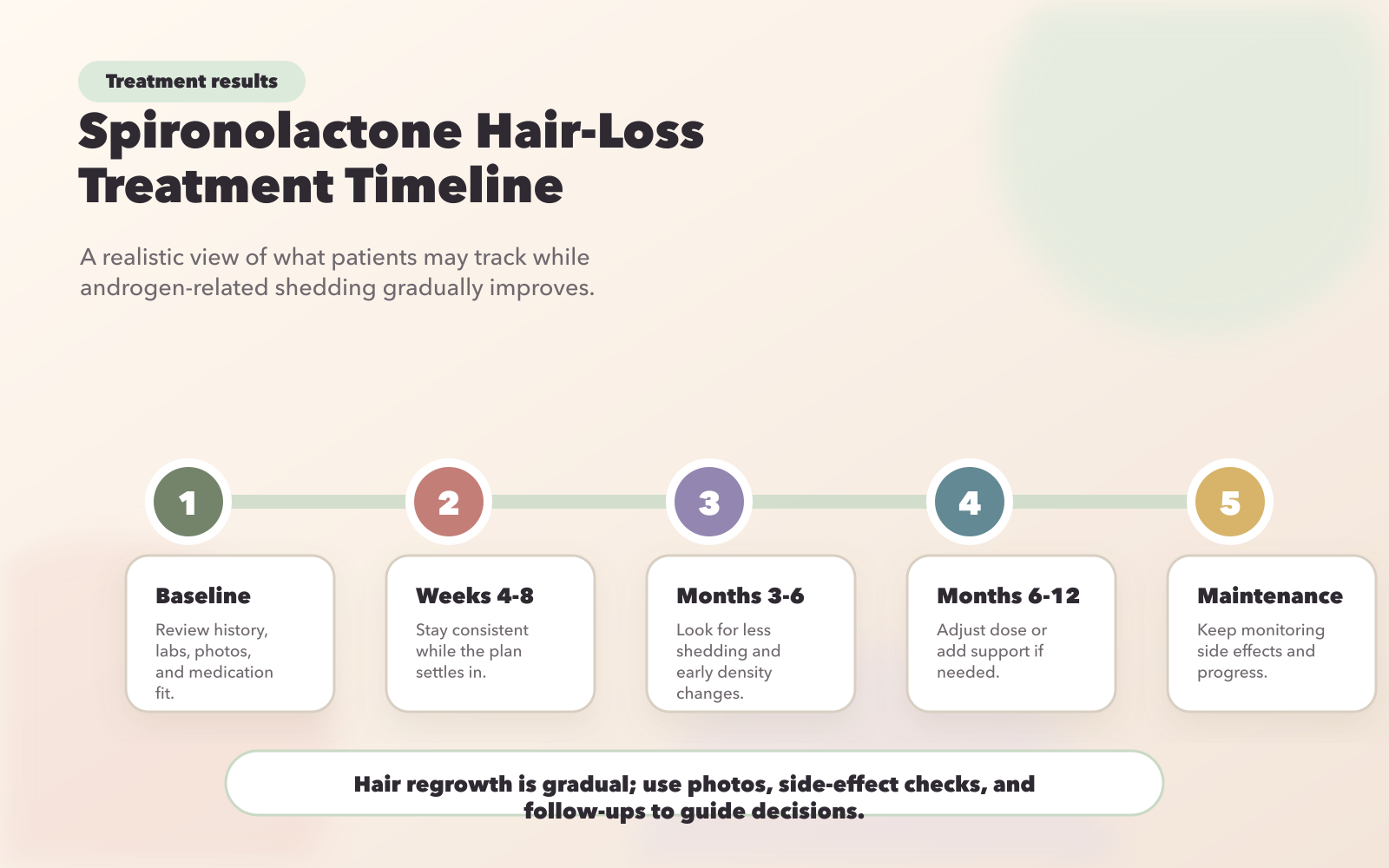
Spironolactone Hair Loss Treatment Timeline and Results
As you continue with your treatment, here’s a closer look at what you can anticipate along the way.
When Results Become Noticeable
Hair regrowth takes time and happens gradually. By the 3-month mark, you’ll likely notice less daily shedding. Around 6 months in, hair strands typically become thicker, and by 9 to 12 months, you should see more substantial improvements. In fact, Sinclair Scale scores often improve from 2.47 to 1.81 after a year of treatment. Studies show that about 74.3% of women using spironolactone report either stabilization or improvement in their hair loss. Keep in mind, though, that these milestones can vary depending on individual circumstances.
Factors That Impact Your Results
The timeline and effectiveness of your treatment can be influenced by several factors. For instance, combining spironolactone with minoxidil significantly enhances results - improvement rates jump to 65.8% compared to 43.2% with spironolactone alone. Additionally, maintaining optimal iron levels can make a difference. Antiandrogen therapies, like spironolactone, tend to work better when ferritin levels are above 40 μg/L. Starting treatment early is also key. It’s much more effective at stopping progression and reversing thinning than trying to regrow hair in areas affected by long-term baldness. Hair loss that has persisted for over 15 years may respond less positively to treatment.
sbb-itb-6dba428
Side Effects and Safety Information
Before starting spironolactone, it's essential to understand its potential side effects and contraindications. While most people tolerate it well, only about 2.79% to 3.2% of patients stop treatment due to adverse effects. Knowing these details is vital when considering spironolactone for managing PCOS-related hair loss.
Possible Side Effects
Spironolactone can cause some common side effects, such as dizziness, nausea, cramps, frequent urination, menstrual irregularities (affecting 7.9%–11.85% of users), breast tenderness, fatigue, and headaches. These effects are often linked to its diuretic properties. To manage dizziness, take the medication at night and stand up slowly. Taking it with food can also help reduce nausea or stomach discomfort.
Some patients report scalp itching or increased flaking (18.92% of users) or facial hair growth (6.93% of cases). Additionally, during the first 2 to 4 months of treatment, you might notice a temporary shedding phase as your hair follicles adapt to hormonal changes. This phase is usually short-lived and subsides as the treatment progresses.
The most serious concern is hyperkalemia, or dangerously high potassium levels, which occurs in about 0.9% of patients. This condition requires regular blood tests to monitor your treatment closely. Symptoms of hyperkalemia may include muscle weakness and irregular heart rhythms. To minimize this risk, avoid potassium supplements, potassium-based salt substitutes, and high-potassium foods unless your doctor advises otherwise.
Who Should Not Take Spironolactone
Spironolactone is not suitable for everyone. Avoid it if you are pregnant, planning to become pregnant, or breastfeeding, as it may cause birth defects in male fetuses. It’s essential to use effective birth control while on this medication, and it is generally safe to combine with most hormonal contraceptives.
Do not take spironolactone if you have Addison's disease, severe kidney disease, anuria (inability to pass urine), or already high potassium levels.
Exercise caution if you have liver disease, gout, or existing electrolyte imbalances, as spironolactone could worsen these conditions. Additionally, it can interact dangerously with ACE inhibitors, ARBs, and other potassium-sparing diuretics like eplerenone. Always inform your healthcare provider about any medications or supplements you’re taking to avoid harmful interactions.
Combining Spironolactone with Other Treatments
Spironolactone offers notable benefits on its own, but pairing it with other treatments can significantly improve hair health and overall results. Research supports the effectiveness of combined therapies in addressing hair loss and related concerns.
Medications That Complement Spironolactone
One of the most effective combinations is spironolactone with minoxidil, available in both topical and oral forms. While spironolactone works by blocking DHT, minoxidil improves blood flow and oxygen delivery to the hair follicles, creating a powerful one-two punch for hair growth. Through Oana Health, you can access oral minoxidil for $25 per month along with oral spironolactone for $14 per month. Alternatively, topical spironolactone is available at $43 per month, offering a way to minimize systemic side effects.
Birth control pills can also be beneficial by regulating menstrual cycles and serving as a necessary precaution to prevent pregnancy during treatment.
For women experiencing PCOS-related insulin resistance, medications like metformin or GLP-1 agonists (e.g., semaglutide) can help address the hormonal imbalances contributing to hair loss. Oana Health provides insulin sensitizers such as oral metformin starting at $22 per month, with comprehensive treatment packs available for managing PCOS symptoms.
In addition to medication, making supportive lifestyle adjustments can further enhance treatment outcomes.
Lifestyle Changes to Maximize Results
While medications target hormone levels, lifestyle changes create a solid foundation for success. Staying hydrated is essential, especially since spironolactone acts as a diuretic. Aim for 8–12 cups (2–3 liters) of water daily. A nutrient-rich diet that includes plenty of protein and iron supports healthy hair growth, while avoiding crash diets can prevent telogen effluvium, a temporary phase of excessive hair shedding.
Stress management plays a key role as well. Elevated cortisol levels can worsen hair loss, so incorporating stress-relief practices like yoga, meditation, or other relaxation techniques can help keep these hormones in check. Additionally, monitoring salt intake can help manage fluid retention and blood pressure. It's also wise to avoid excessive potassium supplements or salt substitutes containing potassium chloride unless recommended by your doctor.
Combining these lifestyle habits with professional guidance can help ensure a personalized and effective treatment plan.
Accessing Treatment Through Oana Health
Oana Health offers telehealth consultations with licensed specialists who focus on PCOS and hormonal imbalances. After reviewing your health history, they develop a customized treatment plan tailored to your needs. Options may include spironolactone, topical spironolactone, oral minoxidil, or insulin sensitizers - all delivered directly to your home with free shipping.
Oana Health ensures accessible and affordable care through telemedicine and FDA-regulated compounding. Whether you opt for a single medication or a combination, monthly costs range from $14 for oral spironolactone to $199 for advanced insulin sensitizer packs. Licensed professionals oversee your progress and adjust treatments as needed, offering a convenient and personalized approach to managing hair loss and hormonal health.
Conclusion
Key Takeaways
Spironolactone provides an effective way to address PCOS-related hair loss by blocking DHT binding and lowering androgen levels. Studies indicate that around 56.6% of women see improvement with oral spironolactone alone, while combining it with minoxidil boosts success rates to 65.8%. Consistent use over 6 to 12 months yields the best results.
"Spironolactone, whether used as monotherapy or adjunct therapy, is a successful and well-tolerated treatment choice for [female pattern hair loss]." - Burns et al., Journal of the American Academy of Dermatology
Lifestyle changes are equally important. Staying hydrated, managing stress, eating a balanced diet, and keeping an eye on potassium levels can enhance the treatment's effectiveness. With a low adverse event rate of just 3.69%, spironolactone is generally well-tolerated by most women.
Moving Forward
Timely action is crucial when dealing with PCOS-related hair loss. If you're noticing symptoms, consult a healthcare provider to create a tailored plan. Since spironolactone is prescribed off-label for hair loss, a medical professional can determine the right dosage for your needs and monitor for potential contraindications.
For a convenient solution, Oana Health offers telehealth consultations with licensed specialists who focus on PCOS and hormonal health. Their services include oral spironolactone starting at $14 per month, topical spironolactone at $43 per month, and combination treatments with oral minoxidil at $25 per month. All options come with free home delivery. Begin treatment today to start seeing results in as little as 6–12 months.
FAQs
How does spironolactone help with hair loss caused by PCOS?
Spironolactone helps tackle hair loss associated with PCOS by counteracting the effects of excess androgens - hormones that contribute to hair thinning. It achieves this in two ways: by lowering androgen levels in the body and by blocking androgen receptors on hair follicles. This combination can slow down hair loss and, in some cases, even encourage regrowth over time.
Since androgen-related hair loss is a frequent symptom of PCOS, spironolactone can be a helpful option for managing it. That said, it’s crucial to consult a healthcare provider to determine if this treatment aligns with your needs and to set realistic expectations for the results.
What are the common side effects of spironolactone and how can you manage them?
Spironolactone may lead to some common side effects like dizziness, nausea, muscle cramps, and fatigue. Thankfully, these are typically mild and can often be managed with a few adjustments.
For dizziness, try getting up slowly after sitting or lying down to help your body adjust. Taking spironolactone with meals can make nausea less bothersome, and staying hydrated can go a long way in reducing muscle cramps. If any of these side effects persist or feel more severe, don’t hesitate to contact your healthcare provider - they’re there to help.
Your doctor can work with you to tweak your treatment plan if necessary, ensuring you stay comfortable while addressing your PCOS symptoms effectively.
Can spironolactone be used with other treatments to improve PCOS-related hair loss?
Spironolactone is frequently used alongside other treatments to improve outcomes for PCOS-related hair loss. Common pairings include oral contraceptives, minoxidil, or additional anti-androgen medications. These combinations can work together to tackle hair loss by addressing several contributing factors at once.
If you're thinking about incorporating another treatment, it's essential to consult a licensed healthcare provider. They can ensure the combination is safe and tailored specifically to your situation, which can be a key step in effectively managing PCOS symptoms like hair loss.