
What to Expect After Years on Spironolactone
Spironolactone, initially used for high blood pressure, has become a common treatment for hormonal issues like acne, hirsutism, and PCOS. It works by blocking androgen receptors and lowering testosterone, helping reduce oil production and slowing hair growth. Results take time - acne improves in about 3 months, while hair growth changes may take 6 months or more. Long-term use can stabilize hormones, with benefits often lasting even after stopping the medication.
Key points:
- Benefits: Clears acne, reduces unwanted hair, and balances hormones over time.
- Side effects: Fatigue, dizziness, menstrual irregularities, and rare risks like liver issues or kidney problems.
- Safety: Regular blood tests are essential to monitor potassium and kidney function.
- Stopping treatment: Gradual tapering is safer, and symptoms may return in 17–18 months for some.
For continued care, consider combining spironolactone with other treatments like hormonal contraceptives or topical solutions. Always consult your healthcare provider for personalized advice.
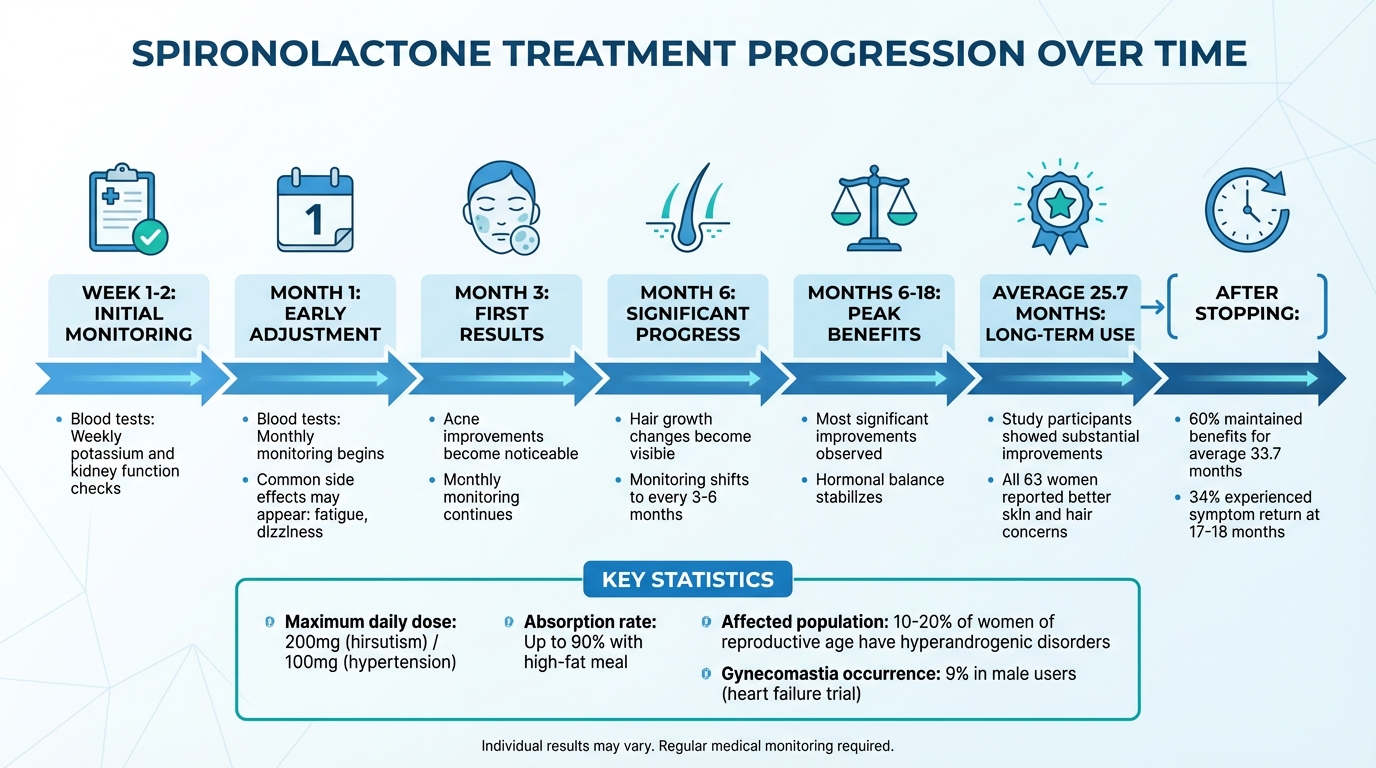
Spironolactone Treatment Timeline: What to Expect from Start to Long-Term Use
How to treat hormonal acne with spironolactone in 2026: dermatologist and acne expert explains
sbb-itb-6dba428
Benefits of Taking Spironolactone Long-Term
Using spironolactone over an extended period not only alleviates symptoms but also promotes hormonal stability that can have lasting effects.
How Symptoms Improve Over Time
The longer spironolactone is used, the more noticeable its impact becomes. While some initial improvements might appear early in the treatment, the most significant changes are usually observed between 6 and 18 months of consistent use.
A study conducted in September 2022 by researcher Chiara Sabbadin examined 63 women dealing with PCOS-related symptoms. These participants used spironolactone for an average of 25.7 months, and all reported substantial improvements in skin and hair concerns. Moreover, continued use led to even greater progress over time.
Maintaining Hormonal Balance
In addition to visible changes, spironolactone plays a key role in regulating hormones. It works by reducing testosterone production and speeding up its removal from the body, fostering a more balanced hormonal environment. This is especially helpful for those managing PCOS.
Hyperandrogenic skin disorders, which affect around 10% to 20% of women of reproductive age, can significantly impact mental health and overall quality of life. By keeping androgen levels in check, spironolactone offers a more sustainable solution than antibiotics vs. spironolactone for acne, addressing concerns about long-term antibiotic use and resistance. Even after stopping treatment, the hormonal benefits of spironolactone can persist, underscoring its long-term value.
Effects After Stopping Treatment
The benefits of spironolactone often extend beyond the treatment period. In the same study, 60% of participants (38 out of 63) maintained clearer skin and reduced hair growth for an average of 33.7 months after discontinuing the medication. In cases where symptoms returned, they typically reappeared about 17.5 months after stopping treatment. These findings suggest that long-term use of spironolactone may create lasting hormonal changes, even after discontinuation.
"Spironolactone is an effective and safe treatment for hyperandrogenic skin disorders, showing long-lasting effects even several months after its discontinuation." - Bentham Science Publishers
These enduring benefits emphasize the importance of weighing the positive outcomes against any potential risks, as the next section will explore in detail.
Side Effects and Risks After Years on Spironolactone
Spironolactone can be highly effective, but it’s essential to stay aware of potential long-term side effects. While many people experience mild symptoms, understanding the risks and following safety protocols can make treatment safer and more manageable. Let’s break down the common side effects, monitoring needs, and rare risks.
Common Side Effects
More than 1% of spironolactone users report experiencing side effects, with fatigue being one of the most frequent complaints. This can often be managed by maintaining regular sleep habits. The medication’s diuretic properties can also cause dizziness, especially when standing up too quickly, so rising slowly is recommended.
Breast tenderness or enlargement is another common issue, affecting both men and women. In fact, gynecomastia (breast tissue growth) occurs in over 5% of users. For instance, a heart failure trial noted that about 9% of male participants developed gynecomastia while taking an average daily dose of 26 mg.
Women often experience menstrual irregularities due to the drug’s antiandrogen effects. Nausea can also occur, though taking the medication with food can help reduce this discomfort. Additionally, the diuretic effects may linger briefly even after stopping the medication.
To manage these side effects effectively, regular check-ins with a healthcare provider are essential.
Required Monitoring and Safety Checks
Long-term use of spironolactone requires consistent monitoring to ensure safety. Blood tests are critical for keeping an eye on potassium levels and kidney function. Initially, these tests are done weekly, then monthly for the first three months, and eventually every 3–6 months.
"Check serum potassium and renal function within 2–3 days and again 7 days after initiation of an aldosterone antagonist; perform subsequent monitoring as needed... but monitor at least monthly for the first 3 months and every 3 months thereafter." - ACCF/AHA
Patients should avoid potassium supplements and salt substitutes containing potassium, as these can dangerously raise potassium levels. Additionally, spironolactone is not safe during pregnancy, as it can interfere with the sexual development of a male fetus. Women of childbearing age should use reliable contraception while on this medication.
Rare but Serious Risks
Although most side effects are mild, some rare risks require immediate attention. Liver issues, for example, can arise 4 to 8 weeks after starting treatment and may present as jaundice (yellowing of the skin or eyes). Severe dehydration caused by vomiting, diarrhea, or excessive sweating can also impair kidney function, particularly if combined with ACE inhibitors. Symptoms of dehydration-related kidney problems include dark urine, reduced urination, confusion, and extreme drowsiness.
Animal studies have suggested a potential link between spironolactone and tumor development, though its relevance to humans remains unclear. Regular discussions with a healthcare provider can help manage these risks, ensuring that any concerns are addressed promptly through proper monitoring and intervention.
How to Manage Spironolactone Treatment Over Time
Managing spironolactone treatment effectively over the long term is key to maintaining hormonal balance and addressing symptoms. To do this, it’s important to focus on proper dosage, explore complementary therapies, and recognize when adjustments might be necessary.
Dosage Adjustments and Consistency
The right dosage depends on the condition being treated. For instance, the maximum daily dose for hirsutism is 200 mg, while for hypertension, it’s generally capped at 100 mg per day. To ensure optimal absorption - up to 90% - take spironolactone with a high-fat meal.
If you miss a dose, take it as soon as you remember, unless it’s almost time for your next dose. In that case, skip the missed one and stick to your regular schedule. Never double up on doses to compensate for a missed pill. Staying consistent with your regimen is essential for maintaining stable hormone levels and achieving the best results.
Consistency also creates a strong foundation for combining spironolactone with other treatments.
Combining with Other Treatments
Pairing spironolactone with hormonal contraceptives can help reduce certain side effects, like irregular periods and breast tenderness.
"Some hormonal contraceptives can reduce hormonal side effects of spironolactone, including breast pain and irregular periods." – NHS
For a more tailored approach, Oana Health offers combination therapies, such as a Metformin & Spironolactone plan for $32/month. This approach not only supports hormonal balance but also addresses issues like insulin resistance, which is common in PCOS.
If these strategies stop delivering the desired results, it might be time to consider other options.
Switching to Alternative Treatments
There are situations where switching treatments makes sense - such as planning for pregnancy, dealing with intolerable side effects, or seeing no improvement after six months. One alternative is topical spironolactone, which targets problem areas directly while reducing systemic effects. This option is available through Oana Health's telehealth services for $43/month.
For facial hair concerns, Eflornithine 12% offers a topical solution that slows hair growth without affecting the rest of the body. This option is priced at $69/month and can be a good fit for those looking to limit systemic exposure while managing unwanted hair growth.
When to Stop or Switch Treatments
Deciding when to stop or switch spironolactone depends on your health goals, how well the treatment is working, and any side effects you may experience. Certain signs can indicate it’s time to reassess your approach.
What Happens When Symptoms Return
Spironolactone helps manage hormonal imbalances, but it doesn’t cure them. This means that after stopping the medication, symptoms like acne or unwanted hair growth often come back. Studies show that about 34% of people with hyperandrogenic conditions experience a relapse after discontinuing spironolactone. On average, symptoms reappear within 17–18 months, though some individuals may maintain improvements for up to 33.7 months after stopping.
If symptoms return, it’s crucial to consult your healthcare provider. They might suggest adjusting the dosage or exploring other treatments. Avoid stopping spironolactone abruptly - tapering off gradually is safer. A typical tapering schedule involves reducing the dose to 50 mg for 1–2 weeks, then 25 mg for another 1–2 weeks, and finally 25 mg every other day before stopping completely.
If tapering or adjustments don’t help, there are other treatment options to consider.
Other Treatment Options to Consider
If spironolactone isn’t working as expected or you’re planning to stop, there are alternatives that can target specific issues. For example, Eflornithine 16%, a topical cream, can help slow unwanted facial hair growth by blocking an enzyme essential for hair follicle development. With consistent use twice a day, results are typically noticeable within 4 to 8 weeks. To avoid a gap in symptom management, it’s recommended to start using Eflornithine at least 8 weeks before discontinuing spironolactone.
For concerns like hair loss, oral minoxidil can help maintain scalp hair density. Both treatments are available through Oana Health’s telehealth services, which connect you with licensed professionals who can prescribe and deliver these therapies directly to your home.
These options can help ensure a smoother transition as you adjust your treatment plan.
Reassessing Your Treatment Plan
Along with proper tapering and exploring alternatives, regular follow-ups with your healthcare provider are key to staying on track. Certain situations may require you to stop spironolactone immediately. For instance, if your potassium levels exceed 6.0 mmol/L or creatinine levels go above 310 mmol/L, discontinuation is necessary. Additionally, if you’re planning a pregnancy, spironolactone should be stopped due to potential risks to fetal development.
After completing a 6-month course of treatment, schedule a follow-up appointment about one month after your final dose. This check-in allows your provider to monitor for symptom recurrence and ensure your electrolytes remain stable. Together, you can determine whether to continue, adjust, or switch to alternative therapies that align with your evolving health needs.
Conclusion
Long-term spironolactone treatment can provide relief from symptoms like acne and hirsutism while helping to regulate hormonal balance. Many side effects tend to lessen over time as your body adjusts to the medication.
To ensure safe and effective use, consistent medical monitoring is crucial. Regular blood tests to check potassium levels and kidney function help reduce risks, especially when spironolactone is taken alongside other medications. As noted by StatPearls, "Communication between doctor and pharmacists is essential; the pharmacist should perform a thorough medical reconciliation of a patient's entire medication list". This ongoing oversight allows for timely adjustments to your treatment plan.
Your care plan is tailored to balance effectiveness and safety, evolving through regular evaluations. Whether continuing spironolactone, combining it with other therapies, or exploring alternatives like Eflornithine or Oral Minoxidil, personalized treatment ensures the best approach for your unique needs.
With Oana Health's telehealth services, you can access licensed medical professionals who provide ongoing, tailored care for long-term treatment management, with the convenience of medications delivered straight to your home.
FAQs
How long do the effects of spironolactone last after stopping treatment?
The effects of spironolactone can differ widely between individuals. Some people may continue to experience benefits for several months after discontinuing the medication, while others might see symptoms return more quickly. On average, its effects can last anywhere from 17 to 34 months, influenced by factors such as the condition being treated, the dosage used, and how the individual responds to the medication.
If you're thinking about stopping spironolactone, it's crucial to talk to your healthcare provider first. They can help guide you through the process and discuss any necessary adjustments to your treatment plan. Always prioritize professional advice to ensure your health and safety.
What safety checks should I follow during long-term spironolactone use?
When taking spironolactone over an extended period, keeping up with regular health checks is crucial. One of the main concerns is monitoring blood potassium levels, as this medication can raise potassium levels, potentially leading to hyperkalemia. It's equally important to perform kidney function tests, especially if you have a history of kidney problems, since spironolactone may impact kidney health with prolonged use.
Be mindful of possible side effects, including dizziness, changes in your menstrual cycle, breast tenderness, or fatigue. These symptoms could signal the need to adjust your treatment. For individuals of childbearing age, avoiding pregnancy while on spironolactone is critical, as it poses risks during pregnancy. Using reliable contraception is a must.
Regular lab work and follow-ups with your healthcare provider play a vital role in staying safe and getting the most out of your treatment with spironolactone.
Can I combine spironolactone with other treatments for better results?
Yes, spironolactone is often used alongside other treatments to boost its effectiveness, particularly for issues like hormonal acne, hair loss, or symptoms of PCOS. For instance, it’s frequently combined with oral contraceptives to help manage acne and reduce excess hair growth in women with PCOS. When it comes to hair loss, spironolactone is sometimes paired with topical solutions like minoxidil for better results.
That said, combining treatments should always be done under the supervision of a healthcare provider. This ensures your plan is customized to your specific needs and helps keep an eye on possible side effects, such as elevated potassium levels or menstrual cycle changes. Regular follow-ups with your doctor are key to achieving safe and effective results.