
How Spironolactone Helps Manage Hair Loss Long-Term
Struggling with hair loss? Spironolactone, a medication originally used for cardiovascular issues, has become a popular option for women dealing with hormonal hair loss, especially those with PCOS. This treatment works by blocking androgens like DHT, stabilizing hair thinning, and promoting regrowth over time. Here's what you need to know:
- How it works: Spironolactone blocks DHT at the follicle level and reduces androgen production, addressing the hormonal cause of hair loss.
- Results: Most women see reduced shedding within 6 months and peak regrowth by 12–24 months.
- Combination therapy: Adding treatments like minoxidil can improve outcomes significantly.
- Side effects: Common issues like menstrual irregularities or drowsiness are manageable with proper guidance.
- Access: Telehealth platforms like Oana Health make it easy to get personalized prescriptions delivered to your door starting at $14/month.
Spironolactone offers a long-term solution for women looking to stabilize and improve hair loss. Consistent use and medical oversight are key to success.
Spironolactone for hair loss| Dr Dray
How Spironolactone Treats Hair Loss
Spironolactone tackles hair loss by blocking androgens at the cellular level. It binds to androgen receptors in hair follicles, preventing dihydrotestosterone (DHT) from attaching and triggering follicle miniaturization. This mechanism, combined with its hormonal effects, helps maintain healthier hair over time.
"The antiandrogenic effects of spironolactone are believed to be mediated through its ability to inhibit the binding of dihydrotestosterone (DHT) to androgen receptors, thus reducing the production of sebum and the miniaturization of hair follicles." – Majed Aleissa, Department of Dermatology, King Abdulaziz Medical City
Blocking Androgens and DHT
Spironolactone works by blocking DHT at the receptor level, which helps preserve terminal hair - the thicker, pigmented strands associated with healthy growth. It also reduces sebum production by disrupting DHT activity in sebocytes, promoting a better scalp environment.
In addition to blocking receptors, spironolactone lowers overall testosterone levels and inhibits androgen production in the ovaries. This dual action is particularly helpful for women with conditions like PCOS, where excess androgens contribute to hair thinning. Research has shown that oral spironolactone improves hair loss in 56.60% of cases, with results increasing to 65.80% when combined with minoxidil. Beyond its receptor-blocking ability, spironolactone also addresses hormonal imbalances, which is key to long-term hair health.
Correcting Hormonal Imbalances
Hormonal imbalances, such as those seen in PCOS or hyperandrogenism, often lead to elevated androgen levels that cause hair follicles to shrink. Spironolactone not only blocks DHT but also reduces these hormonal triggers, tackling the root cause of hair loss.
In a 2022 trial involving 115 women (ages 18–45), a daily dose of 80–100 mg spironolactone combined with 5% topical minoxidil over 24 weeks resulted in a 16.75 hairs/cm² increase in density and a 14.99 mm improvement in hair shaft diameter - outperforming minoxidil alone. Additionally, low-dose spironolactone (averaging 35.28 mg) showed promising results, reducing hair loss severity scores from 2.47 to 1.81 over a year. These findings highlight how addressing hormonal triggers complements receptor blocking, ensuring better hair stability over time.
Starting Treatment with Spironolactone
Dosage and What to Expect Initially
When starting spironolactone, the typical approach is to begin with a low dose, such as 25 mg daily, and gradually increase it to a range of 100–200 mg per day. Most patients find 100 mg daily, divided into two doses, to be effective. A retrospective study revealed that 87% of women with female pattern hair loss were prescribed 50 mg twice daily, totaling 100 mg.
It’s worth noting that an initial shedding phase may occur as hair follicles reset. While this can be unsettling, it’s often an indication that the medication is beginning to take effect. Since spironolactone is a diuretic, staying hydrated is crucial. Taking your dose at night can help manage potential drowsiness and reduce disruptions from nighttime urination. These steps are key to laying the groundwork for successful long-term hair loss treatment.
Combining Spironolactone with Other Treatments
Once your spironolactone dosage is established, adding complementary therapies can help maximize results. Research shows that combining spironolactone with minoxidil can improve outcomes significantly, with success rates reaching approximately 65.80%. For localized treatment with fewer systemic effects, topical formulations of spironolactone, such as a 1% gel or 5% solution, are available. Some women also pair spironolactone with oral minoxidil for added benefits, but this combination requires close medical supervision.
Getting a Medical Consultation
Before starting or adjusting your spironolactone treatment, consulting a healthcare professional is a must. Since its use for hair loss is considered off-label, medical oversight is essential. During your consultation, your doctor will check for potential kidney or liver issues and screen for electrolyte imbalances. Baseline tests for blood pressure and potassium levels are also critical, as spironolactone can increase potassium levels (hyperkalemia), which affects about 0.9% to 4.8% of patients.
Women of childbearing age should use effective birth control while taking spironolactone, as it poses risks to fetal development. A thorough medical evaluation ensures your treatment plan aligns with your overall health and hair care goals. Platforms like Oana Health's telehealth service provide access to licensed professionals who can perform hormonal evaluations remotely, prescribe appropriate treatments starting at $14 per month, and deliver medications directly to your door with free shipping.
Timeline for Results
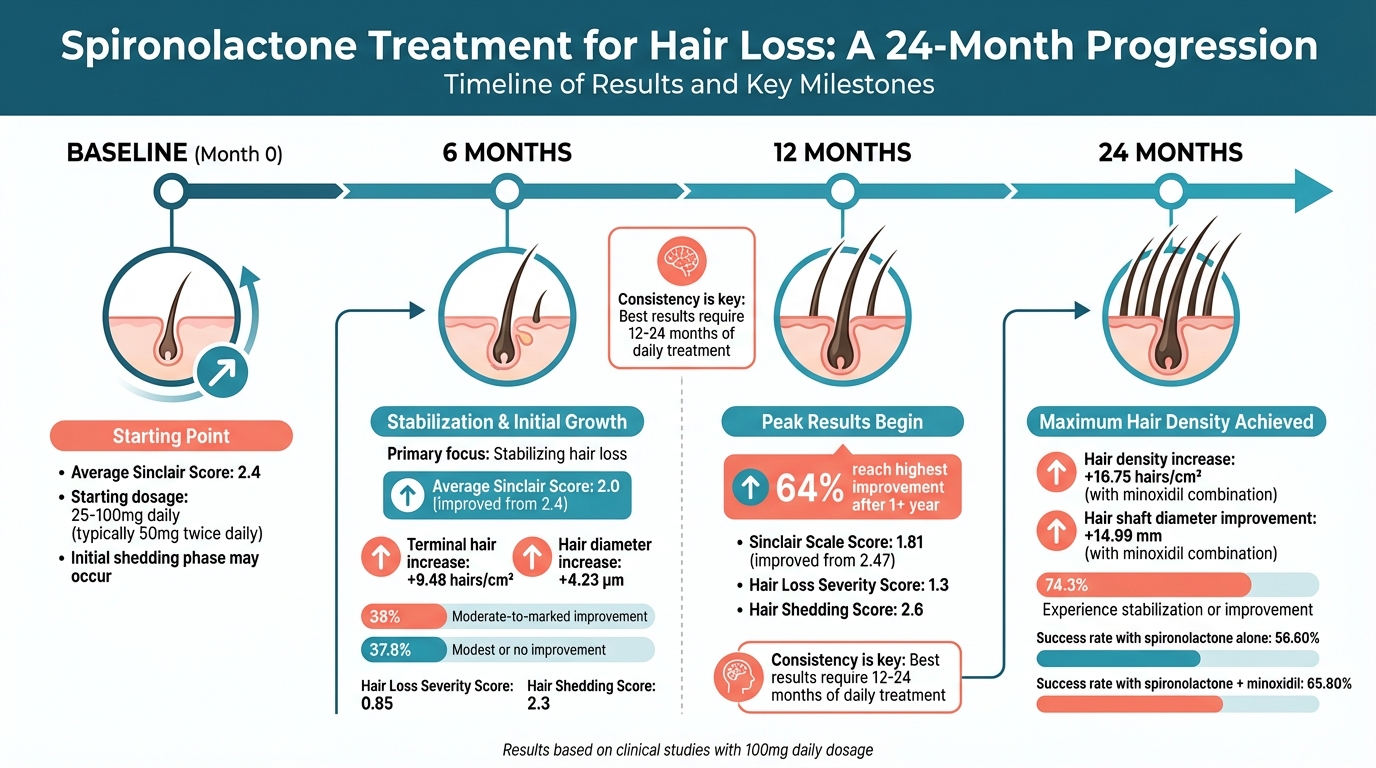
Spironolactone Hair Loss Treatment Timeline and Results
Spironolactone’s effects on hormonal regulation and androgen blocking take time to manifest, with results appearing gradually as treatment progresses.
First 6 Months
In the initial six months, the primary focus is on stabilizing hair loss rather than achieving substantial regrowth. Many patients notice a reduction in daily shedding as the medication begins to block androgens and protect hair follicles from further miniaturization. A 2020 retrospective study conducted at Massachusetts General Hospital found that women taking spironolactone (typically 50 mg twice daily) improved their average Sinclair hair loss scores from 2.4 at baseline to 2.0 after six months.
By the 24-week mark, early signs of regrowth may become visible, such as thicker hair strands and an increase in terminal hair counts. For instance, a 2025 pilot study observed that premenopausal women taking 100 mg of spironolactone daily for 24 weeks experienced an average increase of 9.48 terminal hairs per square centimeter, a 4.23 μm boost in hair diameter, and 38% of participants reported moderate-to-marked improvement, compared to only 9% in the placebo group.
However, it’s worth noting that approximately 37.8% of patients experience modest or no improvement during this early phase. If significant progress isn’t observed after six months, a follow-up consultation may be necessary to discuss adjustments, such as modifying the dosage or adding treatments like minoxidil. These early changes lay the groundwork for more noticeable improvements in the months ahead.
12 to 24 Months
Between 12 and 24 months, most patients see their best results, achieving peak hair density and optimal outcomes. Research shows that 64% of individuals reached their highest Sinclair Score after at least one year of treatment. Additionally, Hair Loss Severity Scores improved from 0.85 at six months to 1.3 at 12 months, while Hair Shedding Scores showed progress from 2.3 to 2.6.
Long-term studies highlight that 74.3% of patients experienced either stabilization or improvement in hair loss with consistent use over 7 to 20 months. Another study evaluating low-dose spironolactone (average dose of 35.28 mg) found that the Sinclair scale score dropped from 2.47 to 1.81 after approximately one year of treatment. The takeaway? Consistency is key. Sticking to a daily treatment routine for 12 to 24 months is essential to achieve and maintain maximum hair density.
sbb-itb-6dba428
Monitoring Progress and Managing Side Effects
Tracking Your Progress
Keeping track of your progress is crucial, and one effective way to do this is with standardized scalp photographs. Take photos every six months, ensuring they’re from the same angles and under similar lighting conditions. This approach helps capture even the smallest changes over time.
Your doctor might also use specific scoring systems like the Sinclair Score (graded from 1 to 5) or the Ludwig Scale to evaluate the severity of hair loss during your visits. Tools like dermoscopy and videodermoscopy can offer a closer look, examining details such as hair shaft diameter, follicular units, and the emergence of new, upright hairs.
This combination of visual and quantitative tracking not only gives a clear picture of your progress but also helps guide timely adjustments to your treatment plan. Alongside this, staying informed about potential side effects is just as important.
Managing Side Effects
While monitoring progress, keep an eye out for side effects that might need attention. The good news is that most side effects from spironolactone are mild and can often be managed with simple tweaks. For example, menstrual irregularities, which affect about 11.85% of women, can often be regulated by pairing spironolactone with oral contraceptives, which also serve as birth control. If you feel dizzy or drowsy, consider taking your dose at night and staying hydrated - it can make a big difference.
Routine blood work will help your doctor keep an eye on potassium levels. Although hyperkalemia (high potassium) is rare, occurring in about 0.9% to 2.7% of patients, it’s important to recognize symptoms like muscle weakness, irregular heart rate, or nausea. If you experience severe vomiting, signs of dehydration (such as dark urine or extreme thirst), or symptoms of a serious allergic reaction, reach out to your healthcare provider immediately.
A follow-up appointment after the first six months of treatment can be a great opportunity to evaluate your progress and make any necessary dosage adjustments. Staying proactive about managing side effects is key to achieving long-term success with your treatment plan.
Personalized Spironolactone Treatment with Oana Health

Oana Health takes spironolactone's proven effectiveness in managing hair loss and makes it even more accessible through personalized, affordable telehealth services.
Affordable Treatment Options
Oana Health provides oral spironolactone for just $14 per month and a topical version for $43 per month, all through their telehealth platform. The topical option is designed to directly target hair follicles while minimizing systemic side effects, whereas the oral treatment offers broader androgen-blocking benefits.
Medications are shipped free of charge, and the initial doctor consultation costs only $20. Licensed medical professionals craft personalized treatment plans tailored to your unique hormonal health needs. As one satisfied patient shared, "Oana Health is efficient and supportive, making my treatment journey seamless."
These affordable options create a strong foundation for even better results when combined with complementary treatments.
Combining Treatments for Better Results
Research consistently shows that combining treatments delivers better outcomes than spironolactone alone. For instance, pairing spironolactone with minoxidil improves hair loss treatment success rates to 65.80%, compared to 43.21% with spironolactone by itself. Oana Health offers oral minoxidil at $25 per month to stimulate hair follicle growth and enhance spironolactone’s effects. Additionally, metformin, available for $32 per month, can help address insulin resistance and hormonal imbalances.
A study found that 100% of patients using a combination of minoxidil and spironolactone gels showed clinical improvement, compared to 80% who used spironolactone gel alone. Your physician can recommend the best combination based on your specific hormonal profile and treatment goals.
How Telehealth Works
Oana Health’s telehealth platform streamlines the entire treatment process. Start with a quick, five-minute online intake form to share your medical history and concerns. U.S.-licensed professionals then review your information and create a custom treatment plan tailored to your hormonal health. Medications are prepared in FDA-regulated compounding pharmacies to ensure high-quality, evidence-based care.
With automatic refills and ongoing support available via phone or online messaging, the platform eliminates the need for repeated office visits while keeping you connected to professional guidance throughout your treatment. Ready to begin? Access oral spironolactone at spironolactone.oanahealth.com or explore topical options at topicalspironolactone.oanahealth.com.
Conclusion
Spironolactone works by blocking DHT and addressing hormonal imbalances, helping to stabilize hair loss and encourage regrowth when used consistently over a 12-month period as part of a tailored treatment plan. Clinical studies highlight noticeable improvement with regular use during this timeframe. For many women, the primary benefit is halting further hair loss, with the added bonus of visible regrowth over time. This dual action - targeting DHT and balancing hormones - makes spironolactone a powerful option in managing hair loss.
The cornerstone of success is a treatment plan designed specifically for your unique hormonal needs. While spironolactone alone can be effective, combining it with other treatments often yields better results. Close medical supervision ensures that your dosage and treatment approach are adjusted to suit your individual requirements, maximizing both safety and effectiveness.
Platforms like Oana Health simplify this process by providing expert guidance, convenient home delivery, and affordable options. Licensed healthcare professionals craft personalized plans, medications are shipped directly to your home, and ongoing support ensures you stay on track throughout your journey.
Consistency is key. With 6 to 12 months of dedicated treatment and a personalized plan, spironolactone offers a proven, long-term solution that is both effective and well-tolerated.
FAQs
How does spironolactone help reduce hair loss caused by hormonal imbalances?
Spironolactone works to address hair loss by countering the effects of androgens, including DHT (dihydrotestosterone). DHT is a hormone known to shrink hair follicles and slow down hair growth. By reducing both the production and activity of androgens, spironolactone helps shield hair follicles from hormonal imbalances that can lead to thinning or shedding over time.
This makes it a valuable choice for managing hair loss in the long term, particularly for those dealing with hormone-related conditions such as PCOS.
What are the common side effects of spironolactone, and how can they be managed?
Spironolactone is usually well-tolerated, but like any medication, it can come with side effects. Some of the more common ones include menstrual irregularities, increased facial hair growth (hypertrichosis), and occasional scalp itching or flaking. In rare cases, it can lead to electrolyte imbalances, which is why regular blood tests to check potassium levels and kidney function are often recommended.
Many side effects can be managed by adjusting the dosage or incorporating additional treatments. For instance, menstrual irregularities might improve with hormonal regulation, and other symptoms may ease as your body adjusts to the medication. Staying in regular contact with your healthcare provider is key to addressing any concerns quickly and ensuring your treatment plan remains both safe and effective.
If you're thinking about starting spironolactone, it's essential to discuss your medical history and any specific concerns with a licensed healthcare professional. This helps ensure the treatment is tailored to your individual needs.
Can spironolactone be used with other treatments to improve hair regrowth?
Yes, spironolactone can be paired with other treatments to improve hair regrowth outcomes. Depending on the cause of hair loss and individual needs, it might be prescribed on its own or alongside additional therapies. This approach allows healthcare providers to design a tailored treatment plan aimed at achieving the best possible results.
For hair loss linked to hormonal imbalances, spironolactone helps by reducing the impact of androgens - hormones often associated with hair thinning. When combined with other options, like topical treatments or supplements, it can promote sustained regrowth and support overall hair health. Be sure to consult a licensed healthcare professional to find the most effective strategy for your unique situation.