
How Spironolactone Reduces Facial Hair in Women
Spironolactone is a medication that helps women reduce unwanted facial hair caused by hormonal imbalances, particularly in conditions like PCOS. It works by blocking androgens (male hormones) at hair follicles and lowering testosterone levels. Research shows that 72% of women taking 75–100 mg daily see noticeable improvements, with results becoming visible after 3–6 months of consistent use. Combining spironolactone with birth control pills or topical treatments like eflornithine can enhance its effects. However, side effects like increased urination, menstrual irregularities, and dizziness may occur, and regular medical monitoring is essential to ensure safety. If you're struggling with facial hair growth, spironolactone could be an effective solution with proper guidance and care.
How Spironolactone Works
Androgens and Facial Hair Growth
Androgens are male sex hormones present in both men and women, but when levels rise in women, they can lead to unwanted facial hair. The main culprit? Testosterone. This androgen is responsible for stimulating hair follicles on areas like the face, chest, and back. When testosterone levels increase, it transforms fine, light vellus hair into darker, coarser terminal hair.
This change is particularly common in women with PCOS, where hormonal imbalances disrupt the normal ratio of sex hormones. Interestingly, the issue isn't always about producing too much testosterone - sometimes hair follicles and sebaceous glands are just more sensitive to normal levels of androgens. This is where spironolactone steps in to counteract these effects.
How Spironolactone Blocks Androgens
Spironolactone tackles hirsutism through two key mechanisms. First, it acts as a competitive inhibitor, blocking dihydrotestosterone (DHT) from binding to androgen receptors in hair follicles. By occupying these receptor sites - both cytosolic and nuclear - it essentially prevents the signals that would otherwise lead to the growth of coarse hair.
Second, spironolactone lowers the overall production of testosterone, reducing the amount available to convert into DHT. Originally developed to manage blood pressure as an aldosterone antagonist, its unique molecular structure also enables these anti-androgenic effects. However, it's worth noting that spironolactone doesn’t block the 5-alpha-reductase enzyme, which is responsible for converting testosterone into DHT. Instead, its effectiveness comes from receptor blocking and decreasing hormone production.
Research on Spironolactone for Hirsutism
Study Results and Data
Clinical studies have shown that spironolactone can significantly reduce unwanted facial hair. Using objective measures like the Ferriman-Gallwey scale, researchers observed an average reduction of 7.20 points in patients taking spironolactone compared to those in placebo groups. Additionally, studies found a 19% reduction in hair shaft diameter with a daily dose of 100 mg, increasing to 30% at 200 mg daily. However, visible improvements generally require at least six months of consistent treatment, with 61% of patients experiencing noticeable changes within that timeframe. By the six-month mark, total hirsutism scores had decreased by roughly 30%. These results highlight how both dosage and treatment duration play key roles in achieving meaningful progress.
"Low-dose spironolactone improves hirsutism in a majority of hirsute women, irrespective of age, severity or duration of hirsutism, menstrual status, or serum hormone levels." - Roger S. Rittmaster, M.D.
Women taking 100 mg of spironolactone daily were found to be over seven times more likely to report improvement compared to those on a placebo, with an odds ratio of 7.18. Furthermore, clinical reviews suggest spironolactone is more effective than other treatments like metformin, 5 mg/day finasteride, or low-dose cyproterone acetate in reducing excessive hair growth.
PCOS-Related vs. Other Types of Hirsutism
The effectiveness of spironolactone can vary depending on the underlying cause of hirsutism. For instance, women with regular menstrual cycles see a 78% improvement, while those with irregular cycles experience a 55% improvement - though combining spironolactone with oral contraceptives can help bridge this gap. This distinction is particularly relevant for women with polycystic ovary syndrome (PCOS), where irregular periods are a common symptom.
Interestingly, factors like age, body mass index, and baseline testosterone levels don't appear to significantly influence treatment success. Instead, better outcomes are associated with the initial severity of hirsutism and lower baseline DHEAS (dehydroepiandrosterone sulfate) levels. The medication’s primary mechanism works directly at the hair follicle, reducing the effects of androgens locally, rather than merely lowering overall androgen levels in the bloodstream.
Using Spironolactone with Other Treatments
Spironolactone and Birth Control Pills
Combining spironolactone with oral contraceptives creates a two-pronged approach to managing facial hair. Oral contraceptives work by suppressing ovarian androgen production and regulating menstrual cycles, while spironolactone blocks androgen receptors directly at the hair follicle.
Studies indicate that oral contraceptives can enhance treatment outcomes, especially in women with irregular menstrual cycles. Clinical guidelines often suggest starting with oral contraceptives alone for six months. If facial hair doesn’t improve enough during that period, spironolactone can be added to the regimen.
"Antiandrogen drugs, often given along with nonandrogenic oral contraceptives, are the most reliable." - Richard Sadovsky, M.D., American Academy of Family Physicians
This combination is particularly crucial for women of childbearing age. Spironolactone has the potential to feminize a male fetus, so reliable contraception is essential during treatment. For those seeking care through telehealth services like Oana Health, providers often prescribe both medications together to ensure safety while optimizing results.
Beyond hormonal treatments, adding topical therapies can further enhance the effectiveness of spironolactone.
Spironolactone and Topical Treatments
Spironolactone’s systemic anti-androgen effects can be complemented by targeted topical treatments. For example, combining spironolactone with eflornithine cream offers faster visible results. While spironolactone works internally to block androgens, eflornithine inhibits hair follicle enzymes directly.
Experts also recommend pairing medications with mechanical hair removal methods like electrolysis, threading, or plucking to achieve the best cosmetic results. Spironolactone helps prevent new hair growth and slows the progression of existing hair, but established facial hair often requires additional interventions. Topical treatments, such as eflornithine or topical spironolactone, can target specific areas while oral spironolactone addresses the underlying hormonal imbalance.
"Optimal therapy probably includes mechanical hair removal combined with judicious use of medications." - Richard Sadovsky, M.D.
sbb-itb-6dba428
A Magic Pill for Acne, PCOS, Female Hair Loss, Hirsutism and HS
What to Expect: Timeline, Side Effects, and Safety
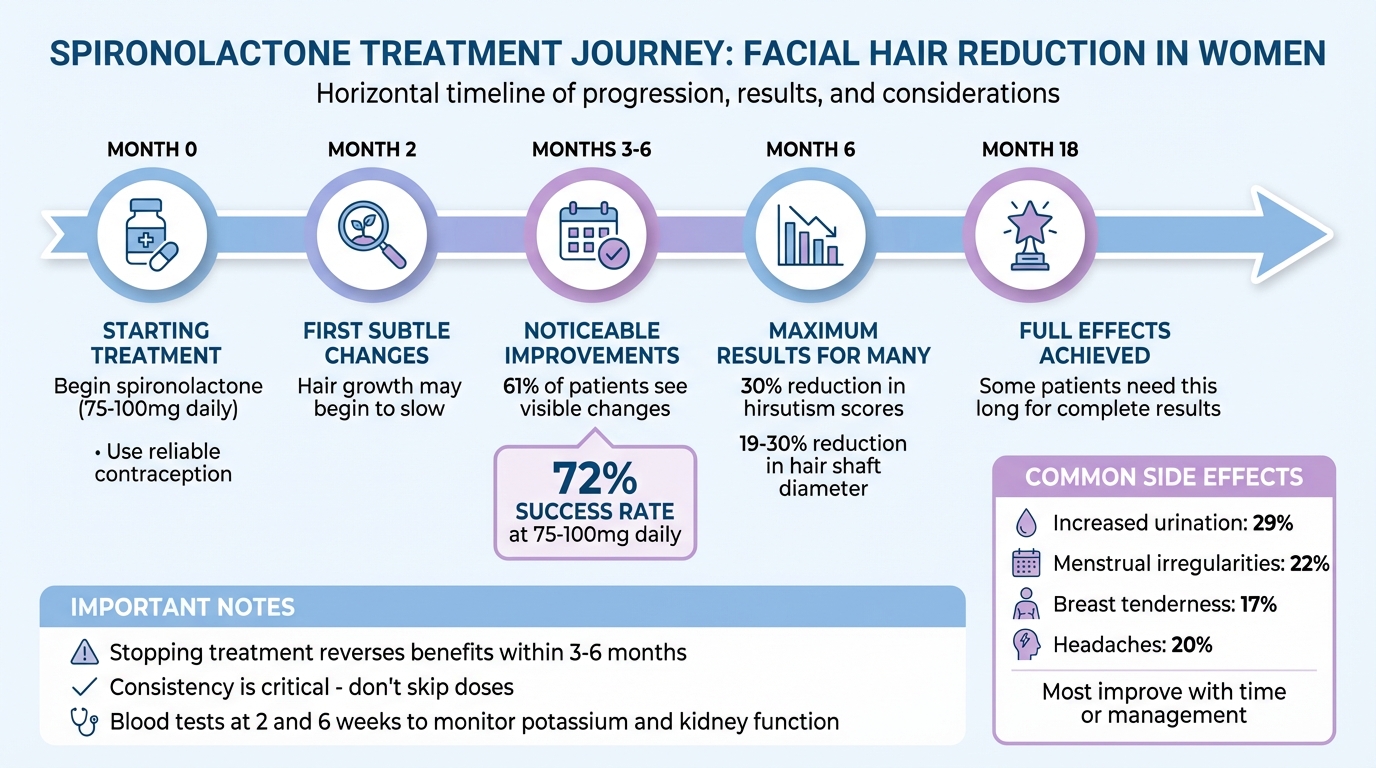
Spironolactone Treatment Timeline: Expected Results and Key Milestones
Now that we've covered how spironolactone works and its research background, let’s dive into what you can anticipate during treatment.
When You'll See Results
Spironolactone works gradually, so patience is key. You might notice the first changes in facial hair within 2 months. By the 3–6 month mark, improvements become more noticeable, with maximum results often occurring around 6 months. For some, it may take as long as 18 months to see the full effect . During this time, hair growth may slow down, and new growth often appears finer and less coarse.
"Spironolactone can take 3 to 6 months to have its full effects. Waiting for the results can be very frustrating."
– Dr. Sajjad Rajpar, Consultant Dermatologist, Midland Skin
Consistency is critical. Stopping spironolactone will reverse its benefits, usually within 3–6 months. Skipping doses can also reduce its effectiveness, so sticking to your daily routine is essential.
While waiting for results, it’s important to be aware of possible side effects and safety measures.
Common Side Effects and Management
Like many medications, spironolactone comes with potential side effects. Some of the most common include increased urination (29%), menstrual irregularities (22%), breast tenderness (17%), dizziness, fatigue, nausea, and headaches . For instance, one clinical study found that headaches affected 20% of women taking spironolactone, compared to 12% in the placebo group.
Thankfully, most of these side effects can be managed with a few adjustments:
- Dizziness: Rise slowly from sitting or lying down, and rest immediately if you feel faint.
- Nausea: Taking the medication with food can help.
- Menstrual irregularities: Your doctor might suggest adding a birth control pill to regulate your cycle .
- Increased urination: This typically improves within the first month.
To avoid complications like hyperkalemia (high potassium levels), steer clear of potassium supplements and limit high-potassium foods, such as large amounts of potatoes or certain vegetables. Staying hydrated is also crucial, especially during exercise or in hot weather, to prevent dehydration and low blood pressure.
Medical Monitoring and Safety
Managing spironolactone’s side effects involves a mix of lifestyle adjustments and regular medical check-ins. Blood tests are usually scheduled at 2 and 6 weeks after starting or adjusting your dose to monitor kidney function and potassium levels. Ongoing monitoring is essential, as elevated potassium is rare in patients under 45 (0.75% to 2%) but becomes more common in women over 46, affecting up to 16%.
"It is very important that your doctor check your progress at regular visits to make sure this medicine is working properly and to decide if you should continue to take it. Blood and urine tests may be needed to check for unwanted effects."
– Mayo Clinic
If you’re of childbearing age, reliable contraception is a must while taking spironolactone, as it can feminize a male fetus . Be sure to report any symptoms of high potassium - such as irregular heartbeat, muscle weakness, or numbness - to your doctor immediately. And don’t forget to inform all healthcare providers, including dentists, that you’re on spironolactone before undergoing any procedures.
Is Spironolactone Right for You?
Spironolactone is known for its ability to block androgens, the hormones responsible for driving facial hair growth. If you're considering treatment options, it's worth noting that research highlights spironolactone as more effective than alternatives like metformin, finasteride (5 mg/day), and low-dose cyproterone acetate in reducing hirsutism. Clinical trials also show that over 95% of participants tolerate spironolactone well, with many able to adjust their dosage as needed.
The data strongly supports spironolactone's position as a top choice for managing hirsutism. However, individual results can vary. For instance, women with regular menstrual cycles see a 78% improvement, compared to a 55% improvement in those with irregular cycles. Pairing spironolactone with birth control often enhances these outcomes further.
Patience is key with this treatment. Studies suggest that 61% of patients need at least six months to notice visible changes. During this time, it's crucial to use reliable contraception, as spironolactone poses a risk of feminizing a male fetus if pregnancy occurs.
If you're dealing with unwanted facial hair, a personalized evaluation is essential. Healthcare providers, like those at Oana Health, specialize in determining whether your facial hair concerns are androgen-related. They can develop a tailored treatment plan and even provide online consultations with licensed medical professionals. For added convenience, they offer prescriptions delivered directly to your home with free shipping.
To ensure the best results, consult a provider experienced in anti-androgen therapy. Regular monitoring and guidance will help you stay on track and manage expectations regarding the treatment timeline. With the right support, spironolactone could be a highly effective option for addressing unwanted facial hair.
FAQs
How does spironolactone help reduce unwanted facial hair in women?
Spironolactone works by targeting androgen receptors and lowering the production of androgens, which are male hormones naturally present in the body. These hormones can stimulate hair follicles, causing excessive hair growth in areas like the face. By reducing this hormonal activity, spironolactone gradually slows and minimizes the growth of unwanted facial hair.
This treatment is especially helpful for women dealing with conditions like hirsutism or PCOS (polycystic ovary syndrome), both of which are often linked to higher androgen levels. It’s worth noting that results aren’t immediate - since hair growth cycles take time to adjust, noticeable changes may take a few months.
What side effects can spironolactone cause?
Spironolactone may lead to side effects like dizziness, nausea, fatigue, and muscle cramps. For some women, it can cause menstrual changes, such as irregular or missed periods, along with breast tenderness or enlargement. In rare cases, it might result in gynecomastia, which is the growth of breast tissue in men.
Additionally, this medication can influence your potassium levels, potentially increasing them, and it may also lower your blood pressure. If you notice any concerning symptoms or side effects, it's essential to bring them up with your healthcare provider.
Can spironolactone be used with other treatments to improve facial hair reduction?
Yes, spironolactone is often paired with other treatments to improve its effectiveness in reducing facial hair. Common options include oral contraceptives, low-dose steroids like dexamethasone, and topical treatments such as eflornithine cream. For additional support, procedures like laser hair removal can be used alongside spironolactone to achieve more visible results.
These combinations address different factors influencing hair growth, providing a more well-rounded approach for women managing hirsutism or PCOS-related facial hair. It's important to consult a licensed healthcare provider to create a treatment plan that suits your specific needs.