
Spironolactone and Sexual Health: Myths vs Facts
Spironolactone, a medication often used for hormonal acne, PCOS, and hair-related conditions, can sometimes impact sexual health. While concerns about libido, vaginal dryness, and arousal changes exist, these effects are generally rare, temporary, and reversible. Here's what you need to know:
- Libido: Only 10–15% of users report reduced sex drive. Most experience no changes.
- Vaginal Dryness: Affects about 15–25% of users, but many find relief with moisturizers or dose adjustments.
- Arousal/Orgasm Issues: Rare, impacting just 1–2% of users. Recovery is typically quick after stopping or lowering the dose.
- Reversibility: Sexual side effects usually resolve within weeks to months after discontinuing or adjusting the medication.
If you experience side effects, options like lowering your dose, taking breaks, or using supportive treatments such as topical hormones can help. Always consult your doctor before making changes. Services like Oana Health offer tailored care to manage spironolactone’s effects while achieving treatment goals.
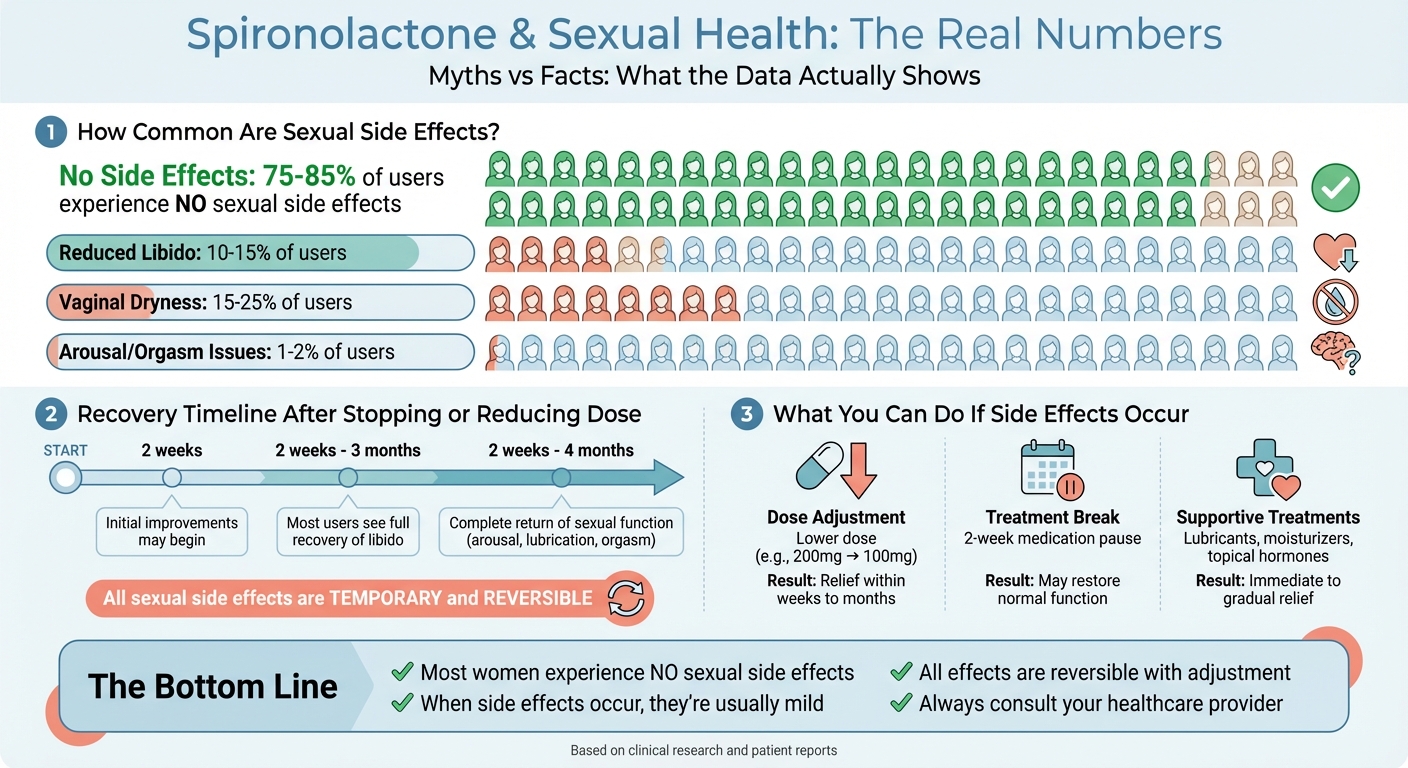
Spironolactone Sexual Side Effects: Prevalence and Recovery Statistics
Myth 1: Spironolactone Always Reduces Sex Drive
There’s a common belief that spironolactone always lowers libido. However, only about 10–15% of women taking this medication report a decrease in sex drive, meaning the majority experience no noticeable changes at all.
This misunderstanding likely comes from spironolactone's role as an anti-androgen. Since it blocks testosterone receptors, it might seem logical to assume it would impact everyone’s libido. But sexual function is influenced by many factors, not just hormones.
Fact: Most Patients Maintain Normal Libido
In practice, most women using spironolactone report no change in their libido. When changes do occur, they’re usually noticed within the first few weeks or months of starting the medication or increasing the dosage. If you experience a drop in sex drive, it’s worth considering other potential causes like stress, lifestyle changes, or interactions with new medications. Your healthcare provider can help pinpoint the source.
For those who do experience libido changes, adjustments to the treatment plan can often resolve the issue.
Tips for Managing Reduced Sex Drive
If spironolactone seems to be affecting your libido, here are some options you can discuss with your doctor:
- Lower the dosage: For example, reducing the dose from 200 mg to 100 mg may alleviate side effects while still addressing conditions like acne or hair loss.
- Take a short break: A two-week pause from the medication may help restore your normal sex drive.
- Adjust the treatment plan: Libido typically improves within 2 weeks to 3–4 months after lowering the dose or stopping the medication. If spironolactone is still needed for its benefits, your doctor might suggest combining it with other therapies to achieve effective results with a lower dose.
For personalized support, telehealth services like Oana Health can connect you with licensed professionals in the U.S. who can help tailor your treatment plan.
In short, spironolactone rarely impacts libido, and most women continue to enjoy normal sexual function while on the medication.
Myth 2: Spironolactone Causes Permanent Sexual Problems
There's a widespread belief that spironolactone leads to permanent sexual dysfunction, with concerns about reduced libido, lower arousal, or difficulty achieving orgasm. However, there’s no solid evidence to back up the claim that these issues are lasting.
Fact: Sexual Function Returns After Treatment Ends
Research and clinical practice show that sexual function - libido, arousal, and orgasm - typically returns to normal after stopping or reducing spironolactone. Most women regain their usual sexual function within 2 weeks to 4 months. In essence, these effects are temporary, and your body usually readjusts once the medication is reduced or eliminated. This recovery has been consistently observed in clinical settings.
Research Confirming Reversible Effects
Studies reinforce the idea that these effects are not permanent. For example, a 2019 case series published in the Journal of Sexual Medicine by Mitchell and colleagues examined seven women who experienced painful intercourse (introital dyspareunia) and decreased arousal while on spironolactone. After discontinuing the medication and applying a topical estradiol 0.01%/testosterone 0.1% gel twice daily to the vestibule, all seven women reported significant improvements. They saw reduced vulvar atrophy, relief from painful intercourse, and increased sexual arousal.
This research highlights that even when spironolactone impacts sexual health, the side effects are reversible. Since spironolactone works by blocking androgen receptors, its effects are linked to hormonal changes. Once the medication is discontinued, hormone levels stabilize, and sexual function typically returns to normal. Importantly, no credible medical studies suggest that spironolactone causes permanent sexual dysfunction in otherwise healthy individuals.
Myth 3: All Users Experience Vaginal Dryness and Pain
Vaginal dryness and discomfort during intercourse are not guaranteed side effects of spironolactone. In fact, these issues affect only a small percentage of users and can often be addressed effectively.
Fact: Only 15-25% Report Lubrication Issues
Research indicates that 15–25% of women report experiencing vaginal dryness or lubrication problems, meaning the majority - 75–85% - do not encounter these symptoms.
The connection between spironolactone and vaginal dryness lies in its role as an anti-androgen. This medication blocks androgen receptors in the vaginal and vestibular glands, which are responsible for producing natural lubrication. With reduced hormonal stimulation, these glands may produce less moisture, potentially leading to dryness and discomfort during sex. However, these effects are not universal and often depend on individual hormonal responses.
A 2019 case series sheds light on this issue, documenting seven women who experienced introital dyspareunia (pain at the vaginal opening). After stopping spironolactone and using a topical estradiol/testosterone gel, these women reported significant improvement. It’s worth noting that cases like these are typically observed in specialized clinics and are not representative of the broader population of spironolactone users.
Treatment Options for Vaginal Dryness
If vaginal dryness or discomfort arises, there are several effective ways to manage these symptoms. The case series mentioned earlier highlighted the benefits of a compounded estradiol 0.01%/testosterone 0.1% gel, applied to the vestibule twice daily. This treatment resolved pain, improved vestibular atrophy, and enhanced sexual arousal for all seven participants.
Other strategies include:
- Lowering your spironolactone dose: Many side effects are dose-dependent. Reducing your dose from 200 mg to 100 mg daily could alleviate symptoms within two weeks to four months.
- Using over-the-counter vaginal moisturizers and lubricants: These can offer immediate relief for mild dryness.
For a more tailored approach, Oana Health provides personalized care through licensed medical professionals. They can adjust your spironolactone dosage, prescribe topical hormonal therapies, or recommend alternative treatments for conditions like acne, PCOS, or unwanted facial hair. Medications are delivered directly to your doorstep with free shipping, offering a discreet and convenient way to address these concerns.
Having access to these treatments ensures that you can maintain your sexual health and comfort while continuing spironolactone therapy.
sbb-itb-6dba428
Myth 4: Spironolactone Never Affects Orgasm or Arousal
There’s a common belief that spironolactone doesn’t influence arousal or orgasm. While these side effects are rare, they can occur - and understanding the possibilities can help you manage expectations.
Fact: Changes in Arousal and Orgasm Are Rare
Studies show that only 1–2% of women taking spironolactone report difficulties with orgasm. For comparison, decreased libido affects around 10–15% of users, and vaginal dryness is reported by 15–25%, making issues with orgasm the least frequent sexual side effect. Since androgens contribute to libido, genital sensitivity, and orgasm pathways, blocking them could theoretically impact sexual response. However, for most women, these changes don’t happen, and when they do, they’re typically mild and reversible.
Examples of Arousal Changes and Recovery
A 2019 case series of seven women highlighted that reducing the spironolactone dose or stopping it altogether, paired with topical hormonal treatments, led to a quick recovery of sexual arousal. This supports the idea that any sexual response changes caused by spironolactone are temporary.
In clinical practice, women who lower their spironolactone dosage - for example, from 200 mg to 100 mg daily - often see their sexual function return to normal within weeks or months. If you experience issues with arousal or orgasm, it’s worth discussing with your healthcare provider. Adjusting your dose or exploring alternative treatments might help. Oana Health offers personalized consultations with licensed professionals who can tailor your treatment, prescribe targeted therapies like topical hormones, or suggest other solutions for managing acne, PCOS, or unwanted facial hair. Plus, everything is conveniently delivered to your door with free shipping.
Next, we’ll explore strategies for adjusting your treatment plan if sexual side effects arise.
How to Manage Sexual Health Side Effects
Experiencing sexual side effects from spironolactone? The good news is that most of these side effects are tied to dosage and can often be reversed. By adjusting your treatment plan, you may be able to restore sexual function while effectively managing your condition. Always consult your healthcare provider before making any changes to your medication.
Adjusting Doses and Treatment Plans
One of the most effective ways to address sexual side effects is by working closely with your healthcare provider to fine-tune your medication. Often, doctors will gradually reduce the spironolactone dose - say, from 200 mg to 100 mg or even 50 mg - and monitor your symptoms over a 4–12 week period. In some cases, a brief break from spironolactone (about two weeks) followed by restarting at a lower dose can help improve issues like libido, lubrication, or overall comfort during intercourse. Any dose adjustments should always be done under medical supervision, with your doctor carefully monitoring your vital signs.
If tweaking the dosage doesn’t fully resolve the side effects, exploring alternative treatments might be the next step.
Considering Alternative Treatments
When dose adjustments don't fully address sexual side effects, switching to alternative therapies could be a solution. Topical spironolactone targets specific areas like the skin or scalp, offering localized treatment with fewer systemic effects. This approach can reduce the risk of side effects like changes in libido or vaginal dryness compared to higher-dose oral therapy. If you're using spironolactone for hair loss, your provider might suggest adding oral minoxidil, which doesn’t interfere with androgen activity. For conditions like PCOS or hormonal acne, other options such as combined oral contraceptives or metformin may help manage symptoms while tapering off oral spironolactone. These alternatives aim to maintain symptom control without compromising sexual health.
Oana Health's Personalized Treatment Options
For those looking for tailored solutions, Oana Health offers personalized treatment options designed to balance effectiveness with your overall well-being. Their U.S.-based licensed clinicians can customize hormone therapy to suit your needs. Oana provides prescription oral spironolactone starting at $14 per month and topical spironolactone at $43 per month, along with alternatives like oral minoxidil for $25 per month for hair loss. With telehealth visits and secure messaging, their providers can monitor your sexual health, adjust doses as needed, and recommend supportive treatments like lubricants, topical hormones, or additional medications for acne and hirsutism. Plus, everything is shipped directly to your home with free delivery.
Conclusion
Research indicates that sexual side effects linked to spironolactone are uncommon and, in most cases, reversible. Most people using this medication don’t encounter these issues, and if they do, symptoms generally improve within weeks or months after making adjustments to the treatment plan.
If you notice changes in your sex drive, lubrication, arousal, or experience discomfort during intercourse, don’t hesitate to address these concerns. Often, simple changes - like reducing your dosage, taking a short break from the medication, or incorporating supportive options such as lubricants or topical hormones - can help restore sexual function while still effectively managing conditions like acne, PCOS, or excessive hair growth. This individualized approach ensures you can maintain both effective treatment and your sexual health.
For personalized care, Oana Health connects you with U.S.-based licensed clinicians who can customize your treatment plan. They offer telehealth consultations and free home delivery of medications, making it easier to prioritize your well-being.
FAQs
What can I do to relieve vaginal dryness caused by spironolactone?
If spironolactone is leading to vaginal dryness, there are practical ways to address it. One option is using a high-quality lubricant during intercourse, which can offer quick relief and make the experience more comfortable. Additionally, maintaining proper hydration throughout the day might support overall vaginal health.
For personalized advice, it’s important to consult your healthcare provider. They might suggest treatments like topical estrogen or other suitable options based on your specific needs. Always speak with a licensed medical professional to explore the best solutions for your situation.
What can I do if spironolactone affects my libido?
If you’re experiencing changes in your libido while taking spironolactone, it’s a good idea to bring it up with your healthcare provider. They can assess your symptoms and discuss whether adjustments to your treatment might be helpful.
Keep in mind, medications affect everyone differently, and your provider can work with you to ensure your treatment supports your overall health and wellness.
Does spironolactone cause long-term sexual health issues?
Current studies in the medical field show that spironolactone is not linked to any lasting sexual health problems. Some people might notice temporary shifts in libido or sexual function when they first begin taking the medication, but these effects are usually mild and tend to go away with time.
If you're worried about how spironolactone might impact your sexual health, it’s best to consult a licensed healthcare provider. They can offer advice tailored to your specific health situation.