
Low-Dose Spironolactone for PCOS: What Studies Show
Low-dose spironolactone (25–50 mg/day) is often used to treat symptoms of Polycystic Ovary Syndrome (PCOS), specifically those caused by high androgen levels, like acne, excess facial/body hair (hirsutism), and thinning scalp hair. While not FDA-approved for PCOS, it works by blocking androgen receptors and reducing androgen production. It’s particularly helpful for women who cannot or prefer not to use hormonal contraceptives.
Key Takeaways:
- Targets Symptoms: Effective for acne, hirsutism, and androgenic alopecia, with visible improvements in 3–12 months.
- Combination Therapy: Works well with metformin or birth control for broader symptom management, especially for insulin resistance and irregular cycles.
- Safety: Generally well-tolerated but requires monitoring for potassium levels and kidney function. Not safe during pregnancy.
- Telehealth Support: Services like Oana Health simplify access to prescriptions, lab tests, and follow-up care.
Spironolactone is not a standalone solution for PCOS but can be part of a personalized plan when combined with lifestyle changes or other medications.
How Low-Dose Spironolactone Works for PCOS
How It Works in PCOS
Spironolactone works by targeting androgens, the hormones often linked to PCOS symptoms. It blocks receptor sites in hair-bearing areas and inhibits enzymes that produce androgens, such as testosterone and DHT. This prevents these hormones from binding and causing issues like excessive hair growth or acne, even if blood testosterone levels remain the same. Additionally, it reduces androgen production in the ovaries and adrenal glands. Although this reduction is modest, it can lower circulating androgen levels enough to ease symptoms over time.
The drug also blocks aldosterone, which leads to sodium excretion, potassium retention, a slight drop in blood pressure, and increased urination. These combined effects make spironolactone effective in addressing certain PCOS symptoms, as discussed below.
Which PCOS Symptoms It Treats
Spironolactone is particularly useful for managing hyperandrogenic symptoms, which stem from excess male hormones. These include hirsutism (unwanted facial and body hair), acne, and androgenic alopecia (female-pattern hair loss on the scalp). For hirsutism and hair thinning, improvements typically take 6–12 months, as hair follicles grow slowly. Acne, however, often responds faster, with noticeable changes within 3–6 months.
However, spironolactone does not directly address other PCOS concerns like weight, insulin resistance, irregular menstrual cycles, or ovulation. Studies have shown no significant impact on BMI, and it is not an insulin-sensitizing medication. If you’re dealing with irregular periods, prediabetes, or difficulty losing weight, additional treatments such as metformin or lifestyle changes might be necessary alongside spironolactone.
Using It with Other Medications
Because spironolactone focuses on specific symptoms, it’s often combined with other treatments to address the broader challenges of PCOS. For example, pairing spironolactone with metformin is common for individuals experiencing both cosmetic (acne, excess hair) and metabolic (insulin resistance, weight gain) issues. One study involving 198 women found that combining 50 mg/day spironolactone with 1,000 mg/day metformin resulted in greater improvements in hirsutism and menstrual regularity compared to using either medication alone over six months.
Spironolactone is also frequently prescribed alongside combined oral contraceptives (birth control pills). Birth control pills help regulate cycles and reduce ovarian androgen production, while spironolactone blocks the remaining androgen activity at the tissue level. However, it’s crucial to use effective contraception because spironolactone can pose risks to a developing fetus.
Some experimental protocols, such as SPIOMET, combine spironolactone with pioglitazone and metformin to address androgens, insulin resistance, and liver fat simultaneously. While promising, these multi-drug approaches are still under study and are not yet standard practice in the U.S..
A Magic Pill for Acne, PCOS, Female Hair Loss, Hirsutism and HS
What Studies Show About Low-Dose Spironolactone
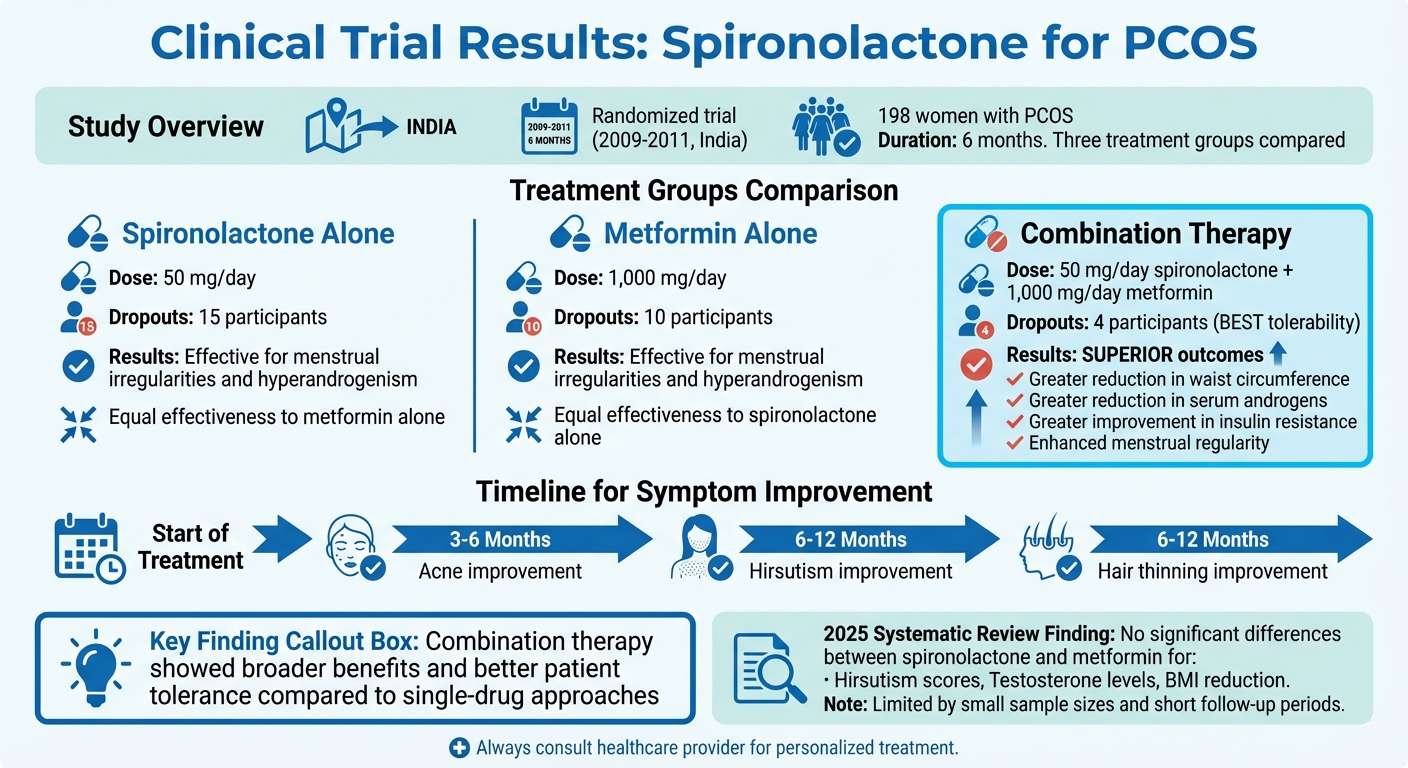
Low-Dose Spironolactone for PCOS: Clinical Trial Results and Treatment Comparison
Results from Clinical Trials
Between 2009 and 2011, a significant randomized trial in India evaluated the effects of 50 mg/day spironolactone, 1,000 mg/day metformin, and their combination in 198 women with PCOS over a period of 6 months. The study revealed that spironolactone alone was as effective as metformin in addressing key PCOS symptoms, such as menstrual irregularities and hyperandrogenism. However, the combination therapy delivered broader benefits, enhancing menstrual cycles, reducing androgen levels, and improving markers of insulin resistance.
Interestingly, the combination therapy group experienced fewer dropouts (4 compared to 15 and 10 in the single-drug groups), suggesting it was better tolerated. Additionally, this group showed greater reductions in waist circumference, serum androgens, and insulin resistance compared to either drug used by itself. These results highlight the potential of combining spironolactone and metformin to tackle multiple PCOS symptoms simultaneously.
Findings from Systematic Reviews
A systematic review conducted in 2025 found no significant differences in reducing hirsutism scores or testosterone levels when comparing spironolactone (used alone or with metformin) to metformin monotherapy. Similarly, spironolactone did not outperform metformin in lowering BMI.
However, the review pointed out limitations in the current research, such as small sample sizes, open-label study designs, and short follow-up periods. The authors concluded that spironolactone remains a reasonable treatment option for women who cannot use combined oral contraceptives. Still, they emphasized the need for larger, more rigorous trials to strengthen the evidence base.
SPIOMET and Multi-Drug Approaches
A newer treatment strategy, SPIOMET, combines low-dose spironolactone (50 mg/day), pioglitazone (7.5 mg/day), and metformin (850 mg/day). This approach has been tested in adolescents and young women with PCOS and aims to address both hyperandrogenism and insulin resistance. In randomized studies lasting 12–18 months, SPIOMET was compared to standard ethinyl estradiol/levonorgestrel oral contraceptives. The SPIOMET group showed higher rates of ovulatory cycles during and after treatment, along with greater reductions in hepatic and visceral fat and improved insulin sensitivity.
Additionally, SPIOMET led to better outcomes in androgen profiles and SHBG levels compared to oral contraceptives. These results suggest that multi-drug strategies like SPIOMET could be especially beneficial for younger patients. However, more extensive research is needed to evaluate long-term safety and refine patient selection criteria before these approaches see widespread use. This emerging strategy opens up new possibilities for more tailored PCOS management.
sbb-itb-6dba428
Safety and Who Should Use Low-Dose Spironolactone
Safety Profile and Monitoring Requirements
Low-dose spironolactone (25–100 mg/day) is generally well-tolerated by most users. Common side effects include menstrual changes, such as spotting or shifts in cycle length, increased urination, fatigue, dizziness (especially when standing too quickly), and mild stomach discomfort. According to a 2025 systematic review, these side effects are typically mild and rarely cause patients to stop treatment.
One potential concern with spironolactone is hyperkalemia, or elevated potassium levels, which can affect heart rhythm and muscle function. However, in healthy young women with normal kidney function, the risk of clinically significant hyperkalemia is minimal. The risk becomes more pronounced in people with chronic kidney disease, diabetes that impacts kidney health, or those taking medications like ACE inhibitors or ARBs.
Before starting spironolactone, certain baseline tests are crucial. These include checking serum potassium levels, kidney function (creatinine/eGFR), and blood pressure. Taking the medication with food and at a consistent time each day can help reduce side effects. These precautions help identify the right candidates for treatment and ensure safe use.
Who Benefits Most from This Treatment
Spironolactone is especially helpful for women with PCOS who deal with hyperandrogenic symptoms like unwanted facial or body hair (hirsutism), acne, or thinning scalp hair. It’s a good option for those who can’t use or tolerate combined hormonal birth control pills due to conditions like migraines with aura or a history of blood clots.
It’s important to use effective contraception while on spironolactone. Skin and hair improvements tend to be gradual, with most women noticing results after 3–6 months of consistent use.
When Not to Use Spironolactone
There are specific situations where spironolactone should be avoided. It’s not safe during pregnancy because it could harm a developing male fetus, and its safety during breastfeeding is not well-established. Women trying to conceive should also avoid using it.
The medication is unsuitable for individuals with chronic kidney disease, significantly reduced kidney function, or high baseline potassium levels. It should not be combined with other potassium-sparing medications to avoid dangerous potassium buildup. Additionally, women with severe dehydration, uncontrolled low blood pressure, or unexplained liver issues should avoid spironolactone. Since most PCOS studies exclude participants with major health conditions, the available safety data primarily applies to healthy, reproductive-age women.
It’s essential to work closely with a licensed healthcare provider to screen for any contraindications and monitor your treatment. Telehealth platforms can simplify ongoing care by coordinating lab tests, adjusting doses, and integrating spironolactone with other PCOS therapies. For example, services like Oana Health provide support to ensure safe and effective treatment from the comfort of home.
Telehealth and PCOS Management
How Telehealth Supports PCOS Treatment
Managing PCOS often requires consistent monitoring, especially when using medications like low-dose spironolactone. Telehealth has become a game-changer in this area, making it easier for patients to connect with specialized clinicians through video visits. This approach removes obstacles like travel and scheduling challenges, particularly for those living in rural areas, and expands access to care.
Through telehealth, clinicians can order essential lab tests - such as hormone panels, metabolic markers, and kidney function tests - via national lab networks. Patients can complete these tests locally, and results are reviewed online. Many telehealth platforms also offer tools to track symptoms like menstrual cycles, acne, hair growth, mood swings, weight changes, and blood pressure. This continuous flow of data allows for timely adjustments to treatment plans, reducing the reliance on infrequent in-person visits.
Evidence backs up telehealth’s effectiveness. For example, the UK STEP-UP trial found that telehealth-based lifestyle programs achieved similar results to in-person care in areas like weight management, metabolic health, and quality of life. Moreover, telehealth made care more accessible while reducing the burden of travel. In the United States, where 6%–12% of reproductive-age women - approximately 5 million women - are affected by PCOS, but only about half report ever receiving a diagnosis, telehealth offers a scalable way to address gaps in both access and awareness.
Combining Medication with Lifestyle Changes
The best approach to managing PCOS often combines medication with lifestyle changes. For instance, while low-dose spironolactone can help manage symptoms, guidelines emphasize that all women with PCOS benefit from lifestyle adjustments like healthier eating, regular physical activity, and weight management, with medication tailored to their specific needs.
Telehealth platforms make it easier to integrate these approaches by offering virtual sessions with dietitians, health coaches, and exercise specialists trained in areas like insulin resistance and weight management. Patients can receive custom nutrition plans emphasizing high-fiber foods, balanced macronutrients, and strategies to control blood sugar spikes. Exercise recommendations are often realistic and gradual, aiming for 150 minutes of moderate-intensity activity per week and two days of strength training. Additional support, like sleep hygiene education, mindfulness techniques, and cognitive behavioral strategies, can also be delivered through video sessions or digital modules to help manage stress, which can worsen PCOS symptoms.
Studies of telehealth weight-management programs show promising results, with participants losing an average of 3–7 kg over 6–12 months. Programs that include frequent remote check-ins, self-monitoring tools, and personalized feedback tend to perform best. For PCOS patients, combining low-dose spironolactone with metformin, while working with a telehealth dietitian on an insulin-friendly eating plan and incorporating walking and resistance training, can lead to modest weight loss, improved energy, more regular cycles, and reduced symptoms like hirsutism and acne over time. These comprehensive telehealth strategies work hand-in-hand with medical treatments to provide well-rounded care.
How Oana Health Helps with PCOS Care
Oana Health takes telehealth for PCOS management to the next level with services tailored to individual needs. Oana Health specializes in telehealth solutions for weight loss, hormone management, and PCOS treatment. Their evidence-based protocols include prescribing low-dose spironolactone for symptoms like excess androgen levels, alongside personalized plans crafted from health questionnaires, lab results, and digital check-ins. Getting started is simple - a 5-minute online visit initiates the process, and prescriptions, such as the Metformin & Spironolactone pack, are shipped to your door for just $32/month, with no shipping fees.
Oana Health places a strong emphasis on monitoring and safety. For patients using low-dose spironolactone, they ensure pregnancy prevention and reliable contraception, check baseline labs (like kidney function and electrolytes), and schedule follow-up tests to watch for potential issues like hyperkalemia or kidney problems. Patients are educated on possible side effects and can use secure messaging to report concerns early. If lab results indicate a problem, clinicians can adjust the medication - such as reducing the spironolactone dose or switching to an alternative - and refer patients for in-person care if needed.
"Thanks to Oana, my menstrual cycles are more regular, and my skin has improved significantly. I also love the 24/7 accessibility and customer service that always goes the extra mile." - Margaret K., MetSpiro user
"Oana's telehealth service is fantastic! It's helped manage my insulin levels and reduce excess hair growth I was experiencing due to PCOS. I'm recommending this to all my friends with PCOS." - Victoria A., Hairless Hype user
Conclusion
Low-dose spironolactone - typically 50 mg per day in research settings - has proven effective in managing hyperandrogenic PCOS symptoms like unwanted hair growth, acne, and thinning hair. In a six-month randomized trial involving 198 women, 50 mg/day spironolactone showed similar effectiveness to 1,000 mg/day metformin in reducing androgen-related symptoms. Interestingly, combining the two treatments delivered even better results, with improved clinical outcomes and fewer dropouts in the combination group. However, a 2025 systematic review analyzing five randomized controlled trials found no significant difference between spironolactone (used alone or with metformin) and metformin monotherapy in improving hirsutism scores, testosterone levels, or BMI over the short term. This highlights the need for larger, long-term studies to better understand spironolactone's role.
At low doses, spironolactone is generally well-tolerated in otherwise healthy young women. Common side effects include irregular bleeding, frequent urination, and mild gastrointestinal discomfort. Serious complications like hyperkalemia (elevated potassium levels) are rare, though monitoring potassium and kidney function at baseline and periodically is recommended. It's important to note that spironolactone is unsafe during pregnancy due to potential risks to a male fetus, so reliable contraception is essential for anyone who could become pregnant while taking it.
Spironolactone works best as part of a personalized treatment plan rather than as a stand-alone solution. It’s particularly suited for women focused on addressing cosmetic hyperandrogenic symptoms, who aren’t currently trying to conceive, or who prefer to avoid or cannot tolerate combined hormonal contraceptives. Pairing spironolactone with metformin and lifestyle changes often leads to better outcomes, especially for those dealing with metabolic issues like insulin resistance. This underscores the importance of combining medications with tailored lifestyle adjustments for more comprehensive care.
Telehealth services are making personalized PCOS management more accessible. U.S.-based platforms like Oana Health offer remote evaluations, prescriptions for medications such as low-dose spironolactone, lab testing, and follow-up care, all delivered by licensed clinicians. These services also include lifestyle coaching, with prescriptions conveniently shipped to your home. For individuals who face challenges accessing in-person specialty care, telehealth provides an effective way to address the chronic and multi-faceted nature of PCOS.
If you’re navigating PCOS, consult a licensed healthcare professional to review your symptoms, medical history, and treatment options. While medications like spironolactone can play a role, sustainable lifestyle changes in areas like nutrition, physical activity, sleep, and stress management remain the cornerstone of long-term PCOS health.
FAQs
Can you take low-dose spironolactone while pregnant?
Low-dose spironolactone is unsafe for use during pregnancy due to potential risks to the developing fetus. If you're pregnant or planning to become pregnant, it's essential to speak with your healthcare provider about alternative ways to manage PCOS symptoms. Always rely on professional medical guidance when making decisions about medications during pregnancy.
How does low-dose spironolactone complement other PCOS treatments?
Spironolactone plays a key role in managing PCOS symptoms by targeting androgen receptors and cutting down the production of androgens. These hormones are often behind problems like acne, hair thinning, and excessive facial hair. When paired with other treatments - such as insulin sensitizers like metformin or hormonal therapies like birth control - it can help achieve better hormonal balance and symptom control.
Using this combination strategy tackles both the underlying causes and the visible symptoms, offering a more thorough approach to managing PCOS.
What side effects can occur with low-dose spironolactone for PCOS?
Low-dose spironolactone is usually easy for most people to tolerate, but like any medication, it can come with side effects. Some of the more common ones include dizziness, headaches, breast tenderness, or changes in menstrual cycles. Occasionally, it might lead to elevated potassium levels (hyperkalemia) or mild stomach issues, like nausea or diarrhea.
If you experience anything out of the ordinary or have concerns while taking spironolactone, reach out to your healthcare provider. They can help determine if adjustments or alternative treatments might work better for you.