
Topical Anti-Androgens for PCOS Symptoms
Struggling with PCOS symptoms like acne, hair loss, or excessive hair growth? Topical anti-androgens might be the solution you're looking for.
These treatments target problem areas directly, offering relief without the side effects of oral medications. Here's the key takeaway:
- PCOS Symptoms: Acne, hirsutism (excess hair growth), and hair thinning are often caused by high androgen levels.
- Topical Treatments: Options like eflornithine cream and topical spironolactone focus on the affected areas, minimizing systemic side effects.
- Why Topicals? They act faster (4–8 weeks for results), require no blood tests, and are safer for women planning pregnancy or with liver/kidney concerns.
- Telehealth Access: Services like Oana Health provide easy online consultations and home delivery for these treatments.
For mild to moderate symptoms, topical anti-androgens can be a game-changer, combining effectiveness with convenience. Keep reading to learn how they compare to oral treatments and what options are available.
Problems with Oral Anti-Androgen Medications
Common Oral Anti-Androgens and How They Work
For managing PCOS, some commonly prescribed oral anti-androgens include spironolactone, finasteride, cyproterone acetate (CPA), and flutamide. These medications work by interfering with androgen activity in different ways.
- Spironolactone acts as an aldosterone antagonist, blocking androgen receptors and reducing 5-alpha reductase activity. Although it's widely prescribed off-label to treat hirsutism and acne, it doesn't have FDA approval for these conditions.
- Finasteride inhibits the enzyme 5-alpha reductase, which lowers the conversion of testosterone into dihydrotestosterone (DHT).
- Cyproterone acetate (CPA) prevents testosterone and DHT from binding to androgen receptors while also suppressing ovarian androgen production.
- Flutamide, a nonsteroidal anti-androgen, blocks androgen receptors and reduces androgen synthesis.
While these medications are effective, they often come with drawbacks that lead many patients to explore alternative treatments.
Side Effects and Risks of Oral Anti-Androgens
Since oral anti-androgens affect the entire body, they can cause a variety of side effects. Common issues include menstrual irregularities, breast tenderness or enlargement, reduced libido, weight gain, and depression. More severe risks also exist. For example:
- Flutamide has a high risk of liver toxicity, restricting its use.
- Spironolactone can lead to hyperkalemia, particularly in patients with kidney problems.
- Cyproterone acetate (CPA) increases the risk of venous thromboembolism when combined with estrogen.
The table below summarizes the side effects, risks, and monitoring requirements for these medications:
| Medication | Common Side Effects | Serious Risks | Monitoring Requirements |
|---|---|---|---|
| Spironolactone | Diuresis, menstrual irregularities, breast tenderness | Hyperkalemia, risk of birth defects | Potassium levels, kidney function |
| Cyproterone acetate | Headache, weight gain, breast tenderness, depression | Increased risk of blood clots | Liver function |
| Flutamide | Stomach upset, breast tenderness | Severe liver damage | Liver function |
| Finasteride | Decreased libido | Risk of birth defects | Not routinely required |
Another critical concern is that all oral anti-androgens are contraindicated during pregnancy due to the potential for birth defects. This means patients must use reliable contraception and undergo regular blood tests to check liver function, potassium levels, and kidney health. These requirements add complexity and cost to treatment, making it less appealing for many.
Why Patients Want Localized Treatment Options
The side effects and constant monitoring tied to oral anti-androgens have led many patients to seek localized treatments. These options aim to minimize whole-body exposure, which helps reduce side effects and eliminates the need for frequent lab work.
For many, the side effects of oral therapy - combined with concerns about safety and the inconvenience of regular testing - make adherence challenging. Localized treatments, on the other hand, focus directly on problem areas, reducing the likelihood of drug interactions and fitting more seamlessly into daily life. This is especially beneficial for women who are planning pregnancy or have liver or kidney concerns.
In short, the growing interest in localized therapies reflects a shift toward more tailored PCOS management - offering effective solutions without the burdens of systemic medication.
How Topical Anti-Androgens Work
How Topical Anti-Androgens Target Problem Areas
Topical anti-androgens are designed to work right at the source of PCOS-related skin issues. By applying the medication directly to the affected areas, the active ingredients penetrate the skin and block androgen activity locally. This approach minimizes how much of the medication enters the bloodstream, focusing its effects on acne, unwanted hair growth, or hair loss. This precise method has paved the way for various specialized formulations, which we’ll dive into next.
Types of Topical Anti-Androgen Treatments
There are several topical treatments being used or studied to help manage PCOS symptoms.
- Eflornithine cream: Approved by the FDA for reducing unwanted facial hair, this cream works by slowing hair growth. It does this by inhibiting an enzyme called ornithine decarboxylase, which is essential for hair production. Results often become noticeable within 4–8 weeks.
- Topical spironolactone: Though still under investigation and not yet FDA-approved for topical use in the U.S., this treatment shows promise for addressing acne and hair loss. When applied directly, it can reduce sebum production and ease acne severity.
- Combination treatments: Some newer formulations combine multiple active ingredients, which can enhance results. Clinical studies have shown that these treatments can deliver visible improvements in as little as 8 weeks. For instance, 81% of women in one study reported significant reductions in unwanted hair growth within a year [1].
"It's been a little over 5 weeks, and I've noticed a dramatic reduction in my facial hair growth. This has been such a relief for me. You really have to stick with it and be patient to notice results!" - Allison L. [1]
Other experimental options, like topical finasteride and flutamide, are also being explored. However, these are less commonly available and not widely used for PCOS treatment at this time.
Benefits of Topical vs Oral Formulations
Topical treatments offer several advantages over oral anti-androgens, particularly when it comes to safety. Oral medications can sometimes cause side effects like menstrual irregularities, breast tenderness, or even liver toxicity. In contrast, topical options usually cause only mild skin irritation, such as redness or dryness, at the application site.
Convenience also plays a big role. Most topical treatments are applied just once a day, often at night, making them easy to fit into a daily routine [1]. For women who experience significant side effects from oral medications or who have conditions like liver or kidney issues - or are planning a pregnancy - topical treatments can be a practical alternative.
"I'm so glad I discovered Oana's topical anti-androgen solution! I used to struggle with the side effects of oral medications, and this alternative fits into my routine perfectly." - Carrie S. [1]
Another advantage is the speed of results. Topical treatments often show improvements in 4–8 weeks, whereas oral medications can take 3–6 months. For mild to moderate acne and facial hair growth, topical options work just as well as oral treatments, with a better safety profile. That said, oral medications might still be the better choice for severe or widespread symptoms due to their systemic effects.
Topical vs Oral Anti-Androgens: Which Works Better
How Fast Each Treatment Type Works
Topical treatments, such as eflornithine cream, can show noticeable improvements in facial hair growth within 4–8 weeks. This relatively quick response makes topical options appealing for women looking for localized, targeted results.
Oral anti-androgens, on the other hand, generally take about three months to show improvements in conditions like acne and hirsutism. Research indicates that acne can improve by as much as 75–90% with oral treatments.
The difference in how quickly these treatments work comes down to their mechanisms. Topical medications act directly on the application site, offering a faster localized effect. Oral medications, however, need time to build up in the body and create hormonal changes, which explains the longer timeline.
While the timeframes differ, other factors like safety and convenience also play a role in choosing the right treatment.
Safety Differences Between Topical and Oral Options
The safety profiles of topical and oral anti-androgens vary greatly. Topical treatments tend to have fewer systemic side effects since they are minimally absorbed into the bloodstream. Most side effects are limited to the skin, such as irritation, redness, or stinging at the application site.
In contrast, oral anti-androgens carry a higher risk of systemic side effects. These can include menstrual irregularities, breast tenderness, reduced libido, and fatigue. Some oral medications, like flutamide, may even cause liver toxicity or alter lipid levels, requiring regular health monitoring. Additionally, oral anti-androgens are not suitable for everyone - they are contraindicated during pregnancy and for those with liver disease or other specific health conditions.
These safety considerations often influence how accessible and practical each treatment option is for patients.
Ease of Use and Getting Prescriptions
Accessibility and ease of use differ between topical and oral anti-androgens, even though both require a prescription in the United States. Oral anti-androgens like spironolactone are widely prescribed but typically require regular blood tests to monitor liver function and electrolyte levels.
Topical treatments, such as eflornithine cream, are also prescription-based but may not be covered by all insurance plans. This can make them more expensive out-of-pocket and sometimes harder to find at local pharmacies. However, in terms of daily use, topical treatments are simpler - they usually require just a once-daily application, often at night, and don’t involve routine blood work.
Telehealth services have made access easier. For instance, Oana Health connects patients with licensed professionals who can prescribe these medications and arrange home delivery with free shipping [1].
Ultimately, the decision between topical and oral treatments depends on individual needs. If you’re dealing with mild or localized symptoms like facial hair growth, a topical treatment might suit you best. For more severe or widespread symptoms, oral medications may provide better overall control, even with the added need for monitoring.
| Treatment Type | Time to See Results | Common Side Effects | Monitoring Required |
|---|---|---|---|
| Topical | 4–8 weeks | Skin irritation, redness | None |
| Oral | 3–6 months | Menstrual changes, fatigue, breast tenderness | Regular blood tests |
sbb-itb-6dba428
Getting Topical Anti-Androgens Through Telehealth
How Telehealth Simplifies PCOS Treatment
Telehealth has reshaped how women manage PCOS, especially when tackling symptoms like unwanted facial hair and acne. By eliminating the need for long appointments or travel, it allows patients to connect with licensed medical professionals right from the comfort of their homes.
The process is straightforward: a quick 5-minute online consultation lets you share your medical history and describe your symptoms. This approach not only saves time but also makes it easier to discuss sensitive issues like hirsutism without discomfort.
For those in rural areas or with limited access to specialists, telehealth bridges an important gap. Traditional PCOS care often involves multiple visits, blood tests, and trips to the pharmacy. Telehealth simplifies this by consolidating everything into a single online interaction. Plus, with 24/7 availability, you can access care when it fits your schedule, making it an ideal complement to the targeted topical treatments mentioned earlier.
Oana Health's Topical Anti-Androgen Treatments
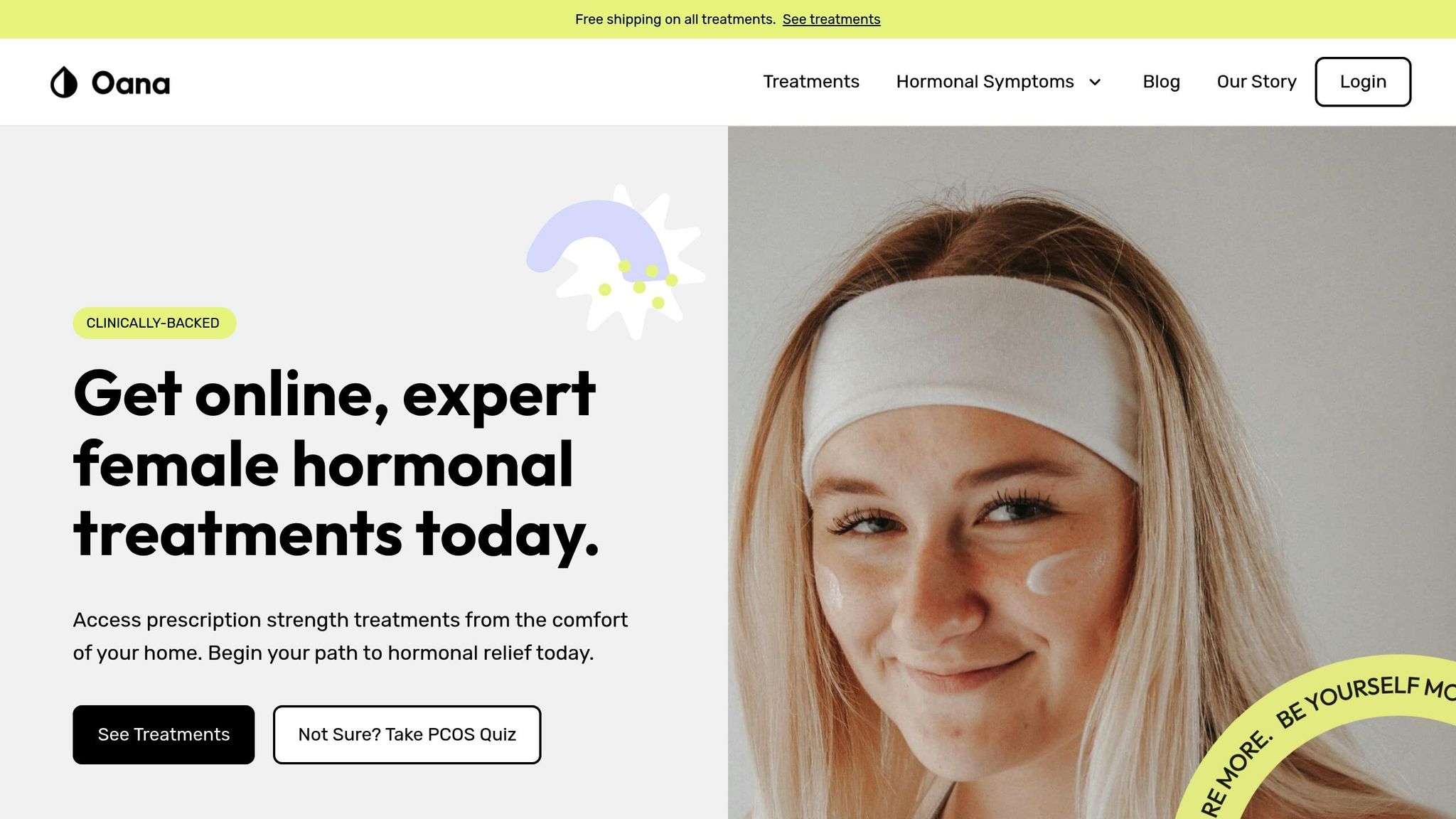
Oana Health offers specialized topical treatments designed to address specific PCOS symptoms. For facial hirsutism, their Hairless Hype treatment combines eflornithine, metformin lotion, and azelaic acid. This prescription-grade solution is priced from $115 per month and works to target unwanted hair growth directly at its source.
For those looking for an alternative to oral metformin, Oana Health provides a topical metformin cream for $89 per month. This option delivers the benefits of metformin without the common gastrointestinal side effects.
"I'm so glad I discovered Oana's metformin lotion! I used to struggle a lot with the side effects of oral metformin, and this is a great alternative for me. I get the same benefits but no more upset stomach and nausea, and this helps me stick with it a lot more consistently." – Carrie S., Topical Metformin user [1]
Other options include topical spironolactone for hair loss at $43 per month and eflornithine 12% for unwanted hair growth at $69 per month. Clinical data reveals that 81% of women experience significant improvement within a year of using these treatments [1].
Home Delivery and Ongoing Care
Oana Health doesn’t just stop at effective formulations - they also prioritize convenience and personalized care. After your initial consultation, treatments are shipped directly to your door with free shipping, ensuring you receive high-quality, physician-approved solutions without any hassle.
The service includes automatic refills and continuous support, available online or by phone. This ensures that your treatment remains effective over time. If you don’t see results within the typical 4- to 8-week window, your plan can be adjusted without requiring a brand-new consultation, allowing your care to adapt to your needs.
"Thanks to Oana, my menstrual cycles are more regular, and my skin has never looked better! I also love the 24/7 accessibility and customer service that always goes the extra mile." – Margaret K., MetSpiro user [1]
PCOS & Skin | Dermatologist Review
Conclusion: Better PCOS Treatment Options for Women
Topical anti-androgens offer a focused approach to managing PCOS symptoms like facial hair, acne, and hair loss while minimizing systemic side effects. This localized strategy addresses a key limitation of broader systemic treatments.
These topical solutions can deliver results similar to oral medications - such as improving acne and controlling sebum production - without the associated systemic risks. They are particularly beneficial for women who either cannot tolerate oral medications or prefer a more targeted treatment option.
Adding to the benefits of localized treatments, telehealth has made specialized care more accessible than ever. Services like Oana Health enable women to consult with licensed medical professionals, receive science-backed care, and access personalized treatments - all from the comfort of home, complete with free delivery.
Clinical research supports the effectiveness of topical treatments, and expert guidelines now recommend them as viable options when other treatments are unsuitable or ineffective.
For women navigating PCOS symptoms, the combination of targeted topical treatments and telehealth services creates a new benchmark for convenience and care. Personalized, prescription-based solutions with ongoing support and automatic refills make managing PCOS simpler and more patient-centered than ever.
This progression in PCOS care equips women with clinically validated treatments that prioritize safety, ease, and long-term results, reinforcing the article's exploration of targeted care and telehealth as game-changers in PCOS management.
FAQs
Are topical anti-androgens effective for managing PCOS symptoms like acne, hair loss, and unwanted hair growth?
Topical anti-androgens offer a targeted approach to managing common PCOS symptoms like acne, hair thinning, and unwanted facial or body hair. By focusing on androgen receptors in the skin, these treatments work to reduce the impact of excess androgens in specific areas without influencing the entire body.
One of the key advantages of topical anti-androgens is their localized application. Since they're applied directly to the affected areas, they carry a lower risk of systemic side effects compared to oral medications. That said, their effectiveness can depend on factors such as the severity of your symptoms and how consistently you use them. For the most effective results, it’s important to consult a licensed healthcare provider who can recommend a treatment plan tailored to your needs.
What are the side effects of topical anti-androgens for PCOS, and how do they compare to oral treatments?
Topical anti-androgens for PCOS are often a gentler option compared to oral treatments. Because they’re applied directly to the skin, they work on specific problem areas - like acne or unwanted facial hair - without affecting the entire body. This localized approach reduces the risk of widespread side effects.
That said, some people may experience mild skin issues, such as irritation, redness, or dryness where the product is applied. These are generally minor compared to potential side effects of oral treatments, which can include hormonal imbalances or nausea. It’s always a good idea to talk to a healthcare provider to figure out the treatment that’s right for you.
How can I get topical anti-androgen treatments for PCOS symptoms through Oana Health?
Getting started with Oana Health is straightforward and hassle-free. It all begins with a short, 5-minute online visit where you’ll share your medical history and outline your specific health concerns. From there, a licensed medical professional will review your details and create a treatment plan tailored just for you - all for a one-time consultation fee of $20.
Once your treatment is prescribed, it’s shipped straight to your doorstep with free shipping. This means you can address concerns like acne, hirsutism, or hair loss without ever needing to leave the comfort of your home.